How to Calculate Workshop Power Tool Depreciation (Analysis)
I remember the day I realized my side business was actually losing money. I had just finished a large batch of custom gate hinges. The customer paid on time, and the check looked healthy. But as I looked around my shop, I saw a dull cold saw blade, a welder that needed a new liner, and a mounting pile of electricity bills. I had priced the job based on my time and the steel, but I had completely ignored the silent cost of my machines wearing down.
For 16 years, I’ve navigated the transition from a hobbyist metalworker to a manufacturing business owner. The biggest hurdle wasn’t learning how to TIG weld stainless steel or program a CNC plasma table. It was learning the math of equipment recovery. If you don’t account for the gradual decline in your tools’ value, you aren’t making a profit; you are simply liquidating your machinery one job at a time. This guide focuses on the practical side of tracking tool value loss to ensure your shop stays profitable and your equipment stays modern.
Determining the True Cost of Machinery Ownership
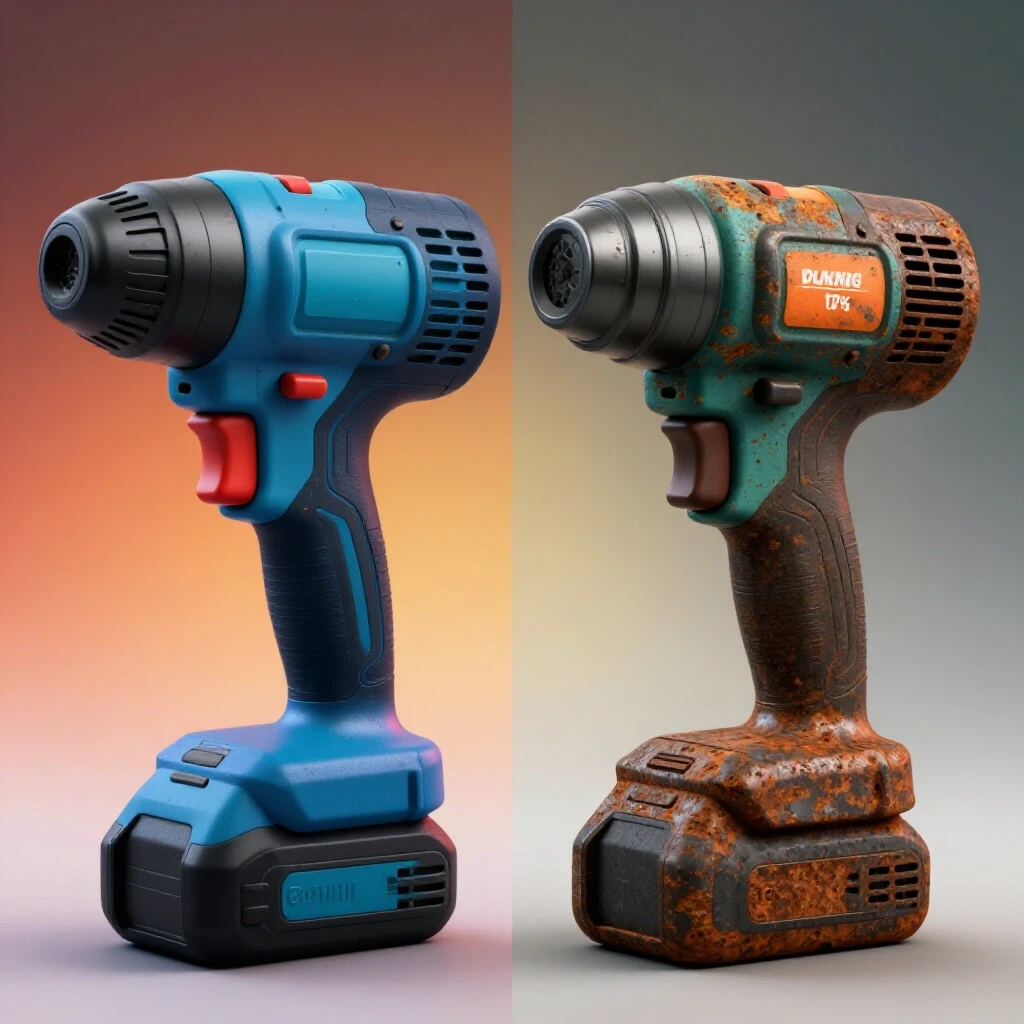
Tracking the loss of value in your workshop equipment is the process of spreading the initial cost of a tool over its expected working life. This ensures that by the time a machine needs replacement, you have already collected enough revenue from your projects to buy a new one without dipping into your personal savings.
When you buy a $4,000 welder, that money doesn’t just vanish. It transforms into a productive asset. However, every hour that welder runs, a small piece of that $4,000 is used up. If you expect the welder to last 10 years and then have a resale value of $1,000, you are essentially “consuming” $300 of that machine every year.
In my early years, I ignored this. I thought if the machine was paid for, the work it did was “free” minus the electricity. This is a trap. Eventually, that machine will fail or become obsolete. If you haven’t factored that $300 annual decline into your fabrication job costing, you will be hit with a massive, unplanned expense when it’s time to upgrade.
Identifying Acquisition Costs
The acquisition cost is the total amount spent to get a piece of machinery leveled, powered, and ready for its first production run. This includes the purchase price, shipping fees, specialized electrical work, and any initial assembly time that takes you away from paid work.
Many shop owners only look at the sticker price. When I bought my first industrial ironworker, the price was $8,000. But after paying for a lift-gate delivery, hiring an electrician to run a 240V circuit, and buying the initial set of punches and dies, my actual investment was closer to $9,500. This higher number is what you must use for your recovery calculations.
Estimating Service Life and Resale Value
Service life is the realistic duration a tool will remain productive in your specific shop environment, while resale value is what you expect to sell it for on the used market. These numbers are rarely found in a manual; they require an honest look at how hard you push your gear.
In a hobby setting, a high-quality drill press might last 30 years. In a production shop running three shifts, it might last five. For a side-hustle metalworker, I usually suggest a five-to-seven-year window for electronic-heavy tools like digital welders and a ten-to-fifteen-year window for heavy cast-iron machinery.
| Tool Type | Estimated Service Life (Years) | Estimated Resale Value (%) |
|---|---|---|
| TIG/MIG Welder | 7 Years | 30% |
| Cold Saw | 12 Years | 40% |
| CNC Plasma Table | 5 Years | 20% |
| Magnetic Drill | 4 Years | 15% |
| Ironworker | 20 Years | 50% |
Calculating the Hourly Burden of Your Power Tools
The hourly burden is the specific dollar amount you must add to your shop rate to cover the wear and tear on a specific machine for every hour it is in use. This metric turns a vague annual cost into a precise figure you can include in a project bid.
To find this, you take your total investment, subtract the expected resale value, and divide the remainder by the total number of hours you expect the tool to run over its life. This is the most honest way to view your equipment. It stops being a “cool tool” and starts being a measurable expense.
The Straight-Line Allocation Method
Straight-line allocation is the simplest way to track value loss by dividing the total cost of the tool evenly across its expected years of service. It assumes the tool loses the same amount of value every year, regardless of how many hours it actually runs.
I use this for tools that I use consistently every week, like my shop compressor or my main workbench grinder. If a $1,200 compressor lasts 10 years and will be worth $200 at the end, the math is simple: ($1,200 – $200) / 10 = $100 per year. If I work 500 hours a year in the shop, that compressor costs me $0.20 for every hour I am standing in the building.
The Units-of-Production Approach
The units-of-production method tracks value loss based on actual usage, such as hours of “arc-on” time or the number of cuts made. This is much more accurate for specialized tools that might sit idle for weeks but work hard when a specific job comes in.
Interestingly, this method saved my business during a slow year. I had an expensive pipe bender that I only used for specific handrail jobs. If I had used the straight-line method, I would have felt the need to charge a massive overhead even when the machine wasn’t moving. By using a “per-bend” cost, I could price my handrail jobs accurately based on the actual wear the machine suffered during that specific contract.
Why Hidden Consumables Impact Tool Value Recovery
Consumables are the parts of your tools that are designed to wear out quickly, such as grinding discs, welding wire, and coolant. While they are separate from the machine’s core value, failing to track them will lead to underestimating the true cost of operating that machinery.
I once took on a project involving 200 linear feet of heavy-duty welding. I accounted for the welder’s hourly wear, but I forgot to track the “consumable burden.” By the end of the week, I had gone through three rolls of wire and two bottles of shielding gas. These costs ate my entire profit margin because I hadn’t added a “consumable percentage” to my equipment recovery rate.
Tracking Welding Consumable Usage
Welding consumable tracking involves measuring the rate at which you use gas, wire, and tips to create a “burden factor” that is added to your welding hourly rate. This ensures you aren’t paying for the customer’s project out of your own pocket.
A good rule of thumb for small metal shop pricing is to add a 15% to 25% markup to your base machine rate to cover these items. If your welder “costs” you $5.00 an hour in wear and tear, the wire and gas might add another $8.00 to $12.00 per hour of trigger time.
- Keep a log of how many projects a single roll of wire lasts.
- Note the date whenever you swap a gas cylinder.
- Track the lifespan of contact tips when working with different materials.
Maintaining Machinery to Protect Resale Value
Regular maintenance is the only way to ensure your machinery reaches its estimated service life and maintains its resale value. A machine that is cleaned and oiled daily will always command a higher price on the used market than one covered in grinding dust.
In my shop, I treat maintenance as a non-negotiable part of the work week. Every Friday, the last 30 minutes are spent wiping down ways, checking oil levels, and clearing chips. This isn’t just about being tidy; it’s about protecting the $50,000+ I have invested in the room. If I can extend a machine’s life by two years through simple cleaning, I am effectively lowering my hourly operating cost.
Building an Accurate Shop Rate Based on Equipment Recovery
A true shop hourly rate is the sum of your desired take-home pay, your fixed overhead (rent, power, insurance), and the calculated hourly wear of your machinery. Without including the equipment recovery piece, your shop rate is incomplete.
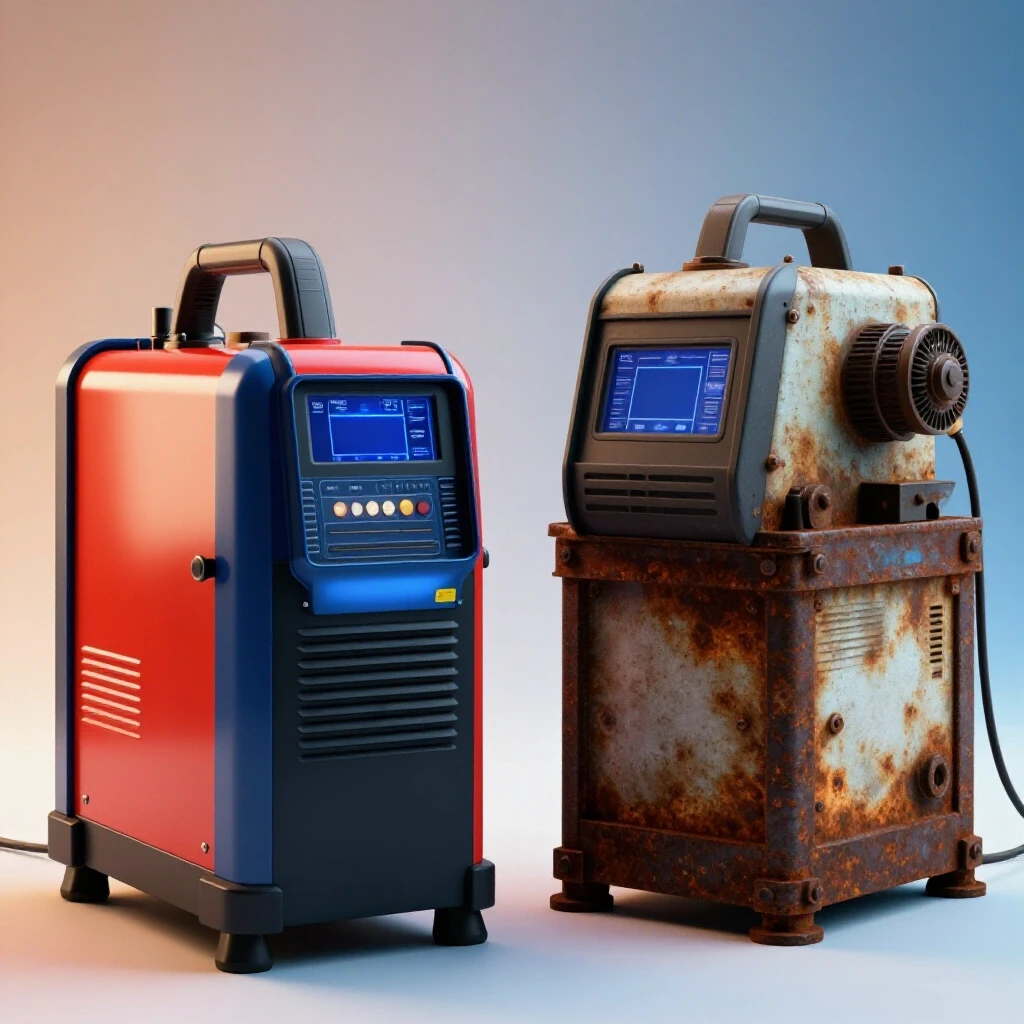
Most side-hustlers start by asking, “What does the guy down the street charge?” They might hear $75 an hour and adopt it. But if the guy down the street is using 30-year-old machines that are already paid off, and you are using brand-new CNC equipment, your costs are much higher. You need to calculate your own rate based on your specific equipment investments.
Calculating Shop Rates for Fabrication Jobs
To calculate your rate, list every power tool you use, find its hourly wear cost, and add it to your base labor rate. This ensures that every time you turn on a machine, you are actively “saving” for its eventual replacement.
As a result of this math, you might find that your “welding rate” is different from your “assembly rate.” If I am just bolting parts together at a bench, I might charge $65 an hour. If I am using the CNC plasma table and the high-end TIG welder, that rate might jump to $110 an hour to cover the higher equipment recovery costs.
Factoring in Material Markup Percentages
Material markup is a percentage added to the raw cost of steel and hardware to cover the time spent sourcing, picking up, and storing materials. It is a critical part of the financial health of a small shop.
I typically suggest a markup of 20% to 50% depending on the job size. If I have to spend two hours driving to the steel yard and loading a trailer, that time has to be paid for. If you only charge the customer what you paid for the steel, you are essentially volunteering your time as a delivery driver.
- Small Jobs (Under $500): 50% markup on materials.
- Medium Jobs ($500–$2,500): 30% markup on materials.
- Large Jobs ($2,500+): 20% markup on materials.
Analyzing Post-Job Profits and Tool ROI
Post-job profit analysis is the practice of looking back at a completed project to see if your estimated equipment wear matched the actual wear. This feedback loop is essential for refining your future bids.
After every major project, I sit down with my notes. Did I use more grinding discs than I thought? Did the bandsaw struggle with that specific alloy, potentially shortening the blade’s life? If I estimated $200 in tool wear but the job actually took twice as long, I need to adjust my “per hour” recovery rate for the next quote.
Evaluating Metal Business ROI Calculators
A return on investment (ROI) calculation tells you how long it will take for a new tool to pay for itself through increased efficiency or new capabilities. This prevents you from buying “shiny objects” that don’t actually move the needle for your business.
Building on this, I always ask: “How many hours will this save me per month?” If a $3,000 cold saw saves me 5 hours of grinding time a month, and my shop rate is $80, that saw saves me $400 a month. The payback period is 7.5 months. That is a solid investment. If the payback period is 5 years, I probably don’t need that tool yet.
| Equipment Purchase | Cost | Monthly Time Savings (Hours) | Value of Time Saved | Payback Period (Months) |
|---|---|---|---|---|
| Mag Drill | $1,200 | 4 Hours | $320 | 3.75 |
| Pulse MIG Welder | $5,500 | 10 Hours | $800 | 6.8 |
| Rotary Draw Bender | $2,800 | 2 Hours | $160 | 17.5 |
Avoiding the Low-Margin Trap
The low-margin trap occurs when a shop owner takes on high-volume work at a low rate, thinking the “volume” will make up for the lack of profit. In reality, more work just means more machine wear, leading to a faster equipment failure.
I’ve seen shops go under because they were “too busy.” They were running their machines 60 hours a week on thin margins. When the machines finally broke down, they had no cash reserves to fix them because they hadn’t been charging enough for equipment recovery. Being busy is not the same as being profitable.
Steps to Optimize Your Workshop Economics
If you want to move from a hobbyist who spends money to a side-hustler who makes it, you must start treating your tools like employees. Every tool needs to “earn” its keep.
Start by listing your five most expensive power tools. Estimate how many hours they have left and what they will be worth when you’re done with them. Divide that “lost value” by the hours you use them each year. Add that number to your next quote. It might feel uncomfortable to raise your prices, but it is the only way to ensure your shop is still standing five years from now.
- Audit your gear: List every machine over $500.
- Calculate hourly wear: Use the straight-line or units-of-production method.
- Update your shop rate: Ensure your hourly bid includes equipment recovery.
- Track your consumables: Don’t let shielding gas and abrasives bleed your profit.
- Review every job: Compare your estimated wear to the reality of the work.
FAQ: Managing Workshop Equipment Value and Recovery
How do I know how many hours a tool will last?
Most industrial-grade power tools are rated for a certain number of motor hours. However, for a small shop, looking at your historical usage is better. If you use a grinder for an hour a day, and your last one lasted three years, you have a baseline of roughly 1,000 hours of service life.
Should I include small hand tools in these calculations?
Generally, no. Items like hammers, screwdrivers, and manual clamps are often treated as “shop supplies.” Their individual cost is low enough that tracking their specific value decline isn’t worth the time. Focus your energy on the “big ticket” items that cost more than $500.
What if I bought my tools used?
The math remains the same. Use your actual purchase price as the starting point. Used tools often have a shorter remaining service life but a much slower rate of further value loss, which can actually make your hourly recovery rate lower and your shop more competitive.
Is it better to repair an old machine or let it lose all value and replace it?
This depends on the “repair-to-replacement” ratio. If a repair costs more than 50% of the machine’s current used value, it’s usually time to replace it. A newer machine often brings increased efficiency that pays for itself faster than nursing an old, slow tool.
How often should I update my equipment recovery rates?
I recommend a review once a year or whenever you add a major new piece of machinery to the shop. Prices for replacement tools fluctuate, and your own efficiency might change as you get better at your craft.
Does the type of material I work with change the tool’s value loss?
Absolutely. Working exclusively with stainless steel or hardened alloys will wear out saws, drills, and welding liners much faster than working with mild steel. If you specialize in “tough” materials, you should shorten your estimated service life by 25% to 30%.
How do I account for a machine that is rarely used?
For specialized tools, use the units-of-production method. Assign a “per-use” fee. For example, if you have a tube notcher that cost $600 and you expect it to last for 600 notches, every notch you make “costs” $1.00. Add that to the job bid.
What is the biggest mistake side-hustlers make with equipment?
The biggest mistake is thinking that because a tool is “paid for,” it no longer costs anything to run. This leads to underpricing and an eventual “capital crisis” where the owner has no money to replace the tools that made the business possible in the first place.
How do I explain a higher shop rate to my customers?
You don’t necessarily need to show them your math. Focus on the quality and reliability that your professional-grade equipment provides. Customers aren’t paying for the tool; they are paying for the result the tool produces. A well-maintained shop produces better results.
Can I use this math to decide between two different tools?
Yes. By comparing the hourly recovery cost and the potential time savings of two different machines, you can see which one offers a better ROI. Often, the more expensive, faster machine is actually “cheaper” per hour because it produces more work in less time.
What happens if I sell a tool for more than I expected?
That is a win for your business. It means your “actual” cost per hour was lower than you estimated. You can put that extra cash back into the business or use it to upgrade to an even better piece of equipment.
Should I track the value of my workshop building?
For most side-hustlers working out of a home garage or a small rented space, it’s better to focus on the tools. Building value is a different financial animal. Focus on the assets that directly produce the chips and the welds.
(This article was written by one of our staff writers, Michael Hargrove. Visit our Meet the Team page to learn more about the author and their expertise.)