Long-Term Durability Review of Popular Welding Gear (Guide)
When I transitioned from a hobbyist to a full-time shop owner, I quickly realized that my biggest financial leaks weren’t just in raw material waste. They were hidden in the slow, silent degradation of my primary tools and protective equipment. Many side-hustlers set their fabrication job costing based on the price of steel and a guess at their time, but they forget that every spark and every hour of arc time is slowly consuming the gear they wear. After 16 years in the industry, I’ve learned that understanding the lifespan of your equipment is the only way to build a sustainable small metal shop pricing model.
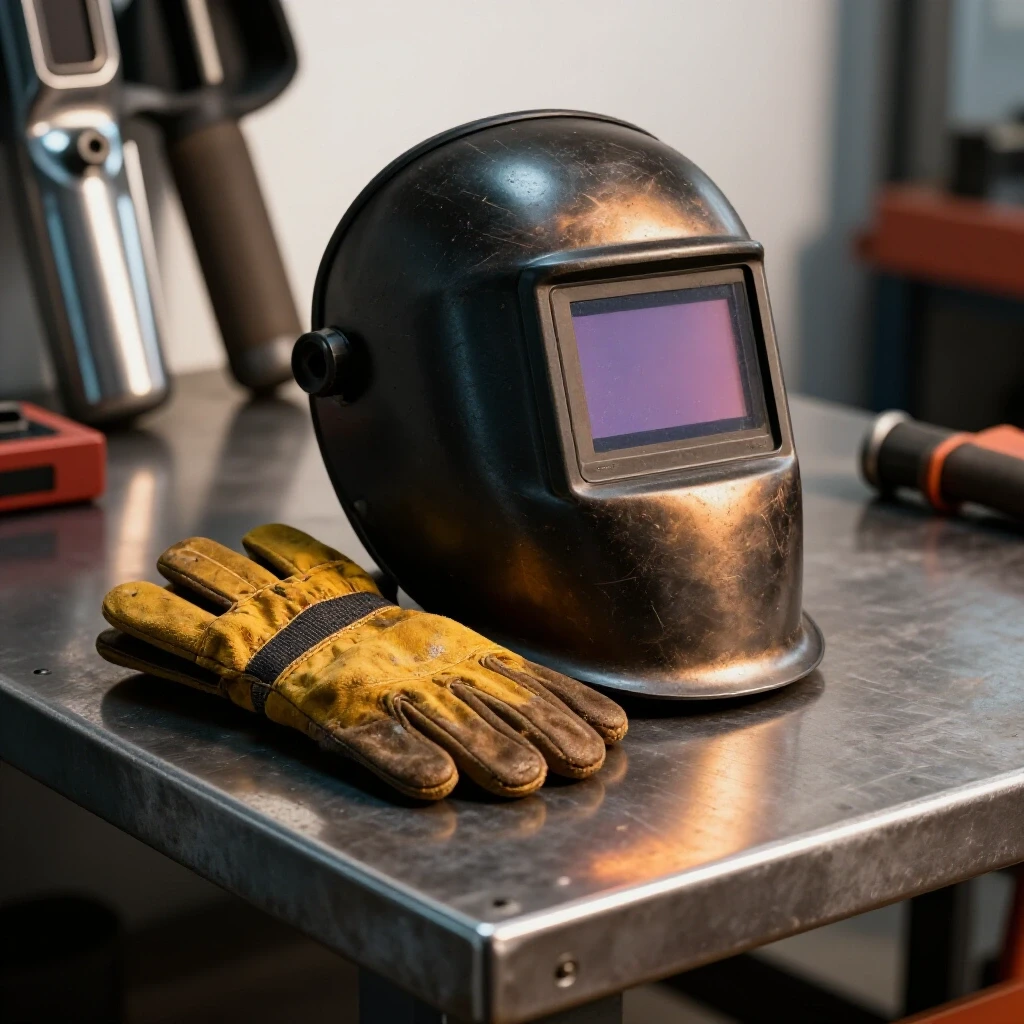
If you are running a business, you aren’t just “buying a helmet.” You are investing in a piece of capital equipment that has a finite number of service hours before its electronics fail or its structural integrity compromises. To stop the bleeding in your budget, you have to look at your gear through the lens of depreciation and material fatigue. This guide examines how the physical breakdown of essential equipment impacts your long-term shop math and how to account for these cycles in your bids.
Integrating Equipment Lifespan into Your Shop Hourly Rate
Calculating your shop rate requires a deep understanding of how long your equipment will actually last under daily stress. This isn’t about how long a tool stays “shiny,” but rather how many billable hours it can survive before the electronics or structural materials require replacement.
When I talk to shop owners about calculating shop rates, I find most people forget to include the “tool tax.” This is the amount you must set aside every hour to replace your gear when it eventually fails. For example, if you expect a high-end auto-darkening lens to maintain its sensor sensitivity for 2,000 hours of arc time, you need to know exactly how that affects your overhead. If you ignore this, you’ll find yourself with a $10,000 repair bill or equipment failure right when you have no cash reserves.
Understanding the Amortization of Protective Gear
Amortization is the process of spreading the cost of an expensive item over its useful life. In a fabrication setting, this means tracking how many projects a piece of gear can handle before it becomes a liability.
- Electronic Components: Auto-darkening filters (ADF) have sensors and batteries that degrade.
- Leather and Textiles: Heat cycles eventually turn soft leather brittle, leading to seam failure.
- Structural Integrity: Plastic shells on helmets become brittle from constant UV exposure.
| Equipment Type | Expected Service Life (Hours) | Primary Failure Mode | Impact on Shop Rate |
|---|---|---|---|
| Heavy-Duty Leather | 400 – 600 | Seam Abrasion/Charring | High (Frequent Replacement) |
| Auto-Darken Helmet | 2,000 – 3,000 | Sensor Lag/LCD Fatigue | Medium (Capital Expense) |
| FR Cotton Jackets | 150 – 200 | UV Thinning/Spark Holes | Low (Consumable Burden) |
| Respirator Systems | 1,000+ | Motor/Seal Degradation | Variable (High Maintenance) |
Why Material Fatigue in Protective Apparel Destroys Your Profit Margins
Tracking the physical breakdown of your protective layers is essential because these items are often treated as “buy and forget” until they fail. In reality, leather and flame-resistant (FR) fabrics undergo chemical and physical changes every time they are exposed to high-amperage heat and ultraviolet radiation.
In my years managing shop budgets, I’ve seen that the “hidden” cost of side-hustle metalworking often lies in the rapid degradation of apparel. A jacket that loses its protective properties after six months of heavy TIG work is a recurring expense that must be captured in your fabrication job costing. If you don’t account for the fact that leather shrinks and seams pull apart under constant thermal cycling, your “profit” on a job is actually just you spending your equipment’s value.
The Science of Seam Integrity and Thread Failure
The most common failure point in workshop apparel isn’t the material itself, but the thread holding it together. Standard nylon threads can melt, while even Kevlar threading can become brittle over time when exposed to constant UV light from the arc.
- Heat-Induced Shrinkage: Leather loses its natural oils when exposed to the arc, causing it to tighten and pull at the seams.
- UV Degradation: Constant exposure to high-intensity light breaks down the molecular bonds in FR cotton, making it “crunchy” and prone to tearing.
- Abrasion Patterns: Side-hustlers often work in tighter spaces than industrial shops, leading to faster wear on elbows and knees.
To manage this, I recommend a simple welding consumable tracking system that includes your apparel. If you know a pair of premium gloves lasts exactly 40 hours of MIG work, you can calculate the “per-hour” cost of those gloves and add it directly to your overhead burden.
Evaluating the Long-Term Reliability of Auto-Darkening Electronics
The electronic brain of your workshop—the auto-darkening lens—is a sensitive piece of hardware operating in a violent environment. Over several years, the liquid crystal layers and the arc sensors begin to lose their reaction speed, which can lead to eye fatigue and slower production rates.
When side-hustle metalworking turns into a serious business, you need to move away from “it still works” to “is it working efficiently?” Electronic fatigue is hard to see until it’s too late. I’ve analyzed shops where older lenses were firing 5-10 milliseconds slower than they did when new. This doesn’t just affect safety; it affects the welder’s ability to perform high-precision work over an eight-hour shift, directly impacting your labor efficiency.
Failure Points in High-Usage Electronic Helmets
- Battery Memory and Leakage: Even “solar-assisted” helmets rely on internal batteries that have a finite number of charge cycles.
- Sensor Blindness: Over time, the clear covers can get pitted, but the sensors themselves can also lose sensitivity due to heat soak.
- LCD Delamination: Heat cycles can cause the layers of the lens to separate, creating “ghosting” or dark spots that hinder visibility.
Building a metal business ROI calculator requires you to factor in the replacement of these electronic components every 3 to 5 years, depending on your shop’s volume. If you are charging a shop rate of $85/hour, a small percentage of that must be earmarked for the eventual failure of these high-tech components.
How Structural Degradation Affects Your Small Metal Shop Pricing
The physical shells of our equipment—helmets, face shields, and gear housings—are typically made of high-impact plastics. However, the workshop environment is a cocktail of chemicals, UV rays, and extreme temperature swings that lead to material embrittlement.
In my experience consulting for small shops, I’ve seen many owners ignore the “crunchy” sound their gear makes when they pick it up. That sound is the plastic losing its plasticizers. If a helmet shell cracks because it has become brittle, your production stops. This downtime is a hidden cost that rarely shows up on a standard invoice but absolutely eats into your annual profits.
Identifying Observable Wear Patterns
- UV Chalking: When plastic starts to look white or “dusty,” the UV rays have compromised the outer layer of the material.
- Stress Cracking: Repeatedly flipping a helmet up and down creates stress at the pivot points, which eventually leads to failure.
- Chemical Softening: Exposure to degreasers or cleaning agents can soften certain plastics, making them more prone to warping under heat.
By recognizing these patterns, you can predict when a piece of gear is reaching the end of its life. This allows you to plan for capital expenditures rather than being surprised by them. This level of foresight is what separates a hobbyist from a professional who understands the financial realities of fabrication.
Formulating a Real Material Markup for Consumable Burden
Most people understand they need to mark up steel, but they fail to apply a “consumable burden factor” to their jobs. This factor accounts for the wear and tear on your gear, as well as the gas, wire, and abrasives used during the project.
A common mistake is thinking that your shop rate covers everything. In reality, your shop rate should cover your time, expertise, and fixed overhead (rent, electricity). The consumable burden—including the slow destruction of your protective gear—should be a separate calculation or a specific markup on your material costs. I typically suggest a 10% to 15% burden factor for most small-batch fabrication work.
Calculating the Consumable Burden Factor
To find your burden factor, you need to track your spending over six months. Total up everything that gets “used up”—gloves, lenses, nozzles, and even the depreciation of your jacket. Divide that by your total material spend. This percentage is your “hidden” cost of doing business.
- Track Every Item: Keep a log of when you start using a new piece of gear.
- Note the Failure Date: When the gear is retired, record the total hours of use.
- Assign a Value: Use the replacement cost to determine the cost-per-hour.
- Apply to Bids: Add this cost-per-hour to your labor rate or as a flat “shop supplies” fee on your invoices.
Developing a Maintenance Schedule to Extend Equipment Life
The best way to improve your ROI is to slow down the rate of degradation. A methodical maintenance schedule isn’t just about cleanliness; it’s about preserving the physical properties of your materials so they last longer in the field.
I’ve found that a simple weekly “gear check” can extend the life of leather and electronics by up to 30%. For a side-hustle, that 30% increase in lifespan translates directly into higher net profit. If you aren’t maintaining your gear, you are essentially throwing money into the scrap bin every time you strike an arc.
Practical Steps for Longevity
- Leather Conditioning: Use specialized oils to keep leather from becoming brittle after high-heat exposure.
- Lens Care: Regularly replace clear cover plates to prevent the main electronic lens from getting pitted or heat-damaged.
- Storage: Store electronic gear in a climate-controlled area to prevent battery degradation and LCD delamination from extreme cold or heat.
- Cleaning: Remove metallic dust from electronic components using compressed air to prevent short-circuiting or sensor interference.
Using Post-Job Cost Reconciliations to Refine Bidding
The final step in mastering shop math is the post-job reconciliation. This is where you look at what you thought the job would cost versus what it actually cost in terms of gear wear and consumables.
I once worked with a fabricator who was losing money on every stainless steel job. We discovered that the high-reflectivity of the stainless was causing his helmet sensors to work twice as hard and his protective sleeves to degrade 50% faster due to the increased UV bounce-back. By adjusting his fabrication job costing for stainless-specific projects, he was able to return to profitability.
The Reconciliation Checklist
- Did I replace any gear during this job? (Gloves, lenses, etc.)
- Is there visible “accelerated” wear? (Charring, brittle leather, lens ghosting)
- How many arc hours were logged?
- Did the “consumable burden” percentage cover these costs?
If your answer to the last question is “no,” it’s time to raise your rates or increase your material markup. Data-driven decisions are the only way to ensure your side-hustle doesn’t become a high-stress hobby that costs you money.
Frequently Asked Questions
How do I factor the lifespan of my gear into a single job quote? You should calculate a “consumable cost per hour.” Take the total life expectancy of your gear (e.g., 500 hours for a jacket) and divide its cost by those hours. Add this hourly “wear fee” to your base shop rate to ensure you are being compensated for the gear’s degradation.
Why does my leather gear fail faster in the summer? Heat and sweat are the enemies of leather. Salt from perspiration breaks down the fibers, while external heat from the workshop environment accelerates the drying process. This makes the leather brittle and prone to cracking or seam failure much faster than in cooler months.
Is it normal for auto-darkening lenses to get “lighter” over time? Yes, this is often a sign of LCD fatigue. The liquid crystals can lose their ability to fully align, leading to a loss of shade density. If you notice your eyes are tired after a day of work even though the lens is “dark,” it may be time to replace the unit.
What is the most common hidden cost in side-hustle metalworking? The most common hidden cost is “untracked consumables.” This includes the small things like clear lens covers, anti-spatter spray, and the gradual wear of your protective apparel. These small costs can easily eat 5-10% of your profit if not tracked.
How often should I perform a full audit of my shop’s equipment health? I recommend a quarterly audit. Every three months, inspect the seams of your apparel, test the reaction speed of your lenses, and check the structural integrity of your helmet shells. This prevents unexpected failures during a deadline.
Can I use standard business depreciation schedules for my gear? While you can use IRS-standard schedules for taxes, they rarely match the physical reality of a fabrication shop. For internal pricing, use “actual use” depreciation based on your specific workload and observable wear patterns.
Does UV exposure from the arc affect my shop’s non-electronic tools? Yes. High-intensity UV can degrade plastic handles on clamps, rubber hoses, and even the insulation on your welding leads. Over several years, these materials will become brittle and may crack, requiring replacement.
How do I explain a “shop supplies” fee to a customer? Be transparent. Explain that this fee covers the specialized protective equipment, shielding gases, and high-wear consumables required to complete their project safely and to a high standard. Most customers understand that professional gear has an operating cost.
What is the best way to track arc hours for equipment lifespan? Many modern machines have built-in timers. If yours doesn’t, you can use a simple logbook or a digital app to track “trigger time” versus “total shop time.” This data is invaluable for calculating your true ROI.
How do I know if my shop rate of $85/hour is enough to cover gear replacement? Run a “break-even” analysis. Subtract your rent, power, and material costs from your gross income. If the remaining amount doesn’t allow you to set aside 5-10% for equipment replacement while still paying yourself a fair wage, your rate is too low.
(This article was written by one of our staff writers, Michael Hargrove. Visit our Meet the Team page to learn more about the author and their expertise.)