How to Choose a Durable Heavy Duty Welding Cart (Review)
Setting up a metalworking space on a budget is a balancing act between cost and long-term reliability. I remember when I first moved my fabrication gear into a small garage in 2013. I had a limited budget and a lot of ambition, but I quickly learned that the floor is the most dangerous place for an expensive welding machine. Dust, metal shavings, and heavy foot traffic can ruin sensitive electronics in months. A robust, mobile foundation is not just a luxury; it is a fundamental requirement for protecting your investment and maintaining an organized workflow in a confined area.
In my years as an industrial maintenance technician, I saw how poorly designed equipment stands led to workplace accidents and damaged machinery. When you are operating on a strict budget, every dollar must go toward gear that will last at least a decade. Choosing a high-quality mobile unit for your welder involves looking past the paint and focusing on the engineering of the frame, the quality of the wheels, and the safety of the gas cylinder storage.
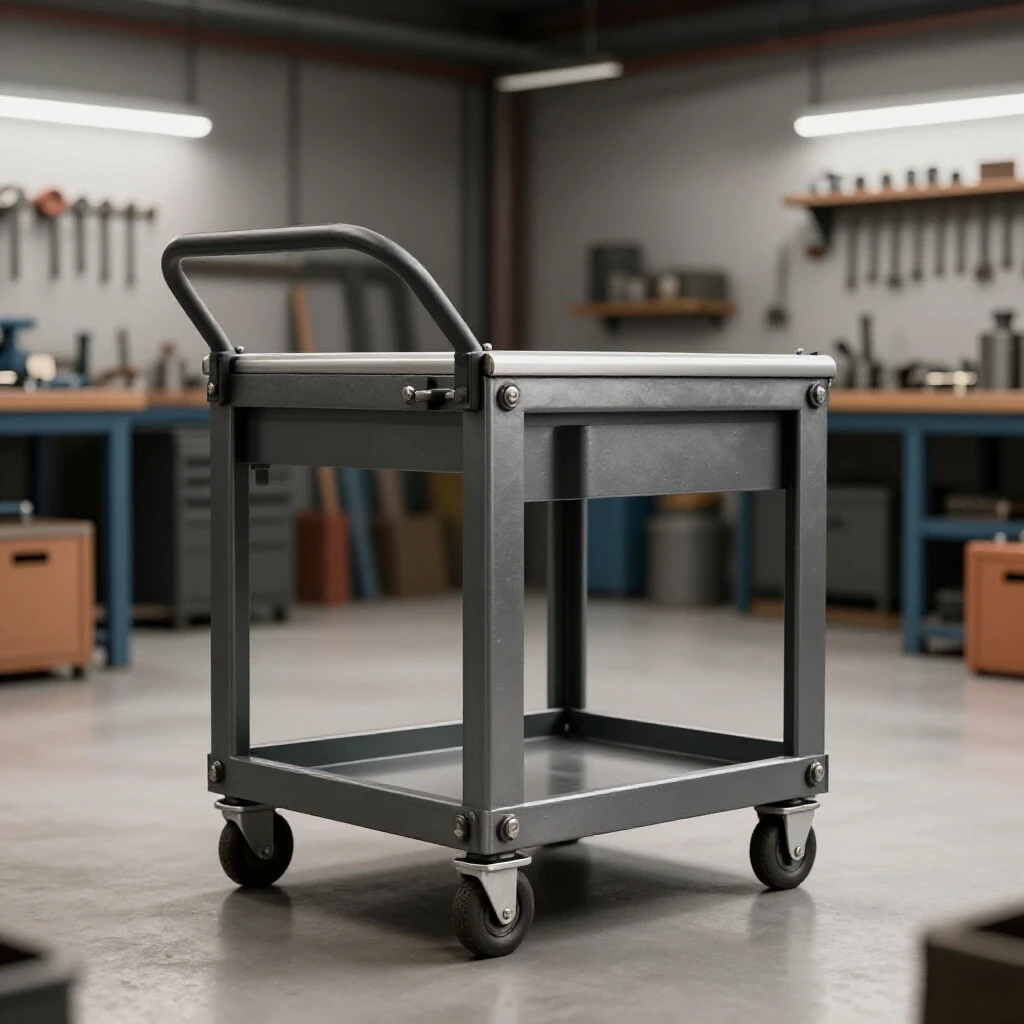
Selecting a High-Strength Mobility Solution for Fabrication Gear
A heavy-duty mobile unit is the backbone of a functional welding station, providing a secure platform for the power source, shielding gas, and essential consumables while ensuring the entire setup can be moved safely across a workshop floor. It serves as a centralized hub that keeps your most expensive tools off the ground and away from grinding dust.
Analyzing Frame Construction and Material Thickness
The structural integrity of a fabrication cart depends primarily on the gauge of the steel used in its frame and shelves, as this determines the total weight the unit can support without bowing or collapsing under stress. In the world of metalwork, “gauge” refers to the thickness of the sheet metal. A lower gauge number indicates a thicker, stronger piece of steel.
When I evaluate a pre-manufactured unit, I look for a minimum of 16-gauge steel for the shelves. If you plan to carry a heavy industrial transformer-based welder and a large gas cylinder, 14-gauge is even better. Thin, 20-gauge steel might look fine in a photo, but once you add 150 pounds of equipment, the shelves will begin to deflect. This deflection can cause the cart to track poorly or, in extreme cases, lead to structural failure.
Understanding Load Capacity and Weight Distribution
Load capacity is a verified measurement of how much weight a structure can safely hold while stationary and in motion. A reliable unit should clearly state its maximum weight limit. For a beginner setup, a capacity of 100 to 150 pounds is common, but “heavy-duty” units should be rated for 300 pounds or more.
I always recommend calculating the total weight of your gear before making a selection. This includes the machine, a full spool of wire, all cables, and the weight of a full gas cylinder. A standard 80-cubic-foot shielding gas tank weighs about 50 pounds when full. If your cart is rated for 100 pounds and your machine weighs 60, you are already nearing the safety limit before you even add your tools and accessories.
| Component | Estimated Weight (lbs) | Cumulative Total |
|---|---|---|
| Inverter Welder Unit | 35 – 55 | 55 |
| 10lb Wire Spool | 12 | 67 |
| Welding Leads/Cables | 15 | 82 |
| 80cf Gas Cylinder (Full) | 50 | 132 |
| Hand Tools & Consumables | 10 | 142 |
As shown in the table, a basic setup easily exceeds 140 pounds. Selecting a unit with a 200-pound capacity provides a necessary safety margin, preventing the frame from twisting during movement.
Mobility Engineering: Casters and Weight Distribution
Effective mobility requires high-quality casters that can handle the static weight of the machine and cylinder, along with the dynamic forces encountered when moving over floor joints or debris in a metalworking environment. The wheels are often the first point of failure on budget equipment, so they require careful scrutiny.
The Role of Bearing Quality and Wheel Material
Industrial-grade casters utilize ball bearings for smooth rotation and specific wheel materials, like hard rubber or polyurethane, to prevent flat spots and ensure the cart remains easy to steer under full load. Bearings are the small metal spheres inside the wheel hub that reduce friction. Without them, the wheel will eventually seize or drag.
In my maintenance experience, I found that solid rubber wheels tend to develop “flat spots” if the cart sits in one place for too long under a heavy load. Polyurethane wheels are a superior choice for a garage shop because they are resistant to chemicals and do not deform as easily. Look for units that feature 360-degree swiveling front casters and large, fixed rear wheels. This configuration allows for “zero-turn” maneuverability in tight spaces, which is essential when your workshop is shared with a parked car or lawn equipment.
Evaluating Caster Diameter and Floor Clearance
The diameter of the wheel determines how easily the cart will roll over small obstacles like power cords or metal offcuts. Small, 2-inch wheels are notorious for getting stuck on the smallest pebble. For a truly mobile fabrication station, I look for front casters that are at least 2.5 to 3 inches in diameter and rear wheels that are 6 to 8 inches.
Larger rear wheels act like a lever, helping the cart climb over the uneven transitions often found in garage doorways or expansion joints in the concrete. If the wheels are too small, you will find yourself jerking the cart to get it moving, which can cause the heavy gas cylinder to wobble or the welder to slide on the top shelf.
Securing Pressurized Cylinders and Gas Systems
Safe storage of shielding gas cylinders is a critical safety requirement, necessitating a design that includes robust chains or straps and a low-slung rear platform to prevent top-heavy tipping hazards. A falling gas cylinder is a major safety hazard, as the pressurized valve can shear off, turning the tank into a dangerous projectile.
Stability Standards for High-Pressure Tanks
Stability is achieved through a combination of a wide wheelbase and a secure vertical support structure, ensuring that even the largest industrial gas tanks remain upright during transport and operation. The American Welding Society (AWS) emphasizes that cylinders must always be secured in an upright position.
When evaluating a cart, check the rear tank platform. It should be positioned as low to the ground as possible. This lowers the center of gravity for the entire unit. A high tank platform makes the cart “tippy.” Furthermore, the unit must have at least two points of contact for the safety chains—one near the middle of the tank and one near the top. Single-chain systems are often insufficient for preventing a tall tank from shifting during a move.
Chain Systems vs. Nylon Straps
While both can work, heavy-duty steel chains are the industrial standard for a reason. They do not stretch, they are fire-resistant, and they provide a positive lock that won’t slip. If a unit uses nylon straps, ensure they are made of thick, high-tensile material and feature a ratcheting or heavy-duty cam buckle. In a shop environment where hot sparks are flying, a steel chain is always the more durable and safer choice for securing high-pressure gas.
Cable Management and Workspace Organization
Integrated storage solutions for welding leads, ground clamps, and torches are essential for preventing trip hazards and protecting expensive electrical components from damage during shop movement. If your cables are draped over the machine or dragging on the floor, they will eventually suffer from insulation tears or internal copper fatigue.
Optimizing Lead Storage and Accessory Access
Dedicated hooks and side-mounted trays allow for organized cable coiling, which preserves the internal copper strands of the leads and keeps the workspace clear for safe fabrication tasks. When I set up a new station, I follow the “three-point rule” for cable management: a hook for the power cord, a hook for the ground clamp, and a dedicated holster for the welding torch.
A well-designed unit will have large, rounded hooks. Sharp angles on hooks can kink the heavy copper cables used in welding, which increases electrical resistance and generates heat. By keeping the leads neatly coiled on the side of the cart, you ensure they are not stepped on or rolled over by the cart’s own wheels—a common mistake that leads to costly cable replacements.
Incorporating Storage for Consumables
Metalworking requires various small parts, such as contact tips, nozzles, and wire brushes. A cart with an integrated drawer or a middle shelf provides a place to keep these items organized. I have found that keeping consumables on the cart itself saves significant time. Instead of walking across the shop to a toolbox, everything you need for a specific project is within arm’s reach.
- Top Shelf: Reserved for the welding power source.
- Middle Shelf: Ideal for a plasma cutter or a box of consumables.
- Bottom Shelf: Best for heavy items like a water cooler or extra spools of wire.
- Side Hooks: For lead management and helmet storage.
Workshop Integration and Electrical Safety Planning
Placing a mobile welding unit requires careful consideration of the shop’s electrical layout, ensuring the machine’s power cord can reach dedicated circuits without creating hazardous extensions or overloading residential breakers. A heavy-duty cart allows you to position your machine perfectly, but you must still respect the limits of your home’s wiring.
Calculating Power Load and Circuit Requirements
Most entry-level welders run on either 120V or 240V circuits. A common mistake is plugging a welder into a standard 15-amp household circuit shared with a refrigerator or shop lights. This almost always results in a tripped breaker. I recommend a dedicated 20-amp circuit for 120V machines.
When your welder is on a cart, you can move it closer to the electrical outlet, which minimizes the need for extension cords. If you must use an extension cord, it must be a heavy-duty, 10-gauge or 12-gauge cord designed for high-amperage tools. Using a thin orange “garden” extension cord is a fire hazard and will starve your welder of the voltage it needs to create a stable arc.
| Tool Class | Typical Amp Draw | Recommended Circuit |
|---|---|---|
| Small Inverter Welder (120V) | 15 – 20A | 20A Dedicated |
| Large Transformer Welder (240V) | 30 – 50A | 50A Dedicated |
| Angle Grinder (4.5 inch) | 6 – 10A | 15A Standard |
| Shop Vacuum | 8 – 12A | 15A Standard |
Managing the Shop Footprint
In a small garage, every square inch of floor space is valuable. A cart with a compact footprint—typically around 18 inches wide by 30 inches long—is ideal. Before purchasing, I suggest marking out the dimensions of the cart on your shop floor with masking tape. Ensure you have at least 3 feet of clearance around the cart when it is in its “working” position to allow for safe movement and ventilation.
Maintenance Protocols for Long-Term Equipment Reliability
Regular inspection of the cart’s structural bolts, caster lubrication, and shelf alignment ensures the unit remains safe to use and protects the significant financial investment made in the welding equipment. Even the best gear requires maintenance to stay in top condition.
Quarterly Inspection Checklist
I maintain a simple logbook for my workshop equipment. Every three months, I perform a “walk-around” inspection of my mobile units. This keeps the shop running smoothly and prevents small issues from becoming dangerous failures.
- Tighten Fasteners: Vibration from moving the cart can loosen nuts and bolts. Check every connection point.
- Lubricate Casters: Use a small amount of lithium grease on the swivel bearings to ensure smooth movement.
- Check Tire Condition: Look for cracks in rubber wheels or debris embedded in polyurethane.
- Inspect Safety Chains: Ensure the attachment points for the gas cylinder are secure and the chains show no signs of rust or wear.
- Clear Dust Accumulation: Use compressed air to blow metal dust off the shelves, as this dust can be conductive and cause electrical issues if it enters the welder.
Tracking Tool Lifespan and Performance
Keeping records of when you purchased your equipment and how it performs helps you make better decisions in the future. If a set of casters fails after only two years, you know to upgrade to a higher-rated set next time. This data-driven approach is how I managed industrial plants, and it works just as well for a home hobbyist trying to stay within a budget.
Conclusion: Establishing a Functional Foundation
Choosing a durable mobility solution is one of the first real tests for a beginner setting up a metalworking shop. It requires looking past aesthetics and evaluating the raw materials and engineering choices made by the manufacturer. By prioritizing steel gauge, caster quality, and cylinder safety, you create a workspace that is not only functional but also compliant with basic safety logic.
I have seen many beginners spend their entire budget on a high-end welding machine, only to place it on a flimsy, light-duty cart that wobbles every time they strike an arc. Don’t make that mistake. A solid, heavy-duty mobile station protects your tools, organizes your workflow, and ensures that your first steps into the world of fabrication are safe and productive. Once you have your gear securely mounted and mobile, you can focus on what really matters: mastering the craft of joining metal.
Frequently Asked Questions
What is the minimum steel thickness I should look for in a heavy-duty unit? For a reliable, long-lasting unit, look for at least 16-gauge steel. This thickness provides the necessary rigidity to support a welder and a gas cylinder without the shelves warping over time. If you are using heavier industrial equipment, 14-gauge is the preferred standard for maximum durability.
Why are the wheels so important on a welding cart? The wheels carry the entire weight of your setup. Low-quality wheels can develop flat spots, seize up, or break when rolling over small debris. High-quality casters with ball bearings and polyurethane wheels ensure that you can move your gear safely and smoothly, even in a crowded garage.
How do I know if a cart can safely hold my gas cylinder? Check for two specific features: a low-slung rear platform and a dual-chain securing system. The low platform keeps the center of gravity down, preventing the cart from tipping. The dual chains ensure the tank remains vertical and won’t shift or fall while the cart is in motion.
Can I use a standard utility cart for my welding machine? I do not recommend it. Standard utility carts are often made of thinner material and lack the specific safety features required for welding, such as non-conductive surfaces, lead hooks, and specialized cylinder storage. Using the wrong cart can lead to equipment damage or safety hazards.
How much weight capacity do I really need for a starter setup? A typical starter setup with an inverter welder and an 80cf gas tank weighs approximately 140 to 150 pounds. To ensure a safety margin and prevent the frame from flexing, you should choose a unit with a rated capacity of at least 200 to 250 pounds.
What are the benefits of having swivel casters on the front? Swivel casters on the front combined with fixed wheels on the rear provide the best balance of steering and stability. This allows you to navigate tight corners in a small workshop while still maintaining a straight line when moving the cart over longer distances.
How does a cart help with electrical safety in a garage? A mobile cart allows you to position your welder closer to the appropriate power outlet, reducing the need for dangerous, undersized extension cords. It also keeps the machine off the ground, where it is less likely to ingest conductive metal dust or be exposed to moisture.
What maintenance does a heavy-duty cart require? You should periodically tighten all assembly bolts, lubricate the caster bearings with grease, and inspect the safety chains. Keeping the shelves clean of metal shavings also prevents corrosion and maintains a professional, safe working environment.
Is a drawer necessary on a welding cart? While not strictly necessary, a drawer or middle shelf is highly beneficial for organizing consumables like contact tips and nozzles. Keeping these items on the cart prevents them from getting lost and ensures you have everything needed for a project in one mobile location.
How do I prevent my cart from tipping over? Ensure the heaviest items, like the gas cylinder and the welding machine, are placed correctly according to the manufacturer’s design. Avoid “top-heavy” configurations by keeping the bottom shelf loaded with heavier items and never moving the cart over large obstacles or steep inclines.
(This article was written by one of our staff writers, Michael Thompson. Visit our Meet the Team page to learn more about the author and their expertise.)