How to Choose Long-Lasting Grinding Discs for Steel (Review)
When I first transitioned from a hobbyist to a professional fabricator, I made a classic mistake. I focused entirely on the big numbers, like the cost of the welder or the price of the steel plate. I ignored the small items that sat on the shelf. It took six months of disappearing profit margins to realize that my “cheap” consumables were actually the most expensive things in my shop.
If you are running a side-hustle or a small shop, your biggest enemy is the hidden cost of operation. You might think you are making $50 an hour, but after you factor in electricity, rent, and the rapid wear of low-quality abrasives, you might be making less than minimum wage. To fix this, you need to master shop math and understand how every tool choice impacts your bottom line.
Establishing Your Base Hourly Shop Rate
A shop rate is the total dollar amount you must charge per hour to cover all expenses and generate a profit. This is the foundation of side-hustle metalworking and determines if your business will survive the first year.
Many new owners pick a number out of thin air, often around $30 or $40 an hour. This is a trap. A realistic shop rate for a small fabrication business usually falls between $65 and $120 per hour. This range covers your labor, the “rent” for your space, and the gradual wearing down of your machinery. If you don’t account for these, you are essentially paying your customers to let you work for them.
To calculate this, start by listing your monthly fixed costs. This includes insurance, utilities, and software subscriptions. Then, add your equipment depreciation. If your $2,000 welder lasts five years, it “costs” you $33 a month just to own it. When you divide these total costs by the number of billable hours you actually work, you find your true overhead.
| Expense Category | Monthly Cost (Example) | Hourly Impact (20 hrs/week) |
|---|---|---|
| Shop Rent/Mortgage | $800 | $10.00 |
| Utilities & Power | $150 | $1.88 |
| Insurance & Licensing | $100 | $1.25 |
| Equipment Depreciation | $200 | $2.50 |
| Consumable Burden (Est.) | $150 | $1.88 |
| Total Overhead | $1,400 | $17.51 |
In this scenario, before you even pay yourself a dime, you need $17.51 per hour just to keep the lights on. If you want to take home $40 an hour, your shop rate must be at least $57.51.
Maximizing Material Removal Efficiency with Ceramic and Zirconia
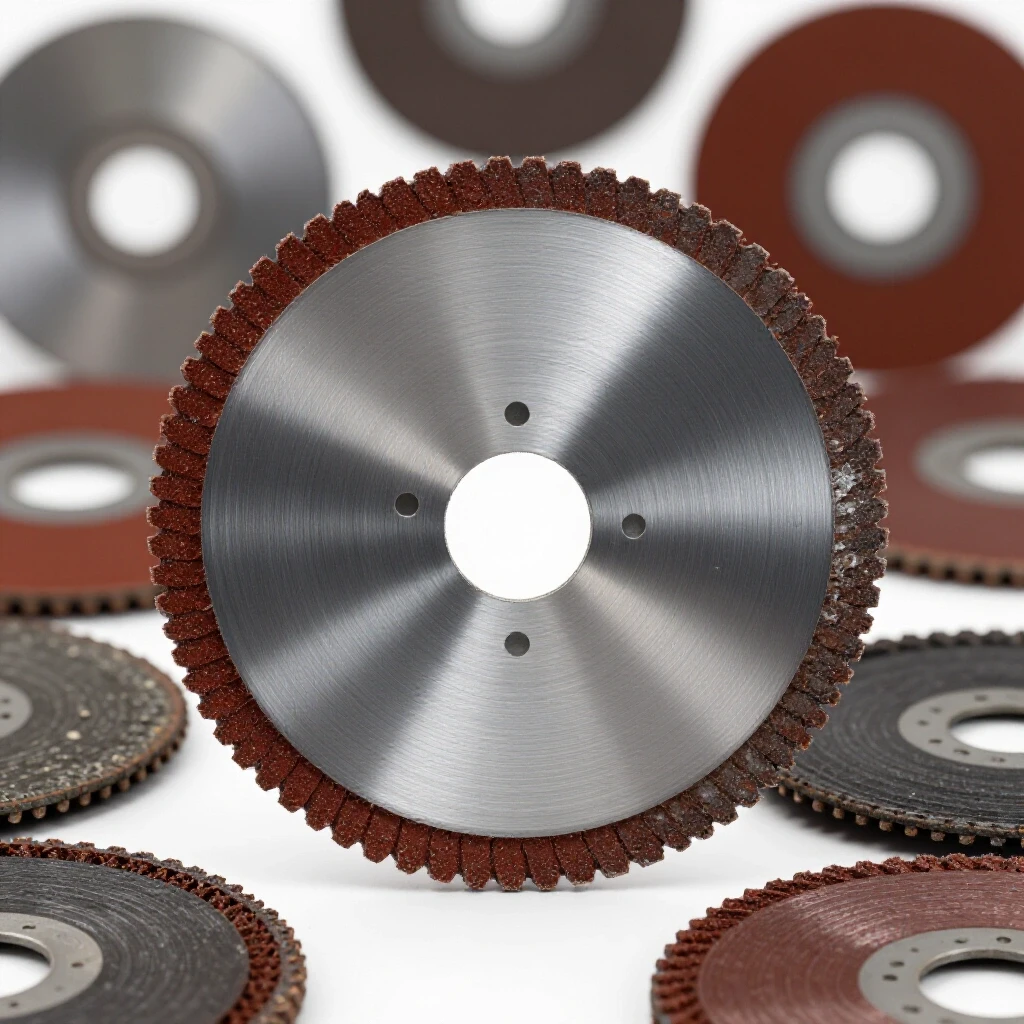
Selecting the right abrasive grain for steel involves matching the mineral type to the pressure and heat of the job. Choosing a grain that stays sharp longer reduces the frequency of tool changes and lowers your cost per gram of metal removed.
When you are grinding heavy steel, you generally choose between two high-performance grains: zirconia alumina and ceramic. Zirconia is a workhorse. It is tough and self-sharpens as it breaks down under high pressure. It is a massive step up from basic aluminum oxide, which tends to dull quickly on ferrous metals.
However, if you are looking for the best return on investment, ceramic is often the winner. Ceramic grains are engineered to micro-fracture. Instead of getting dull and rounded, the grain breaks off in tiny pieces to reveal a new, sharp edge. While a ceramic disc might cost three times more than a standard one, it can last five to ten times longer. In my experience, the labor time saved by not changing discs is where the real profit is made.
- Zirconia Alumina: Best for high-pressure grinding on structural steel. It handles heat well and offers a balanced price-to-performance ratio.
- Ceramic Grain: The premium choice for rapid material removal. It stays cool and maintains its sharp edge until the grain is completely gone.
- Aluminum Oxide: Generally avoided for professional steel fabrication. It glazes over quickly, creating heat rather than removing metal.
Understanding Resin Bonds and Heat Resistance
The resin bond is the “glue” that holds the abrasive grains to the disc. A high-quality bond resists the heat generated during heavy grinding, preventing the disc from shedding grains prematurely or “glazing” over.
Heat is the primary cause of disc failure. When you grind steel, the friction creates immense thermal energy. If the resin bond is weak, it softens. This causes the abrasive grains to fall out before they are actually dull. You end up throwing away a disc that still has plenty of “life” left simply because the bond failed.
Look for discs specifically rated for high-speed steel applications. These often feature an “active” grinding aid or a specialized top coat. This layer acts like a lubricant to reduce friction and keep the workpiece cool. In a small shop, keeping the heat down means you won’t warp thin sections of your project, saving you even more time on rework.
Why Hidden Consumables Bleed Small Shop Profits
The consumable burden factor is a percentage added to a job quote to cover items that are “used up” during fabrication. Failing to track the wear rate of your grinding tools leads to inaccurate job costing and lost revenue.
I once took on a project involving twenty heavy steel frames. I estimated the material and my time perfectly. However, I didn’t realize that the heavy beveling required would eat through twelve premium grinding discs. At $9 each, that was over $100 in costs I hadn’t billed for. My profit for the entire two-day job was nearly wiped out by a stack of spent abrasives.
To prevent this, you must track your usage. For every hour of heavy grinding, note how many discs you consume. Most small shops should apply a 15% to 20% markup on raw materials and then add a “consumable fee” based on the estimated grinding time. If a job requires four hours of prep, and you know you use one disc per hour, that cost must be in the quote.
Calculating the Consumable Burden in Your Fabrication Quotes
A consumable burden is a calculated cost added to every project to ensure you aren’t paying for the customer’s supplies. It turns an invisible expense into a line item that protects your margins.
To calculate this, you need to know your “burn rate.” Start a log for your next five jobs. Record exactly how many discs you use. You will likely find a pattern. For example, you might find that for every $500 in steel you buy, you spend $40 on abrasives. This gives you an 8% consumable ratio.
When you bid on a job, don’t just charge for the steel. Use a formula like this: (Material Cost x 1.20 Markup) + (Shop Hours x Hourly Rate) + Consumable Fee.
The consumable fee should be a flat rate per hour of estimated grinding or a percentage of the material cost. For heavy steel work, I recommend a 5% to 10% burden rate on top of the total material cost to ensure your cabinets stay stocked without dipping into your personal take-home pay.
Analyzing Tool ROI and Amortization Schedules
Return on Investment (ROI) in a workshop is the measurement of how quickly a tool or supply pays for itself through increased speed or decreased waste. Amortization is the process of spreading the cost of an expensive tool over its useful life.
When you buy a high-end angle grinder or a bulk pack of premium ceramic discs, you are making a capital investment. A $200 grinder that lasts three years is cheaper than a $60 grinder that burns out every six months. The same logic applies to your abrasives.
| Disc Type | Unit Cost | Minutes of Use | Cost Per Minute | Metal Removed (Est.) |
|---|---|---|---|---|
| Budget Grade | $2.50 | 8 mins | $0.31 | Low |
| Professional Zirconia | $5.50 | 25 mins | $0.22 | Medium |
| Premium Ceramic | $9.50 | 60 mins | $0.16 | High |
Looking at the table, the “expensive” disc is actually the cheapest to use. It costs $0.16 per minute of grinding compared to $0.31 for the budget version. Over a year of side-hustle work, this difference can add up to hundreds of dollars in saved costs and dozens of hours in saved labor.
Building a Custom Job Quote Framework
A job quote framework is a repeatable template that ensures you never forget to charge for overhead, consumables, or your expertise. It moves your pricing from “guessing” to “accounting.”
Your quote should be broken down into four distinct pillars: 1. Materials: The raw steel, including a 20% markup for sourcing and transport. 2. Labor: Your total shop rate multiplied by the estimated hours. 3. Consumables: A calculated fee for discs, gas, and wire. 4. Subcontracting: Any outside services like powder coating or laser cutting (plus a 10-15% management fee).
By using this structure, you can show the customer a professional breakdown. If they ask for a discount, you can point to the labor or material costs. Never discount your shop rate; instead, suggest changing the scope of the project to reduce the hours required.
Bulk Sourcing and Strategic Inventory Management
Inventory management is the practice of buying supplies in quantities that lower your unit cost without tying up too much cash. For a small shop, this means finding the “sweet spot” between buying one disc at a time and buying a thousand.
Buying a single grinding disc at a local hardware store is the most expensive way to run a business. You pay retail prices and waste fuel and time driving to the store. Instead, use your tracking data to see how many discs you use in three months. Buy that amount online from a dedicated industrial supplier.
Most suppliers offer a significant price break at the 10, 25, or 50-unit mark. By moving from single-unit purchases to 25-packs, you can often drop your cost per disc by 30%. That savings goes directly into your profit margin. However, be careful not to over-buy specialty items that you rarely use. Stick to bulk-buying the “bread and butter” items like your primary steel grinding discs.
Real-World Case Study: The Heavy Beveling Project
In my tenth year of business, I took a contract to fabricate several large mounting brackets for a local construction firm. They were made from 1-inch thick A36 structural steel. Each bracket required a deep 45-degree bevel for weld penetration.
I ran a test. On the first bracket, I used a standard zirconia disc. It took 18 minutes to complete the bevel, and the disc was 60% worn. On the second bracket, I switched to a premium ceramic disc with a cooling agent. The bevel took only 11 minutes, and the disc looked almost new.
- Time Saved: 7 minutes per bracket.
- Total Brackets: 40.
- Total Time Saved: 280 minutes (4.6 hours).
- Labor Value ($85/hr): $391.00.
By spending an extra $4 per disc, I saved nearly $400 in labor costs. This is the “hidden” ROI of high-performance consumables. The faster you finish a job, the sooner you can start the next one, effectively increasing your shop’s earning capacity.
Essential Digital Tools for Shop Management
Managing a small metal shop requires more than just a welder and a grinder; it requires a digital “toolbox” to track the money. Using software reduces human error and makes tax season much less stressful.
- QuickBooks or FreshBooks: These are excellent for professional invoicing and tracking expenses. They allow you to photograph receipts on the fly so you never lose a deductible expense.
- Microsoft Excel or Google Sheets: I still use a custom spreadsheet for job estimation. It allows me to plug in my material costs and hours to see an instant “what-if” profit margin.
- Evernote or Keep: Use these to log your “burn rates” for consumables. Take a photo of a spent disc next to the finished part to remember how much abrasive a specific task requires.
- Square or PayPal: Having a way to accept credit cards on-site can speed up your cash flow. Just remember to factor the 3% processing fee into your shop rate.
Actionable Benchmarks for Your First Year
Benchmarks are standard measurements used to compare your performance against industry averages. They help you identify if your shop is running efficiently or if you are leaking money.
- Average Shop Rate: $65–$120 per hour depending on your region and equipment.
- Material Markup: 15% to 25% (higher for small quantities).
- Consumable Burden: 5% to 10% of the total project cost.
- Profit Margin Target: 15% to 20% after all expenses and your own wages are paid.
- Quote Accuracy: You should aim to be within 10% of your estimated time on 90% of your jobs.
If your profit margins are consistently lower than 15%, look at your consumable usage and your shop rate. Usually, the issue isn’t that you aren’t working hard enough; it’s that you aren’t charging enough for the “small” things.
FAQ: Mastering Workshop Economics and Consumables
How do I know if a grinding disc is actually “long-lasting” before I buy it? Look for the grain type and the bond rating. For steel, ceramic grains are the gold standard for longevity. Check the RPM rating as well; a disc used on a grinder that exceeds its rated speed will wear out prematurely and can be dangerous.
Is it worth buying premium discs for small, quick jobs? Usually, yes. Even on small jobs, a premium disc removes metal faster. This reduces the heat buildup in the workpiece, which prevents warping. The time you save in cleanup and straightening often outweighs the extra few dollars spent on the disc.
How do I explain a “consumable fee” to a customer who thinks it should be included? Transparency is key. I tell customers that I don’t hide costs in an inflated hourly rate. Instead, I charge a fair rate for my skill and a separate fee for the specific materials their project consumes. Most professional clients understand that welding gas and abrasives are significant costs.
What is the most common mistake when pricing fabrication work? Underestimating “non-sparking” time. People often forget to charge for the time spent unloading steel, cleaning the shop, talking to the customer, and driving to the hardware store. These are all billable hours that must be covered by your shop rate.
How often should I recalculate my shop rate? At least once a year, or whenever you make a major equipment purchase. If the price of electricity or your shop insurance goes up, your rate must go up too.
Does disc diameter affect how long a disc lasts? Yes. A 5-inch disc has more abrasive surface area than a 4.5-inch disc. If your grinder can safely handle a larger diameter, you will generally see a better lifespan and a lower cost per square inch of abrasive.
How can I tell if I am pushing too hard on a grinding disc? If you see the disc “glazing” (becoming shiny and smooth) or if the steel is turning deep blue or purple, you are likely using too much pressure. This creates excess heat that kills the resin bond. Let the abrasive grain do the work.
What is the best way to store discs to ensure they stay effective? Keep them in a cool, dry place. Humidity can degrade the resin bond over time, making the discs brittle or prone to shedding grain. I keep mine in a sealed plastic bin or a dedicated cabinet off the shop floor.
Should I charge the same rate for grinding as I do for welding? Yes. Your shop rate is for your time and the use of your facility. While grinding might seem like “unskilled” labor compared to welding, it uses more consumables and puts more wear on your body and tools.
How do I track small items like anti-spatter spray or grinding discs? I use a “kit” method. I know that for every $1,000 of structural steel work, I go through a specific amount of supplies. I add a flat “Consumable Kit” fee to those types of quotes based on that historical data.
What should I do if a project takes much longer than I quoted? Finish the job and honor the quote, but perform a post-job audit. Identify exactly where the time went. Did the steel require more prep? Did you use more discs than expected? Use that data to ensure your next quote is more accurate.
Can I use the same grinding disc for different types of steel? You can use a steel-rated disc on various ferrous alloys, but be aware that harder steels will wear the disc faster. Always check that the disc is not contaminated with other metals if you are working on a project with strict material requirements.
Final Steps for Your Workshop
To move your shop toward better profitability, start with one small change today. Go into your shop and count your current inventory of grinding discs. Open a simple spreadsheet and record what you paid for them. Then, for every job you do this week, write down how many you use.
Once you have this data, you can stop guessing. You will know exactly how much to charge for your consumables and whether it’s time to upgrade to a more efficient, longer-lasting abrasive. Remember, a successful fabrication business isn’t built on the jobs you take; it’s built on the margins you keep. Focus on the math, track your “burn,” and treat your consumables as the strategic investments they are.
(This article was written by one of our staff writers, Michael Hargrove. Visit our Meet the Team page to learn more about the author and their expertise.)