How to Choose Heavy-Duty Casters for Welding Tables (Guide)
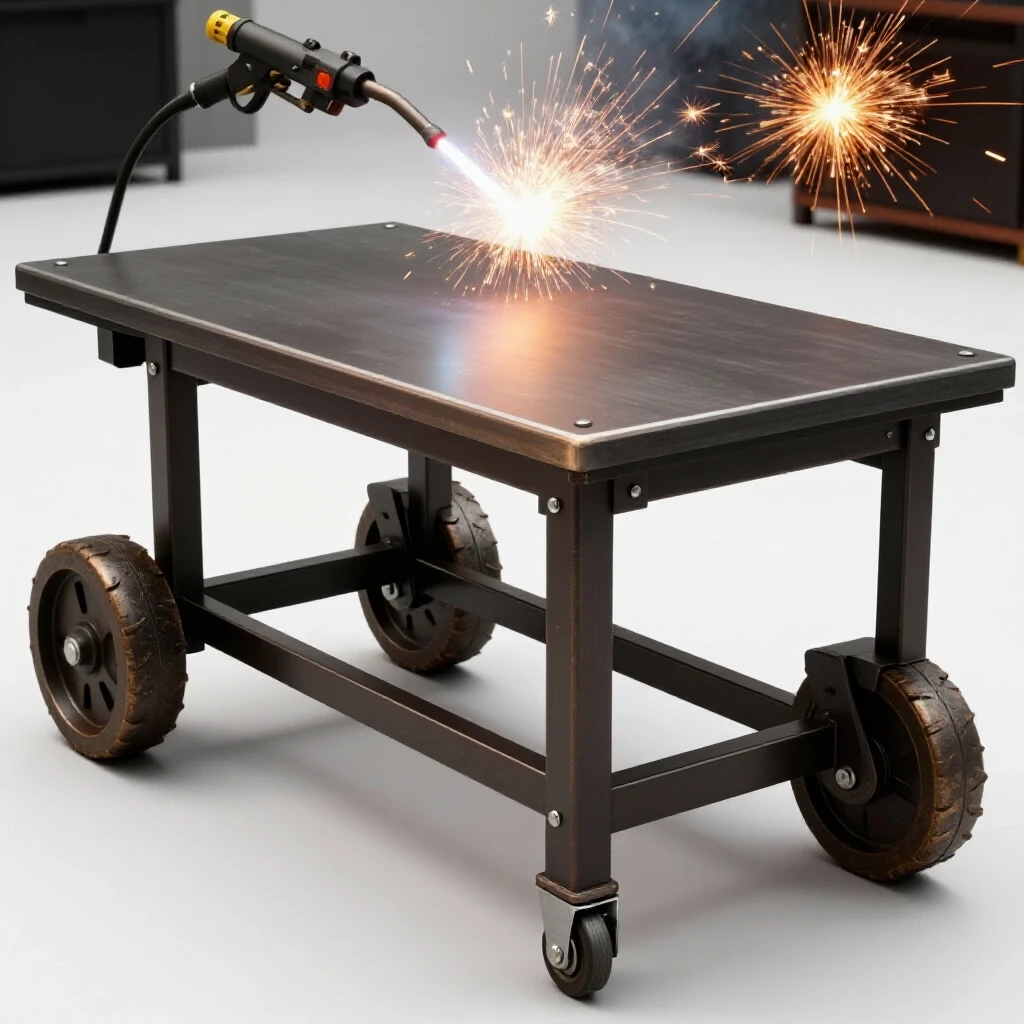
I remember the first time I had to move my main fabrication table. It was a 4×8 beast with a one-inch thick steel top, and it didn’t have wheels. I spent forty-five minutes using a pry bar and wooden blocks just to shift it three feet so I could fit a long trailer frame into the shop. That was forty-five minutes of non-billable time. In the world of side-hustle metalworking, those lost minutes are the difference between a profitable weekend and just breaking even.
When you transition from a hobbyist to a small shop owner, you start seeing your floor space as a resource that must earn its keep. Every piece of equipment needs to be flexible. However, putting a two-thousand-pound table on the wrong wheels is a safety hazard and a financial mistake. Choosing the right industrial-grade rollers is about more than just movement; it is about protecting your investment and ensuring your shop remains an efficient, money-making environment.
Establishing a Realistic Hourly Shop Rate for Fabrication
Your hourly shop rate is the total cost of running your business divided by your billable hours, plus your desired profit. It includes rent, power, insurance, and the gradual wear on your equipment. This number ensures you are not just “buying a job” but building a sustainable manufacturing business that can eventually fund its own upgrades.
Most side-hustlers I consult with start by picking a number out of thin air, usually around $40 or $50 an hour. They forget that their welder, their bandsaw, and even their heavy-duty table are depreciating assets. If you want to scale, you need to be looking at a shop rate between $65 and $120 per hour, depending on your local market and specialty.
A mobile shop allows you to take on larger projects that wouldn’t normally fit in a small footprint. If you can move your table to the driveway to finish a long gate, you’ve just increased your shop’s capacity without increasing your rent. This is why the hardware under your table legs matters. If a wheel fails under a heavy load, you aren’t just replacing a $30 part; you are risking a $2,000 table top and potentially hours of downtime.
Determining Weight Capacity for Industrial Mobility Solutions
Load capacity refers to the maximum weight a single wheel assembly can support safely. For metalwork, this includes the weight of the steel table frame, the thick top plate, and the heaviest workpiece you anticipate. Calculating this correctly prevents catastrophic failure and equipment damage during a high-stakes project.
When I calculate table loads, I never divide the total weight by four. I use the “three-wheel rule.” Why? Because most shop floors are not perfectly flat. At some point, your table will hit a high spot, and the entire weight of the assembly will be supported by only three wheels. If your table and project weigh 1,500 pounds, you don’t need 375-pound capacity casters. You need casters rated for at least 500 pounds each.
- Static Load: This is the weight the table holds while sitting still.
- Dynamic Load: This is the weight the wheels can handle while in motion.
- Safety Factor: Always add a 25% cushion to your weight estimates to account for the impact of dropping a heavy piece of plate onto the table surface.
Analyzing Material Durability Against High-Heat Environments
Welding environments expose shop equipment to grinding sparks, molten slag, and extreme heat. Selecting wheel compounds that resist melting or flat-spotting is essential for maintaining a smooth-rolling shop. High-performance materials like phenolic resins or cast iron ensure your investment lasts through years of heavy fabrication.
In my experience, rubber wheels are a disaster in a metal shop. They pick up every stray metal shaving and eventually look like a pincushion. Worse, a hot piece of slag can melt right into the tread, creating a permanent flat spot. I prefer phenolic wheels or glass-filled nylon. These materials are incredibly hard and can withstand temperatures that would liquefy standard hardware-store wheels.
| Wheel Material | Heat Resistance | Debris Shedding | Floor Protection |
|---|---|---|---|
| Cast Iron | Excellent | Good | Poor (can mar) |
| Phenolic Resin | High | Excellent | Fair |
| Polyurethane on Iron | Moderate | Fair | Excellent |
| Glass-Filled Nylon | High | Good | Fair |
Building on this, the financial reality is that cheaper wheels cost more over time. If you buy $15 rubber casters, you might replace them every year. A $40 phenolic caster might last a decade. When you are tracking your side-hustle metalworking expenses, the “cost per year of service” is a much more important metric than the initial purchase price.
Integrating Leveling Components for Precision Fabrication
A level welding surface is mandatory for accurate fit-ups and preventing frame twist. Leveling casters or floor-lock systems allow a table to transition from a mobile cart to a rock-solid, stationary fixture. This stability directly impacts the quality of your finished work and reduces time spent on corrections.
Interestingly, many fabricators forget that a table on wheels is essentially a giant skateboard. When you are leaning into a heavy grind or trying to square up a frame, the last thing you want is the table creeping away from you. This is why I recommend either leveling casters—which have a retractable rubber foot—or a dedicated floor lock.
A floor lock is a foot-activated plunger that presses against the ground to take the weight off the wheels. This is a critical piece of shop safety. It ensures that when you are applying 50 pounds of force to a wrench, the table stays put. From a fabrication job costing perspective, a table that doesn’t move allows for faster, more accurate setups, which reduces the “non-value-added” time in your quotes.
Why Hidden Consumables Bleed Small Shop Profits
In my 16 years of consulting, the biggest “profit killer” I see is the failure to track consumables. We often think about the steel and the wheels, but we forget the shielding gas, the welding wire, and the grinding discs. These costs can easily add 10% to 15% to a project’s total expense.
When you are setting up your shop, every piece of equipment should be evaluated for its “consumable burden.” For casters, the “consumable” is the grease for the bearings and the time spent cleaning the tracks. If you choose sealed precision bearings, you reduce that maintenance time. It might cost $10 more per wheel, but it saves you an hour of maintenance every year. At a $100/hour shop rate, that wheel pays for itself in the first twelve months.
- Track every disc: Keep a log of how many grinding discs you use per project.
- Monitor gas usage: Note your flow meter settings and how many hours a tank lasts.
- Factor in wire weight: Don’t just guess; weigh your spool before and after a large job.
- Amortize your tools: Divide the cost of your casters and table by 5,000 hours of expected use to find your “per-hour” equipment cost.
Tracking the Return on Investment for Shop Upgrades
ROI is a calculation used to determine the profitability of an investment relative to its cost. By tracking how much time a mobile table saves during material handling, you can determine how many billable hours it takes to pay for the upgrade. It turns a “tool purchase” into a “business asset.”
Let’s look at a real-world scenario. Suppose you spend $250 on a set of high-quality, heavy-duty swivel plate casters. If those wheels save you just 5 minutes of setup and cleanup time per day, that is roughly 20 hours of saved time per year. If your shop rate is $80/hour, you have just “earned” $1,600 in recovered time.
The payback period on those casters is less than two months. This is the kind of shop math that separates the hobbyists from the professionals. Every upgrade you make should have a clear path to paying for itself through increased efficiency or expanded capabilities.
Strategies for Accurate Fabrication Job Costing
Pricing your work accurately is the hardest part of running a side-hustle. Most people use a “material x 3” formula, which is a dangerous trap. It doesn’t account for the complexity of the job or the overhead of your shop. Instead, you should use a bottom-up approach.
Start with your material cost, including a 15% markup for sourcing and handling. Add your labor hours multiplied by your true shop rate. Finally, add a “consumable burden” (usually 5-10% of the labor cost) and a profit margin. If your table is mobile, your labor hours for material handling will be lower, making your quotes more competitive.
- Material Markup: Covers the time spent driving to the steel yard and the cost of fuel.
- Shop Overhead: Covers rent, utilities, and insurance.
- Equipment Depreciation: A small fund set aside to replace your welder or table casters when they eventually wear out.
Common Mistakes in Small Shop Equipment Selection
One of the most frequent errors I see is choosing stem-mount casters for heavy tables. For a welding table that might hold a thousand pounds of steel, you want plate-mount casters. A plate mount spreads the load over a larger area of your table leg, reducing the risk of the metal fatiguing or the bolt shearing off.
Another mistake is mixing rigid and swivel casters in a way that makes the table hard to steer. For most small shops, four swivel casters are the way to go. This allows you to “crab” the table sideways or rotate it in its own footprint. If you have a very long path to travel, two rigid and two swivel casters work better, but in a tight 20×20 garage, 360-degree mobility is king.
Digital Tools for Managing Shop Economics
In today’s market, you don’t need a degree in accounting to stay profitable. There are several tools that can help you track your ROI and job costs effectively.
- QuickBooks or FreshBooks: Excellent for tracking general overhead and invoicing.
- Custom Excel Spreadsheets: I use these to calculate my “three-wheel” load ratings and depreciation schedules.
- Evernote or Google Keep: Use these to snap photos of receipts and material tags while you are at the yard.
- Time Tracking Apps: Apps like Toggl help you see exactly how much time you spend moving equipment versus actually welding.
Key Takeaways for Shop Owners
Selecting the right mobility solution for your fabrication surface is a foundational business decision. It affects your shop’s flow, your physical safety, and your bottom line. By choosing components rated for at least 500 pounds, prioritizing heat-resistant materials, and factoring the cost into your shop rate, you set yourself up for long-term success.
Remember, every tool in your shop is either a profit center or a cost center. A table that moves easily, stays level, and survives the heat of a heavy project is a profit center. It allows you to work faster and take on bigger, higher-paying jobs.
Frequently Asked Questions
What is the minimum weight rating I should look for in a welding table caster? You should look for a minimum of 500 pounds per caster for a standard 4×4 or 4×8 steel table. Always use the “three-wheel rule” for safety, meaning three casters should be able to support the entire weight of the table and the workpiece combined.
Why shouldn’t I use rubber wheels in my metal shop? Rubber wheels are prone to picking up metal shavings and can be easily damaged by hot sparks or slag. This leads to flat spots, making the table difficult to move and potentially unstable during precision work.
Are leveling casters worth the extra cost? Yes, especially if you do a lot of frame work or projects requiring tight tolerances. They combine the mobility of a wheel with the stability of a solid leg, ensuring your table doesn’t move or wobble during fit-up.
How do I calculate the ROI of upgrading my shop furniture? Estimate the time saved per day by the upgrade. Multiply that time by your hourly shop rate over a year. Compare that “recovered revenue” to the initial cost of the upgrade to find your payback period.
What is a “consumable burden” in job costing? This is a percentage added to a quote to cover the cost of items that are used up during a project, such as welding gas, wire, sanding discs, and electricity. It is usually between 5% and 15% of the total labor cost.
Should I use swivel or rigid casters for a heavy table? In small shops, four swivel casters are generally preferred because they allow for maximum maneuverability in tight spaces. Rigid casters are only better if you frequently move the table over long, straight distances.
What is the best way to mount casters to a steel tube table leg? Plate mounts are superior to stem mounts for heavy-duty applications. You should weld a thick steel mounting plate to the bottom of your table leg and bolt the caster to that plate using Grade 5 or Grade 8 hardware.
How often should I inspect the wheels on my fabrication equipment? I recommend a monthly inspection. Look for flat spots, embedded debris, or signs of bearing failure. Greasing the swivel joints every six months will also significantly extend the life of the hardware.
Can I use casters with plastic hubs? For heavy-duty welding tables, it is best to avoid plastic hubs. Look for cast iron, steel, or heavy-duty aluminum hubs to ensure the wheel doesn’t crack under a heavy static load.
What is a floor lock, and do I need one? A floor lock is a separate foot-pedal device that locks the table in place by pressing a rubber pad against the floor. It is a great alternative if you choose standard casters instead of leveling casters, as it provides a solid, non-slip base.
How does table mobility affect my insurance or shop safety? A mobile shop is often safer because it allows you to clear paths for exits and maintain better ergonomics. However, ensure your casters are properly rated; a wheel failure under load is a major liability risk.
What is the “three-wheel rule” in load calculation? The three-wheel rule assumes that due to floor irregularities, only three wheels will support the load at any given time. To find the required capacity per caster, divide your total max weight by three instead of four.
(This article was written by one of our staff writers, Michael Hargrove. Visit our Meet the Team page to learn more about the author and their expertise.)