How to Maximize Vertical Tool Storage in Small Shops (Guide)
When I first started my fabrication journey over two decades ago, I worked out of a space so small I had to move my welder outside just to swing a full sheet of 16-gauge steel. It was a classic bottleneck that many of you likely recognize. As I transitioned from a hobbyist to a professional fabricator, I realized that the floor is for machines and movement, not for clutter. Every square foot of concrete is a premium asset that should be generating revenue through CNC plasma tables, press brakes, or assembly zones.
Scaling a fabrication business requires a mental shift from “where can I put this?” to “how does this item support my workflow?” When you integrate automation like a CNC system, your floor space requirements change instantly. You need clear travel paths for material handling and safe zones for gantry movement. This guide explores how to reclaim your workshop floor by migrating your tool inventory to the walls, ensuring your high-output machines have the room they need to operate.
Mapping Lean Workflow Loops and Material Handling
Lean workflow mapping is the process of identifying and eliminating waste in your production cycle by analyzing how materials and people move through the shop. In a fabrication environment, this means minimizing the distance between raw stock, the cutting station, and the welding bench to reduce “travel waste.”
I spent years walking back and forth across my shop because my grinders were on one side and my welding table was on the other. By mapping my “spaghetti diagram”—a drawing of my actual foot traffic—I saw how much time I was losing. For an advanced shop, every step counts toward your bottom line. You want a linear or U-shaped flow where material enters one door and exits another as a finished product.
To achieve this, your floor must remain unobstructed. When you mount your heavy-duty fabrication tools on vertical surfaces, you clear the way for pallet jacks or forklifts. This is especially critical when moving 4×8 or 5×10 sheets of plate steel. If you have tool chests or rolling carts blocking these lanes, you increase the risk of accidents and slow down your throughput.
| Layout Type | Material Flow Efficiency | Floor Space Usage | Best For |
|---|---|---|---|
| Random Placement | Low (High Travel Waste) | High (Cluttered) | Hobbyist/Repair |
| Functional Cells | Medium (Zoned Work) | Medium (Organized) | Small Batch Fab |
| Linear Lean Flow | High (Direct Path) | Low (Vertical Focus) | High-Output Production |
Engineering High-Load Vertical Support Systems
Vertical tool organization in a metal shop involves more than just putting up hooks; it requires engineered systems capable of holding heavy grinders, clamps, and jigs. Because metalworking tools are significantly heavier than woodworking tools, the mounting substrate must be anchored directly into the building’s structural frame or reinforced masonry.
I prefer using custom-fabricated steel French cleat systems. These consist of a 45-degree angled steel rail bolted to the wall studs, allowing you to hang heavy brackets that can be repositioned as your shop evolves. Unlike plastic or thin pegboards, a steel cleat system can support the weight of multiple 7-inch grinders or a full set of heavy-duty C-clamps.
When designing these brackets, I use my CNC plasma table to cut 10-gauge or 3/16-inch plate. This allows me to create tool-specific cradles that hold the equipment securely. For example, a dedicated grinder rack should support the tool by its gear housing rather than the guard. This prevents the tool from falling due to vibration from nearby heavy machinery.
- Load Ratings: Ensure your wall anchors are rated for at least 200% of the intended load.
- Spacing: Leave 3 inches of “knuckle room” between tools for quick retrieval.
- Material: Use HRPO (Hot Rolled Pickled and Oiled) steel to prevent mill scale from interfering with your welds during bracket fabrication.
Integrating 3-Phase Power Systems for Advanced Machinery
A 3-phase power converter is a device that transforms single-phase residential or light commercial electricity into the three-phase power required by industrial-grade motors and CNC electronics. This is a critical upgrade for any shop owner looking to run professional-grade mills, lathes, or large air compressors.
When I upgraded to a 50HP rotary phase converter, it changed the way I laid out my shop. Instead of running long, hazardous extension cords across the floor, I ran a 3-phase bus duct along the ceiling. This allows me to drop power lines vertically to each machine. By keeping the electrical distribution overhead, I maintained a clear floor for material movement.
You generally have two choices: Rotary Phase Converters (RPCs) or Variable Frequency Drives (VFDs). RPCs are better for running multiple machines at once, while VFDs are excellent for controlling the speed of a single motor. For a growing shop, I recommend a high-quality RPC sized at 2x the horsepower of your largest motor to handle the start-up surge.
3-Phase Power Options Comparison
- Rotary Phase Converters: Best for shops with multiple 3-phase machines. They provide “true” 3-phase power but can be noisy and consume some idle power.
- Variable Frequency Drives (VFD): Ideal for single-machine speed control. They are efficient and quiet but require one unit per motor.
- Digital Phase Converters: The most expensive option, but they provide perfectly balanced voltage (within 1%), which is vital for sensitive CNC electronics.
Designing High-Volume Clean Air Filtration Networks
Industrial air quality management involves using multi-stage filtration and high-CFM (Cubic Feet per Minute) blowers to remove metal dust, smoke, and VOCs from the breathing zone. In a small shop, a CNC plasma table can fill the room with hazardous smoke in minutes, making a robust extraction system mandatory.
I learned the hard way that a simple box fan in the window doesn’t cut it. I eventually installed a wall-mounted cyclone dust collector with 6-inch rigid spiral ducting. By mounting the collector vertically on the wall or in a dedicated exterior enclosure, I saved about 9 square feet of floor space. This might not sound like much, but in a 1,000-square-foot shop, that is nearly 1% of your total area reclaimed.
When designing your ductwork, you must account for static pressure loss. This is the resistance the air faces as it moves through the pipes. Every 90-degree bend or foot of flexible hose increases this resistance. I recommend using “long-radius” elbows and keeping your vertical drops as straight as possible to maintain high air velocity, which prevents dust from settling in the pipes.
- CFM Requirements: A CNC plasma table typically needs 1,000–1,500 CFM for effective smoke pull.
- Static Pressure: Aim for a velocity of 3,500 to 4,000 FPM (Feet Per Minute) in the ducts to keep metal chips moving.
- Filtration: Use HEPA-rated filters to capture sub-micron particles from welding fumes.
Streamlining CNC Plasma and Automation Workflows
CNC gantry integration is the process of installing and calibrating an automated cutting system to ensure repeatable accuracy and efficient material use. The “gantry” is the overhead bridge that moves the cutting torch along the X and Y axes. To maximize efficiency, the area around the gantry must be clear of any floor-based obstructions.
One of the biggest mistakes I see is placing a CNC table in a corner where it’s hard to load. I positioned mine with at least 4 feet of clearance on three sides. To keep the floor clear, I mounted the PC controller and the plasma power supply on a heavy-duty wall swing arm. This keeps the sensitive electronics away from the sparks and dust on the floor while allowing me to swing the interface out of the way when loading full sheets.
Your software workflow—the transition from CAD (Design) to CAM (Toolpaths) to the CNC controller—is just as important as the hardware. I use a “tooling file” system where every material thickness has a pre-set cut speed and pierce height. By storing these digital assets in a cloud-based ERP, I can update a cut parameter on my office computer and have it instantly available at the machine.
Maximizing Every Vertical Inch for Accessory Storage
In a high-output shop, accessories like grinding wheels, flap discs, and welding wire are “consumables” that need to be organized and accessible. I use vertical “slat-wall” panels made from 14-gauge expanded metal. This allows me to use standard S-hooks or custom-welded hangers to store everything from my welding helmets to my magnetic squares.
I also utilize the space above my head. I fabricated an overhead rack for long-stock storage (tubing and angle iron). By storing 20-foot lengths of steel near the ceiling, I removed one of the biggest floor-space killers in the shop. I used 2×2 square tubing for the arms, ensuring they were lag-bolted into the main ceiling joists. Always check your building’s load-bearing capacity before adding overhead storage.
- Categorize by Frequency: Put tools you use every hour at eye level.
- Shadow Boarding: Paint “shadows” of the tools on your vertical racks. This makes it instantly obvious when a tool is missing or hasn’t been put back.
- Point-of-Use: Mount your MIG pliers and nozzle gel directly on the wall next to the welder, not in a drawer ten feet away.
Operational Metrics and Safety Benchmarks
Transitioning to a professional-grade layout requires tracking your progress. I track “Square Foot Revenue,” which is my total monthly profit divided by the shop’s square footage. As I moved more tools to the walls and integrated CNC automation, this number steadily climbed. My floor space became more productive because it was no longer being used for “dead storage.”
Safety is the other side of the efficiency coin. OSHA standards for commercial shops require clear aisles and proper ventilation. By moving my air filtration and electrical drops to the walls and ceiling, I eliminated trip hazards. I also maintain a 3-foot “clear zone” around all electrical panels, which is a standard NEC requirement.
- Aisle Width: Maintain a minimum of 36 inches for walking paths.
- Floor Load: Most residential slabs are 4 inches thick (2,500–3,000 PSI). Ensure your heavy CNC machines have leveling feet to distribute weight.
- Amortization: I calculate the “payback period” for every shop upgrade. If a $2,000 wall-storage project saves me 10 minutes a day, it pays for itself in less than a year based on my shop rate.
Frequently Asked Questions
How do I know if my wall can handle the weight of heavy fabrication tools?
Most standard 2×4 or 2×6 stud walls can handle significant vertical loads if the weight is distributed. For heavy tools like 9-inch grinders or large clamps, I recommend bolting a 3/4-inch plywood backer or a steel plate across multiple studs. This prevents the load from pulling a single fastener out of the wood. Always use structural lag bolts rather than standard wood screws.
What is the best height for wall-mounted tool storage?
The “Golden Zone” is between 30 inches and 70 inches from the floor. This is where your hands naturally reach without bending or using a step ladder. Store your most-used items (grinders, hammers, tape measures) in this zone. Items used less frequently, like specialized jigs or large pipe wrenches, can go higher or lower.
Can I run my CNC plasma table on a phase converter?
Yes, but you must be careful. CNC electronics are sensitive to “voltage sag” and “noisy” power. If you use a rotary phase converter, ensure it is a “CNC-rated” model which provides more balanced voltage across all three legs. Alternatively, many modern plasma power supplies are “auto-linking” and can run on single-phase or three-phase power, though they are more efficient on three-phase.
How do I prevent metal dust from ruining my wall-mounted tools?
Metal dust is conductive and abrasive. I recommend using a high-volume air filtration system as your first line of defense. For tools stored on the wall, you can use “dust covers” or simple magnetic strips that allow you to wipe down the tools quickly. Periodically blowing out your power tools with compressed air is also vital to prevent internal shorts.
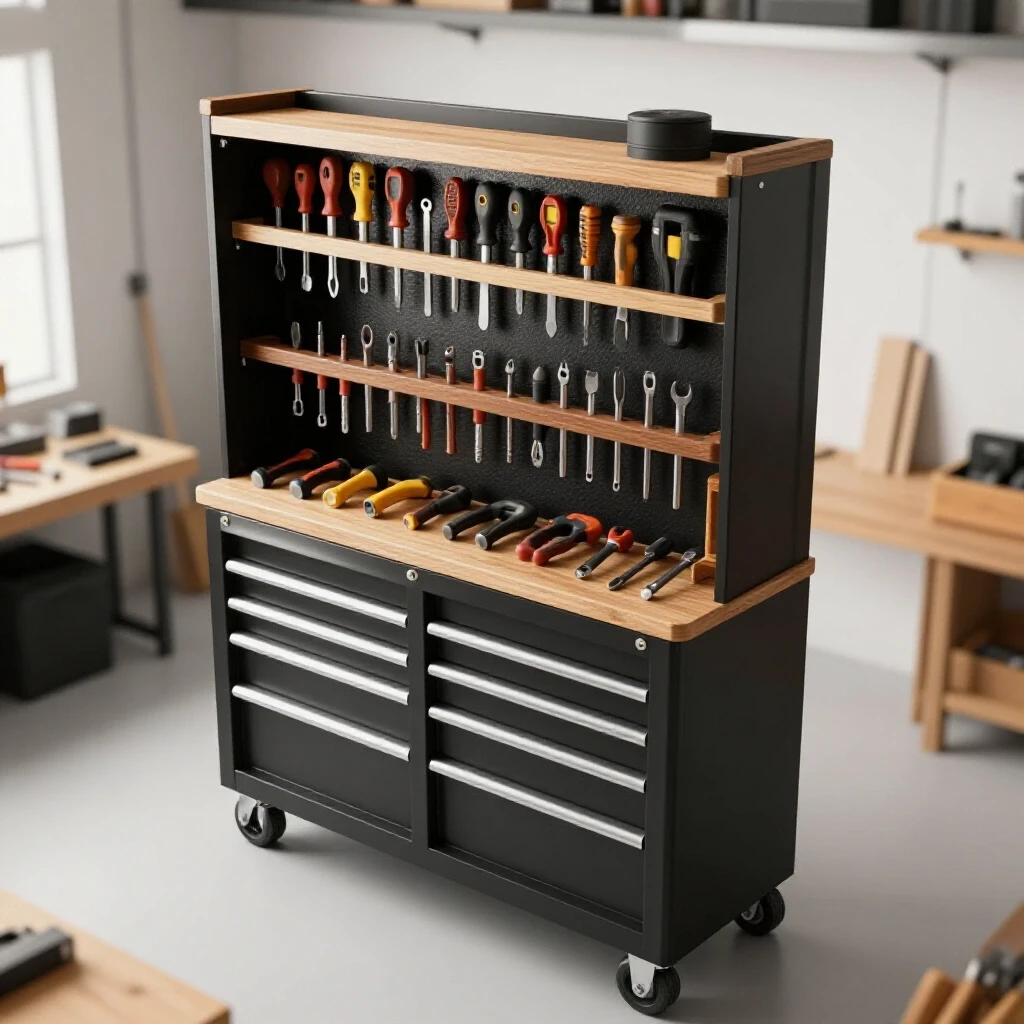
Why shouldn’t I just use rolling tool chests?
While rolling chests are popular, they consume valuable floor space. In a small shop, every square foot occupied by a cabinet is a square foot you can’t use for material handling or machine gantries. Vertical storage utilizes the “dead space” above your workbenches, leaving the floor open for movement and larger projects.
Is a French cleat system strong enough for metalworking?
A wooden French cleat is often insufficient for the weight of metal fabrication gear. However, a steel French cleat—fabricated from 3/16-inch or 1/4-inch flat bar—is incredibly strong. I have used steel cleats to hold hundreds of pounds of steel clamps without any sign of deflection.
What is the most efficient way to store welding clamps?
Clamps are notorious for taking up space. I find that a vertical “comb” rack is best. This is a horizontal bar with vertical slots or “teeth” cut into it. You slide the spine of the clamp into the slot, and the head rests on the bar. This allows you to store 20 or 30 clamps in a very small horizontal footprint on the wall.
How do I manage long-stock steel without a floor rack?
Overhead cantilever racks are the solution. By mounting heavy-duty arms to the wall studs near the ceiling, you can store 20-foot lengths of tubing or angle iron. This keeps the steel off the floor and prevents it from becoming a trip hazard. Just ensure you have a safe way to load and unload the material, such as a localized gantry crane or a helper.
Do I need a permit to install a 3-phase converter in my home shop?
Electrical requirements vary by location. In many jurisdictions, adding a phase converter is treated like adding any other large appliance (like a welder). However, because you are dealing with high-voltage equipment, I always recommend consulting with a licensed electrician to ensure your sub-panel can handle the load and that your grounding system is up to code.
How much CFM do I actually need for a small fab shop?
For a shop under 1,000 square feet, I recommend at least 1,200 CFM of air movement for general filtration. If you are running a CNC plasma table, you need a dedicated extraction system for that machine specifically, often requiring an additional 1,000 to 2,000 CFM depending on the table size and whether you use a water table or a downdraft system.
What is the biggest mistake people make when organizing a shop?
The biggest mistake is “over-organizing” for aesthetics rather than workflow. It doesn’t matter if your tools look pretty on the wall if they are ten feet away from where you actually use them. Always prioritize “Point-of-Use” storage. If you weld in one specific corner, every tool needed for welding should be within arm’s reach of that corner.
(This article was written by one of our staff writers, Edward Sinclair. Visit our Meet the Team page to learn more about the author and their expertise.)