Unnecessary Tools to Avoid in a Fabrication Shop (Checklist)
I have spent the last 17 years elbow-deep in machine grease and metal chips. My journey began in industrial maintenance, where I learned that a shiny coat of paint often hides a weak casting or a poorly designed motor. In my own shop, I have owned and torn down dozens of welders, lathes, and mills to see what makes them tick. I have seen many fabricators lose thousands of dollars on equipment that looked great in a catalog but offered no real-world value.
The marketing hype in the tool industry is thick. Every year, new “revolutionary” gadgets claim to change the way we work. Most of these items end up gathering dust on a shelf or taking up precious floor space. When you are building a shop, you need to focus on the iron and the electronics that actually do the work. My goal is to help you see past the branding and understand the mechanical realities of the machinery you bring into your workspace.
Why Structural Rigidity and Material Choice Dictate Long-Term Value
Cast iron quality refers to the grade of metal used in a machine’s base. It dictates how well a tool absorbs vibration and maintains alignment over time. High-quality castings prevent the frame from twisting under heavy loads, ensuring that your cuts remain consistent through years of heavy use.
I once spent a weekend trying to level a budget-tier lathe that used a thin, sheet-metal stand. No matter what I did, the bed twisted every time I tightened a bolt. This is a common issue with machinery that prioritizes low shipping weight over structural integrity. In a fabrication environment, weight is usually your friend. It provides dampening, which is the ability of a material to soak up the “chatter” or vibrations caused by a cutting tool.
Vibration is the enemy of a clean finish and tool life. When a machine frame is too light, the energy from the motor and the cutting force has nowhere to go. It bounces back into the workpiece. This causes a poor surface finish and can even chip carbide inserts. When evaluating a new machine, look at the “mass-to-power” ratio. A heavy machine with a modest motor is often a better investment than a powerful motor on a flimsy frame.
| Material Type | Vibration Dampening | Structural Rigidity | Weight Profile |
|---|---|---|---|
| Grade 25 Cast Iron | High | High | Very Heavy |
| Welded Plate Steel | Medium | Medium | Heavy |
| Sheet Metal / Aluminum | Low | Low | Light |
Building on this, the way a machine is seasoned matters. In the old days, castings sat outside for months to let internal stresses settle. Today, many budget manufacturers skip this. As a result, a brand-new machine might “move” or warp slightly during its first year in your shop. If you find a machine that feels unusually light for its size, it is likely a candidate for early retirement in a high-production environment.
Identifying Redundant Motor Features and Drive Systems
Motor design involves the electrical and mechanical components that provide torque and rotation. This includes the housing, windings, and cooling mechanisms. A well-built motor uses high-quality copper and robust bearings to ensure it can run at full load without overheating or losing speed.
I have seen many tools marketed with “Peak Horsepower” ratings that are essentially meaningless. This is a common tactic to make a small motor sound like an industrial powerhouse. Peak horsepower is the amount of power a motor produces right before it stalls and burns out. What you actually need to look for is the “Continuous Duty” or “S1” rating. This tells you what the motor can handle all day long.
The Reality of Brushed vs. Brushless Motors
A brushless motor uses electronic controllers instead of physical carbon brushes to manage the electrical field. This design reduces friction, heat, and maintenance needs. Because there are no brushes to wear down, these motors tend to last significantly longer in dusty fabrication environments.
Interestingly, many people buy expensive, high-RPM motors for tasks that require low-speed torque. If you are drilling large holes in thick plate, a motor that screams at 30,000 RPM is a waste of money. You want a motor with a high torque-to-weight ratio. I often tell people to check the frame size of the motor. A larger motor housing usually means larger internal cooling fans and more copper, which translates to a longer lifespan.
Understanding Variable Frequency Drives (VFD)
A Variable Frequency Drive, or VFD, is an electronic device that controls the speed of an AC motor by changing the frequency of the electricity. This allows you to have full torque at low speeds without the need for complex mechanical pulleys or gearboxes.
If you are looking at a machine with a massive, complicated mechanical speed-change system, you might be looking at a redundant design. Modern VFDs have become so reliable and affordable that they have made many old-gear-reduction systems unnecessary. However, be wary of proprietary control boards. If a machine uses a “black box” controller that you cannot buy from an industrial supply house, you are at the mercy of that manufacturer for repairs.
The Pitfalls of Low-Utility Specialty Implements
Low-utility implements are tools designed for a very narrow task that could be performed more efficiently with standard, versatile shop equipment. These tools often promise to save time but usually end up taking more time to set up and calibrate than the task itself is worth.
In my shop, I have a “wall of shame” for gadgets that promised to automate simple tasks. For example, many “all-in-one” sharpening jigs for drill bits are notoriously difficult to align. A seasoned fabricator can often get a better edge by hand on a standard bench grinder in half the time. These specialty tools are often marketed to beginners who are intimidated by basic manual skills.
- Avoid tools that only perform one specific “proprietary” task.
- Look for multipurpose machinery that can be adapted with standard accessories.
- Question any tool that requires a long setup time for a five-second operation.
- Beware of “kits” that include twenty accessories you will never use.
As a result of buying these “time-savers,” many shops become cluttered. This clutter kills workflow. Every square foot of your shop has a monthly cost, whether you own the building or rent it. If a tool is not earning its keep by being used at least once a month, it is likely a redundant asset that is costing you money in lost floor space.
Measuring Spindle Runout and Bearing Quality
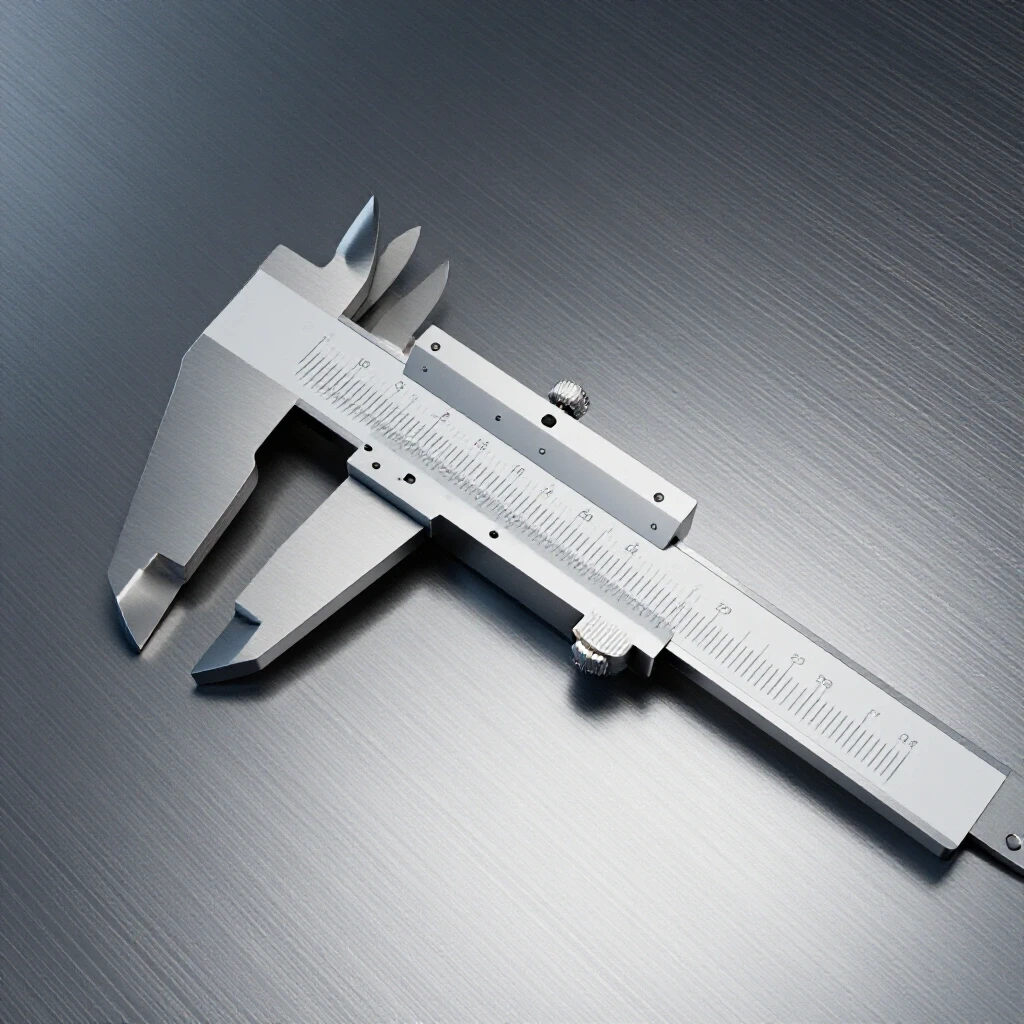
Spindle runout, or Total Indicated Runout (TIR), is the measure of how much a rotating shaft deviates from its center axis. It is a core metric of machine health. Even a tiny amount of runout can cause drill bits to wander, milling cutters to break, and finishes to look like a plowed field.
I always bring a dial indicator when I go to look at a used or new machine. I place the indicator on the inside of the spindle taper and rotate it by hand. On a high-quality milling machine or lathe, you want to see a TIR of less than 0.0005 inches. If the needle jumps more than 0.001 inches, the bearings are either poor quality or the spindle was not ground accurately at the factory.
| Machine Type | Acceptable TIR (Inches) | Warning Level (Inches) |
|---|---|---|
| Precision Metal Lathe | 0.0002 – 0.0005 | > 0.001 |
| Vertical Milling Machine | 0.0003 – 0.0007 | > 0.0015 |
| Bench Drill Press | 0.001 – 0.003 | > 0.005 |
The bearings themselves are the heart of any rotating tool. Many budget machines use “shielded” bearings that are filled with cheap grease at the factory and can never be serviced. Better machines use “tapered roller bearings” or “angular contact bearings” that can be adjusted for preload. Preload is the amount of pressure applied to the bearings to remove any internal play. Without proper preload, the spindle will deflect when it hits the metal, leading to inaccuracies.
Evaluating the Impact of Proprietary Electronics
A control board is the electronic brain of a modern machine, managing speed, torque, and safety shutdowns. Proprietary designs are unique to one manufacturer and cannot be easily swapped with off-the-shelf parts. This creates a long-term risk for the shop owner if the manufacturer stops supporting that model.
I once worked on a CNC plasma table where the main driver board failed. The company had gone out of business two years prior. Because the board used a proprietary communication protocol, we couldn’t just swap in a standard motor driver. That $10,000 machine became a very heavy table because of one $200 circuit board. When you are choosing machinery, ask if the motors and drivers are “standard NEMA frames” or “open-source compatible.”
- Check if the machine uses standard industrial components (like Schneider or ABB).
- Look for clear wiring diagrams inside the electrical cabinet.
- Avoid machines with “all-in-one” touchscreens that control every single function.
- Verify that the software does not require a yearly subscription to stay functional.
Interestingly, the simplest machines are often the most durable. A manual lathe with a simple on-off switch and a VFD is much easier to maintain than a machine with a complex digital interface that handles gear changes. If the digital screen fails on the complex machine, the whole tool is dead. If the VFD fails on the simple machine, you can buy a new one from twenty different suppliers and be back in business the next day.
Why Oversized Footprints Can Hinder Shop Efficiency
Floor space optimization is the practice of maximizing the utility of every square foot in a workshop to ensure movement and workflow aren’t hindered. A machine that is physically huge but has a small work capacity is a poor use of resources.
I have seen fabricators buy massive, old industrial shears that take up twenty feet of wall space, only to use them for cutting small tabs. In a modern shop, space is a premium. You have to account for the “swing zone” around the machine where long pieces of material will be moving. If a machine’s footprint is 4×8 feet, but you need 10 feet of clearance on both sides to use it, that machine actually “occupies” 240 square feet of your shop.
Building on this, consider the weight-to-footprint ratio. A heavy, compact machine is almost always better than a light, sprawling one. Thin sheet-metal enclosures often make a machine look larger and more “industrial” than it really is. I often strip off unnecessary plastic or sheet-metal guards (while keeping the functional safety ones) just to see the actual iron underneath. You would be surprised how much “bulk” on a modern machine is just empty air and decorative covers.
The Hidden Cost of Non-Standard Tooling
Tooling compatibility refers to the ability of a machine to accept standard, widely available bits, holders, and fixtures. Machines that require proprietary “quick-change” systems often lock you into a high-cost ecosystem that offers no real performance benefit over standard options.
For example, a lathe that uses a standard “D1-4” spindle nose allows you to buy chucks from hundreds of different manufacturers. A lathe with a proprietary threaded spindle might limit you to only the chucks sold by that specific brand. This is a classic “razor and blade” business model. They sell you the machine at a fair price but make their real profit on the specialized tooling you are forced to buy later.
- Stick to standard tapers like Morse Taper (MT) or R8 for mills.
- Ensure lathes use standard “AXA” or “BXA” tool posts.
- Avoid welders that use proprietary torch consumables.
- Look for machines that use standard belt and chain sizes.
As a result of sticking to standards, your “consumable cost” stays low. Consumables are the things you use up, like drill bits, inserts, and welding tips. If you have to pay $15 for a specialized welding nozzle that should cost $2, you are flushing money down the drain. Over the life of a machine, these costs can easily exceed the original purchase price of the tool itself.
Assessing Alignment and Slide Tolerances
Slide tolerances refer to the fit between moving parts, such as the carriage on a lathe or the table on a mill. If these fits are too loose, the machine will “slop” and vibrate. If they are too tight, the machine will bind and wear out prematurely.
When I inspect a machine, I look for “gibs.” Gibs are adjustable strips of metal (usually bronze or cast iron) that allow you to take up the wear in a slide. If a machine does not have adjustable gibs, it is essentially a disposable tool. Once the slides wear down, there is no way to tighten them back up. This is a common feature in “hobby-grade” tools that are meant to look like industrial machines but lack the internal adjustments needed for long-term precision.
To test this, move the table to one end of its travel and try to “wiggle” it by hand. Then move it to the center and do the same. A well-made machine will feel the same across its entire range of motion. If it is tight in the corners but loose in the middle, the ways (the tracks the table slides on) are worn out. This is a difficult and expensive problem to fix, often requiring the ways to be “re-scraped” by a specialist.
Framework for Evaluating New Machinery Purchases
Before you pull the trigger on a major purchase, you need a systematic way to compare your options. Don’t let a salesperson lead the conversation. Use a checklist to ensure you are looking at the mechanical facts rather than the marketing bullet points.
- Mass Check: What is the actual weight of the machine without the crate? Compare this to competitors.
- Spindle Inspection: What is the TIR? Are the bearings adjustable or sealed?
- Motor Analysis: Is it a continuous duty motor? Does it use a standard NEMA frame?
- Electronics Audit: Does it use a standard VFD? Are the wiring diagrams available?
- Tooling Compatibility: Does it use R8, MT, or other industry-standard tapers?
- Adjustment Features: Does it have adjustable gibs on all sliding surfaces?
- Footprint vs. Capacity: How much floor space does it take up compared to its maximum work envelope?
By following this framework, you can objectively see which machines are built for work and which are built for the showroom floor. It takes the emotion out of the purchase. You stop seeing a “brand name” and start seeing a collection of bearings, castings, and circuits. This is the only way to build a shop that is efficient, reliable, and cost-effective.
Summary of Key Takeaways
Choosing the right machinery is about more than just reading a spec sheet. It requires an understanding of how metal behaves under stress and how electronics manage power. Avoid the temptation to buy “miracle” gadgets or machines that prioritize aesthetics over iron.
Focus your budget on the core “trinity” of shop equipment: rigidity, precision, and serviceability. A heavy machine with a standard motor and high-quality bearings will always outlast a light machine with “smart” features and proprietary parts. Your shop space is your most valuable asset—don’t waste it on redundant tools that don’t contribute to your bottom line.
Frequently Asked Questions
Why is cast iron better than steel for machine bases?
Cast iron has a unique internal structure that contains graphite flakes. These flakes act as tiny shock absorbers, which helps the material dampen vibrations much better than solid steel. This leads to better surface finishes on your parts and longer tool life because the cutting edge isn’t being “bounced” against the workpiece.
What does “Total Indicated Runout” (TIR) actually tell me?
TIR tells you how “true” a rotating part is. If a spindle has high runout, it means it is spinning in a slight oval or wobble rather than a perfect circle. This causes uneven wear on tools and makes it impossible to hold tight tolerances. For most fabrication work, a TIR under 0.001 inches is the standard for a “good” machine.
Is a brushless motor always better than a brushed motor?
Generally, yes, especially in a fabrication shop. Metal dust is conductive. In a brushed motor, this dust can get inside, cause arching, and wear out the brushes or the commutator quickly. Brushless motors are usually sealed better and have no physical contact points to wear out, making them much more reliable in dirty environments.
How can I tell if a machine uses proprietary electronics?
Look at the motor controller and the main circuit board. If they have a brand name like “Delta,” “GS2,” or “Curtis,” they are likely standard industrial parts. If the board has no markings or only the machine manufacturer’s logo, and it uses non-standard connectors, it is likely proprietary.
Why should I care about “Continuous Duty” ratings?
Many “budget” tools use motors that can only run for 10 or 15 minutes before they need to cool down. A continuous duty (S1) rating means the motor can run at its rated horsepower 24 hours a day without overheating. In a real shop, you don’t want to have to stop working because your machine’s motor is too hot to touch.
What are “gibs” and why are they important?
Gibs are adjustable metal wedges located between the sliding parts of a machine (like the cross-slide on a lathe). They allow you to “tighten up” the machine as it wears over time. Without gibs, a machine will eventually become loose and sloppy, and there will be no way to fix it without expensive machining.
Is a heavier machine always better?
In 90% of cases, yes. Weight provides the mass needed to resist the forces of cutting metal. A heavier machine will be more stable, vibrate less, and hold its alignment better than a light one. The only downside is the difficulty of moving it, but that is a one-time problem compared to the daily benefit of a rigid machine.
How do I avoid “tool bloat” in a small shop?
Before buying any new tool, ask yourself: “Can I do this job accurately with the tools I already have?” If the answer is yes, the new tool is likely a luxury rather than a necessity. Focus on versatile, high-quality machines that can perform multiple tasks with different attachments.
Why is “Peak Horsepower” a misleading metric?
Peak horsepower is measured at the moment the motor is about to fail. It is a “flash” number used by marketers to trick people. A “2 HP Peak” motor might only produce 0.75 HP during actual work. Always look for the “Rated HP” or “Continuous HP” to know the true strength of the machine.
What is the most common mistake when buying a first metal lathe?
Most people buy a lathe that is too small or too light. They focus on the “swing” (the diameter it can turn) but ignore the “bed rigidity.” A small, light lathe will chatter and struggle with even moderate cuts, leading to frustration. It is almost always better to buy a used, heavy industrial lathe than a brand-new, lightweight “hobby” lathe.
(This article was written by one of our staff writers, Steven Brooks. Visit our Meet the Team page to learn more about the author and their expertise.)