How to Choose the Right Way Lube for Metal Lathes (Guide)
I have spent 17 years in industrial maintenance and private fabrication, and if there is one thing I have learned, it is that the most expensive lathe in the world is only as good as the thin film of oil between its moving parts. When you are looking at metal lathe comparison guides or reading machine tool reviews, everyone talks about motor horsepower and swing over bed. They rarely talk about the fluid that prevents your carriage from jumping like a nervous rabbit during a fine finishing cut. Choosing the right lubricant for your machine ways is not about picking a brand name; it is about understanding the mechanical interface between cast iron surfaces.
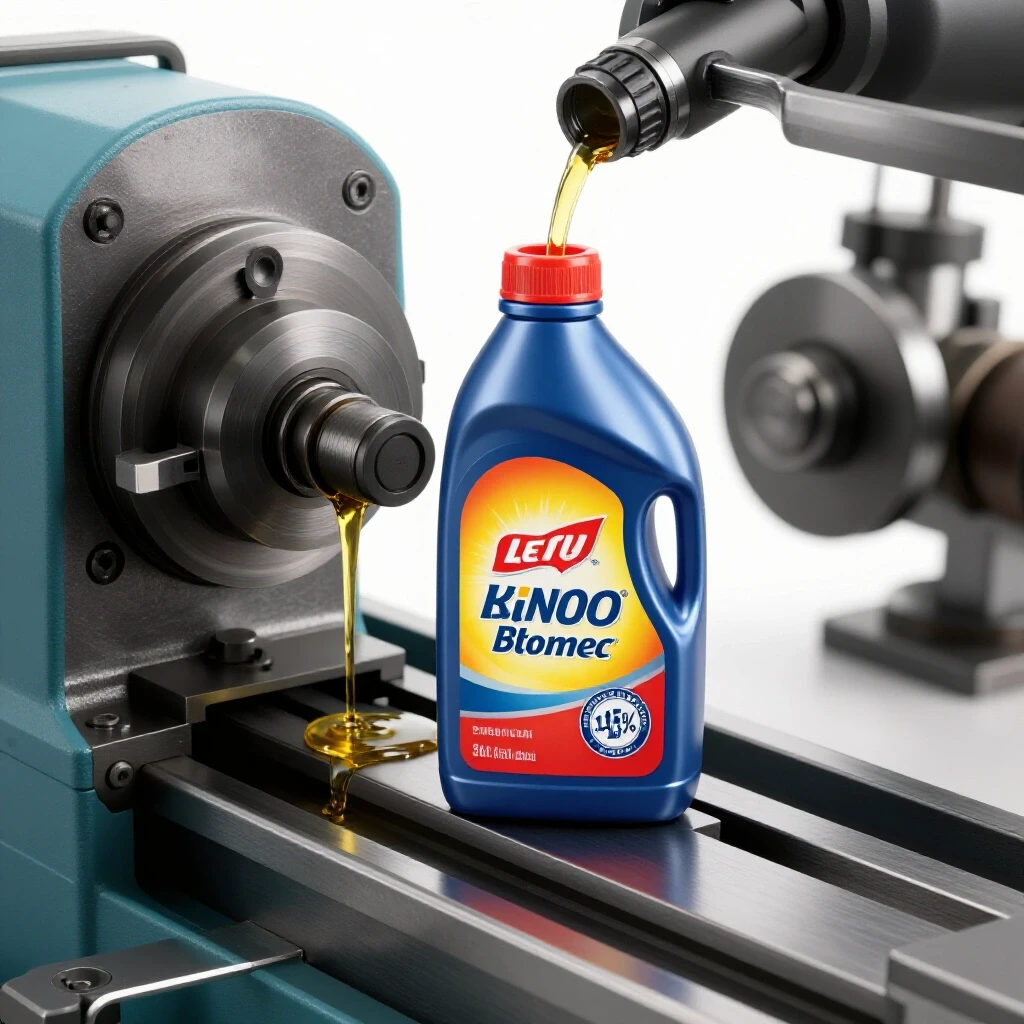
In my shop, I have seen seasoned machinists struggle with “stick-slip,” a phenomenon where the carriage jerks instead of sliding. This usually happens because they chose a lubricant based on price or availability rather than technical specifications. When you are choosing workshop machinery, you are investing in a system of tolerances. If you do not select the correct way lubricant to maintain those tolerances, you are essentially letting your machine grind itself into early retirement. This guide focuses on the technical reality of sliding friction to help you make an objective choice.
Understanding Viscosity Grades for Sliding Surfaces
Viscosity is a measurement of a fluid’s resistance to flow, often categorized by ISO grades ranging from 68 to 220 for manual machinery. In the context of a metal lathe, the correct viscosity ensures that a stable oil wedge forms between the bed ways and the carriage, preventing metal-to-metal contact even under heavy workloads.
When you look at different machine tool reviews, you will notice that lathes come in various sizes, from benchtop models to heavy industrial units. The weight of the carriage and the surface area of the ways dictate the viscosity you need. A small benchtop lathe does not have the mass to “squeeze” out a thinner oil, so an ISO 68 grade is often the standard. However, as the machine gets larger, the pressure on the ways increases.
If the oil is too thin, the weight of the carriage will push the lubricant out from between the surfaces. This leads to increased wear and poor surface finishes. On the other hand, if the oil is too thick for a small machine, the carriage will feel heavy and difficult to move, which ruins your “feel” for the cut. I have found that following the manufacturer’s ISO suggestion is a baseline, but you must adjust based on your specific shop temperature and the age of the machine.
- ISO 68: Best for smaller lathes (under 12-inch swing) and horizontal surfaces.
- ISO 220: Required for large, heavy carriages or vertical ways where oil runoff is a concern.
- Mid-range (ISO 100): Often a compromise for medium-duty machines in variable temperature shops.
The Role of Tackifiers in Vertical and Horizontal Adhesion
Adhesion refers to the ability of a lubricant to “stick” to a metal surface, a property achieved through chemical additives known as tackifiers. These additives prevent the oil from simply running off the ways and pooling in the chip tray, ensuring that the sliding surfaces remain coated even when the machine is idle.
I remember a project where I was working on a lathe with a vertical turret. The owner was using a standard gear oil because it was “thick.” Within ten minutes of operation, the vertical ways were bone dry, and the oil was all over the floor. This is why dedicated way lubricants are non-negotiable. Tackifiers give the oil a “stringy” quality. If you touch a drop of proper way lube between your thumb and forefinger and pull them apart, you should see small threads of oil stretching between them.
This adhesion is especially critical for the tailstock and the vertical faces of V-ways. Without tackifiers, gravity wins every time. When choosing workshop machinery lubricants, you are looking for a product that stays where you put it. This also plays a role in “wipe-off.” As the carriage moves, the way wipers are designed to keep chips out, but they also tend to wipe away oil. A high-adhesion lubricant resists this wiping action better than a general-purpose oil.
Eliminating Stick-Slip for Precision Carriage Travel
Stick-slip is a jerky, stuttering motion that occurs when the static friction between two surfaces is significantly higher than the kinetic friction. Specialized way lubricants contain friction modifiers that equalize these two forces, allowing the carriage to move smoothly from a dead stop at very low speeds.
If you have ever tried to take a 0.001-inch shave off a workpiece and had the carriage “jump” forward 0.005 inches, you have experienced stick-slip. It is the enemy of precision. In my 17 years of diagnosing machine issues, I’ve found that many people mistake stick-slip for lead screw backlash or a loose gib. In reality, the surfaces are just “locking” together because the lubricant film has failed.
The friction modifiers in a dedicated way lube act like microscopic ball bearings. They ensure that the force required to start the carriage moving is almost the same as the force required to keep it moving. This is vital when you are hand-feeding a cut. When you evaluate spindle runout explanation videos or alignment guides, remember that even a perfectly aligned machine will produce poor results if the carriage movement is not fluid.
Comparison of Friction Characteristics
| Lubricant Type | Static Friction | Kinetic Friction | Stick-Slip Risk |
|---|---|---|---|
| General Purpose Oil | High | Low | Very High |
| ISO 68 Way Lube | Low | Low | Low |
| ISO 220 Way Lube | Moderate | Low | Very Low |
| Heavy Gear Oil | High | Moderate | High |
Impact of Bed Way Geometry on Lubricant Distribution
Bed way geometry refers to the physical shape of the lathe’s structural rails, such as V-ways, flat ways, or box ways. The shape of these surfaces determines how the lubricant is distributed and how much “load-bearing” surface area is available to support the oil film.
In my teardown tests of older workshop machinery, I often see uneven wear patterns on V-ways. This is because the angled surfaces of a V-way tend to shed oil faster than a flat way. If you are choosing a lubricant for a machine with steep V-ways, you need a higher tackiness rating to ensure the oil climbs and stays on the peaks of the ways.
Box ways, which are flat and wide, provide a lot of surface area. This is great for dampening vibrations—much like the cast iron dampening specs you see in high-end machine brochures—but it also means the oil has a larger area to cover. On these machines, a slightly lower viscosity with high “spreadability” is often better to ensure the entire surface is wetted.
- V-Ways: Require high tackiness to resist gravity-induced runoff.
- Flat Ways: Benefit from excellent “wetting” ability to cover large surface areas.
- Hardened Ways: Require high-pressure additives to prevent scuffing on the treated surface.
- Soft Cast Iron Ways: Need extra anti-wear additives to prevent the carriage from “lapping” the bed over time.
Coolant Compatibility and the Problem of Emulsification
Coolant compatibility is the ability of a way lubricant to remain separate from the water-based cutting fluids used during machining. A high-quality way lube is “demulsifiable,” meaning it will float to the top of the coolant tank rather than mixing with it.
When I am conducting machine tool reviews, I always check the coolant tank. If I see a milky, cloudy mess, I know the way lube is emulsifying with the coolant. This is a disaster for two reasons. First, the oil loses its lubricating properties when mixed with water. Second, the “tramp oil” in the coolant tank becomes a breeding ground for bacteria, leading to that foul “Monday morning smell” in the shop.
A proper way lubricant is designed to “shed” water. When the coolant splashes onto the ways, the oil should stay stuck to the metal, and the water should bead up and roll off. This separation allows your oil skimmer to remove the used way lube from the coolant tank easily. This keeps your coolant clean and your ways protected. If you ignore this, you’ll find that your expensive coolant needs to be replaced twice as often.
Matching Lubricant to Load and Operating Speed
Load and speed dynamics involve the pressure exerted by the workpiece and cutting tool versus the velocity at which the carriage moves. High-load, low-speed operations require a stronger oil film to prevent the surfaces from touching.
In a manual lathe environment, we are often working at relatively low carriage speeds compared to automated machinery. However, we might be taking very heavy “hogging” cuts that put immense pressure on the ways. This is where the “film strength” of the lubricant is tested. Film strength is the ability of the oil molecules to stay together under pressure.
If you are doing a lot of heavy turning on a large-diameter workpiece, the downward force on the carriage is significant. In these cases, I lean toward an ISO 220 grade. If your work is primarily small-diameter, high-speed polishing or light finishing, an ISO 68 grade will provide less resistance and a better “feel.”
- Analyze your average workpiece weight.
- Determine your most frequent cutting depth.
- Check the ambient temperature of your shop (colder shops need thinner oil).
- Assess the total surface area of your machine’s bed ways.
Structural Integrity and the Cost of Poor Lubrication
The structural integrity of a lathe’s bed is its most valuable asset. Once the cast iron ways are worn or scored due to improper lubrication, the machine loses its accuracy, and the cost of “re-scraping” the ways often exceeds the value of the machine.
I have seen many hobbyists buy a budget lathe and then use whatever motor oil they have in the garage. Within a year, the “frosted” finish on the ways—those tiny indentations designed to hold oil—is gone. Once those are gone, the ways become smooth and the oil has nowhere to sit, accelerating the wear even further. This is a classic example of saving ten dollars on oil and losing two thousand dollars in machine value.
When you are choosing workshop machinery, you are looking at the quality of the castings and the induction hardening of the ways. It makes no sense to invest in high-quality cast iron if you aren’t going to protect it. A dedicated way lube is an insurance policy for the geometry of your machine.
Technical Metrics for Evaluating Way Lubricants
When you are cutting through the marketing hype, you need to look at the technical data sheets (TDS). These sheets provide objective numbers that tell you how the oil will actually perform under pressure.
One metric to look for is the “Four-Ball Wear Test” result. This test measures the scar diameter left on metal balls after being subjected to high pressure and rotation in the lubricant. A smaller scar means better wear protection. Another is the “Weld Point,” which tells you at what pressure the lubricant film completely fails and the metals weld together.
- Viscosity Index: How much the oil thins out as it gets hot. A higher number is better.
- Copper Strip Corrosion: Ensures the additives won’t eat your brass or bronze gibs.
- Pour Point: The lowest temperature at which the oil will still flow.
- Flash Point: The temperature at which the oil gives off ignitable vapors (less critical for ways, but good for safety).
Lubricant Performance Benchmarks
| Metric | Ideal Range (ISO 68) | Ideal Range (ISO 220) | Why It Matters |
|---|---|---|---|
| Viscosity Index | 95 – 105 | 90 – 100 | Consistency across temperatures |
| 4-Ball Wear Scar | < 0.40 mm | < 0.45 mm | Prevents physical way damage |
| Demulsibility | 40/40/0 (15 min) | 40/40/0 (20 min) | Keeps oil out of coolant |
| Copper Corrosion | 1a or 1b | 1a or 1b | Protects bronze carriage parts |
Practical Inspection: How to Tell if Your Current Choice is Working
You don’t need a laboratory to know if you’ve made the right choice; you just need to observe your machine during a standard work session. I use a few simple tests to verify that the lubricant film is doing its job.
First, move the carriage to one end of the bed and wipe a small section of the ways completely dry with a clean rag. Move the carriage over that section and back. Now, look at the surface. There should be a visible, uniform sheen of oil left behind. If the surface looks “dry” or has streaky patches, your oil isn’t adhering properly or the viscosity is too low.
Second, check your gibs. The gibs are the adjustable strips of metal that take up the slack between the carriage and the ways. If you find yourself having to tighten them constantly, it’s a sign that the metal is wearing away due to poor lubrication. Finally, listen to the machine. A well-lubricated carriage moves with a dull “whoosh” sound. A poorly lubricated one will often have a high-pitched “hiss” or a rhythmic “thump-thump” as it hits dry spots.
Avoiding Common Selection Mistakes
The biggest mistake I see is the “oil is oil” mentality. People think that because a lathe doesn’t have an internal combustion engine, the type of oil doesn’t matter. This ignores the fact that engine oils are designed to hold soot in suspension and operate at 212 degrees Fahrenheit, while way lubes are designed to shed contaminants and operate at room temperature.
Another mistake is over-lubricating with the wrong product. If you use a sticky gear oil, it will attract every metal chip and abrasive grain of dust in the shop. This creates a “lapping compound” that will grind your ways down faster than if you used no oil at all. A proper way lube is “tacky” enough to stay on the ways but “slick” enough that chips can be easily wiped away by the felt wipers.
- Do not use hydraulic oil: It lacks the tackifiers needed for vertical surfaces.
- Do not use motor oil: The detergents in it will emulsify with your coolant.
- Do not use “3-in-1” or household oils: They are too thin and offer zero pressure protection.
- Do not mix different ISO grades: Unless you are sure they share the same base chemistry.
Step-by-Step Selection Framework for Shop Owners
When you are ready to make a purchase, follow this logical progression to ensure you are getting the right tool for the job. This is the same process I use when I am setting up a new maintenance contract for a machine shop.
- Check the Manual: Even if it’s 40 years old, the manufacturer had a reason for their spec.
- Identify Way Orientation: If you have vertical ways (like on a milling machine or a turret lathe), prioritize ISO 220.
- Measure the “Footprint”: A heavy carriage (over 200 lbs) almost always needs ISO 220 to maintain the oil wedge.
- Evaluate Coolant Use: If you run “flood” coolant, you must choose a highly demulsifiable oil.
- Consider Shop Climate: If your shop hits 40 degrees in the winter, an ISO 220 oil will turn into molasses. You might need to drop to ISO 68 for those months.
- Check Material Compatibility: Ensure the oil is safe for the “Turcite” or “Babbitt” liners if your machine uses them.
The Long-Term Economics of Quality Lubricants
It is easy to look at a five-gallon bucket of general-purpose oil and compare it to a one-gallon jug of specialized way lube and think you are saving money. But in my experience, the cost of the lubricant is the smallest part of your shop’s overhead.
The real costs are tool life, surface finish, and machine downtime. When a carriage is properly lubricated, it requires less force to move. This means less wear on your lead screws and half-nuts. It means your feed motor (if you have one) runs cooler and lasts longer. It means your parts come off the machine with a mirror finish, reducing the time you spend sanding and polishing.
In 17 years, I have never seen a machine fail because the owner spent too much on high-quality way lubricant. I have, however, seen dozens of lathes sold for scrap because the ways were so badly scored that they could no longer turn a straight cylinder. When you choose the right lubricant, you are protecting the “heart” of your workshop.
Frequently Asked Questions
Can I use ISO 68 hydraulic oil as a substitute for ISO 68 way lube?
No. While the viscosity (thickness) is the same, hydraulic oil lacks the tackifiers and friction modifiers essential for sliding ways. Hydraulic oil is designed to flow through valves and pumps, whereas way lube is designed to stick to surfaces and prevent the jerky “stick-slip” motion common in carriage travel.
Why does my lathe carriage feel “stiff” in the morning but loose in the afternoon?
This is usually due to temperature-related viscosity changes. If you are using a high-viscosity oil like ISO 220 in a cold shop, the oil is very thick until the machine warms up. If this is a constant problem, you might consider switching to a multi-grade lubricant or a lighter ISO 100 grade, provided your machine’s weight allows for it.
How often should I see oil on my lathe ways?
You should see a thin, wet film of oil every time you move the carriage. If the ways look dry or “polished” but not wet, your lubrication system (whether it’s a manual oiler or an automatic pump) is not delivering enough fluid, or the oil you are using is running off too quickly.
Is it okay to mix two different brands of way lubricant?
Generally, it is safe if they are the same ISO grade and both are mineral-oil based. However, different manufacturers use different chemical tackifiers. In rare cases, these can react and cause the oil to become “gummy.” It is always best to drain the old oil before refilling with a new brand.
What happens if I use an oil that is too thick?
Using an oil that is too thick (like using ISO 220 on a tiny benchtop lathe) will increase the “drag” on the carriage. This makes it harder to feel the cutting forces through the handwheels, which can lead to tool breakage or poor accuracy. It also puts unnecessary strain on the small gears in the apron.
Does way lube expire or go bad in the bottle?
Way lubricants have a long shelf life, typically 3 to 5 years if kept in a sealed container in a climate-controlled area. However, the tackifiers can eventually settle or break down. If the oil looks cloudy, has a strange odor, or no longer feels “stringy,” it is time to replace it.
How do I know if my way lube is compatible with my coolant?
Check the technical data sheet for “demulsibility” ratings. You can also do a “jar test”: mix a small amount of your way lube and your coolant in a clear jar, shake it up, and let it sit. They should completely separate within 30 minutes. If they stay mixed or look like mayonnaise, they are incompatible.
Why is my way lube turning black?
Way lube turns black because it is doing its job—suspending tiny particles of metal wear and environmental dust. On a manual lathe, this is why we wipe the ways down and apply fresh oil frequently. If the oil turns black almost immediately, it may indicate that your ways are wearing rapidly or your wipers are failing.
Can I use way lube in my lathe’s headstock gearbox?
Generally, no. Headstock gearboxes require oils with different additives, often including “Extreme Pressure” (EP) additives that might not be present in way lube. Furthermore, the tackifiers in way lube can cause foaming in a high-speed gearbox, which leads to poor lubrication and overheating.
What is the difference between “way oil” and “slideway lubricant”?
These are two names for the same thing. Both refer to oils specifically formulated for the sliding surfaces of machine tools, featuring the necessary tackiness and anti-stick-slip additives.
Do I need different oil for hardened ways versus soft cast iron ways?
Most modern ISO-rated way lubricants are formulated to work on both. However, for soft cast iron ways, the anti-wear (AW) additive package is more critical to prevent the “lapping” effect. Always ensure your chosen lubricant specifies “multi-metal compatibility” to protect any bronze or brass components in the carriage.
Can I use a thinner oil if I live in a very cold climate?
Yes. If your shop is consistently below 50 degrees Fahrenheit, an ISO 68 oil will perform more like an ISO 100 or 220 does at room temperature. Just remember to switch back to a heavier oil when the weather warms up to ensure the film strength remains sufficient.
(This article was written by one of our staff writers, Steven Brooks. Visit our Meet the Team page to learn more about the author and their expertise.)