Cheap vs High-End Metal Bandsaws for Fabrication (Review)
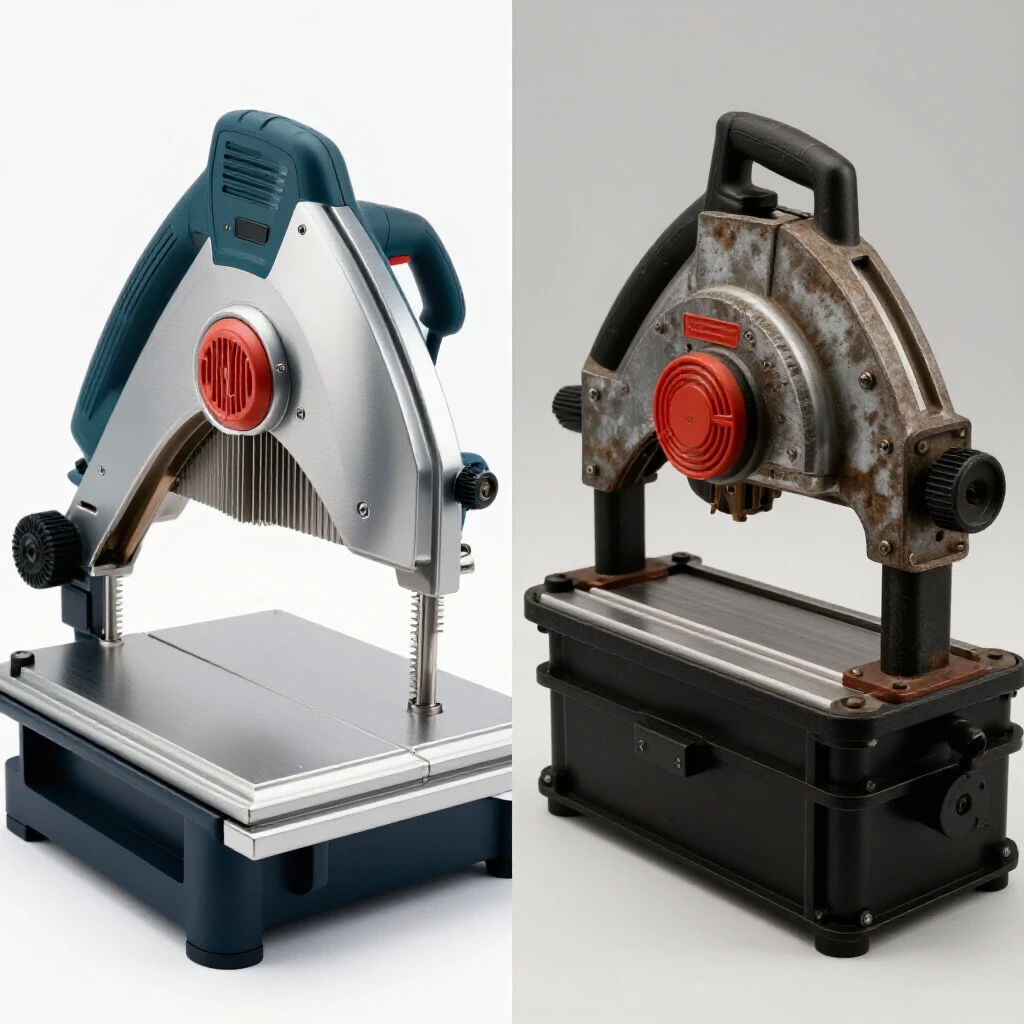
I have spent the last 17 years in industrial maintenance and private fabrication, and if there is one thing I have learned, it is that a spec sheet is often a work of fiction. When you are looking to add a metal-cutting bandsaw to your shop, you are faced with a massive price gap. On one side, you have the ubiquitous budget pivot saws that have populated home garages for decades. On the other, you have precision-engineered machines that cost four times as much but look remarkably similar in a tiny catalog photo.
The confusion usually starts with marketing hype. Every manufacturer claims their machine offers “industrial-grade” performance and “precision accuracy.” However, after tearing down dozens of these units to replace worm gears or realign tracking wheels, I can tell you the truth lies in the casting quality and the internal drive components. Choosing workshop machinery requires looking past the fresh coat of paint to see how the tool handles the physics of cutting metal. In this guide, I will break down the mechanical realities of entry-level versus premium saws so you can make a confident investment.
Evaluating Machinery Materials and Frame Rigidity
The frame of a bandsaw serves as the backbone for every cut, providing the necessary stiffness to keep the blade from twisting under pressure.
When you compare different tiers of machinery, the first thing to look at is the material used in the “bow”—the part that holds the wheels and the blade. Budget-friendly saws often use thin-walled cast aluminum or light-duty grey iron. While these are easy to move around the shop, they lack the mass required to absorb vibrations. In my experience, a light frame acts like a tuning fork. When the blade teeth hit a piece of structural steel, the resulting harmonics cause the blade to chatter, which ruins the surface finish and kills the blade life.
Higher-end models typically use Grade 25 or Grade 30 cast iron. This material has excellent structural dampening properties. It is heavy, yes, but that weight is functional. It prevents the frame from flexing when you crank down the blade tension. If a frame flexes even 0.010 inches under tension, your blade will never track straight. I always check for “torsional stiffness” by trying to physically twist the bow by hand when the blade is off. If it moves, it’s a hobbyist tool, not a fabrication tool.
Why Heavy Castings Dampen Harmonics
Structural dampening refers to a material’s ability to dissipate mechanical energy, preventing vibrations from traveling through the machine and into the cut.
In the world of machine tool reviews, we often talk about “mass.” In a bandsaw, mass equals stability. When a blade enters a cut, it encounters varying resistance, especially when moving through the hollow section of a tube and then hitting the solid wall. A heavy cast iron frame absorbs these micro-impacts. This results in a quieter cut and a much straighter line. Thin sheet steel frames, common in the lowest-priced units, tend to “oil-can” or vibrate, which leads to the blade wandering off its vertical axis.
Motor Designs and Drive System Reliability
The motor and gearbox are the heart of the saw, responsible for maintaining constant blade speed regardless of the thickness of the material.
Most small-shop saws use motors under 1 HP, but not all horsepower is created equal. On entry-level machines, you often find “universal” motors or low-quality induction motors with optimistic ratings. These motors tend to run hot. I’ve seen many budget motors burn out because their cooling fans are undersized for the slow-speed, high-torque demands of cutting stainless steel.
Premium saws usually feature high-torque induction motors paired with better-engineered gearboxes. The gearbox is a critical failure point. In a cheap saw, the worm gear is often made of a soft brass alloy that wears down within a year of heavy use. High-end units use hardened bronze gears and high-quality oil seals to prevent leaks. When choosing between these options, look at the cooling fins on the motor and the size of the gearbox housing. A larger housing holds more oil, which keeps the gears cool during long cuts.
Inverter vs. Transformer Electrical Efficiency
Electrical drive systems manage how power is delivered to the motor, impacting both the torque at low speeds and the overall energy consumption.
| Feature | Budget Transformer/Capacitor Drive | Premium VFD (Variable Frequency Drive) |
|---|---|---|
| Speed Control | Step pulleys (Manual belt change) | Electronic dial (Infinite adjustment) |
| Torque at Low RPM | Drops significantly | Maintained via vector control |
| Heat Generation | High | Low to Moderate |
| Complexity | Simple, easy to repair | Complex, requires electronics knowledge |
| Startup | High amp draw (Hard start) | Soft start (Protects gears) |
Interestingly, many modern mid-to-high-end saws are moving toward brushless direct-drive motors or VFDs. A VFD allows you to dial in the exact surface feet per minute (SFM) for the material you are cutting. If you are switching between aluminum and 304 stainless steel, being able to slow the blade down electronically without losing torque is a game-changer for tool longevity.
Critical Mechanical Tolerances and Blade Tracking
Precision in a bandsaw is measured by how well the blade stays on the wheels and how straight it remains as it passes through the guide bearings.
Blade tracking is often the most frustrating part of owning a budget saw. If the wheels are not perfectly coplanar (on the same plane), the blade will pop off or rub against the wheel flange, causing premature wear. On high-end machines, the wheels are machined to tighter tolerances, often with a Total Indicated Runout (TIR) of less than 0.002 inches. I have tested budget saws where the wheels had a runout of 0.015 inches, which causes the blade to “pulse” during the cut.
The guide bearings are another area where manufacturers cut corners. A budget saw might use simple steel blocks or cheap, unsealed ball bearings. These bearings are constantly showered in metal chips and coolant, leading to rapid failure. Premium saws use high-grade, shielded bearings and often include carbide-faced guides that “pinch” the blade to keep it from twisting. This is where you see the difference in cut accuracy, especially on 4-inch solid rounds.
Measuring Blade Guide Alignment
Guide alignment is the process of ensuring the blade is perfectly square to the vise and the table in both the horizontal and vertical planes.
To check this, I use a machinist’s square against the blade (with the saw unplugged). On a high-end machine, the guide arms are beefy and don’t flex when you lock them down. On cheaper units, the guide arms are often made of thin cast zinc or light aluminum. When you tighten the set screw to lock the guide arm in place, the arm actually shifts, throwing your blade out of square. If you can’t get a square cut, you’ll spend twice as much time at the sander or milling machine fixing the error.
- Maximum allowable vertical deviation: 0.005 inches per inch of cut height.
- Target wheel runout (TIR): Under 0.003 inches.
- Blade tension target: 15,000 to 25,000 PSI (requires a tension gauge).
Vise Design and Clamping Stability
A bandsaw is only as accurate as its ability to hold the workpiece perfectly still during the entire duration of the cut.
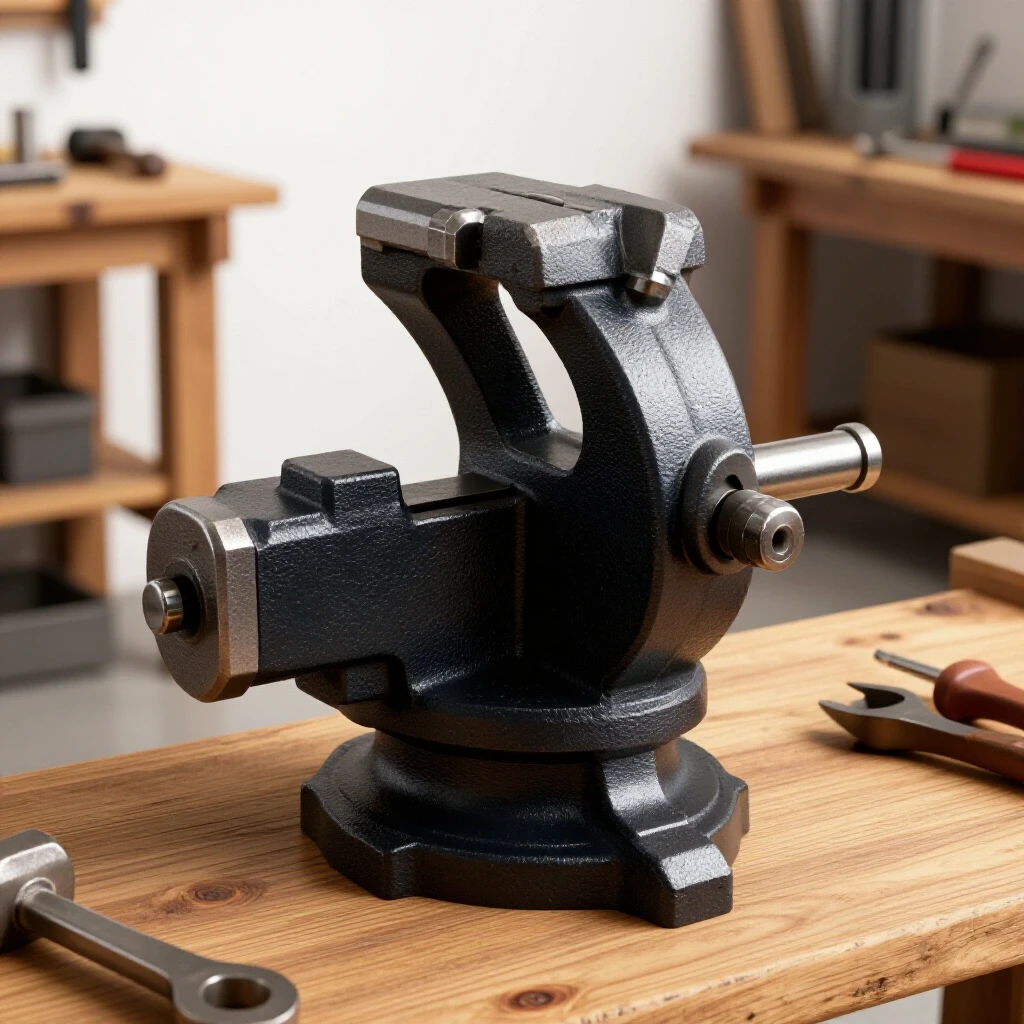
I have seen many fabricators blame their blade for a crooked cut when the real culprit was the vise. Budget saws often feature a vise made of thin pressed steel or light castings. The “nut” that the lead screw travels through is frequently made of plastic or soft zinc. Under pressure, these components flex, allowing the material to vibrate or angle upward.
High-end saws use a heavy, ground-surface cast iron vise. The jaws are taller and wider, providing more surface area to grip the material. Some even feature a “quick-release” or “swing-away” jaw that allows for rapid adjustments. When you are doing repetitive cuts, a stable, fast-acting vise saves hours of frustration. If the vise jaw deflects when you tighten it, your cut will never be square.
Long-Term Maintenance and Parts Availability
The true cost of a machine isn’t the purchase price; it’s the cost of keeping it running over five to ten years of shop use.
When choosing workshop machinery, you must consider the “parts pipeline.” If a capacitor blows or a drive belt snaps on a generic budget saw, you might find yourself searching through obscure forums to find a compatible part from a different brand. Premium brands usually maintain a warehouse of spares. I once had to wait six weeks for a worm gear for a “bargain” saw, which effectively shut down my project.
Maintenance on a high-end saw is usually more straightforward because the components are designed to be serviced. For example, the bearings are standard sizes that can be sourced from any industrial supply house, and the oil ports are easily accessible. Budget saws often use “sealed-for-life” components that aren’t actually sealed well, meaning when they fail, you have to replace the entire assembly rather than a $5 bearing.
Essential Inspection Checklist for New Machinery
- Check the Bed Level: Use a precision level to ensure the base isn’t warped from shipping.
- Test Blade Squareness: Check the blade against the vise at 90 and 45 degrees.
- Inspect Gearbox Oil: Many saws ship with “shipping oil” that needs to be replaced immediately with high-quality gear lube.
- Verify Motor Amperage: Use a clamp meter to ensure the motor isn’t drawing more than its rated current during a standard cut.
- Measure Wheel Runout: Use a dial indicator on the face and edge of the drive wheels.
Why Spindle Runout and Wheel Alignment Matter
In the context of a bandsaw, “spindle runout” refers to the wobble in the shafts that hold the drive and idler wheels.
If the drive shaft is bent or the bearings are seated poorly, the wheel will wobble. This wobble is transferred directly to the blade. Think of it like a car wheel that is out of balance; at high speeds, it shakes the whole vehicle. In a metal-cutting environment, this shaking causes the blade teeth to chip. I’ve seen blades that should have lasted for 200 cuts fail after 20 because of poor wheel alignment. When you are researching, look for reviews that mention “blade harmonic vibration”—this is a red flag for poor internal tolerances.
Planning Your Shop Layout and Power Requirements
Before you pull the trigger on a purchase, you need to ensure your workspace can actually support the machine.
Even a small 4×6 or 5×7 metal-cutting saw takes up a surprising amount of room because you need “in-feed” and “out-feed” space for long bars of material. A 10-foot stick of tubing needs 10 feet of clear space on the left side of the saw. Additionally, while many of these saws run on standard 120V power, they can pull a significant “surge” when the motor starts or when the blade binds. If you are running on a 15-amp circuit with lights and a heater, you might find yourself tripping breakers constantly. I always recommend a dedicated 20-amp circuit for any stationary metal-cutting tool.
Final Decision: Is the Premium Justified?
Deciding between a budget-friendly option and a high-end machine comes down to your workload and your tolerance for “fiddling.”
If you are a hobbyist who cuts a few pieces of angle iron once a month, a budget saw is a perfectly viable tool, provided you are willing to spend a Saturday “tuning” it. You will likely need to replace the blade immediately, shim the vise, and perhaps replace the stand with something sturdier. However, if you are a fabricator who needs to move from a drawing to a finished weldment quickly, the high-end machine pays for itself in avoided rework.
The premium price tag covers better metallurgy, tighter machining tolerances, and a drive system that won’t overheat during a 20-minute cut through a 4-inch solid bar. In my shop, I value the “walk-away” factor—the ability to start a cut, let the hydraulic downfeed do its work, and know that the resulting piece will be square and ready for welding.
Common Questions About Metal-Cutting Saws
What is the most common failure on budget metal-cutting saws? The most common failure is the worm gear inside the gearbox. Because these are often made of soft brass and the factory oil is poor, the teeth can strip if the blade binds. I always recommend changing the gearbox oil to a high-quality synthetic 85W-140 as soon as you get the machine.
Can I use a wood-cutting bandsaw for metal? Generally, no. Wood-cutting saws run at speeds of 2,000 to 3,000 surface feet per minute (SFM), while metal-cutting requires 80 to 200 SFM. Running a blade that fast through metal will generate enough heat to melt the teeth instantly.
How often should I change the blade? You should change the blade when you notice the “feed pressure” increasing or if the cut starts to curve significantly. Using a dull blade puts unnecessary strain on the motor and the gearbox. In my experience, a high-quality bi-metal blade is worth the 3x price increase over a standard carbon steel blade.
Do I really need a coolant system? For thin-wall tubing and light fabrication, a “dry” saw or using a wax stick is usually sufficient. However, if you are cutting solid rounds or thick plates, a flood coolant system keeps the blade cool and flushes chips away, which can triple your blade life.
What is “hydraulic downfeed” and is it necessary? A hydraulic downfeed is a cylinder that controls the speed at which the saw head drops. It allows for a consistent feed rate, which prevents the blade from “dropping” into the material and breaking teeth. It is highly recommended for anyone looking for repeatable accuracy.
What tooth count (TPI) should I use? The rule of thumb is to have at least three teeth in the material at all times. For thin-wall tubing, use a high TPI (14-18). For solid bars, use a lower TPI (6-10). Variable pitch blades (like 10-14 TPI) are a great “all-around” choice for most fabrication tasks.
Why does my blade keep popping off the wheels? This is usually due to improper tracking or low blade tension. Check that the wheels are clean and free of metal chips. If the wheels are aligned and the tension is high, the “tires” on the wheels may be worn or the wheels themselves may be out of alignment.
Is a swivel-head saw better than a swivel-vise saw? Yes. A swivel-head saw allows you to keep your material straight in the shop while you angle the saw head for miter cuts. This is a huge space-saver and is generally more accurate than trying to angle a long heavy bar in a swivel vise.
What is the first upgrade I should make to a budget saw? Replace the factory blade with a high-quality bi-metal blade from a reputable manufacturer. Most budget saws ship with a “test blade” that is too soft for serious metalwork. After that, build a sturdier stand to reduce vibration.
How do I know if a saw has enough power? Look at the amp rating on the motor plate rather than the “peak horsepower” in the marketing materials. A motor that draws 7-10 amps at 120V is usually sufficient for most 4×6 or 5×7 saws. If it’s drawing 4-5 amps, it will likely struggle with solid stainless or large sections.
What is the difference between a horizontal and a vertical bandsaw? Most metal saws are “gravity-fed” horizontal saws where the blade drops through the work. Many of these can be locked in a vertical position with a small table attached. While useful for small notches, they lack the throat depth and stability of a dedicated vertical saw designed for contouring.
Does weight really matter that much? Yes. In the world of machine tools, weight is a proxy for rigidity and dampening. A 150-pound saw will almost always outperform a 60-pound saw of the same capacity because it resists the forces that cause blade deflection and vibration.
(This article was written by one of our staff writers, Steven Brooks. Visit our Meet the Team page to learn more about the author and their expertise.)