Daily Machine Tool Maintenance to Reduce Shop Downtime (Fix)
When I first moved my fabrication operations from a cramped garage to a dedicated commercial-scale space, I thought the biggest hurdle would be the cost of the new equipment. I quickly learned that the real challenge wasn’t buying the machines; it was keeping them running every single day without interruption. In those early years, I spent more time reacting to unexpected mechanical failures than I did actually shipping finished parts. This reactive cycle is the silent killer of growth for any scaling shop.
Transitioning from a hobbyist mindset to a professional production flow requires a shift in how you view your equipment. You are no longer just a guy with a welder and a manual mill; you are a shop manager overseeing a complex system of moving parts. If a lathe bed is covered in abrasive grit or a phase converter is overheating due to dust buildup, your entire production line grinds to a halt. I have spent two decades refining the habits that keep a shop floor active, focusing on the small, repeatable actions that prevent large-scale failures.
Strategic Layout Planning for Efficient Equipment Care
A strategic workshop layout involves arranging machinery and workstations to minimize movement and maximize accessibility for routine upkeep. By placing tools in a logical sequence based on material flow, you ensure that every machine is easy to reach for cleaning, lubrication, and inspection without moving heavy stock.
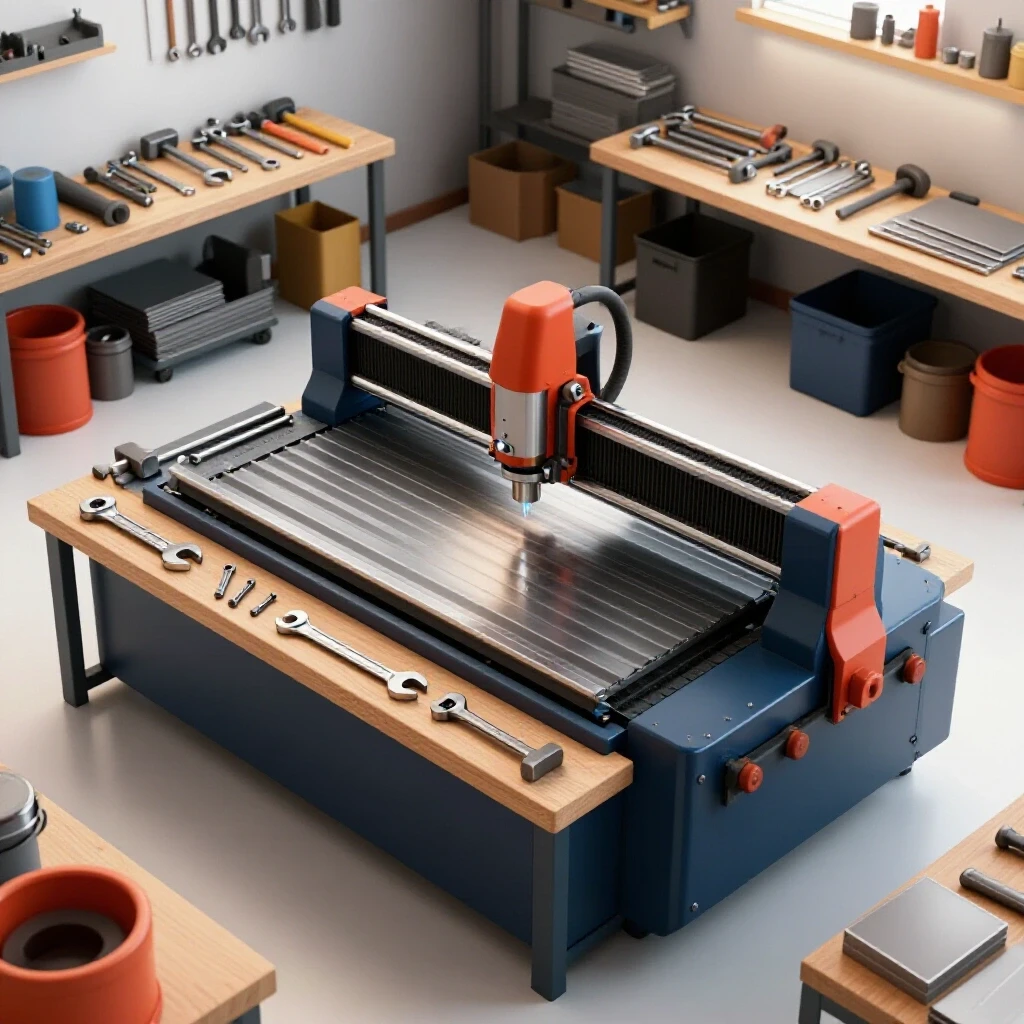
When you are scaling a shop, floor space becomes your most valuable and limited resource. I’ve seen many talented fabricators cram a new CNC plasma table against a back wall to save space, only to realize later they can’t access the water table drains or the gantry rails for cleaning. A machine you cannot easily reach is a machine that will eventually fail because you will skip the basic upkeep.
I follow a “three-foot rule” for all primary equipment. This means maintaining a clear 36-inch perimeter around every major tool. This isn’t just for safety or OSHA compliance; it’s about making sure there is no excuse to skip a daily wipe-down or an oil check. When you have to climb over a pile of scrap to reach a grease fitting, that fitting doesn’t get greased.
| Layout Feature | Impact on Shop Workflow | Maintenance Benefit |
|---|---|---|
| Linear Flow Pattern | Reduces material handling time by 30% | Keeps debris concentrated in specific zones |
| 3-Foot Access Buffers | Improves operator safety and movement | Allows full access to lubrication points and filters |
| Dedicated Chip Zones | Prevents cross-contamination of materials | Simplifies daily cleanup and scrap recycling |
| Mobile Workstations | Increases floor flexibility for large projects | Enables deep cleaning of floor space beneath tools |
Managing Power Stability and Electrical Infrastructure
Electrical infrastructure management involves the installation and monitoring of power delivery systems, such as phase converters, to ensure consistent voltage to industrial machinery. Proper electrical setups prevent motor overheating and component wear caused by “dirty” power or unbalanced phases.
Most residential or light commercial shops lack native 3-phase power, which is the lifeblood of industrial-grade mills and lathes. When I integrated my first heavy-duty vertical mill, I had to choose between a static converter and a rotary phase converter. I learned the hard way that a poorly balanced converter can lead to premature motor failure. If the voltage across your three legs varies by more than 5%, your motors will run hot, shortening their lifespan significantly.
Every morning, I make it a habit to check the temperature of my rotary phase converter and the main breaker panel. Excessive heat is often the first sign of a loose connection or an internal component beginning to fail. Using a simple handheld infrared thermometer allows you to spot these “hot spots” before they cause a blown fuse or a melted wire during a critical production run.
- Phase Balance Check: Use a multimeter to ensure voltage between legs is within a 2-5% tolerance.
- Connection Tightness: Inspect terminal blocks monthly for signs of thermal expansion or loose lugs.
- Cooling Fan Function: Ensure all electrical cabinets have functioning fans and clean intake filters.
- Grounding Integrity: Verify that every machine has a dedicated ground to prevent static buildup and electronic interference.
High-Volume Air Quality and Dust Collection Systems
Air quality management focuses on the capture and filtration of airborne particulates generated during grinding, cutting, and machining. This involves designing ductwork with sufficient static pressure and maintaining filters to protect both the machinery’s precision surfaces and the operator’s health.
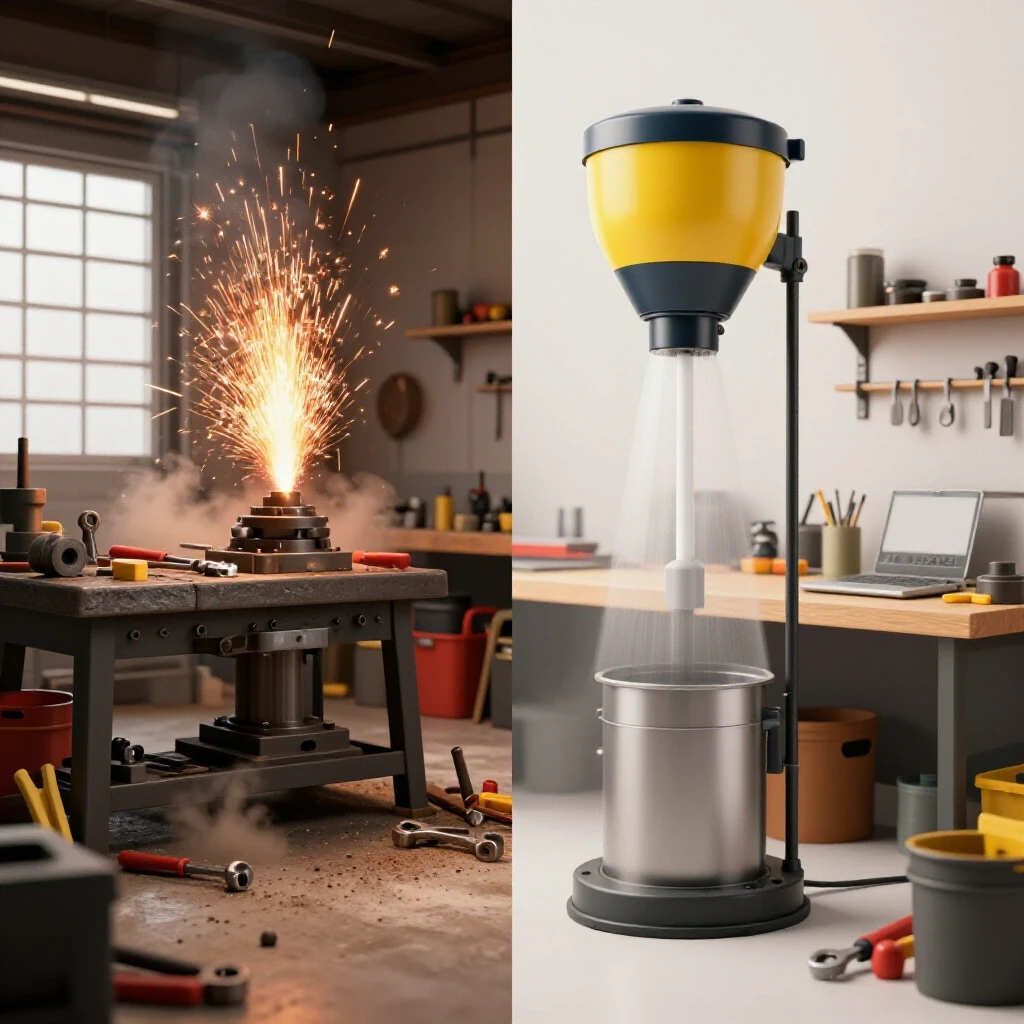
In a high-output shop, dust is more than just a nuisance; it is an abrasive that eats away at precision ways and lead screws. I once lost a week of production on a precision lathe because fine grinding dust from a nearby bench had settled on the carriage, acting like sandpaper every time I moved the tool post. Since then, I’ve treated dust collection as a primary mechanical system, not an afterthought.
Effective dust collection requires more than just a shop vac. You need a system capable of moving at least 1,000 to 1,200 CFM at the tool to keep fine particles from escaping into the shop air. I recommend a multi-stage cyclone separator, which drops the heavy chips into a bin before the fine dust reaches the expensive HEPA filters. This prevents the filters from clogging prematurely and maintains the static pressure needed for effective suction.
- Empty Collection Bins: Check bins daily; a full bin causes dust to bypass the separator and clog the primary filters.
- Pulse-Clean Filters: If your system has a manual or automatic pulse cleaner, use it every few hours of operation.
- Inspect Duct Seals: Use a smoke pen to check for leaks in your ductwork, as even small gaps significantly reduce suction power.
- Monitor Static Pressure: Install a magnehelic gauge to track pressure drop across the filters, signaling when they need deep cleaning or replacement.
Routine Mechanical Care for Precision Metalworking Tools
Routine mechanical care involves the daily cleaning, lubrication, and alignment verification of machine tools to ensure accuracy and longevity. These small, consistent actions prevent the buildup of chips and grime that lead to mechanical binding and excessive wear on moving parts.
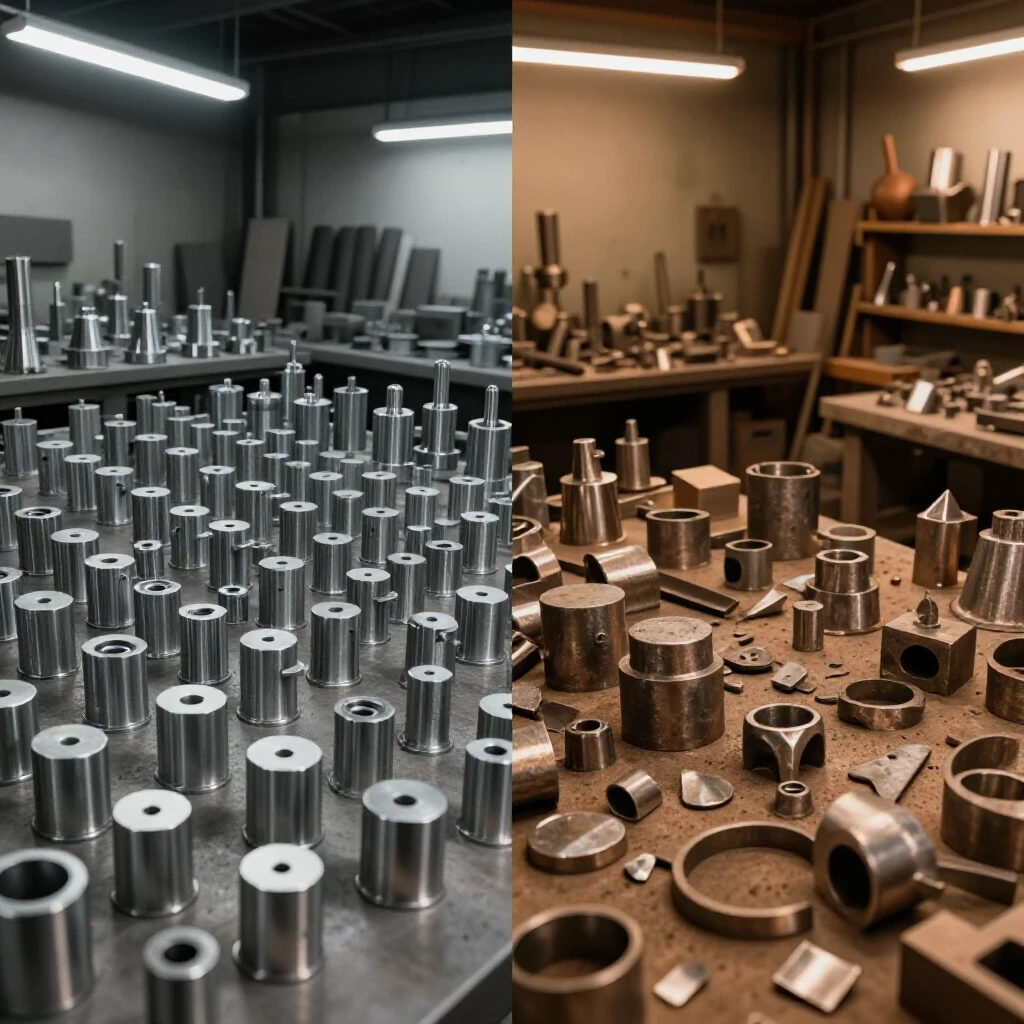
I view my machines as living organisms that need constant hydration—in the form of oil and grease. Every morning, before the first spindle turns, I perform a “walk-around” that takes less than ten minutes but saves hours of potential downtime. I start by clearing any chips left over from the previous shift. Chips left on a machine overnight can trap moisture, leading to surface rust on precision-ground surfaces.
Lubrication is the single most important factor in preventing mechanical wear. Most manual mills and lathes use a “one-shot” oiling system. I’ve seen many guys pull that handle once and walk away, but you need to verify that the oil is actually reaching the ways. Look for a thin, consistent film of oil on the sliding surfaces. If one side is dry, you likely have a clogged capillary tube or a faulty manifold that needs immediate attention.
- Way Lubrication: Apply fresh ISO 68 way oil to all sliding surfaces and cycle the axes to distribute it.
- Chip Removal: Use a brush or vacuum—never compressed air—to remove metal shavings from sensitive areas like lead screws.
- Spindle Taper Inspection: Clean the internal taper of your mill spindle with a dedicated wiper to ensure tool holders seat correctly.
- Alignment Verification: Quickly check that the vise is square or the tailstock is centered using a dial indicator if high precision is required for the day’s tasks.
Implementing a Systematic Upkeep Framework
A systematic upkeep framework is a structured schedule of daily, weekly, and monthly tasks designed to standardize equipment care across a workshop. By documenting these steps, a shop owner ensures that nothing is overlooked, even during periods of high production stress.
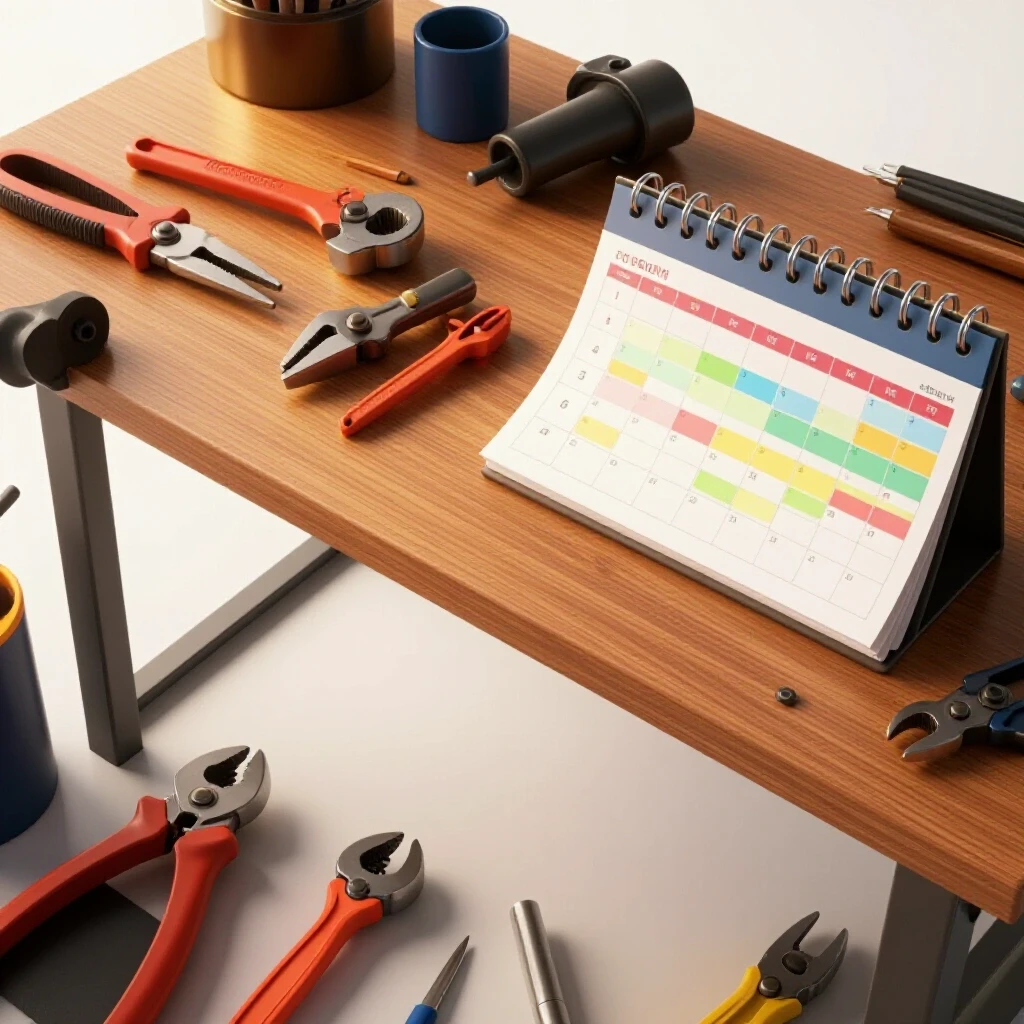
The biggest mistake I made early on was relying on my memory to handle maintenance. When the shop got busy, the maintenance got skipped. Now, I use a simple physical checklist attached to every major machine. This creates accountability and ensures that if I hire an assistant or an apprentice, the standard of care remains the same. We don’t start the day until the “Daily Five” for each machine are checked off.
This framework also includes a “Five-Minute Reset” at the end of every shift. This isn’t a deep clean; it’s a quick sweep and a wipe-down. Leaving a machine clean for the next day isn’t just about aesthetics; it allows you to spot leaks or loose bolts immediately the following morning. If the floor is covered in chips, you’ll never notice that small puddle of hydraulic fluid that indicates a failing seal.
| Frequency | Task Description | Target System |
|---|---|---|
| Daily | Wipe down ways and apply fresh oil | Linear Motion / Ways |
| Daily | Clear chips from T-slots and bellows | Workholding / Protection |
| Weekly | Check coolant concentration and pH | Fluid Management |
| Weekly | Inspect drive belts for tension and wear | Power Transmission |
| Monthly | Leveling check with a precision spirit level | Machine Geometry |
Optimizing Material Handling to Protect Equipment
Material handling optimization involves the use of carts, racks, and lifting aids to move raw stock and finished parts through the shop with minimal risk of damaging equipment. Proper handling prevents accidental impacts and keeps heavy loads from straining machine tables or operator health.
I’ve seen more machines damaged by a swinging piece of bar stock or a dropped heavy plate than by actual operation. As you scale up, the size and weight of your materials usually increase. If you are still manhandling 4×8 sheets of steel onto a plasma table, you are one slip away from a bent gantry or a broken limit switch. Integrating simple material handling solutions, like a jib crane or a heavy-duty rolling cart, protects your investment in machinery.
Furthermore, keeping your material organized prevents the “clutter creep” that makes maintenance difficult. I use vertical racks for long stock and labeled bins for offcuts. By keeping the floor clear, I ensure that my rolling oil cart can reach every machine in the shop without me having to play a game of Tetris first. This organization directly supports the speed and efficiency of my daily upkeep routines.
- Use Rolling Carts: Move heavy parts on wheels to avoid dropping them near sensitive machine beds.
- Install Racks Near Entry: Place material storage as close to the delivery point as possible to minimize travel through the shop.
- Clear Transit Paths: Maintain a minimum 4-foot wide path for material movement to prevent bumping into machines.
- Protect Machine Surfaces: Use wood or rubber mats on machine tables when loading heavy workpieces to prevent gouges.
Establishing Long-Term Operational Reliability
Building a professional-grade shop is a marathon, not a sprint. The goal is to create a space where the equipment works for you, rather than you working for the equipment. By focusing on these daily, mechanical fundamentals, you remove the variables that lead to frustration and financial loss. I’ve found that the more disciplined I am with the small things—like checking a filter or wiping a rail—the more I can focus on the high-level fabrication work that I actually enjoy.
Consistency is the key to scaling. As you add more complex tools, the stakes only get higher. A small lubrication failure on a manual mill is a nuisance; a similar failure on a high-speed CNC spindle can cost thousands of dollars and weeks of lost time. Start building these habits now, regardless of the size of your current setup. When you eventually move into that larger space or add that next piece of automation, your foundation of mechanical care will already be in place.
Frequently Asked Questions
How often should I really be checking the oil levels in my machines? You should check oil levels every single day before you turn the machine on. Most industrial tools have sight glasses that make this a five-second task. Running a spindle or a gearbox even slightly low on oil can cause heat buildup that leads to permanent bearing damage.
What is the best way to clean metal chips without damaging the machine? Always use a brush, a vacuum, or a specialized “chip hook.” Never use compressed air to blow chips off a machine. Compressed air often forces small, sharp metal fragments past the wipers and into the precision ways or bearings, where they cause significant abrasive wear.
Why does my 3-phase converter get so hot during the summer? Phase converters generate heat as they balance electrical loads. In the summer, higher ambient temperatures make it harder for the unit to cool itself. Ensure the converter has at least 12 inches of clearance on all sides for airflow and that any cooling fans are free of dust.
Can I use standard automotive grease for my machine tools? No. Machine tools require specific lubricants designed for high-pressure and low-speed applications. Standard automotive grease may not have the “tackiness” required to stay on vertical ways or the specific additives needed to prevent “stiction” (static friction) in precision slides.
How do I know if my dust collection system is actually working? The best way to tell is by monitoring the “static pressure” using a magnehelic gauge. If the pressure rises significantly, your filters are clogged. If it drops suddenly, you likely have a leak in your ductwork or a disconnected hose.
What should I do if I find rust on my machine’s table? Clean it immediately using a fine abrasive pad and a rust-penetrating oil. Once the rust is gone, wipe the surface clean and apply a dedicated machine table sealant or a light coat of way oil. To prevent it from returning, avoid leaving damp materials or wood on the metal surface overnight.
How do I balance my shop layout if I have limited space? Focus on “mobile versatility.” Put smaller machines on heavy-duty locking casters so they can be moved into a central “work zone” when needed and pushed back to the wall for maintenance. Always prioritize keeping the main material path clear.
Is it necessary to level my machines every month? For most shops, checking the level once every three to six months is sufficient, unless you notice a change in the accuracy of your parts. However, new machines should be checked more frequently as they settle into the concrete floor, which can shift slightly under heavy loads.
What is the most common maintenance task that people skip? Cleaning the spindle tapers and tool holders is frequently overlooked. A tiny piece of debris in a taper can cause “runout,” which leads to poor surface finishes, broken tools, and premature spindle bearing wear. It only takes a few seconds to wipe them clean.
How can I reduce the noise level in my shop during maintenance? Noise is often a sign of vibration or friction. Regularly tightening loose panels, ensuring belts are properly tensioned, and keeping all moving parts lubricated will naturally lower the decibel level of your shop. If a machine suddenly gets louder, it’s a signal that something needs immediate inspection.
(This article was written by one of our staff writers, Edward Sinclair. Visit our Meet the Team page to learn more about the author and their expertise.)