How to Make Money Doing Small Fabrication Projects (Guide)
I remember the first time I sold a custom metal gate. I charged the client $600, thinking I had made a small fortune for a weekend of work. After I paid for the steel, the hinges, the welding gas, and two packs of grinding discs, I sat down with my receipts. When I factored in the twenty hours I spent cutting, fitting, and finishing, I realized I earned about four dollars an hour. I would have made more money flipping burgers, and I wouldn’t have ruined a perfectly good pair of boots in the process.
That moment changed how I looked at my workshop. For 16 years, I have moved away from “guesstimating” and toward a strictly data-driven approach to fabrication. Transitioning from a hobbyist to a professional side-hustler is not about how well you can stack beads or how shiny you can get a stainless finish. It is about understanding the financial heartbeat of your shop. If you do not track your pennies, your dollars will disappear into the scrap bin.

Many shop owners between the ages of 35 and 55 find themselves in a tricky spot. You have the skills and the tools, but you struggle to price your work in a way that actually pays for your time and equipment. You might feel guilty charging a “real” price, or perhaps you simply do not know what your time is worth. This guide is built on the hard numbers and realistic metrics I have gathered over nearly two decades of making metal move for a profit.
Establishing a Profitable Hourly Shop Rate for Metalwork
A shop rate is the total amount of money your business must earn for every hour of active labor to cover all expenses and provide a profit. It is not just a random number like $50 or $100; it is a calculated figure based on your specific rent, utilities, and income goals.
Most side-hustle metalworkers make the mistake of looking at what the guy down the street charges. That is a recipe for failure because you do not know his overhead. To find your true rate, you must add up your annual fixed costs, such as shop rent (even if it is a portion of your home mortgage), insurance, and software subscriptions. Then, add your variable costs like electricity and heating. Finally, decide on your desired annual take-home pay. Divide that total by the number of hours you can realistically bill in a year.
In my experience, a healthy rate for a small-scale fabrication shop typically falls between $65 and $120 per hour. If you are charging less than $65, you are likely subsidizing your customers’ projects with your own savings.
| Expense Category | Annual Cost (Example) | Monthly Impact |
|---|---|---|
| Shop Space (Utilities/Insurance) | $3,600 | $300 |
| Consumables (Gas, Wire, Discs) | $1,800 | $150 |
| Tool Maintenance & Repairs | $1,200 | $100 |
| Software & Marketing | $600 | $50 |
| Total Fixed Overhead | $7,200 | $600 |
If you plan to work 15 hours a week on your side business, you have about 720 billable hours per year. To just break even on that $7,200 overhead, you need to make $10 per hour before you even pay yourself a dime. This is why calculating shop rates is the most important step in professionalizing your workspace.
Managing Equipment Depreciation and Capital Investment ROI
Depreciation is the process of spreading the cost of an expensive tool over its useful life, rather than counting the full price against one month’s profit. Return on Investment (ROI) measures how quickly a tool pays for itself through increased speed or new capabilities.
When I bought my first high-end TIG welder for $4,500, I didn’t expect to make that money back in the first month. Instead, I looked at its five-year depreciation cycle. If that machine lasts 60 months, its “cost” to the shop is $75 per month. If that welder allows me to take on stainless steel food-grade projects that pay $20 more per hour, the payback period becomes very clear.
You should aim for a “payback period” of 12 to 24 months for any major tool upgrade. If a new $3,000 cold saw only saves you five minutes a week, it is a luxury, not a business investment. However, if it eliminates two hours of grinding per project, it is a profit-generating machine.
- Machine Amortization: Divide the tool cost by its expected lifespan in months.
- Productivity Gain: Measure how many minutes a new tool saves per common task.
- Billable Increase: Calculate how much more you can charge for the higher-quality finish the tool provides.
Developing Accurate Fabrication Job Costing Models
Fabrication job costing is the method of estimating the total expense of a project by breaking it down into material, labor, and overhead components. It transforms a “hunch” into a formal quote that protects your margins and ensures you are not working for free.
I use a simple three-part formula for every quote: (Materials x Markup) + (Billable Hours x Shop Rate) + (Consumable Burden). The markup on materials covers your time spent driving to the steel yard, loading the truck, and the risk of a mistake. A standard markup is 20% to 50% depending on the project size.
One trap I fell into early on was failing to account for “shop flow” time. This includes cleaning the floor after a job, organizing the scrap, and talking to the client on the phone. If a project takes 10 hours of hood-down welding, it likely takes 13 hours of total shop time. You must bill for the total time, not just the “active” fabrication.
- Material Takeoff: List every inch of steel, every bolt, and every ounce of paint.
- Labor Steps: Break the job into cutting, fitting, welding, and finishing.
- Buffer Percentage: Always add 10% to your labor estimate for the “unexpected” issues that always happen in custom work.
Tracking Welding Consumables and Hidden Material Expenses
Consumables are the “hidden” items that get used up during a project, such as shielding gas, welding wire, sanding belts, and drill bits. These are often the biggest drain on small metal shop pricing because they are hard to see on a daily basis.
I once tracked every single flap disc I used for a month. I was shocked to find I was spending nearly $200 on abrasives alone. If you aren’t factoring a “consumable burden” into your quotes, you are losing money every time you pull the trigger on your torch.
A simple way to handle this is to add a flat percentage to every job. For general MIG welding and assembly, a 5% to 10% consumable surcharge on the total labor cost usually covers the basics. For high-precision TIG work involving expensive argon gas and tungsten, that number might climb to 15%.
| Consumable Item | Typical Cost Basis | Tracking Method |
|---|---|---|
| Shielding Gas (Argon/C25) | $60 – $120 per tank | Hours of flow time |
| Flap Discs / Grinding Wheels | $3 – $9 per disc | Count used per project |
| Welding Wire / Rod | $2 – $15 per pound | Weight used per job |
| Cleaning Chemicals / Paint | $10 – $20 per can | Percentage of container |
Strategic Material Sourcing and Inventory Management
Sourcing involves finding the best prices for raw materials by building relationships with local metal service centers and buying in bulk when possible. Effective inventory management means keeping enough common stock on hand to avoid emergency trips to the hardware store.
When you are starting a side-hustle in metalworking, the temptation is to buy steel from a big-box home improvement store. This is a massive mistake. The price per foot at those stores can be 400% higher than at a dedicated steel yard. Even if you have to pay a small “broken bundle” fee at a professional supplier, you will still save a significant amount of money.
- Establish a Business Account: Even as a side-hustler, most steel yards will give you a better rate if you have a registered business name.
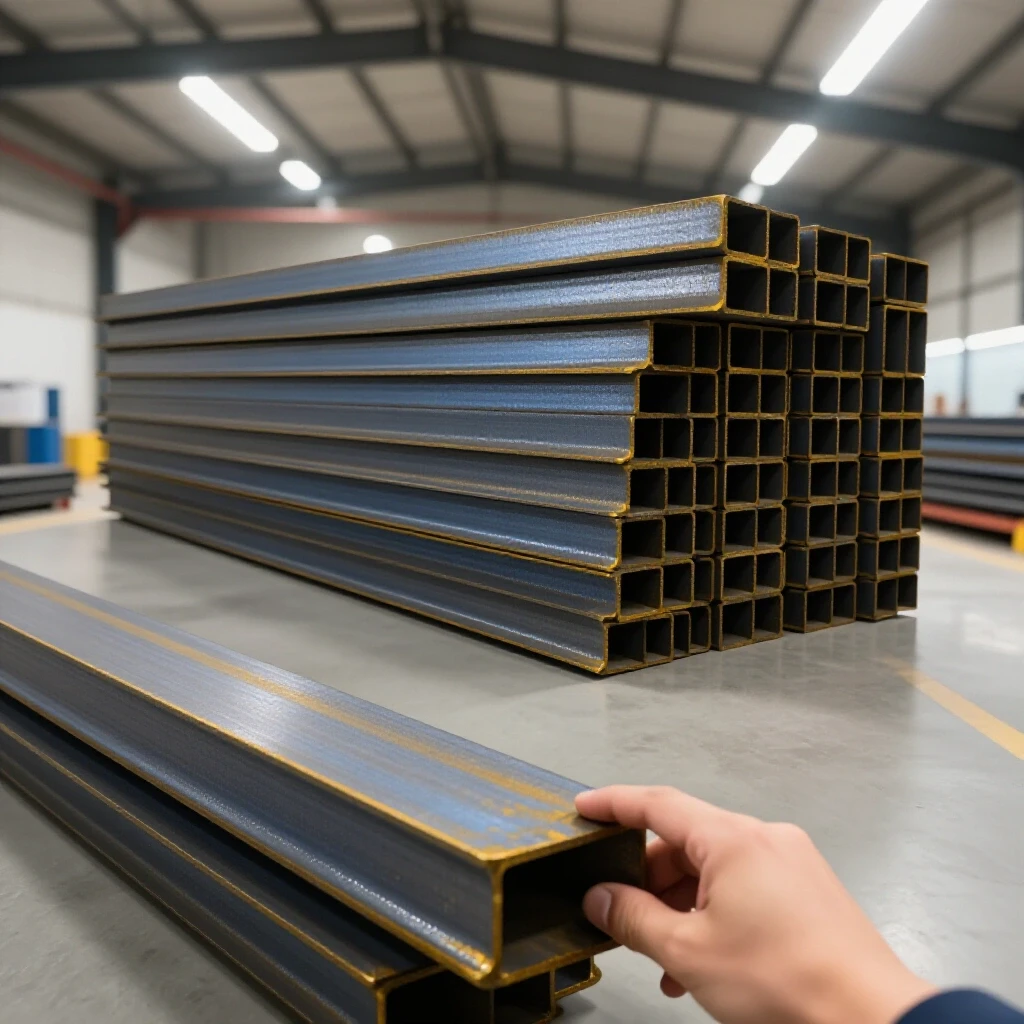
- Buy Full Lengths: A 20-foot stick of square tubing is always cheaper per foot than four 5-foot pieces.
- Scrap Utilization: Organize your off-cuts. Being able to pull a 12-inch gusset from a scrap bin instead of cutting into a new 20-foot bar is pure profit.
Analyzing Post-Project Profits and Adjusting Bids
Post-job reconciliation is the act of comparing your original estimate to the actual time and money spent once the work is finished. This is the only way to know if your small metal shop pricing is actually working.
I keep a simple log for every job. On the left side, I put my estimated hours and material costs. On the right side, I put the reality. If I estimated four hours for a repair and it took six, I need to ask why. Was the metal dirtier than expected? Did a tool break? Over time, this data allows you to refine your quotes.
If you find that you are consistently over-budget on time, you have two choices: get faster or raise your rates. Most of the time, the answer is to raise your rates. Your clients are paying for the finished product and your expertise, not just the hours you spend under the hood.
Essential Tools for Workshop Financial Management
To run a professional operation, you need more than just a welder and a grinder. You need a digital “toolbox” to manage the money side of the business. These tools help you stay organized and ensure you get paid on time.
- QuickBooks or FreshBooks: These are excellent for creating professional invoices and tracking your shop expenses for tax time.
- Microsoft Excel or Google Sheets: I still use a custom spreadsheet for my job costing. It allows me to plug in material prices and instantly see my projected margin.
- Square or PayPal Zettle: Having a way to accept credit cards on-site can be the difference between getting a deposit today or “waiting for a check” next week.
- Evernote or Google Keep: Use these to snap photos of receipts the moment you buy materials. It prevents the “shoebox full of paper” headache at the end of the year.
- Time Tracking Apps (like Toggl): Use this to track exactly how much time you spend on a project. You might be surprised how much time “little” tasks actually take.
Why “Friend Prices” Can Kill Your Side Business
One of the hardest parts of managing a small fabrication shop is saying “no” to friends who want a deal. I have seen many talented fabricators quit because they spent all their free time doing “favors” for people who didn’t value their labor.
When someone asks for a “friend price,” I usually offer them the “friend schedule” instead. I tell them I will do the work at my full professional rate, but I will move them to the front of the line. Or, I offer to teach them how to do it themselves using my tools—while they pay for the consumables.
Real friends want to see you succeed. If they are asking you to lose money so they can save money, they aren’t treating your business with respect. Pricing your work fairly is a sign of professional maturity.
- Be Transparent: Show them the cost of materials first. Most people have no idea how expensive steel has become.
- Stick to the Quote: If you quoted $200, do not accept $150 because “it looked easy.”
- Value Your Time: Every hour you spend on a discounted job is an hour you can’t spend on a profitable one.
Conclusion: Taking the Next Step Toward Profitability
The transition from a hobby to a profitable side-hustle is a journey of a thousand small measurements. It starts with the realization that your skills have a market value and that your workshop is a production environment, not just a place to hang out. By calculating a real shop rate, tracking every flap disc, and being honest about your labor time, you move from “making stuff” to “running a business.”
Start small. This week, pick one project and track every single minute you spend on it—from the first phone call to the final wipe-down. Compare that time to what you charged. That data is your roadmap. It will tell you exactly where you are losing money and where you are winning. Metalworking is a demanding craft, but when the numbers finally line up, it is also one of the most rewarding ways to build a secondary income.
Frequently Asked Questions
What is a realistic hourly rate for a home-based fabrication shop?
A realistic rate typically ranges from $65 to $120 per hour. This covers overhead, consumables, tool depreciation, and a fair wage for your skilled labor. Charging less often results in the owner paying out of pocket to complete projects.
How do I calculate a markup on materials?
Most small shops use a markup between 20% and 50%. This covers the time spent sourcing, transporting, and storing the metal. For small projects with high handling time, use a higher percentage; for large projects with bulk material, a lower percentage is acceptable.
Should I charge for the time I spend quoting a job?
For small projects, quoting time is usually rolled into your overhead. However, for complex custom builds that require hours of design or CAD work, you should charge a “design fee” or “estimate fee” that is credited toward the project if the client moves forward.
How do I factor in the cost of welding gas?
The easiest way is to apply a “consumable burden” percentage (usually 5-15%) to your total labor cost. Alternatively, you can track how many hours of “arc time” a tank lasts and divide the refill cost by those hours to get a precise per-hour gas cost.
Is it better to charge a flat fee or an hourly rate?
A flat fee is better for the customer because they know the cost upfront, but it is riskier for you. Most experienced fabricators use an hourly rate to calculate a “fixed quote.” This gives the customer a set price while ensuring the shop’s costs are covered.
What is the biggest hidden cost in a small metal shop?
Abrasives and finishing supplies are usually the biggest hidden costs. Flap discs, grinding wheels, and sandpaper wear out quickly and are often omitted from quotes, which can eat up 10% or more of a project’s profit.
How do I know when to buy a new piece of equipment?
Calculate the payback period. If a new tool costs $2,000 and saves you 5 hours of labor a month at a $80/hour rate ($400/month), it pays for itself in five months. If the payback period is over 24 months, it may not be a wise business investment.
How do I handle customers who think my prices are too high?
Educate them on the costs of materials and the quality of professional fabrication. If they still complain, they are likely not your target customer. It is better to have no work than to have work that loses you money.
Should I charge for shop cleanup?
Yes. Cleanup is a necessary part of the fabrication process. You should include “prep and post-processing” time in your labor estimate. If a job creates a massive mess, your billable hours should reflect the time it takes to return the shop to a working state.
What is the best way to track my shop’s financial health?
Perform a monthly “reconciliation.” Add up all your income and subtract all your expenses (including a set amount for tool depreciation). If the remaining number doesn’t meet your goals, look at your shop rate or your estimation accuracy.
(This article was written by one of our staff writers, Michael Hargrove. Visit our Meet the Team page to learn more about the author and their expertise.)