How to Buy Steel in Bulk From Service Centers Safely (Guide)
Moving from local retail metal yards to industrial service centers is a significant step for any growing workshop. In my 16 years of managing shop operations, I have learned that this transition is less about the transaction and more about the technical logistics. When you start receiving material in bulk bundles rather than individual pieces, your focus must shift toward verifying material chemistry, managing massive weights, and ensuring the structural safety of your storage area.
Early in my career, I made the mistake of assuming all structural steel was created equal. I ordered a large quantity of A36 plate for a series of precision components, only to find that the internal stresses caused the material to bow significantly after it was cut. I had not requested the proper documentation or verified the flatness tolerances before the delivery truck left my dock. That experience taught me that professional material acquisition requires a methodical approach to quality control and physical safety.
Verifying Material Integrity Through Documentation
A Mill Test Report (MTR) is a certified document provided by the steel mill that describes the chemical and physical properties of a specific heat of steel. It ensures the material meets ASTM or AISI standards, providing data on tensile strength, yield strength, and chemical composition like carbon and manganese levels.
Understanding how to read these documents is the first step in professional material management. When a delivery arrives, the MTR should match the heat number stamped or tagged on the steel bundles. I always check the carbon equivalent (CE) on the report, as this affects how the material behaves during thermal processes. If the documentation does not match the physical tags on the material, the shipment should be flagged before it is offloaded.
The Importance of Heat Number Traceability
Heat number traceability is the process of tracking a specific batch of steel back to its original melting and casting at the mill. This number is usually painted or stamped on the ends of the material or printed on the bundle tags. It serves as a permanent link between the physical metal and its certified test results.
In a professional shop environment, maintaining this traceability is vital for quality assurance. If a structural failure occurs or if a batch of material shows unexpected characteristics, the heat number allows you to identify if the issue is isolated or systemic across the entire lot. I make it a habit to transfer these numbers to my internal inventory logs as soon as the material is racked.
Understanding ASTM Standards for Common Stock
ASTM International provides the technical standards for the materials used in fabrication, such as ASTM A36 for carbon structural steel or A500 for cold-formed tubing. These standards define the minimum requirements for strength and the allowable ranges for chemical elements. Knowing these specifications helps you ensure the material is fit for its intended mechanical purpose.
- ASTM A36: The standard for carbon structural steel used in most general applications.
- ASTM A500: Specifically covers cold-formed welded and seamless carbon steel structural tubing in rounds and shapes.
- ASTM A513: Covers resistance-welded carbon and alloy steel mechanical tubing, often used when tighter tolerances are needed.
- ASTM A572: A high-strength, low-alloy steel that offers better strength-to-weight ratios than A36.
Dimensional Precision and Tolerance Standards
Dimensional tolerance refers to the allowable deviation from the specified size, thickness, or straightness of a piece of metal. Service centers follow industry standards that define how much a 20-foot beam can bow or how much the wall thickness of a tube can vary from its nominal size.
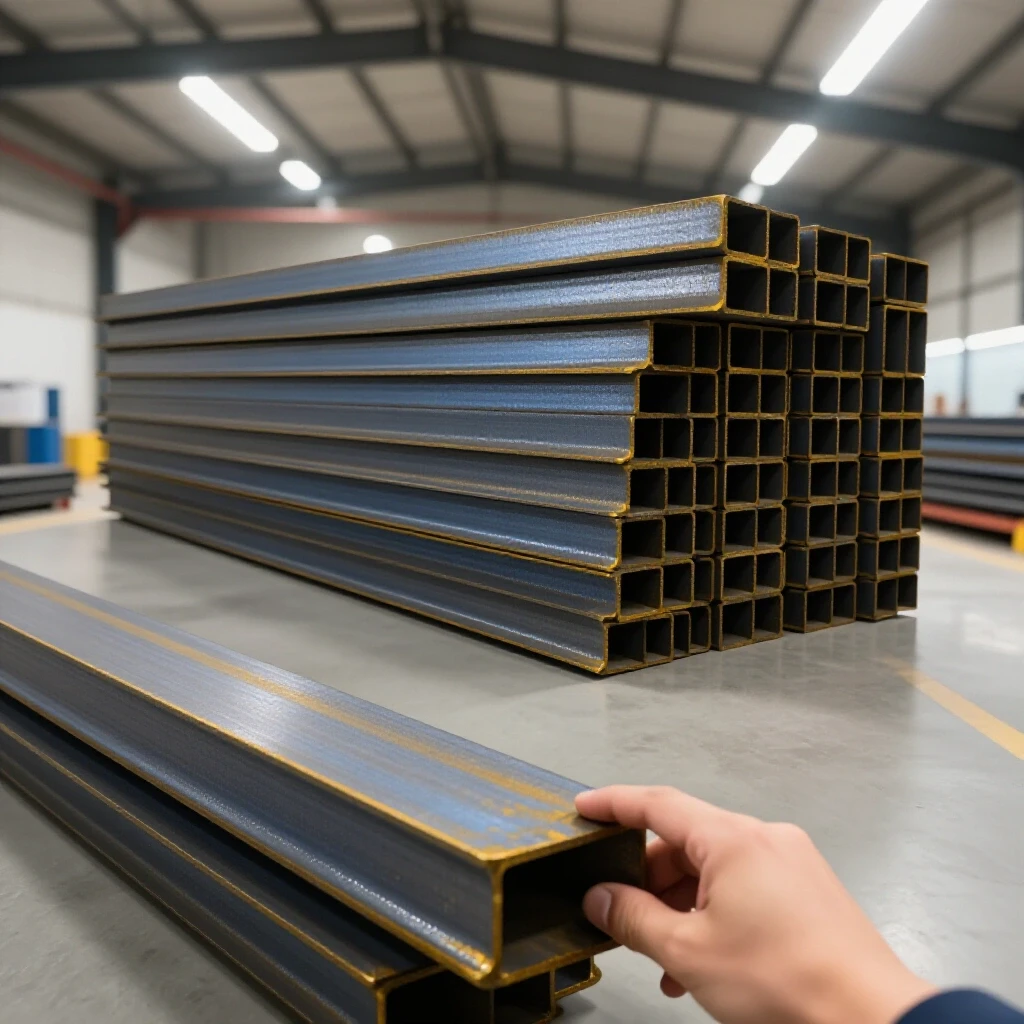
When you receive a large shipment, you are not just checking the quantity; you are checking the geometry. I have seen bundles of square tubing where the “twist” or “camber” was outside of acceptable limits, making the material nearly impossible to use for precision work. Using a calibrated tape measure, calipers, and a straightedge during the receiving process is the only way to catch these issues early.
Measuring Wall Thickness and Diameter
Wall thickness in steel is often referred to by gauge or decimal thickness, and it is rarely exactly what is listed on the invoice. Standard tolerances usually allow for a small percentage of variation, but significant deviations can impact the structural integrity of your builds. I use digital calipers to check multiple points on the ends of the stock to ensure consistency across the bundle.
For round stock or tubing, checking the “out-of-round” tolerance is equally important. If a tube is slightly oval rather than perfectly circular, it may not fit into standard brackets or sleeves. These measurements should be taken at least six inches from the end of the bar to avoid any distortion caused by the mill’s cutting process.
Identifying Camber, Sweep, and Twist
Camber and sweep describe the curvature of a piece of steel along its length, while twist refers to the rotation of the profile’s cross-section. Camber is the curve in the vertical plane, and sweep is the curve in the horizontal plane. These deviations are common in long lengths of structural steel and must be within specific limits.
| Deviation Type | Description | Common Measurement Method |
|---|---|---|
| Camber | Curvature of the strong axis | String line along the length |
| Sweep | Curvature of the weak axis | String line along the length |
| Twist | Rotation of the ends relative to each other | Leveling one end and checking the other |
| Flatness | Deviation from a plane surface | Straightedge across the width |
Safe Receiving and Unloading Protocols
Receiving a bulk delivery of steel is a high-risk activity that requires clear communication and proper equipment. Service center trucks are often loaded with several different orders, and the driver is responsible for the safety of the load until it is released. You must have a designated unloading zone that is level and clear of obstructions.
In my shop, I never allow the unloading process to begin until I have verified that the forklift or crane capacity exceeds the weight of the bundles being moved. A standard “lift” or bundle of steel can weigh between 2,000 and 5,000 pounds. Attempting to move this with undersized equipment is a recipe for equipment failure and serious injury.
Calculating Bundle Weights for Equipment Safety
Before the truck arrives, you should know the approximate weight of your order. Steel weighs approximately 490 pounds per cubic foot, but using linear weight charts is more practical for daily shop use. For example, a 20-foot length of 2x2x1/4 inch square tubing weighs about 118 pounds. A bundle of 24 pieces would weigh over 2,800 pounds.
- Always check the data plate on your forklift for its “load center” capacity.
- Remember that long loads reduce the effective capacity of the forklift as the weight shifts forward.
- Use a spreader bar if you are lifting long, flexible bundles with an overhead crane to prevent the steel from buckling or slipping.
Managing the Delivery Site Environment
The delivery area must be restricted to essential personnel only. I make sure the ground is firm enough to support the weight of both the delivery truck and the unloading equipment. If you are working on asphalt during a hot day, the heavy outriggers or tires can sink, potentially tipping the load.
Communication with the driver is critical. They often have specific sequences for unstrapping the load to prevent the remaining material from shifting. Never cut the steel banding on a bundle while it is still on the truck or while it is suspended in the air. The tension in the bands can cause the material to “spring” outward with significant force.
Structural Integrity of Storage Systems
Storing bulk steel requires heavy-duty racking systems designed to handle thousands of pounds of point loads. Cantilever racks are the industry standard for long stock because they allow for easy side-loading and organization by size and grade. The safety of these racks depends on their anchoring and the weight limits of the individual arms.
I have seen shops try to save money by building their own racks out of scrap material. While this is common, it is risky without proper engineering. If you are storing three tons of steel on a rack, you must be certain the welds and the floor anchors can handle the lateral forces. A rack collapse in a small shop is almost always catastrophic.
Cantilever Rack Safety and Loading
Cantilever racks consist of a vertical column, a base, and horizontal arms that extend outward. The weight capacity of each arm is rated based on an “evenly distributed load.” If you place all the weight at the very tip of the arm, you significantly reduce its capacity and increase the risk of the arm bending or the rack tipping.
- Store the heaviest bundles on the lowest levels of the rack to keep the center of gravity low.
- Ensure the rack is perfectly plumb; even a small lean can cause the load to shift over time.
- Use “arm lips” or end stops to prevent round stock from rolling off the ends of the arms.
- Label every rack level with its maximum weight capacity to prevent accidental overloading.
Environmental Protection and Rust Prevention
Bulk steel is typically shipped as “hot-rolled,” which has a layer of mill scale that provides some protection. However, it will rust quickly if exposed to moisture or high humidity. Storing your inventory indoors is ideal, but if you must store it outside, it should be covered with a heavy tarp and elevated off the ground to prevent “wicking” moisture from the soil.
For high-carbon or cold-finished steels, I apply a light coat of corrosion-inhibiting oil if they will be sitting for more than a few weeks. Managing the environment of your storage area prevents the “hidden cost” of having to clean or grind heavy rust off the material before you can begin your work.
Essential Equipment for Material Handling
Handling bulk material safely requires more than just a forklift. You need a suite of tools designed to manage the unique challenges of long, heavy, and often sharp objects. From specialized lifting magnets to heavy-duty rollers, the right equipment reduces physical strain on the operator and prevents damage to the material.
I recommend investing in high-quality rigging gear, such as polyester slings or Grade 80 alloy chains. These should be inspected before every use for nicks, fraying, or stretched links. In a small shop, a manual gantry crane can be a highly effective and safer alternative to moving long bars by hand or using a forklift in tight spaces.
Using Lifting Magnets and Clamps
Lifting magnets are excellent for moving flat plates, but they have strict limitations. The surface of the steel must be clean, and the thickness of the plate affects the magnet’s holding power. Thin sheets do not allow for the full magnetic field to develop, which can lead to the plate dropping unexpectedly.
Plate clamps, or “dogs,” are used for vertical or horizontal lifting of heavy sections. These rely on a cam-action grip that tightens as more weight is applied. It is vital to ensure the clamp is rated for the specific hardness of the steel you are lifting. Using a standard clamp on hardened tool steel can result in the teeth slipping.
- Verify the rated capacity (WLL) of all lifting devices.
- Check for “test tags” on slings and chains to ensure they are within their inspection period.
- Use “tag lines” (ropes) to guide long loads from a safe distance rather than using your hands.
- Ensure that all operators are trained on the specific controls and safety features of the equipment.
Common Pitfalls in High-Volume Material Acquisition
One of the most frequent mistakes I see is failing to account for the “drop” or “remnant” management. When you buy in bulk, you end up with many short pieces that can quickly clutter your shop and create tripping hazards. Developing a system for labeling and storing these remnants is just as important as managing the full bundles.
Another trap is ignoring the physical condition of the material upon arrival. If the steel is excessively pitted or has deep gouges from the service center’s forklift, it may be unsuitable for your needs. Always perform a visual inspection before signing the Bill of Lading (BOL). Once you sign that document, you are generally accepting the material in its current condition.
Frequently Asked Questions
What should I do if the material delivered doesn’t match the MTR?
You should notify the service center immediately and refrain from using the material. The MTR is the legal certification of the metal’s properties. If the heat numbers don’t match, you cannot be certain of the material’s strength or chemical makeup, which is a significant safety risk for structural projects.
How can I safely move a 20-foot bundle if my forklift forks are only 4 feet long?
Moving long loads with short forks is dangerous because the load can tip forward or slide off. You should use fork extensions or a spreader bar attachment. Fork extensions increase the support area under the bundle, while a spreader bar allows you to lift from two points further apart using slings.
Is it safe to stack different sizes of steel on the same rack arm?
It is generally safe as long as the total weight does not exceed the arm’s capacity and the load is stable. However, always place the largest and heaviest items on the bottom of the stack. Stacking smaller items under larger ones creates an unstable “pyramid” that can shift or roll.
Why does the “actual” thickness of the steel differ from the “nominal” thickness?
Manufacturing processes have inherent variations. Standards like ASTM A6 define the “allowable variations” for dimensions. For example, a plate might be slightly thicker or thinner than the nominal size but still be within the legal tolerance for that grade.
How do I check for “twist” in a square tube?
Place the tube on a known flat surface, like a precision welding table. If one corner is lifted off the table while the other three are touching, the tube is twisted. You can measure the gap with feeler gauges to see if it exceeds the standard tolerance for that size of tubing.
What is the safest way to cut the steel bands on a bundle?
Always wear safety glasses and heavy gloves. Use long-handled banding cutters and stand to one side of the band, never directly in front of it. Use one hand to hold the band down against the bundle to prevent it from snapping toward your face when it is cut.
Can I store steel directly on a concrete floor?
It is not recommended for long-term storage. Concrete can hold moisture, which will cause the bottom layer of steel to rust quickly. Use “dunnage”—4×4 wooden blocks—to keep the steel at least four inches off the floor. This also makes it much easier to get forklift forks or slings under the material.
What is the difference between “camber” and “sweep”?
Camber is a curve in the “strong axis” (the vertical way a beam sits), while sweep is a curve in the “weak axis” (the horizontal side-to-side curve). Think of a ruler: camber is trying to bend it against its flat side, and sweep is bending it along its thin edge.
How do I know if my shop floor can handle a heavy steel rack?
Most industrial concrete floors are 4 to 6 inches thick, but the capacity depends on the soil underneath. You should consult with a structural engineer or check the original building plans. A single upright of a loaded cantilever rack can put several thousand pounds of pressure on a very small area.
What is a “Bill of Lading” and why is it important?
The Bill of Lading (BOL) is a legal document between the shipper and the carrier that details the type, quantity, and destination of the goods. When you sign it, you are confirming that you received the items in good condition. Always note any visible damage or missing pieces on the BOL before signing.
How often should I inspect my storage racks?
I recommend a formal visual inspection every six months. Look for bent arms, cracked welds, or loose floor anchors. If a forklift ever bumps a rack, it should be unloaded and inspected immediately, as even a small dent can significantly reduce the structural integrity of the column.
Should I worry about the “mill scale” on the steel?
Mill scale is a natural byproduct of the hot-rolling process. While it provides some protection, it must be removed before painting or coating. If the scale is “loose” or flaking excessively, it may indicate that the steel was stored poorly or exposed to the elements for too long.
(This article was written by one of our staff writers, Michael Hargrove. Visit our Meet the Team page to learn more about the author and their expertise.)