Abrasive Cut-Off Saws vs Cold Metal Saws: Real Costs (Review)
When I first started my fabrication business sixteen years ago, I fell into a trap that kills many side-hustles before they even get off the ground. I focused on the “cool” factor of the tools rather than the math behind the machine. I remember bidding on a project for fifty custom gate frames. I calculated my material costs and my time, but I completely ignored the actual expense of making each cut. By the end of the week, I had burned through twenty abrasive wheels and noticed my electricity bill was climbing. I realized then that I wasn’t just a fabricator; I was a small-scale manufacturing manager who didn’t know his own numbers.
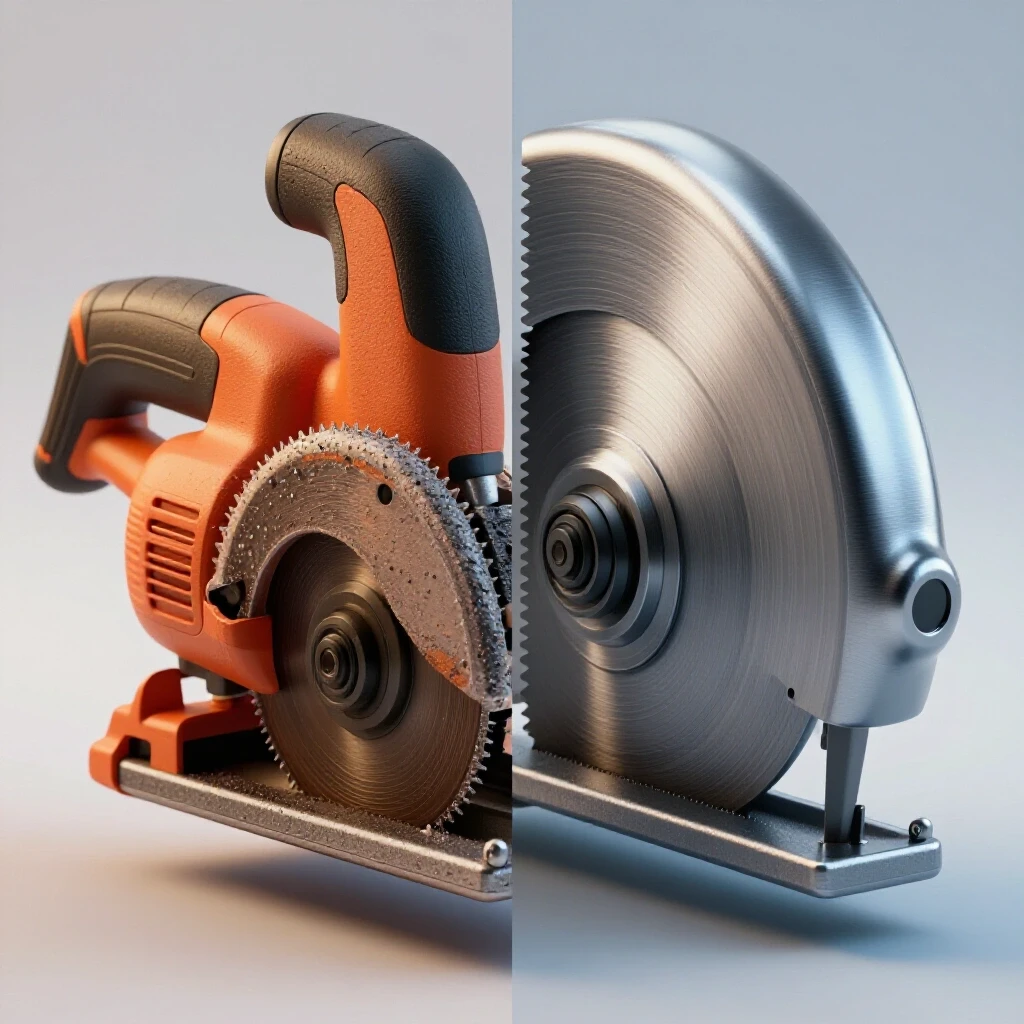
If you are moving from a hobby to a paid side-hustle, your success depends on mastering shop math. You need to understand how much it costs to pull the trigger on your saw every single time. Whether you use a high-speed abrasive saw or a slow-speed cold saw, the financial impact on your bottom line is significant. This guide will help you break down those expenses so you can price your work for actual profit.
Calculating a True Shop Rate for Metal Fabrication
A shop rate is the hourly amount you must charge to cover every expense in your workshop while still making a profit. It is not just your “take-home” pay; it is the lifeblood of your business operations.
Many new shop owners pick a number out of thin air, like $40 or $50 an hour. However, once you factor in rent, insurance, taxes, and tool wear, that $50 might actually be a loss. For most small shops, a realistic rate falls between $65 and $120 per hour. To find your number, you must list every fixed cost you have. This includes your shop’s power bill, the cost of floor space, and even the small things like rags and floor sweep.
Building on this, you need to add a “consumable burden.” This is a percentage added to every job to cover things you use up, like cutting wheels and coolant. If you don’t track these, they will eat your margins. I suggest starting with a 10% to 15% burden rate until you have enough data to be more precise.
Initial Purchase Price and Equipment Amortization
Amortization is the process of spreading the cost of a large tool over its useful life to understand its daily or monthly expense. It turns a scary upfront price into a manageable operational cost.
When comparing cutting tools, the entry price is the first hurdle. A standard abrasive chop saw usually costs between $150 and $300. In contrast, a professional-grade cold saw can cost anywhere from $2,500 to $4,500. For a side-hustle, that $2,500 jump feels massive. But we have to look at how long that tool will last.
If you buy a $300 abrasive saw and expect it to last three years, the cost is $100 per year. If you buy a $3,000 cold saw and it lasts ten years, the cost is $300 per year. While the cold saw is more expensive annually, the efficiency it brings might save you more than $200 in other areas. Interestingly, the cheaper tool often has a shorter lifespan because the high-speed motors and dust exposure lead to faster mechanical failure.
- Abrasive Saw Purchase Price: $150–$300
- Cold Saw Purchase Price: $2,500–$4,500
- Expected Lifespan (Abrasive): 2–4 years
- Expected Lifespan (Cold Saw): 10–15 years
Tracking the Real Cost of Consumables
Consumables are items that get smaller or disappear as you use them, such as the wheels on a chop saw or the liquid coolant in a cold saw. These are the most common “hidden” costs in a small shop.
Abrasive wheels are cheap to buy but expensive to use. A single 14-inch wheel might cost $7. However, if you are cutting thick 2-inch square tubing, that wheel might only last for 20 to 30 cuts before it becomes too small to use. This means each cut costs you about $0.25 to $0.35 in blade wear alone. In a big project with 200 cuts, that is $70 just in wheels.
Cold saws use a High-Speed Steel (HSS) blade. These blades are expensive, often costing $150 to $250 each. However, a single blade can make thousands of cuts before it needs attention. Even better, these blades can be sent out to be sharpened for a fraction of the cost of a new one. When you break it down, the cost per cut on a cold saw is often much lower than an abrasive saw, even though the initial blade price is higher.
| Consumable Item | Initial Cost | Typical Life (Cuts) | Cost Per Cut |
|---|---|---|---|
| Abrasive Wheel | $8.00 | 25 | $0.32 |
| HSS Cold Saw Blade | $200.00 | 1,500 | $0.13 |
| Cooling Fluid (Per Gal) | $35.00 | 5,000 | $0.01 |
Electricity and Maintenance: The Hidden Overhead
Overhead consists of the ongoing costs to operate your business that aren’t directly tied to a specific piece of material. This includes the power to run the motors and the time spent fixing the machines.
Abrasive saws use high-amperage universal motors. They pull a lot of power and create a lot of heat. Because they take longer to struggle through thick material, they stay on longer. Also, the dust they create is terrible for your shop environment. It settles on other tools, causing rust and wear. I have found that shops using abrasive saws spend more on cleaning supplies and HVAC filters than those using cold saws.
Cold saws use low-RPM induction motors. They are much more efficient and pull less current. The main maintenance cost here is the coolant system. You have to keep the fluid clean and at the right mix ratio to prevent rust on your parts. If you let the coolant go bad, it can smell or even damage the pump. This is a small but necessary task that must be factored into your weekly shop schedule.
- Abrasive Saw Power Draw: 15 Amps (High Peak)
- Cold Saw Power Draw: 5–8 Amps (Consistent)
- Maintenance Task (Abrasive): Dust collection and motor brush replacement.
- Maintenance Task (Cold Saw): Coolant filtration and gearbox oil changes.
A Three-Year Financial Comparison Case Study
To see the true economic impact, let’s look at a hypothetical shop making 1,000 cuts of mild steel tubing per year. This is a very realistic volume for a part-time side-hustle.
In Scenario A, the owner uses an abrasive saw. Over three years, they spend $200 on the saw. They use 40 wheels per year, totaling 120 wheels at $8 each ($960). Their electricity and shop cleaning costs are estimated at $150. The total three-year cost is $1,310.
In Scenario B, the owner buys a used or entry-level cold saw for $2,000. Over three years, they use one HSS blade ($200) and $50 worth of coolant. Their electricity and maintenance costs are lower, around $75. The total three-year cost is $2,325.
At this volume, the abrasive saw is still cheaper in total dollars. However, the cold saw owner has a machine that will likely last another ten years, whereas the abrasive saw is likely near the end of its life. As a result, the “break-even” point where the cold saw becomes the smarter financial choice is usually around the 4,000 to 5,000 cut mark. If you plan to grow, the cold saw is an investment; if you are staying small, the abrasive saw is a budget-friendly tool.
How to Factor Sawing Costs into Your Job Quotes
Pricing your work accurately means you don’t just guess at the total. You need a formula that accounts for the wear and tear on your equipment.
When I quote a job, I use a “per-cut fee.” This covers the consumable wear and the machine depreciation. For an abrasive saw, I might charge $1.00 per cut. For a cold saw, I might charge $0.50 per cut. This seems small, but on a project with 50 pieces of metal, it adds $25 to $50 to the quote. This ensures that when it comes time to buy a new blade or a new saw, the money is already in the bank.
As a side-hustler, you should also track your “setup time.” It takes time to square up the saw, set your stops, and organize your material. I always add 15 minutes of shop time to any job that requires more than five cuts. If your shop rate is $80/hour, that is a $20 setup fee. Never give away your preparation time for free.
- Calculate the number of cuts required for the project.
- Multiply cuts by your determined “per-cut fee” (e.g., $0.75).
- Add a flat setup fee for machine adjustment (15–30 minutes of shop rate).
- Total these and add them to your material and labor costs.
Analyzing Post-Job Profits and Variance
Post-job analysis is where you look back at a finished project to see if you actually made what you thought you would. This is the only way to get better at quoting.
If you quoted $500 for a job and it cost you $450 to produce, your margin is too thin. You need to look at where the money went. Did you use more abrasive wheels than you planned? Did the cold saw blade get dull halfway through because of a hard spot in the steel? This is called “cost variance.”
I keep a simple logbook next to my saws. I write down the date and how many cuts I made. At the end of the month, I can see exactly how long a blade lasted. If I see that a $200 blade only gave me 500 cuts instead of 1,000, I know I need to adjust my pricing or check my coolant mix. This data-driven approach removes the guesswork and helps you stay profitable.
Smart Sourcing and Bulk Purchasing Strategies
Buying your consumables in bulk can drastically change your ROI. This is a simple way to lower your overhead without changing your workflow.
If you use an abrasive saw, never buy one wheel at a time from a big-box store. You will pay $12 to $15 per wheel. If you buy a box of 25 from a welding supplier, you can often get them for $6 each. That is an instant 50% reduction in your consumable cost. For cold saws, having two blades is essential. This allows you to have one on the machine while the other is being sharpened, preventing expensive downtime.
Building on this, look for “remnant” blades or sales from industrial liquidators. Sometimes larger shops upgrade their machines and sell off their old blade stock for pennies on the dollar. Since HSS blades are standardized by diameter and arbor size, you can often find high-quality blades that fit your saw at a deep discount.
- Buy abrasive wheels in packs of 10 or 25.
- Keep at least two HSS blades for a cold saw.
- Establish a relationship with a local sharpening service.
- Track your “cost per cut” every quarter to ensure your pricing is still accurate.
Modern Tools for Tracking Workshop Economics
You don’t need expensive software to manage your shop’s finances. A few simple digital tools can help you stay organized and professional.
- Google Sheets or Excel: Create a simple spreadsheet to track every purchase. I have columns for “Item,” “Cost,” and “Date.” This makes tax time much easier.
- Wave or QuickBooks Self-Employed: Use these for invoicing and tracking your income. They can link to your bank account to categorize your tool purchases automatically.
- Evernote or Keep: Take photos of your receipts immediately. Thermal paper receipts fade over time, and a digital backup is vital for tax audits.
- A Simple Counter: I keep a manual “clicker” counter on my saw. Every time I make a cut, I click it. This gives me the data I need for my cost-per-cut calculations.
By using these tools, you move from being a hobbyist who makes things to a business owner who makes money. The transition is all about the data. When you can look a customer in the eye and know exactly why your quote is $600 instead of $400, you will feel more confident and your business will be more sustainable.
Conclusion and Next Steps
Managing a small workshop is a balancing act between initial costs and long-term efficiency. If you are just starting out and only doing a few projects a month, the abrasive saw is a low-risk way to begin. Its high consumable cost is offset by its very low purchase price. However, as your volume increases, the “hidden” costs of wheels, electricity, and cleanup will start to eat your profits.
Your next step should be to look at your last three projects. Calculate exactly how many cuts you made and how many wheels or blade inches you used. If your consumable costs are higher than 15% of your total job cost, it is time to re-evaluate your pricing or your equipment. Start a “tool fund” by adding a small percentage to every invoice. This way, when you are ready to upgrade to a more efficient machine, the money is already there, and you aren’t hurting your personal bank account.
Frequently Asked Questions
Which saw is better for a shop with limited electrical power?
The cold saw is generally better for shops with limited power. It uses an induction motor that pulls fewer amps during the cut compared to the high-torque demand of an abrasive saw. Abrasive saws can often trip 15-amp breakers if you push them too hard.
How do I know when to switch from an abrasive saw to a cold saw?
The financial “sweet spot” is usually when you are making more than 1,000 cuts per year. At this volume, the savings in consumable costs and the ability to sharpen blades begin to outweigh the high initial purchase price of the cold saw.
Is the cost of coolant significant for a cold saw?
For a small shop, coolant is a very low cost. A $40 gallon of concentrate can make 10 to 20 gallons of fluid. Since the fluid is recycled through a pump, a single batch can last several months of part-time use.
Can I deduct the cost of these saws on my taxes?
Yes, if you are operating as a legitimate business. You can typically use Section 179 to deduct the full purchase price of the equipment in the year you buy it, or you can depreciate it over several years. Consult a tax professional to see which fits your side-hustle better.
How much should I charge for “sawing” on a quote?
A good rule of thumb is to charge $0.50 to $1.00 per cut, plus a flat setup fee. This covers the blade wear and the time spent measuring and marking your material.
Do abrasive saws cost more in “hidden” cleanup time?
Yes. Abrasive saws create fine metallic dust that travels everywhere. You will spend more time vacuuming the shop and cleaning your other tools. If you value your time at $60/hour, spending 15 minutes cleaning up after a big cutting session costs you $15.
What is the average lifespan of a cold saw blade?
A high-quality HSS blade can last between 800 and 2,000 cuts depending on the material thickness and type. Because you can sharpen them 5 to 10 times, the total life of the “steel” is very long.
Should I buy a used cold saw to save money?
Buying used is a great way to improve your ROI. However, check the gearbox for leaks and ensure the spindle isn’t bent. A used saw for $1,200 is a much faster path to profitability than a new one for $3,000.
Does cutting stainless steel change the cost?
Yes, stainless steel is much harder on blades and wheels. You should double your “per-cut fee” for stainless to account for the significantly faster wear on your consumables.
How do I track my shop’s electricity usage for one tool?
You can use a “Kill-A-Watt” meter for 110v tools to see exactly how many kilowatt-hours a project uses. Multiply that by your local utility rate to find the exact cost of the power used.
(This article was written by one of our staff writers, Michael Hargrove. Visit our Meet the Team page to learn more about the author and their expertise.)