Is Buying a Heavy-Duty Sheet Metal Shear Profitable? (Review)
I remember the exact moment I realized my side business was actually a very expensive hobby. I was standing over a sheet of 10-gauge mild steel with a handheld plasma torch, trying to follow a straight line for the fifth time that morning. My back ached, the shop was filled with smoke, and I still had three more panels to prep before I could even start welding. I looked at the clock and realized I had spent two hours on a task that should have taken ten minutes. When I sat down that night to look at my numbers, I found that after accounting for electricity, gas, and my own time, I was effectively paying my customers for the privilege of doing their work.
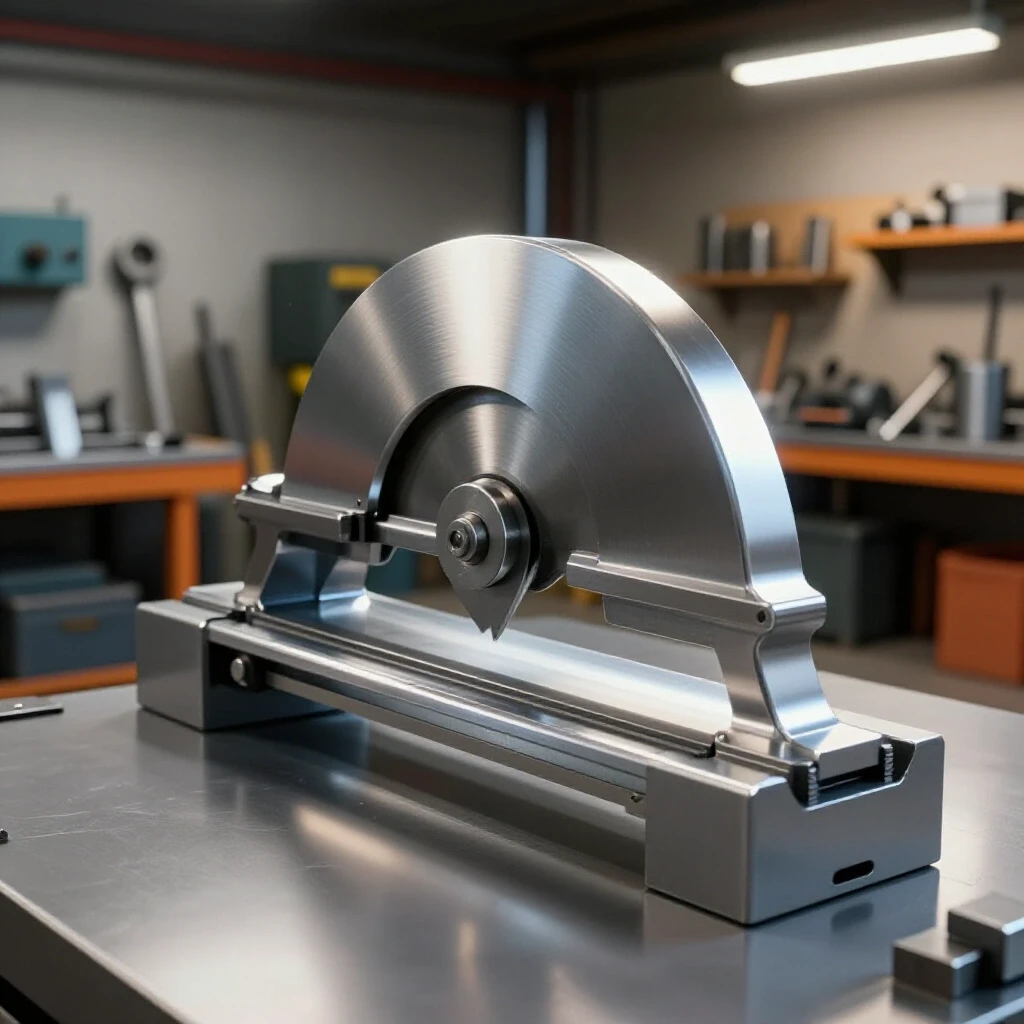
Transitioning from a hobbyist to a professional fabricator requires a shift in how you view your workshop. It is no longer just a collection of tools; it is a production environment where every square foot of floor space and every minute of operation has a dollar value. For many shop owners, the decision to bring in a heavy-duty sheet metal shear is a major turning point. These machines, designed to handle stock between 1 mm and 6 mm thick with blade lengths of a meter or more, are significant investments in both money and space. Understanding the financial mechanics of such an addition is the only way to ensure your shop remains sustainable.
Establishing a True Shop Hourly Rate
A shop hourly rate is the total amount of money your business must charge per hour of labor to cover all expenses and generate a surplus. Many small shop owners pick a number out of thin air, often landing between $65 and $120 per hour, but without knowing your specific overhead, this is a dangerous gamble.
In my 16 years of managing fabrication environments, I have seen shops fail because they forgot to include the “unseen” costs. Your shop rate is not just your take-home pay. It must cover rent, insurance, taxes, and the incremental wear and tear on your equipment. To find your rate, you must add your monthly fixed costs to your desired monthly income and divide that by the number of billable hours you can realistically work. For a side-hustler, those billable hours might only be 40 to 60 per month. If your fixed costs are $1,200 and you want to make $3,000, but you only have 50 hours of shop time, your base rate must be $84 per hour just to break even.
Managing Machine Amortization and Floor Space
Amortization is the process of spreading the cost of a large equipment purchase over its useful life. When you bring in a heavy-duty shear, you are not just paying for the metal and the blades; you are paying for the capacity to produce clean, straight cuts for years to come.
A high-capacity shear has a footprint that extends far beyond the machine itself. You need clearance to feed 1-meter or 2-meter sheets in the front and space to catch the dropped pieces in the back. In a small shop, floor space is a finite resource that carries a cost. If your shop is 500 square feet and your rent is $1,000, every square foot costs you $2 per month. A shear that occupies 40 square feet of “working zone” costs you $80 a month just to sit there. I always track this as part of my overhead burden. If the machine does not increase your throughput enough to cover its own “rent” and its monthly depreciation, it may be a drain on your resources.
| Expense Category | Allocation Method | Typical Range (Small Shop) |
|---|---|---|
| Fixed Overhead | Rent, Insurance, Utilities | $800 – $2,500 / month |
| Consumable Burden | Blades, Lube, Small Tools | 5% – 15% of Material Cost |
| Machine Depreciation | (Cost – Resale) / Useful Life | $50 – $300 / month |
| Labor Rate | Market Rate + Skill Premium | $65 – $120 / hour |
Throughput Metrics and Production Speed
Throughput refers to the amount of finished work a shop can produce in a specific timeframe. In the context of sheet metal fabrication, a heavy-duty shear changes your throughput by replacing slow, manual cutting methods with a repeatable mechanical process.
When I evaluate a tool, I look at cut cycles per hour. A foot-operated or hydraulic shear allows you to position a sheet against a back gauge and execute a cut in seconds. Compare this to a manual layout with a square, followed by a cut with a grinder or plasma torch, and then the inevitable grinding to clean up the edge. If the shear reduces your prep time from 15 minutes per panel to 30 seconds, you have reclaimed 14.5 minutes of billable time per piece. If your shop rate is $90 per hour, that reclaimed time is worth roughly $21.75 per panel. This is where the real value of industrial-grade machinery lies: it buys you back the time you need to take on more jobs.
The Hidden Costs of Maintenance and Consumables
Every machine has an appetite. For a heavy-duty shear, the primary consumables are the blades and the lubricants required for the moving parts. High-speed steel (HSS) or tool steel blades are incredibly durable, but they do eventually dull.
- Blade Maintenance: Unlike a grinder disc that you toss when it’s gone, shear blades require professional sharpening. This involves removing the heavy blades, sending them to a specialized grinding service, and then reinstalling and gapping them.
- Gib Adjustments: Gibs are the adjustable guides that control the clearance between the moving ram and the frame. If these are not checked and adjusted regularly, the shear will “burr” the metal rather than cutting it cleanly. This leads to extra labor in the finishing stage.
- Lubrication: Heavy-duty equipment relies on consistent lubrication of the pivot points and slides. Neglecting this leads to premature wear on the bushings, which can be an expensive repair that shuts down production.
I track these costs using a “consumable burden factor.” For every job that passes through the shear, I add a small percentage to the material cost to cover the eventual sharpening of the blades and the grease in the fittings. This prevents a $500 sharpening bill from wiping out my profits at the end of the year.
Building a Custom Job Quote for Sheet Metal Work
Accurate fabrication job costing is the difference between a thriving shop and one that is slowly bleeding out. When a client asks for a quote, you cannot simply guess based on the material price. You must account for the entire lifecycle of the project.
I use a simple formula for my bids: (Material Cost x Markup) + (Shop Rate x Estimated Hours) + Consumable Burden. The material markup is essential because it covers the time you spend sourcing, ordering, and moving the metal. For small batches, a 20% to 35% markup is standard. If I am using the shear to prep 20 identical brackets, I estimate the time for layout, the time for the shear cycles, and the time for deburring. Because the shear provides a clean edge, the deburring time is significantly lower than it would be with other cutting methods. I make sure to reflect that efficiency in my quote to stay competitive while still protecting my margins.
Sourcing Strategies and Material Management
One of the benefits of owning a high-capacity shear is the ability to buy larger sheets of metal. Buying 4’x8′ or 5’x10′ sheets is almost always cheaper per square foot than buying “pre-cut” pieces from a local supply house.
However, managing large stock requires its own set of logistics. You need a way to move the sheets from your delivery point to the shear. If you are working alone, this might mean investing in a sheet cart or a vacuum lift. When I was running my manufacturing business, I found that buying in bulk only saved me money if I had an organized way to store the off-cuts. A shear is excellent for turning large sheets into usable blanks, but if you don’t track your “drops” (the leftover pieces), you are throwing money in the scrap bin. I label my drops with the material type and thickness and store them in a rack right next to the shear for quick access on smaller jobs.
Analyzing Post-Job Profits to Refine Bidding
The most important part of the process happens after the job is finished and the customer has paid. I perform a post-job cost reconciliation on every major project. This is where I compare my estimated time and costs against the actual data I tracked during the build.
If I estimated that shearing 50 panels would take one hour, but it actually took two because the back gauge was slipping or the material was awkward to handle, I need to know that. This data allows me to adjust my future quotes. If I find that I am consistently faster with the shear than I anticipated, I can lower my bid slightly to win more work while still maintaining my target hourly rate. This feedback loop is the only way to move from “guesstimating” to precise financial management.
Key Takeaways for Shop Efficiency
- Calculate your break-even rate by including all fixed monthly costs and your desired income.
- Factor in the “rent” of your machinery by evaluating how much floor space it occupies.
- Track cut cycles to understand the true impact of a machine on your production speed.
- Never ignore maintenance; dull blades and loose gibs add labor costs to the finishing stage of every job.
- Use a consistent bidding formula that includes material markups and a consumable burden.
Frequently Asked Questions
How do I determine if my shop rate is too high for my local market? Check the rates of local commercial fabrication shops. While you may have lower overhead as a side-hustler, your rate should be within 20% of the local professional standard. If you are significantly lower, you are leaving money on the table. If you are higher, you must justify it through specialized skills or faster turnaround times.
What is a “gib adjustment” and why does it matter for my costs? Gibs are the wear strips or guides that keep the shear’s blade moving in a perfectly straight vertical path. If they are loose, the blade can deflect, causing the metal to fold or leave a heavy burr. This adds significant time to your “cleanup” phase, which eats into your profit margin.
How much should I mark up my raw materials? For most small shops, a markup of 20% to 35% is appropriate. This covers the time spent ordering, the cost of fuel for pickup, and the risk of a mistake during fabrication. For very small jobs or specialty metals, some shops go as high as 50%.
Does a foot-operated shear have the same throughput as a hydraulic one? A foot-operated shear can be very fast for thin-gauge material, but it causes operator fatigue over long production runs. A hydraulic or mechanical shear maintains the same cycle time regardless of how long you have been working, which makes your production estimates more reliable for large orders.
How do I track consumables like blade wear? I recommend a “Consumable Burden Factor.” Add 5% to 10% to the labor portion of your quote specifically for tool maintenance. This money should be set aside in a separate account so that when it is time to sharpen the blades or replace parts, the cash is already available.
Can I use a heavy-duty shear for materials other than mild steel? Yes, but you must be careful. Stainless steel is much harder and will dull blades faster, while aluminum can sometimes “pick up” or gall on the blades. Always check the manufacturer’s thickness ratings for different materials, as the capacity for stainless is usually much lower than for mild steel.
What is the best way to organize sheet metal drops? Store them vertically in a rack labeled by gauge. If you have a shear, you can square up your drops into standard sizes (like 12″x12″ or 24″x24″). This makes them easier to count as inventory and faster to use for the next small project.
How often should I perform a post-job cost reconciliation? You should do this for every job during your first year of business. Once you have a firm grasp on your shop’s performance, you can move to doing it for only the largest or most complex projects. This data is the foundation of your pricing strategy.
(This article was written by one of our staff writers, Michael Hargrove. Visit our Meet the Team page to learn more about the author and their expertise.)