Air vs Cordless Impact Wrenches for Shop Use (Comparison)
In my fifteen years of running a small-scale fabrication shop, I have learned that the most expensive tool is the one that fails in the middle of a deadline. I started my career tracking every hour of runtime and every dollar spent on repairs in a series of weathered notebooks. These logs have taught me that marketing specifications often crumble when faced with the daily grind of a professional environment. When you are looking to invest in high-torque fastening equipment, the choice between pneumatic systems and modern battery-operated platforms is rarely about the numbers on the box. It is about how those tools integrate into your workflow, their long-term maintenance requirements, and their actual performance under sustained load.
Many fabricators feel the same frustration I do when reading shallow reviews. We do not care if a tool looks nice or has a bright LED light; we care if the internal hammers will shatter after a year of heavy use. My experience comes from thousands of hours of structural assembly and equipment repair. I have seen the transition from the absolute dominance of compressed air to the rise of high-output brushless motors. This guide is built on those years of data, focusing on the mechanical realities and operational costs that define the life of a tool in a working shop.
Evaluating Torque and Power Delivery Systems
Torque represents the rotational force a tool applies to a fastener, usually measured in foot-pounds (ft-lbs). In a shop environment, we distinguish between fastening torque, which is the force applied when tightening, and nut-busting or breakaway torque, which is the peak force used to loosen a stubborn bolt.
When I look at a tool’s spec sheet, I immediately look for the distinction between these two metrics. Pneumatic tools typically offer a very consistent power curve. As long as your compressor can maintain the required Cubic Feet per Minute (CFM) and Pounds per Square Inch (PSI), the tool will hit with the same force every time. In my maintenance logs, I’ve noted that air-driven hammers provide a predictable vibration frequency that helps a seasoned fabricator “feel” when a fastener is seated correctly.
Modern battery-powered units operate differently. They rely on sophisticated electronic controllers to manage brushless motors. These controllers can pulse the power to maximize breakaway torque, often exceeding the raw power of mid-sized air tools for short bursts. However, my data shows that as the battery charge drops below 30%, the peak torque often begins to sag. This is a critical factor for garage machinery maintenance where consistency is key for structural integrity.
Understanding Impact Mechanisms and Internal Wear
The internal “hammer and anvil” mechanism is the heart of any impact tool. In pneumatic models, this is a purely mechanical system lubricated by oil mist from the air line. My long-term logs show that with proper lubrication, these components can last for a decade. The wear is gradual and predictable.
In cordless platforms, the motor is linked to the impact mechanism through a series of gears. While brushless motors are incredibly efficient, they generate significant internal heat during high-load tasks. I have found that the electronic components—the triggers and circuit boards—are often the first points of failure rather than the mechanical hammers. This “digital” failure mode is much harder to predict than the “analog” wear of an air tool.
Infrastructure Requirements and Shop Integration
Shop infrastructure refers to the secondary systems required to operate a tool, such as air compressors, piping, and dryers for pneumatic tools, or charging stations and battery management systems for cordless ones. These systems represent a significant portion of your initial investment and ongoing utility costs.
Building a reliable air system is a major undertaking. For a professional shop, you aren’t just buying a tool; you are maintaining a compressor, managing condensation with refrigerated dryers, and ensuring your pipe runs don’t have pressure drops. In my shop, I track the electricity used by the 5HP compressor. It is a significant utility hit, but it allows me to run multiple tools—including grinders and sanders—simultaneously.
- Pneumatic Infrastructure: Requires a dedicated space for the compressor, regular tank draining, and filter replacements.
- Cordless Infrastructure: Requires a clean, temperature-controlled area for charging stations and a systematic way to rotate batteries to prevent downtime.
The Hidden Costs of Air Quality
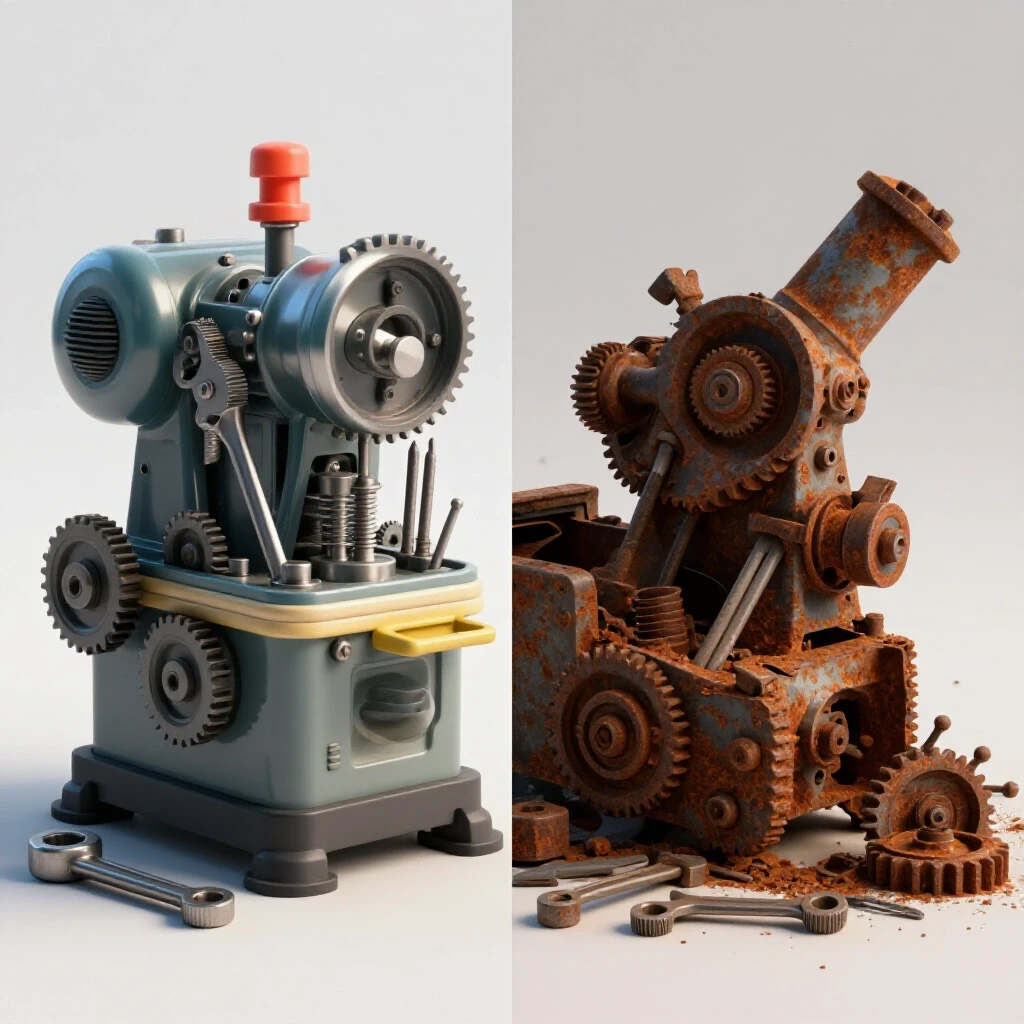
One of the biggest mistakes I see in tooling investment guides is ignoring air quality. If you run “wet” air—air with high moisture content—through a pneumatic impact, you are inviting internal corrosion. I spent three years tracking the repair costs of air tools before and after installing a high-quality desiccant dryer. The repair frequency dropped by nearly 60%. If you aren’t willing to invest in air treatment, the longevity of your pneumatic tools will suffer.
Battery Management and Lifecycle
For cordless tools, the “infrastructure” is the battery itself. Lithium-ion cells have a finite number of charge cycles, typically between 500 and 1,000. In a high-volume shop, a battery might only last two to three years before its capacity drops significantly. I keep a “birth date” on all my battery packs with a silver marker. This helps me track which cells are losing their punch and plan for replacements before they fail mid-project.
Duty Cycles and Thermal Management
A duty cycle is the percentage of time a tool can operate under load within a ten-minute period without overheating or sustaining damage. For example, a 40% duty cycle means the tool can work for four minutes but then needs six minutes of rest to cool down.
In my testing, pneumatic tools excel in high duty cycle environments. The expanding air actually helps cool the tool from the inside out. I have used air impacts for hours on end during heavy equipment teardowns with very little thermal drift. This makes them the standard for power tool reliability ratings in heavy industrial settings.
Cordless tools, however, are often limited by heat. The battery cells and the motor windings trap heat. During a project involving hundreds of large-diameter bolts, I’ve had cordless units go into thermal shutdown. This is a safety feature, but it can be a major bottleneck. My logs show that high-capacity batteries (6.0Ah or higher) handle heat better than slim packs because the load is spread across more internal cells.
| Performance Metric | Pneumatic (Air) Impact | Cordless (Battery) Impact |
|---|---|---|
| Duty Cycle | 80% to 100% (Continuous) | 25% to 40% (Intermittent) |
| Power Consistency | Constant (with stable PSI) | Declines as battery drains |
| Weight-to-Power Ratio | Excellent (Lightweight) | Fair (Heavy due to battery) |
| Maintenance Need | Daily Oiling | Periodic Cleaning/Charging |
| Expected Lifespan | 10 to 15 Years | 3 to 5 Years (Electronics/Batteries) |
Why Thermal Protection Matters
When a brushless motor gets too hot, the insulation on the copper windings can begin to degrade. This is why I pay close attention to motor insulation classes when reading spec sheets. A tool with Class H insulation can handle higher temperatures than one with Class F. If you are doing heavy fabrication, choosing a tool with superior thermal management is more important than choosing the one with the highest peak torque.
Long-Term Maintenance and Rebuildability
Rebuildability is the ease with which a tool can be taken apart, cleaned, and repaired using replacement parts. This is a core pillar of any welder buying guide or tool ownership strategy, as it determines the total cost over the tool’s life.
Pneumatic tools are the kings of rebuildability. Most professional-grade air impacts can be completely disassembled with basic hand tools. You can buy “tune-up kits” that include new vanes, gaskets, and O-rings for a fraction of the cost of a new tool. In my maintenance journal, I have a 3/4-inch drive air impact that has been rebuilt three times over twelve years. It still hits as hard as the day I bought it.
Cordless tools are generally more modular. If the trigger fails, you replace the entire switch assembly. If the motor burns out, you often replace the entire motor and electronics module. While this makes repairs fast, the parts are often expensive—sometimes costing 60% of the price of a new tool. This often leads to cordless tools being treated as “disposable” once the warranty expires, which is a significant factor in long-term equipment planning.
Creating a Preventative Maintenance Schedule
I recommend a strict schedule to maximize the life of your fastening tools. For air tools, this means two drops of air tool oil in the inlet every morning. For cordless tools, it means blowing out the motor vents with compressed air once a week to remove metallic dust that can short out the electronics.
- Daily: Oil air tools; check battery contacts for debris.
- Weekly: Inspect anvils for cracks or excessive play; blow out dust.
- Monthly: Check air line filters and lubricators; test battery health.
- Annually: Deep clean impact mechanisms and replace grease; inspect compressor valves.
Total Cost of Ownership and Utility Impact
Total Cost of Ownership (TCO) is a financial estimate intended to help buyers determine the direct and indirect costs of a product. It includes the purchase price, energy costs, maintenance, and the eventual replacement cost.
When I calculated the TCO for my shop, the results were surprising. While a cordless impact wrench has a lower “entry fee” because you don’t need a compressor, the cost of replacing batteries over a ten-year period can exceed the cost of the tool itself. Conversely, the pneumatic tool has a high entry fee but very low operating costs if you already have an air system.
Utility Costs: Air vs. Electricity
Running a compressor is not cheap. A 5HP motor pulling 22 amps on a 240V circuit adds up quickly during a busy month. However, that compressor is a “force multiplier” that powers many other tools. Cordless tools are much more energy-efficient on a per-bolt basis. If you are a low-volume shop or a mobile fabricator, the energy savings and lack of infrastructure make cordless the clear winner. For a high-volume production shop, the durability of air usually offsets the utility costs.
Warranty Tracking and Recovery
I keep a digital folder for every major tool purchase. This includes a scan of the receipt, the warranty terms, and a log of any issues. Many professional-grade tools offer three-year warranties, but they often require registration within 30 days. I have saved thousands of dollars by holding manufacturers to their warranty claims when a brushless controller failed prematurely or a battery pack died within its first year.
Practical Decision Pathways for Shop Owners
Choosing the right platform depends on your specific shop layout and the type of work you perform. There is no “perfect” tool, only the tool that best fits your operational constraints. I use a simple decision matrix when I am helping other fabricators evaluate their needs.
When to Choose Pneumatic Systems
If your work involves stationary assembly at a bench and you already have a robust air system, pneumatic is almost always the better long-term investment. The tools are lighter, which reduces operator fatigue during an eight-hour shift. They are also virtually immune to the metallic dust and sparks common in a welding environment. I prefer air for heavy-duty tasks like removing rusted suspension components or large-scale structural bolting where I need the tool to run at 100% power all day long.
When to Choose Cordless Platforms
If you find yourself moving around large projects or working outside the shop, the freedom of a battery-powered tool is invaluable. I use my cordless impact for “triage”—quick jobs where I don’t want to drag a 50-foot air hose across the floor. They are also superior for precision work because many modern cordless tools have “auto-stop” modes that prevent over-tightening or throwing a nut across the room when it breaks loose.
- Mobile Repair: Cordless is the only logical choice.
- High-Volume Assembly: Pneumatic offers better ergonomics and longevity.
- Precision Fastening: Cordless electronics offer better torque control.
- Harsh Environments: Pneumatic handles heat and dust better.
Conclusion and Next Steps
Making an informed decision on your shop’s fastening tools requires looking past the marketing hype and focusing on the mechanical realities of your daily work. Whether you choose the tried-and-true reliability of compressed air or the modern convenience of high-output batteries, your success depends on how you maintain that equipment.
My advice is to start by auditing your current infrastructure. If you have a weak compressor, don’t buy a high-end air impact; you won’t see its full potential. Conversely, if you go cordless, invest in the highest-capacity batteries you can afford to manage heat better. Keep a maintenance log, track your “birth dates” on batteries, and never ignore a change in the sound of your tool’s impact mechanism. By treating your tools as long-term investments rather than disposable commodities, you will build a shop that is both efficient and profitable.
FAQ
How does the torque of a cordless impact compare to a pneumatic one?
In short bursts, high-end cordless impacts can match or even exceed the breakaway torque of many 1/2-inch pneumatic tools. However, pneumatic tools maintain their torque more consistently over long periods of use, whereas cordless tools may see a performance drop as the battery drains or the motor heats up.
What is the most common failure point for cordless impact wrenches?
Based on my logs, the most common failures are electronic. This includes trigger switches, brushless motor controllers (PCBs), and battery contact points. Unlike the mechanical wear of an air tool, these failures are often sudden and require the replacement of entire electronic modules.
Do I really need an air dryer for my pneumatic tools?
Yes. Moisture in the air lines causes internal rusting of the hammer mechanism and the motor vanes. Over time, this leads to a loss of power and eventual seizure. If you want your air tools to last ten years or more, a refrigerated or high-quality desiccant dryer is a mandatory investment.
Are brushless motors really better than brushed ones for shop use?
Absolutely. Brushless motors are more efficient, produce less heat, and have no carbon brushes to replace. In a shop environment where metallic dust is present, the sealed nature of most brushless motors also prevents internal shorts, which was a common problem with older brushed designs.
How much CFM does a typical 1/2-inch air impact wrench require?
Most professional 1/2-inch air impacts require between 4 and 6 CFM at 90 PSI to operate at full power. If your compressor’s “delivered CFM” is lower than the tool’s requirement, the tool will lose torque quickly during sustained use as the tank pressure drops.
Can I use my cordless impact in a welding environment?
You can, but you must be careful. Metallic dust from grinding and sparks from welding can be drawn into the motor cooling vents by the tool’s internal fan. This can cause premature wear or electrical shorts. I make it a habit to blow out my cordless tools with compressed air at the end of every day in the shop.
Is it worth rebuilding an old air impact wrench?
Usually, yes. A high-quality pneumatic tool is designed to be serviced. A rebuild kit typically costs 10-20% of the price of a new tool. If the main housing and the anvil are in good shape, replacing the internal vanes and seals can return the tool to like-new performance.
How do I know when a battery pack is reaching the end of its life?
You will notice a “sag” in power during heavy loads and a shorter overall runtime. If you have a smart charger, it may indicate a high internal resistance. I also track charge times; if a battery that used to take 60 minutes to charge now finishes in 20, it usually means the capacity has significantly degraded.
What is the impact of cold weather on these tools?
Pneumatic tools can suffer from “icing” if there is moisture in the lines, as the expanding air drops in temperature. Cordless tools suffer from reduced battery chemistry efficiency in the cold; a battery that is freezing will not deliver its full rated torque until it warms up.
Why do some manufacturers list “nut-busting torque” so much higher than fastening torque?
Nut-busting torque is a measure of the tool’s peak output during the first few seconds of operation, often using a specific pulse pattern. Fastening torque is the sustained force the tool can apply. Always use the fastening torque rating when determining if a tool is appropriate for your assembly needs.
(This article was written by one of our staff writers, David Reynolds. Visit our Meet the Team page to learn more about the author and their expertise.)