Aluminum Oxide vs Silicon Carbide Grinding Wheels (Review)
I’ve spent the better part of two decades in shops where the air smells like ozone and hot metal. Over those 18 years, I have learned that the most frustrating problems aren’t usually the ones that break a machine in half. The real headaches are the subtle issues—the slight discoloration on a finished part, the vibration that won’t go away, or the weld porosity that appears out of nowhere. Most of the time, these problems can be traced back to a single, overlooked variable: the interaction between your abrasive tool and the workpiece.
When a process that worked yesterday suddenly fails today, my first instinct is to isolate the variables. I remember a job in a custom mill where we were prep-grinding high-tensile steel plates for a structural weld. The operators were complaining about “greasy” wheels that wouldn’t bite and a blue tint forming on the metal. After a quick look, I realized they had switched to a batch of wheels meant for non-ferrous materials. They were trying to force a tool to do a job its chemistry wouldn’t allow. This guide is built on those kinds of lessons. We will break down how to choose between the two primary synthetic abrasives used in modern shops to ensure your diagnostics lead to permanent solutions.
Understanding the Chemistry of Synthetic Abrasives
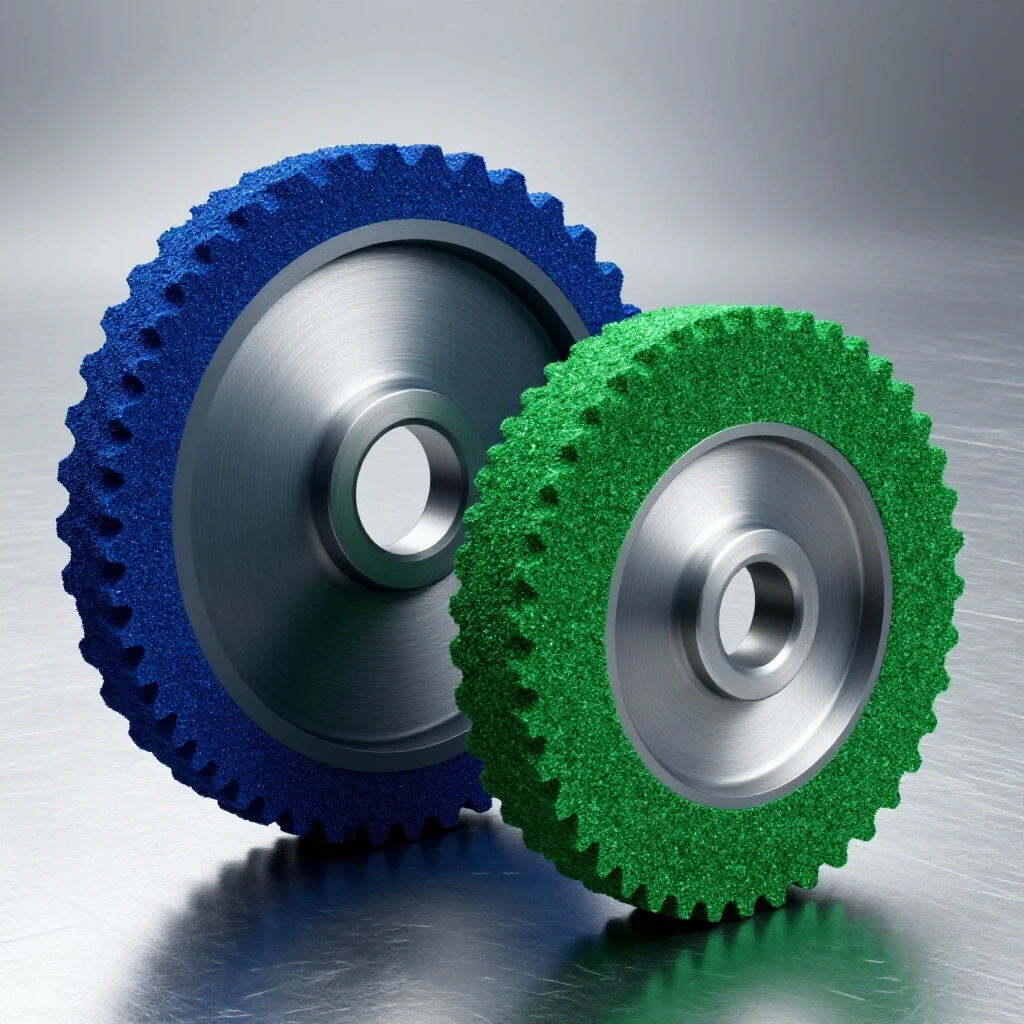
Synthetic abrasives are engineered crystals designed to fracture under specific pressures to maintain a sharp cutting surface. Choosing the wrong crystal structure for your material leads to excessive heat, tool chatter, and poor surface integrity.
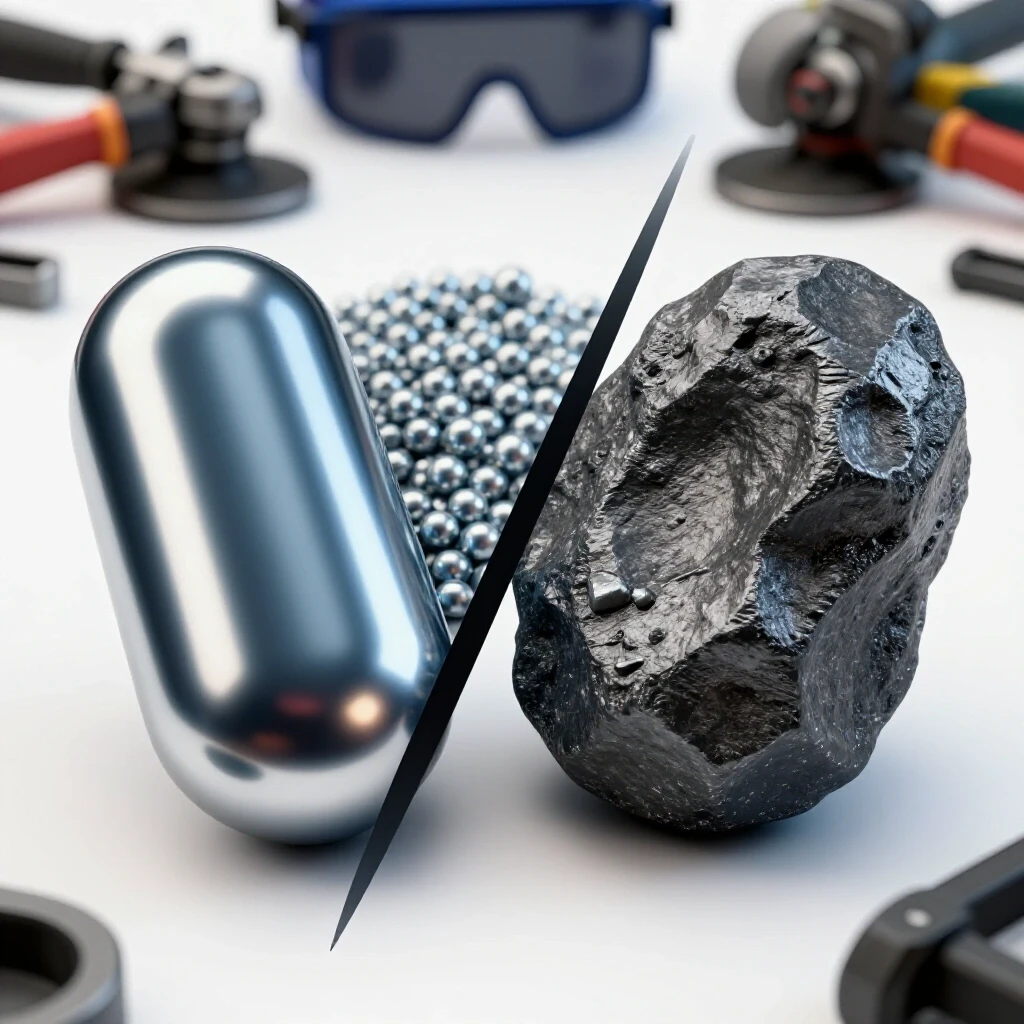
In my experience, the foundation of any metalworking diagnostic guide starts with the grain. You have two main players: one based on aluminum oxide and the other on silicon carbide. Aluminum oxide is a tough, blocky grain. It is designed to take a beating. It excels on high-tensile materials like carbon steel and alloy steels because it resists fracturing too early. Silicon carbide, on the other hand, is harder but more brittle. Its grains are sharper and more friable, meaning they break easily to reveal new, needle-like edges. This makes it the go-to for very hard materials or very soft, gummy ones.
The Role of Friability in Tool Performance
Friability is a measure of how easily an abrasive grain breaks down under work pressure. A wheel that is too friable for the job will wear away instantly, while one that isn’t friable enough will “glaze” or “load,” leading to mechanical troubleshooting steps that often overlook the wheel itself.
When I’m diagnosing tool chatter solutions, I look at the grain’s breakdown rate. If the grain doesn’t fracture, it becomes dull. A dull grain stops cutting and starts rubbing. This rubbing creates friction, which leads to heat. In a high-precision environment, that heat causes the metal to expand, throwing off your lathe alignment checklist or causing structural warping. Understanding friability helps you predict whether a wheel will stay sharp or turn into a blunt instrument that ruins your workpiece.
Troubleshooting Surface Defects and Thermal Damage
Thermal damage is the silent killer of structural integrity in metal fabrication. It occurs when the abrasive grain fails to cut cleanly, instead converting mechanical energy into heat that migrates into the part.
I once tracked a series of metallurgical cracks in a set of hardened shafts. The shop thought it was a heat-treat error. After using an infrared heat tracker, I found the surface temperature during the final pass was hitting nearly 1,000 degrees Fahrenheit. They were using a dense, non-friable wheel on a material that required a sharp, fast-breaking silicon carbide grain. By switching the abrasive, we dropped the surface temperature by 400 degrees and the cracking stopped.
Identifying “Burn” Patterns and Work Hardening
Surface burn usually shows up as straw, brown, or blue discoloration on steel. This isn’t just a cosmetic issue; it represents a change in the metal’s grain structure and hardness.
- Straw/Yellow: Indicates a temperature of roughly 400-450°F. Usually acceptable for mild steel but may affect precision tolerances.
- Brown/Purple: Indicates 500-550°F. This can lead to surface softening in tempered parts.
- Dark Blue: Indicates temperatures exceeding 600°F. This often results in work hardening or “skin” brittleness, which leads to weld defects later.
Building on this, if you see these colors while using an alumina-based wheel on hardened tool steel, the wheel is likely too “hard” for the application. The bond is holding onto dull grains for too long. Interestingly, switching to a more friable silicon carbide wheel can often solve this because the sharper grains require less pressure to penetrate the surface, reducing the friction that causes the burn.
Diagnosing Wheel Loading and Vibration
Loading occurs when bits of the workpiece become embedded in the pores of the grinding wheel. This is a common cause of tool chatter and can even lead to spindle bearing wear if left unaddressed.
I’ve seen many fabricators struggle with metal fabrication fixes on aluminum or brass. They use a standard multipurpose wheel and within minutes, the wheel face looks like solid metal. This is because aluminum is ductile and has a low melting point. The heat of grinding melts the aluminum, which then “loads” the wheel. Once loaded, the wheel can no longer cut. It begins to bounce off the work, creating a resonant vibration that many mistake for a loose spindle or a bad motor controller.
Using Silicon Carbide for Non-Ferrous Materials
Silicon carbide is the standard solution for non-ferrous metals like aluminum, copper, and brass. Because the grains are so sharp, they slice through the “gummy” metal rather than plowing through it.
In my diagnostic process, if I encounter excessive vibration on a grinder, I first check for wheel loading. If the pores are clogged, no amount of machine leveling or tightening will fix the chatter. Using a silicon carbide wheel with an open structure (wide spacing between grains) allows the chips to be thrown clear of the wheel. This keeps the tool cool and the vibration levels within a mechanical tolerance of 0.001 to 0.003 inches of displacement.
Material Compatibility and Grain Interaction
The chemical relationship between the abrasive and the metal determines the efficiency of the cut. Some materials have a chemical affinity for certain abrasives, which causes the grain to dull prematurely.
For example, silicon carbide is chemically reactive with steel at high temperatures. The carbon in the wheel wants to migrate into the iron. This causes the sharp edges of the silicon carbide to “melt” away or dull almost instantly when used on heavy ferrous grinding. This is why we use aluminum oxide for steel; it is chemically stable and won’t react with the iron, allowing the grain to do its job until it physically wears down.
Comparison of Abrasive Applications
| Material Type | Recommended Abrasive | Why? | Potential Diagnostic Issue |
|---|---|---|---|
| Carbon Steel | Aluminum Oxide | High toughness, resists dulling | Overheating if bond is too hard |
| Stainless Steel | Premium Alumina | Resists loading, keeps heat low | Surface contamination/rusting |
| Aluminum/Brass | Silicon Carbide | Sharp grains slice soft metal | Loading leading to chatter |
| Cast Iron | Silicon Carbide | Brittle grain matches brittle metal | Rapid wheel wear |
| Carbide Tools | Silicon Carbide | Harder than the tool material | Glazing if pressure is too low |
As a result of these differences, your first step in any metalworking diagnostic guide should be to verify the material-to-abrasive match. I’ve seen 50% of “machine errors” vanish simply by putting the right wheel on the spindle.
Resolving Tool Chatter and Surface Finish Errors
Tool chatter is a harmonic vibration that leaves a “washboard” pattern on the metal. It is often the result of a mismatch between the wheel’s hardness and the material’s resistance.
When I’m called in for tool chatter solutions, I look at the grit size and the bond hardness. A wheel that is too “hard” (meaning the glue holding the grains is very strong) won’t let go of dull grains. These dull grains push against the work, causing the machine’s arm or spindle to flex and snap back. This cycle repeats hundreds of times per second, creating chatter. If you are using an aluminum oxide wheel and getting chatter on hardened steel, the wheel is likely refusing to self-sharpen.
Systematic Steps to Eliminate Chatter
- Check Wheel Balance: Use a static balancer to ensure the wheel isn’t heavy on one side.
- Verify Spindle Backlash: Ensure the spindle has less than 0.002 inches of play.
- Inspect for Loading: Look for metal shiny spots on the wheel face.
- Adjust Feed Rate: Sometimes increasing the IPT (inches per tooth) or feed-per-pass can force the wheel to break down and sharpen itself.
- Switch Abrasive Type: If alumina is chattering on a hard surface, try a green silicon carbide wheel to see if the sharper grain penetrates more easily.
Building on this, I remember a lathe alignment checklist that failed to solve a finish issue on a gray iron casting. The operator was using a fine-grit alumina wheel. We switched to a coarse silicon carbide wheel. The sharper, more brittle grains of the silicon carbide handled the brittle nature of the iron perfectly, and the chatter disappeared immediately.
Troubleshooting Weld Porosity and Surface Contamination
Weld porosity is often caused by contaminants left behind during the grinding process. If you are preparing a joint and your abrasive is leaving “smears” or embedded particles, your weld quality will suffer.
I once spent three days tracking down intermittent porosity in a high-pressure pipe weld. We checked the gas flow (set at 35 CFH), we checked the rod, and we checked the machine’s ground. It turned out the fabricators were using silicon carbide wheels to prep the steel pipe. The wheels were breaking down and leaving microscopic carbon-rich particles embedded in the grain of the steel. When the arc hit those particles, they outgassed, creating tiny bubbles in the weld pool.
Abrasive Selection for Weld Prep
- For Steel: Always use aluminum oxide. It leaves a clean, chemically compatible surface for the weld puddle.
- For Aluminum: Use a dedicated, non-loading silicon carbide wheel or a specialized alumina wheel designed for non-ferrous work.
- Cleaning: After grinding, always wipe the joint with an approved solvent to remove any loose abrasive dust.
By following these mechanical troubleshooting steps, you ensure that the “root cause” of your weld failure isn’t something you introduced during the preparation phase.
Managing Thermal Stress in High-Carbon Steel
High-carbon steels are sensitive to rapid temperature changes. If you use a non-friable aluminum oxide wheel on a high-carbon part, you risk creating “grinding checks”—tiny, microscopic cracks that can lead to catastrophic failure under load.
In my repair logs, I’ve noted that high-carbon steels respond better to “white” or “pink” aluminum oxide. These are high-purity versions of the grain that are more friable than the standard “brown” alumina. They break down faster, keeping the part cooler. If the part still gets too hot, that’s when I consider a silicon carbide wheel, even though it wears faster. The cost of a new wheel is nothing compared to the cost of a cracked structural component.
Monitoring Temperature with Modern Tools
I highly recommend using a smartphone vibration spectrum analyzer and an infrared thermometer. If you see the temperature of a part rising more than 150°F above ambient during a single pass, your abrasive choice is likely wrong. Similarly, if the vibration analyzer shows a peak at the spindle’s RPM frequency, you have an imbalance. If the peak is at a much higher frequency, you are likely dealing with grain-level chatter from a glazed wheel.
Abrasive Diagnostics Checklist for the Professional Shop
To keep your shop running with minimal downtime, use this checklist when a grinding process goes sideways.
- Identify Material Hardness: Is it above 50 HRC? If yes, consider a more friable grain like silicon carbide or premium alumina.
- Check for Discoloration: If the part is blue, you have too much friction. Reduce pressure or go to a softer bond.
- Inspect Surface Finish: Are there deep scratches or a “washboard” pattern? Check wheel balance and grit size.
- Evaluate Wheel Wear: If the wheel isn’t wearing down at all, it’s glazed. If it’s wearing too fast, it’s too soft for the material.
- Audit the Prep Process: Are you using the same wheel for aluminum and steel? Stop. Cross-contamination causes weld porosity.
Case Study: The Vibrating Surface Grinder
A client once called me about a surface grinder that was producing a terrible finish. They had already replaced the spindle bearings and leveled the machine using a precision spirit level (to within 0.0005 inches per foot). The vibration persisted.
I watched the machine run. The wheel was a standard brown aluminum oxide, and they were grinding a large plate of 300-series stainless steel. Stainless steel is notorious for work-hardening and being “gummy.” The wheel was loading up almost instantly. The “vibration” wasn’t the machine; it was the wheel hitting the loaded spots and jumping. We switched to a silicon carbide wheel with a very open structure. The sharp grains cut through the stainless without melting it into the wheel pores. The “vibration” vanished, and the finish returned to a mirror shine.
Conclusion
Mastering the choice between these two primary abrasives is about more than just buying the right wheel. It is about understanding the physics of how metal is removed. Whether you are addressing tool chatter solutions or troubleshooting weld porosity, the grain you choose is your primary interface with the work.
If you find yourself stuck, go back to the basics. Look at the sparks. Aluminum oxide usually produces long, branching sparks, while silicon carbide produces shorter, more orange sparks. If your sparks look “stifled” or weak, your grains aren’t cutting. By systematically testing your wheels and monitoring the thermal and vibrational output of your machines, you can move away from guesswork and toward a more data-driven, reliable fabrication process.
Frequently Asked Questions
Why does my grinding wheel keep turning black and stopping?
This is called “loading.” It happens when the material you are grinding melts and fills the spaces between the abrasive grains. It is common when using aluminum oxide on soft metals like aluminum or copper. Switching to a silicon carbide wheel or using a wheel dresser to open the pores can help.
Can I use a silicon carbide wheel on mild steel?
You can, but it is not efficient. Silicon carbide is very hard but brittle. Steel is tough and will dull the sharp points of the silicon carbide quickly. Additionally, at high temperatures, the carbon in the wheel can react with the steel, leading to rapid wheel wear and potential surface contamination.
How do I know if my wheel is “too hard” for the job?
If you see burn marks (blue/brown tint) on the metal, but the wheel itself isn’t wearing down, the bond is too hard. A wheel should slowly wear away to expose new, sharp grains. If it doesn’t, it glazes over and generates heat instead of cutting.
What is the best way to prevent tool chatter during grinding?
First, ensure the wheel is balanced and the spindle is tight (backlash under 0.002 inches). If the mechanics are sound, try a softer bond or a more friable grain like silicon carbide. Chatter often happens when a dull wheel bounces off the workpiece.
Why is my weld cracking after I prep it with a grinding wheel?
You might be using a wheel that is too hard, causing “grinding checks” or microscopic cracks from heat. Alternatively, if you are using silicon carbide on steel, you might be leaving carbon deposits that contaminate the weld pool and cause brittleness.
Is green silicon carbide different from black silicon carbide?
Yes. Green silicon carbide is generally higher purity and more friable (brittler) than black. It is typically used for very hard materials like tungsten carbide or precision ceramics where heat management is critical.
How does grit size affect the troubleshooting process?
Coarser grits (lower numbers like 36 or 60) cut cooler and faster but leave a rougher finish. Finer grits (120+) generate more heat because there are more contact points. If you are struggling with heat, try a coarser grit to see if the temperature drops.
What are the signs of a glazed wheel?
A glazed wheel will look shiny or “glassy” on the face. It will produce very few sparks, a lot of heat, and a high-pitched squealing sound. You need to use a diamond dresser to strip away the dull layer and expose fresh abrasive.
Can abrasive choice cause machine motor overheating?
Yes. If a wheel is glazed or loaded, the operator often compensates by pushing harder. This increases the load on the motor, leading to higher amperage draw and potential motor controller faults. Always check the wheel before assuming the motor is failing.
Should I use coolant with these wheels?
Coolant helps with both heat and loading. However, some wheels are designed for dry use. If you are troubleshooting thermal warping, adding a steady stream of coolant can stabilize the part, but make sure your wheel bond is rated for wet applications.
(This article was written by one of our staff writers, Paul Whitaker. Visit our Meet the Team page to learn more about the author and their expertise.)