How to Make Drill Bits Last Longer Cutting Hard Steel (Fix)
When I first opened my manufacturing shop sixteen years ago, I thought I knew how to price a job. I would look at the material cost, double it, and add a bit for my time. It took exactly one project involving a high-strength alloy to realize I was bleeding money through my tool chest. I spent more on replacement cutting tools than I made in profit because I didn’t understand how to manage tool life or account for the hidden costs of working with hardened materials.
For those of you transitioning from a hobby to a side-hustle, the financial reality of the workshop is often found in the small details. It isn’t just about finishing the part; it is about how much of your equipment you “consumed” to get there. If you are drilling through hardened steel and your bits are turning blue or snapping, you aren’t just losing a tool. You are losing your hourly rate and your return on investment.
In this guide, I will break down the economics of maintaining cutting edges in tough alloys. We will look at how to set a real shop rate, how to track your consumable burden, and the specific technical adjustments that keep your overhead low and your profits predictable.
Establishing a True Shop Rate for Metal Fabrication
A shop rate is the total cost of keeping your doors open and your machines running for one hour. It includes fixed costs like rent and insurance, variable costs like electricity and heat, and the gradual wear on your machinery. Knowing this number is the only way to ensure your side-hustle is actually a business.
When you start a side-hustle metalworking business, you must move beyond “beer money” pricing. Most small shops should aim for a rate between $65 and $120 per hour. This range covers your labor, your overhead, and a margin for reinvestment. If you are working with difficult materials that punish your equipment, your rate needs to reflect that increased wear.
To calculate your rate, add your monthly overhead (utilities, insurance, software, and debt payments) and divide it by the number of billable hours you work. Then, add your desired hourly wage. Finally, add a “machinery reserve” of about 10% to cover future repairs. This ensures that when a tool eventually fails, the money to replace it is already in the bank.
Mapping Machinery Amortization and Tool ROI
Amortization is the process of spreading the cost of an expensive tool over its expected lifespan. For a drill press or a mill, you might expect ten years of service. If a machine costs $3,000, it effectively costs you $300 a year, or about $25 a month, plus the cost of the electricity it uses.
Understanding this helps you calculate the metal business ROI. If you buy a high-end drill press to handle harder alloys, you need to know how many holes or projects it takes to pay for itself. I use a simple formula: (Total Tool Cost + Maintenance) / (Expected Number of Jobs). If that number is too high, you either need to raise your prices or find a more efficient way to work.
Understanding Consumable Burden in Hardened Alloy Projects
Consumable burden refers to the total cost of items that are used up during a job, such as drill bits, sanding discs, and cutting fluids. In fabrication job costing, these are often underestimated. For hardened steel, the cost of these items can sometimes equal the cost of the raw material itself.
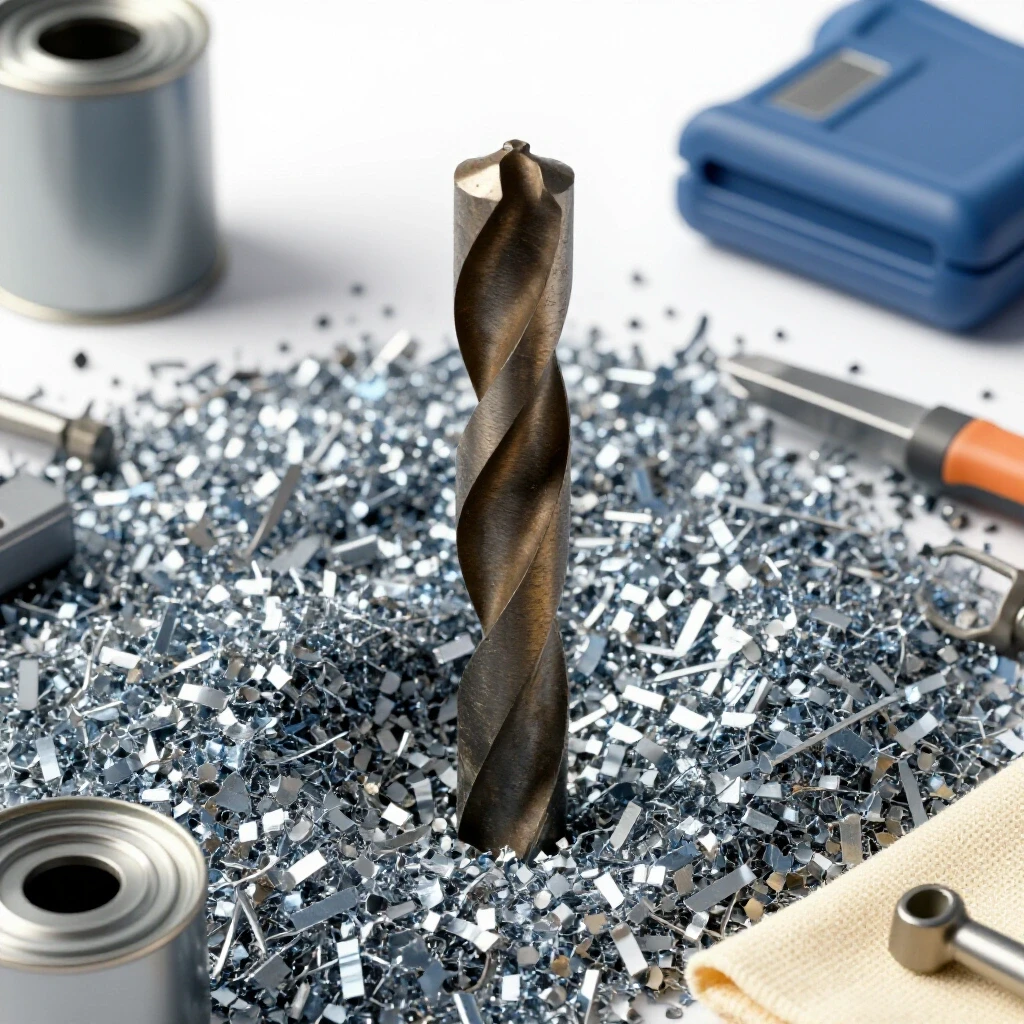
When you are cutting through high-tensile materials, your drill bits are your primary consumable. If you are using standard high-speed steel (HSS) bits, they may only last for a few holes before they lose their edge. This is a “hidden” cost that many side-hustlers ignore until they have to buy a new set. I track these costs meticulously to ensure my material markup is accurate.
A common mistake is forgetting to charge for the “wear and tear” on these items. I recommend a consumable markup of 15% to 20% on every job. This covers the bits you dull, the oil you spray, and the electricity you pull from the grid. Without this markup, you are effectively paying the customer to let you work for them.
| Item Type | Expected Life (Hard Steel) | Cost Per Unit | Cost Per Hole (Est.) |
|---|---|---|---|
| Standard HSS Bit | 2-5 Holes | $4.00 | $0.80 – $2.00 |
| Cobalt (M35) Bit | 20-30 Holes | $12.00 | $0.40 – $0.60 |
| Carbide Tipped | 100+ Holes | $45.00 | $0.45 or less |
| Cutting Fluid | 50 Holes per oz | $0.50/oz | $0.01 |
Thermal Management to Protect Cutting Edges
Heat is the primary enemy of any cutting tool, especially when working with alloys that have been heat-treated or work-hardened. When the tip of a drill bit exceeds its critical temperature, the metal softens and the sharp edge rolls over. Once this happens, the tool will no longer cut; it will only generate more friction and heat.
To keep your tools sharp for longer, you must manage the “Surface Feet Per Minute” (SFPM). This is a measurement of how fast the outer edge of the bit is moving against the metal. For hard steel, you want a slow rotation speed and a heavy, consistent pressure. This ensures that the bit is actually “biting” into the material and pulling heat away in the form of metal chips.
I often see beginners run their drill presses at high speeds, thinking it will cut faster. In reality, this just turns the bit into a friction welder. By slowing the RPM down and using a high-quality sulfur-based cutting oil, you create a barrier that reduces friction and carries heat away. This simple change can increase the life of a single bit by 300% or more.
The Role of Feed Pressure in Tool Longevity
Feed pressure is the amount of force you apply to the drill handle. When working with tough alloys, you cannot be timid. If you don’t apply enough pressure, the bit will simply rub against the surface. This rubbing creates work-hardening, which makes the steel even harder to penetrate and ruins the bit instantly.
You want to see long, curly chips coming out of the hole. If you see fine dust or smoke, you are either spinning too fast or not pressing hard enough. In my shop, I teach that “chips carry the heat.” If your chips are blue, the heat is leaving the tool and staying in the scrap, which is exactly what you want.
Selecting High-Performance Substrates for Tougher Steels
The material your drill bit is made from determines how much heat it can handle before it fails. While standard HSS is fine for mild steel or wood, it is usually a poor choice for a profitable side-hustle dealing with hardened alloys. Upgrading your tooling is often the fastest way to improve your small metal shop pricing efficiency.
Cobalt bits (usually M35 or M42 grade) are the industry standard for manual drilling in hard materials. They contain 5% to 8% cobalt, which allows them to maintain their hardness at much higher temperatures than standard steel. While they cost three times as much, they often last ten times longer, making them a much better investment for your ROI.
- HSS (High-Speed Steel): Good for general use, but fails quickly in hard steel.
- Cobalt: The “sweet spot” for most small shops. Highly heat resistant and can be resharpened.
- Carbide: Extremely hard and heat resistant, but very brittle. Best used in rigid setups like a heavy-duty mill rather than a handheld drill.
Why Cobalt Offers the Best ROI for Side Hustlers
When I analyze tool costs, I look at the cost per hole. A $5 HSS bit that dies after two holes costs $2.50 per hole. A $15 cobalt bit that lasts for 30 holes costs $0.50 per hole. By spending more upfront, you reduce your job costs by 80%. This is the kind of shop math that separates profitable businesses from struggling hobbies.
Additionally, cobalt bits can be resharpened using a specialized grinder. Learning to put a fresh edge on a dull bit is a vital skill. It allows you to extend the life of a single tool for months, further lowering your consumable burden and increasing your project margins.
Building a Job Quote That Accounts for Tool Wear
Accurate fabrication job costing requires you to look past just the labor hours. You must account for the difficulty of the material. If a client brings you a project using AR400 wear plate or stainless steel, you cannot quote it the same way you would quote a project using mild steel.
I use a “complexity multiplier” in my bidding process. For standard projects, the multiplier is 1.0. For hardened steel, I increase this to 1.5 or 2.0. This accounts for the slower drilling speeds, the extra cutting fluid, and the inevitable dulling of bits. If a job requires 20 holes in hard steel, I factor the cost of at least one new high-quality bit into the quote.
- Calculate Base Labor: (Estimated Hours x Shop Rate).
- Add Material Cost: (Raw Metal Cost + 20% Markup).
- Add Consumable Burden: (Specific Tooling + 15% Overhead).
- Add Complexity Factor: (Total x 1.2 for hard materials).
The “Hole Tax”: Pricing by Feature
Many experienced fabricators use a “per hole” pricing model for tough materials. For example, you might charge $5.00 for every hole drilled in hardened plate. This covers the time, the machine wear, and the bit life. It is an easy way to explain costs to a customer and ensures you aren’t underestimating the work involved.
Tracking Post-Job Performance and Tool Depreciation
To truly master your finances, you must review every job once it is finished. Did you use more bits than you expected? Did the drilling take twice as long because the steel was harder than the supplier claimed? This post-job analysis is where you find the “leaks” in your profit margin.
I keep a simple log for every major project. I record the start and end times, the number of consumables used, and any issues I encountered. If I find that I consistently spend $50 on bits for a recurring $500 job, I know I need to adjust my material markup or invest in a better sharpening system.
- Total Revenue: What the customer paid.
- Actual Labor: Your hours multiplied by your shop rate.
- Direct Costs: Materials and specific tools bought for the job.
- Net Profit: Revenue minus (Labor + Direct Costs).
If your net profit is negative or very low, you are likely not accounting for the way hard materials destroy your tools. Using this data, you can refine your metal business ROI calculators and ensure your future bids are more accurate.
Digital Tools for Shop Management and Estimation
In the modern shop, you don’t have to do all this math on a napkin. There are several tools that can help you track your expenses and provide professional quotes to your clients. Using these tools makes your side-hustle look like a professional operation, which allows you to command higher rates.
- QuickBooks or FreshBooks: Excellent for tracking general overhead and invoicing.
- Excel or Google Sheets: I recommend building a custom “Job Estimator” where you can plug in material types and hole counts.
- Evernote or Keep: Use these to snap photos of receipts for consumables so you don’t lose them at tax time.
- Machinist’s Calculator Apps: These provide instant RPM and feed rate suggestions based on the material and bit size you are using.
By integrating these tools, you reduce the mental load of running a business. You can focus on the fabrication work while the software helps you maintain your financial health.
Summary of Financial Benchmarks for Small Shops
To stay profitable while working with punishing materials, keep these benchmarks in mind. Your shop rate should be at least $65/hour to cover basic overhead. Your material markup should be 20% to 30% to account for sourcing and handling. Finally, your consumable burden should be tracked to the penny on high-wear jobs.
Extending the life of your cutting tools is not just a technical skill; it is a financial strategy. Every extra hole you get out of a drill bit is money that stays in your pocket. By slowing down, using the right lubricants, and choosing the correct bit substrates, you turn a potential loss into a consistent gain.
The transition from hobbyist to professional is marked by a shift in focus. You stop worrying about just the “how” of fabrication and start focusing on the “how much.” When you respect your tools and your time, your customers will too.
Frequently Asked Questions
How do I know if my shop rate is too low?
If you are busy every weekend but your bank account isn’t growing, your rate is likely too low. A healthy shop rate should allow you to pay all expenses, pay yourself a fair wage, and still have money left over to replace worn-out equipment. If you can’t afford to buy a new set of cobalt bits without dipping into your personal savings, you need to raise your prices.
Why should I use cobalt bits instead of cheaper HSS bits?
Cobalt bits are specifically designed to handle the heat generated when cutting through hard alloys. While HSS bits are cheaper, they lose their temper (hardness) at relatively low temperatures. Cobalt bits stay hard even when they get hot. For a business, the reduced “downtime” spent changing or sharpening bits makes cobalt the more profitable choice.
What is the best way to calculate material markup?
Most small shops use a sliding scale. For small orders under $100, a 50% markup is common to cover the time spent ordering and picking up the metal. For larger orders, 20% to 25% is standard. This markup must also cover the “waste” or “drops” that you can’t bill to the customer.
How do I stop drill bits from burning up in stainless steel?
Stainless steel work-hardens very quickly. To prevent burning, you must use a slow RPM and a very heavy feed pressure. You cannot let the bit “dwell” or spin in the hole without cutting. Use a high-quality cutting paste or oil to keep the temperature down and ensure the bit keeps biting into the fresh metal.
Is it worth buying a dedicated bit sharpener?
If you drill more than 50 holes a month in hard materials, a professional sharpener (like a Drill Doctor or an industrial bench grinder setup) will pay for itself in less than a year. It allows you to reuse expensive cobalt bits multiple times, which directly lowers your consumable burden.
How do I account for electricity and heat in my job quotes?
These are part of your “overhead.” Add up your shop’s utility bills for the year and divide by the number of hours you plan to work. Usually, this adds about $2 to $5 per hour to your shop rate. It’s a small amount, but over a year, it can mean the difference between profit and loss.
Should I charge for the time I spend quoting a job?
Generally, you don’t charge for the quote itself, but you must build that “administrative time” into your hourly shop rate. If you spend 5 hours a week quoting and 15 hours a week fabricating, your shop rate for those 15 hours must be high enough to cover the 5 hours of office work.
What is the “Consumable Burden Factor”?
This is a percentage added to a job to cover things that are hard to measure, like welding gas, sandpaper, and drill bits. For general fabrication, 10% is standard. For heavy drilling in hard steel, I recommend increasing this to 15% or 20% to ensure you aren’t losing money on tool wear.
Can I use a handheld drill for hardened steel?
It is possible, but not efficient for a business. Handheld drills lack the rigidity and consistent pressure needed to keep a bit from rubbing and work-hardening the material. For professional results and longer tool life, a drill press or mill is required so you can control the feed rate and pressure accurately.
How do I handle a job where I break an expensive bit?
This should be covered by your “machinery reserve” or your “consumable markup.” You generally don’t bill the customer for a broken tool unless it was a very specialized, one-time-use cutter that you discussed upfront. This is why having a 15% to 20% markup on every job is vital—it creates a “safety net” for these accidents.
(This article was written by one of our staff writers, Michael Hargrove. Visit our Meet the Team page to learn more about the author and their expertise.)