Electric vs Propane Workshop Heaters: Which is Best? (Tips)
When I first moved my metalworking gear into a drafty two-car garage in 2013, I had a strict $2,000 budget. I spent most of that on a decent multi-process welder, a solid workbench, and basic safety gear. What I didn’t account for was the bone-chilling dampness of a concrete floor in January. I quickly learned that temperature control isn’t just about personal comfort; it is a fundamental part of maintaining tool health and ensuring weld integrity.
Choosing between various heating methods for a fabrication space requires a balance of safety, electrical capacity, and operating costs. In a small shop, every amp on your circuit breaker and every square foot of floor space is valuable real estate. If you choose the wrong system, you might find yourself unable to run your angle grinder without tripping a breaker, or worse, dealing with flash rust on your expensive new steel stock due to moisture buildup.
Evaluating Thermal Demands in the Starter Fabrication Space
Determining the heat requirements for a metalworking area involves calculating the British Thermal Units (BTUs) needed to raise the temperature of a specific square footage. This step prevents overspending on oversized units or wasting money on underpowered heaters that never reach a comfortable working temperature.
A common mistake I see beginners make is ignoring the “thermal mass” of their shop. In a metal shop, your anvil, welding table, and drill press all act as giant heat sinks. They soak up the warmth, making the air feel colder for longer. To find your baseline, you generally need about 25 to 40 BTUs per square foot for a standard insulated garage. If your space is uninsulated, that number can easily double.
The Impact of Ambient Temperature on Metalworking Precision
Ambient temperature affects how metal reacts to welding, how lubricants flow in machinery, and how comfortably a technician can perform fine measurements. Working in extreme cold can lead to brittle welds or condensation that ruins precision surfaces on tools like micrometers and lathes.
When the air is too cold, the “heat-affected zone” of a weld cools too rapidly. This can lead to cracking or poor penetration, especially on thicker plate steel. Furthermore, if you use a heating source that introduces moisture, you risk “flash rust.” This is a fine layer of oxidation that forms on clean metal surfaces almost overnight. For a beginner on a budget, protecting your investment in raw materials is just as important as the tools themselves.
Analyzing Electrical Heating Options for Small Shops
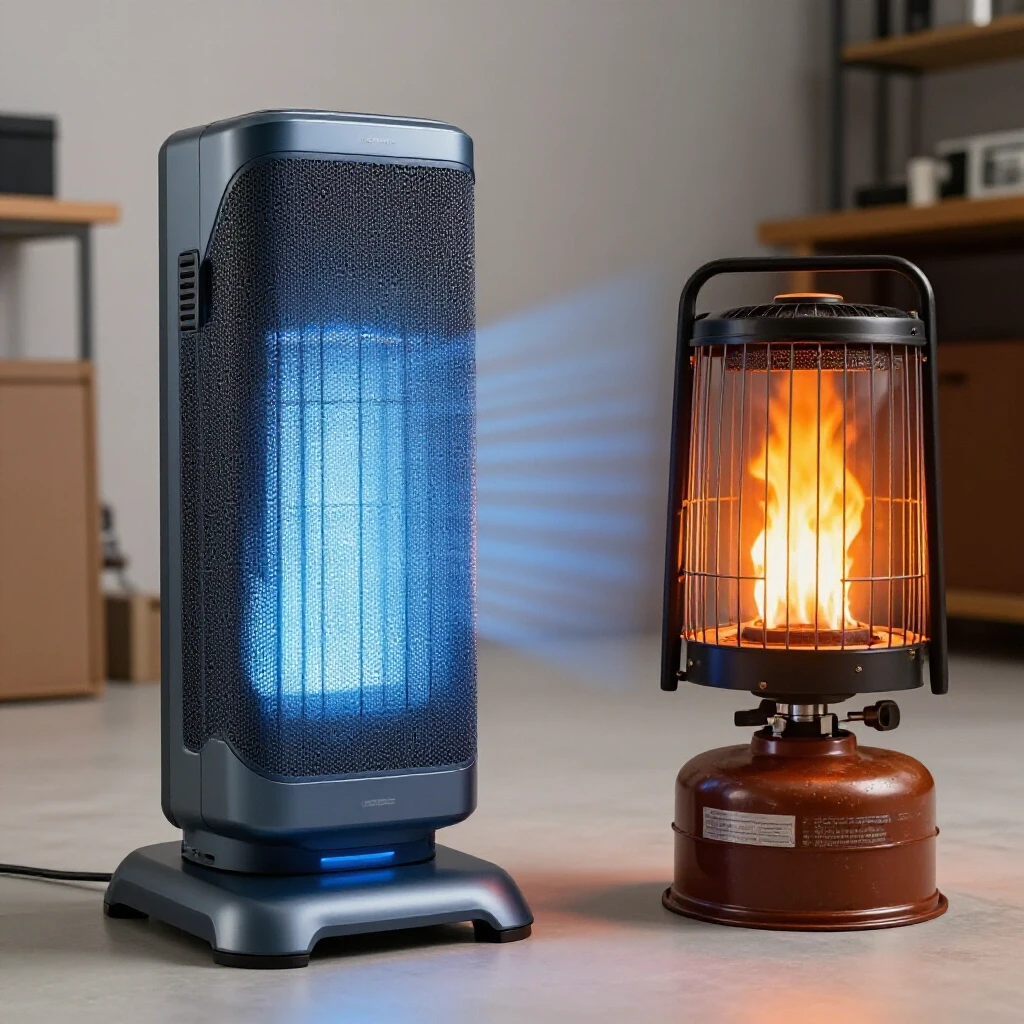
Electrical heating involves using resistive coils or infrared elements to convert electricity into heat without an open flame. These units are popular in home shops because they do not require fuel storage and generally produce “dry” heat that does not contribute to tool rust.
I prefer electric heat for small, enclosed spaces because it is generally cleaner. However, the limitation is almost always your breaker panel. A standard 120V outlet can only support a small 1,500-watt heater, which produces about 5,100 BTUs. This is barely enough to take the edge off a small corner of a garage. For real fabrication work, you often need to look at 240V options, which require the same type of outlet as a heavy-duty welder.
Managing Amperage Draw and Circuit Load Limits
Circuit load management is the process of calculating the total electrical demand of your tools and heating units to ensure they do not exceed the capacity of your breaker. This is critical in residential shops where the total service might only be 60 to 100 amps.
Building on my background in industrial maintenance, I always suggest a “power audit” before buying a heater. If you have a 20-amp circuit and you plug in a 15-amp heater, you only have 5 amps left. That isn’t enough to run a vacuum or a bench grinder. You must decide if you have the electrical “headroom” to run heat and tools simultaneously.
Table 1: Power Consumption by Tool Class and Heating Load
| Tool / Device | Voltage (V) | Amperage (A) | Wattage (W) | BTU Output |
|---|---|---|---|---|
| Small Space Heater | 120V | 12.5A | 1,500W | 5,118 |
| Industrial Fan Heater | 240V | 30A | 7,200W | 24,500 |
| Entry-Level MIG Welder | 120V | 20A | 2,400W | N/A |
| 4.5-inch Angle Grinder | 120V | 6A | 720W | N/A |
| LED Shop Lighting | 120V | 0.5A | 60W | N/A |
Implementing Propane Solutions for High-Output Heating
Propane heating utilizes portable or fixed burners fueled by liquid propane gas to generate high levels of thermal energy quickly. These systems are often favored for their portability and the fact that they do not draw from the shop’s electrical grid.
Interestingly, propane can be a double-edged sword for the metalworker. While a propane “torpedo” or radiant heater can warm a freezing garage in minutes, it produces moisture as a byproduct of combustion. In my second shop, I used a propane radiant heater. I loved the instant heat, but I had to be incredibly diligent about wiping down my cast iron tool surfaces with oil to prevent the moisture in the air from causing rust.
Combustion Safety and Ventilation Requirements
Proper ventilation is the practice of ensuring a constant exchange of fresh air to prevent the buildup of carbon monoxide and excess moisture. For any heater that burns fuel, maintaining a high Cubic Feet per Minute (CFM) air exchange rate is a non-negotiable safety standard.
As a result of the combustion process, propane heaters consume oxygen. If you are working in a tightly sealed garage, this can become dangerous very quickly. I follow a strict rule: if a fuel-burning heater is on, a vent or window must be cracked. This might seem counterproductive to heating the space, but it is essential for safety. I also recommend a high-quality carbon monoxide detector placed at eye level, away from the heater itself, to monitor air quality.
Budgeting and Operational Costs for Shop Climate Control
Operational cost tracking involves comparing the price of electricity per kilowatt-hour (kWh) against the price of propane per gallon or pound. For a budget-conscious beginner, the “cheaper” heater to buy is not always the cheaper one to run over a three-month winter.
When I tracked my costs in 2015, I found that propane was often cheaper for “burst” heating—turning it on high for 20 minutes to warm the air, then turning it off. However, electric heat was more cost-effective for maintaining a steady temperature all day. You should check your local utility rates. In some regions, electricity is prohibitively expensive, making propane the only logical choice for a hobbyist.
Table 2: Estimated Hourly Operating Costs (Example Data)
| Heater Type | Energy Source | Unit Cost (Avg) | Hourly Consumption | Cost Per Hour |
|---|---|---|---|---|
| 5,000W Electric | Electricity | $0.14 / kWh | 5 kWh | $0.70 |
| 30,000 BTU Propane | Propane Gas | $3.50 / Gallon | 0.33 Gallons | $1.15 |
| 1,500W Electric | Electricity | $0.14 / kWh | 1.5 kWh | $0.21 |
Integrating Heat into Your Starter Metal Workshop Layout
Workshop layout planning is the strategic placement of tools, workbenches, and utilities to maximize workflow and safety. When adding a heat source, you must consider fire hazards, clearance from flammable materials, and the location of your welding station.
Building on this, you never want your heat source too close to your grinding station. Sparks from an angle grinder can travel 15 feet and could potentially ignite a propane leak or melt the plastic housing on an electric heater. I recommend a “clear zone” of at least 3 feet around any heater, kept free of sawdust, rags, or aerosol cans.
- Maintain a 3-foot clearance from all flammable materials.
- Place heaters away from “high-spark” zones like grinders and chop saws.
- Ensure the heater does not block emergency exits or walkways.
- Position fans to circulate warm air down from the ceiling toward the floor.
Safety Gear and Standards for Heated Environments
Safety integration involves selecting protective equipment and following established guidelines to mitigate the risks of fire and fumes. Even when you are just trying to stay warm, the standards set by organizations like the American Welding Society (AWS) regarding ventilation still apply.
For example, AWS Fact Sheet No. 1 emphasizes that adequate ventilation is necessary for all welding environments. If you are using a propane heater, you are already “competing” for fresh air. This makes a dedicated exhaust fan even more critical. I also suggest wearing natural fiber clothing like cotton or wool. Synthetic “puffy” jackets are popular in winter, but they can melt instantly if a spark hits them or if you lean too close to a radiant heater.
Actionable Framework for Heater Selection
To help you make a final decision, I have developed a simple vetting process. This checklist focuses on the three main constraints of a beginner shop: power, safety, and budget.
- Check Your Panel: Do you have an open 240V breaker slot? If not, a high-output electric heater will require an expensive subpanel upgrade.
- Measure Your Space: Calculate your square footage and multiply by 30. That is your target BTU requirement.
- Assess Your Tooling: Will you be doing high-precision work on bare steel? If so, the “dry” heat of electric is worth the extra cost to prevent rust.
- Evaluate Ventilation: Does your garage have windows or a ridge vent? If it is a sealed “hot box,” avoid propane unless you install a dedicated vent.
- Track Your Time: If you only spend 2 hours a week in the shop, a portable propane unit is convenient. If you are there 20 hours a week, electric is safer and more consistent.
Common Rookie Mistakes to Avoid
One of the biggest pitfalls I see is the “undersized electric heater” trap. Beginners often buy a cheap 120V heater from a big-box store, only to find it does nothing for a freezing garage. They end up buying three of them, which eventually trips the circuit and costs more than one proper 240V unit.
Another mistake is neglecting the “floor-up” approach. Heat rises. If your shop has a high ceiling, all your expensive warmth is sitting at the roofline while your feet freeze on the concrete. I solved this in my own shop by installing a simple, industrial-grade ceiling fan set to “reverse.” This pushes the warm air back down to the work zone, making even a small heater feel twice as effective.
Next Steps for Your Fabrication Space
Setting up a functional shop is a marathon, not a sprint. Your first priority should be safety and ensuring your environment doesn’t damage your tools. If you are still undecided, start by insulating your garage door. It is a low-cost upgrade that makes any heater you choose perform significantly better.
Once the space is tempered, focus on your layout. Keep your metal storage off the concrete floor to prevent moisture wicking, and keep your heater in a permanent, safe location. By treating your shop climate as a technical requirement rather than an afterthought, you set yourself up for better welds, longer tool life, and a much more enjoyable building experience.
Frequently Asked Questions
How many BTUs do I actually need for a standard two-car garage? For a typical 400 to 500 square foot garage with basic insulation, you should look for a heater capable of producing between 15,000 and 25,000 BTUs. If you have high ceilings or no insulation, you may need to move toward the 30,000 to 45,000 BTU range to maintain a steady 60 degrees Fahrenheit.
Can I run a 240V heater and a welder on the same circuit? Technically, no. Most 240V heaters and welders require a significant amount of amperage. If you try to run both on a single 30-amp or 50-amp circuit, you will likely trip the breaker as soon as you strike an arc. I recommend a dedicated circuit for the heater so it can stay on while you work.
Does propane heat really cause tools to rust? Yes, it can. Propane releases water vapor as it burns. In a cold shop, this moisture condenses on cold steel surfaces like your table saw top or welding table. To prevent this, you must ensure good ventilation and keep your tools coated with a light film of protective oil or wax.
Is it safe to leave an electric shop heater on overnight? I generally advise against leaving any shop heater unattended. While many modern electric units have thermostats and overheat protection, the risk of a dust-clogged element or a mechanical failure causing a fire is not worth the risk in a residential space.
What is the most “budget-friendly” way to heat a shop? The most budget-friendly approach is often a combination of insulation and a portable propane radiant heater for “spot” warmth. Insulating the garage door and sealing air leaks provides the highest return on investment by keeping whatever heat you generate inside the building.
Do I need a carbon monoxide detector if I use a propane heater? Absolutely. Any time you burn fuel in an enclosed space, carbon monoxide (CO) is a risk. A CO detector is a mandatory safety item for any shop using propane or kerosene heat. It is a small investment that can save your life.
How do I prevent my heater from getting clogged with metal dust? Metal dust from grinding is conductive and can cause shorts in electric heaters. I recommend placing your heater as far from your grinding station as possible and using a shop vacuum or air compressor to blow out the heating elements or cooling fins at the end of every week.
What is the difference between radiant and forced-air heat? Radiant heat warms objects (like you and your workbench) directly using infrared waves, similar to the sun. Forced-air heat warms the air and blows it around the room. Radiant is often better for drafty shops because it doesn’t lose all its effectiveness if a door is opened briefly.
Can I use a “buddy” style heater for a metal shop? Portable “buddy” heaters are fine for small, localized warmth, but they are often underpowered for a full garage. They are best used as a secondary heat source right next to your workbench while you do assembly or layout work.
Will a heater affect my welding gas? Extreme cold can affect the pressure in your shielding gas cylinders (like Argon or CO2). A heater helps keep these cylinders at a stable temperature, ensuring consistent gas flow and better weld quality. Just ensure the heater is never pointed directly at a pressurized cylinder.
(This article was written by one of our staff writers, Michael Thompson. Visit our Meet the Team page to learn more about the author and their expertise.)