How to Find Cheap MIG Welding Wire in Bulk Safely (Review)
When I first transitioned from a hobbyist to a professional fabricator, I made a mistake that nearly sank my business in the first six months. I was landing plenty of work, but at the end of the month, my bank account never seemed to grow. I realized I was pricing my jobs based on what I thought was “fair” rather than what the math dictated. I was ignoring the silent drain of consumables and the slow decay of my equipment.
For sixteen years, I have tracked every pound of wire and every kilowatt of power. I have learned that a successful side-hustle is not built on how well you can weld, but on how well you can manage the economics of your workshop. If you are moving from small weekend projects to taking on paying clients, you need a system that tracks your overhead and ensures every pull of the trigger is profitable.
Establishing a Profitable Shop Rate Baseline
A shop rate is the total amount you must charge per hour to cover your business expenses and pay yourself a fair wage. It is the foundation of every quote you send to a client.
Many new shop owners pick a number out of the air, often around $30 or $40 an hour. In reality, a sustainable shop rate for a small fabrication business usually falls between $65 and $120 per hour. This range covers your rent, insurance, power, and the eventual replacement of your welder. If you charge less than $65, you are likely paying your customers to let you work for them.
To find your rate, you must list every fixed cost you have. This includes your shop rent, even if the shop is in your garage. You should charge the business a “rent” equivalent to what that space would cost elsewhere. Add in your annual insurance premiums, software subscriptions for invoicing, and your average monthly power bill. Divide this total by the number of billable hours you actually work each month. Most side-hustlers only have about 15 to 20 billable hours a week after accounting for cleaning, quoting, and material runs.
| Expense Category | Monthly Cost (Example) | Hourly Impact (20 hrs/week) |
|---|---|---|
| Shop Rent/Utilities | $600 | $7.50 |
| Insurance & Licensing | $150 | $1.88 |
| Equipment Depreciation | $200 | $2.50 |
| Desired Take-Home Pay | $4,000 | $50.00 |
| Total Base Shop Rate | $4,950 | $61.88 |
Sourcing Filler Metals in Volume for Better Margins
Volume purchasing involves buying your primary welding supplies in larger quantities to lower the price you pay for every pound of material used.
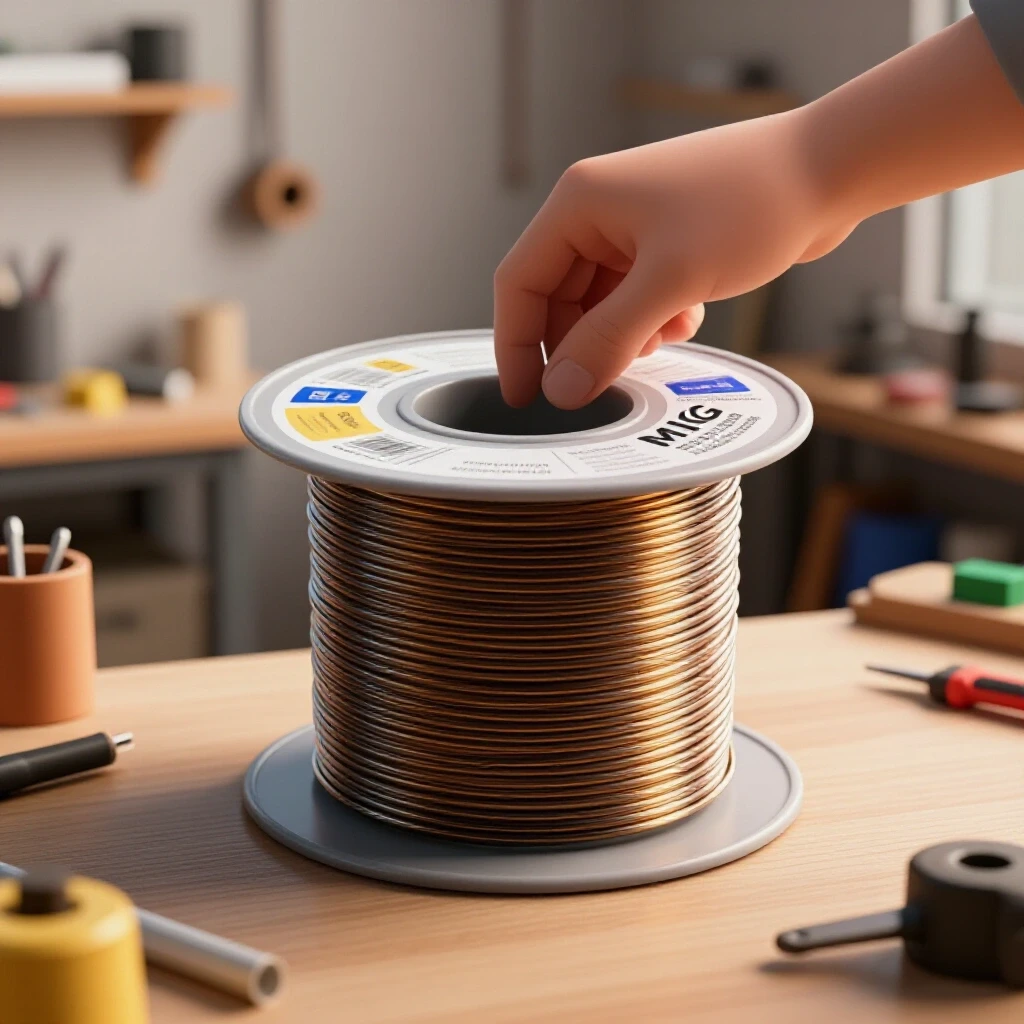
One of the easiest ways to increase your profit on a job is to lower your consumable costs. When you buy a small 2-pound spool of wire at a big-box retail store, you might pay $15. That is $7.50 per pound. However, if you move up to a 33-pound or 44-pound spool from an industrial supplier, that price can drop to under $3.00 per pound. Over a year of steady fabrication, this single change can save you hundreds of dollars.
When looking for these deals, you must focus on the unit price. Do not look at the total price of the spool; look at the cost per pound. I recommend checking with local industrial gas suppliers first. They often have “house brands” that are high quality but lack the expensive marketing of major name brands. Buying in bulk is only a deal if the wire is actually usable, so always ask for a bulk discount when buying four or more large spools at once.
Verifying AWS Classifications and Material Specs
AWS classifications are standardized codes that tell you exactly what a welding wire is made of and how strong it will be.
You should never buy wire just because it is cheap. If the wire does not have an American Welding Society (AWS) stamp, like ER70S-6, you are taking a massive risk. This specific classification is the workhorse of the MIG welding world. The “70” stands for 70,000 psi of tensile strength. If you buy uncertified wire to save a few pennies, you could end up with brittle welds that fail under pressure.
Always verify that the spool has the AWS classification clearly printed on the label. This ensures that the chemistry of the metal is consistent. In my experience, cheap, uncertified wire often has “dirty” chemistry that causes excessive spatter. This increases your cleanup time. If you spend an extra hour grinding spatter because you bought low-quality wire, you have lost all the money you saved on the purchase.
Assessing Packaging Integrity and Storage Protocols
Packaging integrity refers to how well the wire is protected from the air, while storage protocols are the steps you take to keep it clean in your shop.
When you buy in volume, you will have wire sitting on your shelf for months. Steel wire is prone to rusting if it is exposed to moisture in the air. When you receive a bulk order, check that the plastic wrap around the spool is airtight. If the seal is broken, the wire can begin to oxidize before you even open it. Rust on your wire acts like sandpaper inside your liner, wearing out your equipment and causing the wire to feed poorly.
I keep my bulk spools in a climate-controlled cabinet or a sealed plastic bin with desiccant packs. These packs pull moisture out of the air. Interestingly, even a small amount of surface rust can lead to porosity in your welds, which are tiny holes that weaken the joint. If you cannot store it safely, do not buy it in bulk. The savings disappear the moment you have to throw away a rusted 44-pound spool.
- Check for vacuum-sealed packaging upon delivery.
- Store spools off the concrete floor to prevent moisture wicking.
- Use “first-in, first-out” inventory management to keep stock fresh.
- Inspect the wire for a smooth, copper-colored finish before loading.
The Hidden Impact of Consumable Burden on Project Bids
Consumable burden is the total cost of all items used up during a job that aren’t the primary raw materials, such as gas, wire, and sanding discs.
Many fabricators forget to charge for the “small stuff.” They charge for the steel and their time, but they ignore the $20 worth of welding gas and the $15 worth of flap discs they used. This is called the consumable burden. A safe way to handle this is to add a percentage to every quote. I typically apply a 10% to 15% burden factor to the labor total of a job.
For example, if a job takes 10 hours at a $80 shop rate, your labor cost is $800. A 15% burden would add $120 to the bill to cover your wire, gas, and abrasives. If you don’t do this, that $120 comes directly out of your pocket. Over ten jobs, that is $1,200 in lost profit. Tracking these costs allows you to see if your bulk purchasing is actually helping your bottom line.
Mapping Machinery Amortization and ROI
Amortization is the process of spreading the cost of a large tool over its useful life to understand how much it costs you to own it every hour.
Every time you pull the trigger on your welder, you are one step closer to needing a new one. If you buy a $3,000 welder and expect it to last 5,000 hours of arc time, it costs you $0.60 per hour just to own that machine. This is your Return on Investment (ROI) calculation. You need to know how many jobs it takes to pay for a tool before it starts making you “real” money.
When I consider a new tool, I look for a payback period of less than 12 months. If a $2,000 cold saw saves me 30 minutes of labor on every gate I build, and I build two gates a week, I save 52 hours a year. At a $80 shop rate, that tool pays for itself in less than six months. This data-driven approach prevents you from buying “shiny toys” that don’t actually increase your shop’s efficiency.
| Tool Investment | Purchase Price | Estimated Life (Hrs) | Hourly Ownership Cost |
|---|---|---|---|
| Industrial MIG Welder | $3,500 | 6,000 | $0.58 |
| Plasma Cutter | $2,200 | 3,000 | $0.73 |
| Ironworker | $8,500 | 10,000 | $0.85 |
| Horizontal Band Saw | $1,800 | 4,000 | $0.45 |
Building a Custom Job Quote with Material Markups
A material markup is a percentage added to the cost of raw materials to cover the time spent sourcing, transporting, and storing them.
You should never sell material to a client at the same price you paid for it. You had to drive to the steel yard, wait in line, and use your fuel to get it to the shop. Most professional shops use a sliding scale for markups. For a small job with $100 in steel, a 100% markup is common. For a large project with $5,000 in steel, the markup might drop to 20% or 25%.
Using a markup ensures that your “hidden” time is paid for. If you spend two hours picking up steel and don’t charge for it, you have effectively lowered your hourly rate. I recommend creating a simple spreadsheet where you plug in your material costs, and it automatically applies the correct markup based on the total value. This keeps your bidding consistent and prevents “quoting by gut feeling,” which is often wrong.
Analyzing Post-Job Profits to Refine Future Bids
Post-job reconciliation is the act of comparing your original estimate to the actual time and materials spent once the project is finished.
This is the most important step for any side-hustle owner. Once a project is out the door, look at your notes. Did it take 12 hours when you quoted 8? Did you use more wire than expected? If you don’t look at these numbers, you will keep repeating the same pricing mistakes. I keep a digital log for every project. If I consistently go over on time for a specific type of table or bracket, I raise my prices for that item in the next quote.
A healthy profit margin for a small shop is usually between 20% and 35% after all expenses and your own wages are paid. If your post-job analysis shows a margin of only 5%, you need to look at your consumable sourcing or your labor efficiency. Perhaps buying wire in larger spools or switching to a more efficient gas blend could bring that margin back up.
Essential Tools for Workshop Financial Management
To run a shop professionally, you need digital tools that track your spending and help you generate professional documents for your clients.
- QuickBooks or FreshBooks: These are standard for tracking expenses and sending invoices. They allow you to categorize your bulk wire purchases so you can see exactly how much you spend on consumables annually.
- Google Sheets or Excel: I use a custom-built estimator here. It includes my shop rate, a section for material costs with markups, and a field for consumable burden.
- Evernote or OneNote: Use this to take photos of your receipts and keep notes on how long specific tasks take. This builds your “database” for future quotes.
- Square or PayPal: Having a way to accept credit cards is vital. While they charge a fee (usually around 3%), the speed of payment often offsets the cost.
- Inventory Tracker: A simple whiteboard or spreadsheet to track when you are low on bulk wire so you can wait for a sale rather than buying at full price in an emergency.
Steps to Transition from Hobby to Profitable Side-Hustle
Moving into professional work requires a shift in mindset from “making things” to “running a production environment.”
First, stop thinking about the price of a single spool of wire and start thinking about your annual “tonnage.” If you know you use 200 pounds of wire a year, you can negotiate a much better price with a local supplier than if you buy one spool at a time. Second, fix your shop rate. If you aren’t charging at least $65 an hour, you are likely losing money on overhead.
Finally, protect your investments. Bulk buying only works if the product remains in peak condition. Invest in proper storage and always check certifications. By treating your shop like a business from day one, you build a foundation that can eventually support you full-time. Small adjustments in how you buy and how you bid are the difference between a stressful hobby and a profitable enterprise.
FAQ: Managing Workshop Economics and Consumables
Is it safe to buy welding wire from online liquidators? It is generally risky. Liquidators often sell “new old stock” that may have been stored in damp warehouses. Unless they can verify the AWS classification and the packaging is still vacuum-sealed, the risk of rust and poor feedability is high. It is usually safer to stick with established industrial suppliers who offer volume discounts.
How do I know if a bulk wire deal is actually a good price? Always calculate the cost per pound. Take the total price, including shipping and taxes, and divide it by the weight of the wire. If the result is significantly lower than the per-pound price of a standard 11-pound spool at your local shop, it is a good deal. Aim for a 20% to 40% savings when buying in bulk.
What is the most common mistake when pricing fabrication work? Underestimating “non-welding” time. Fabricators often only charge for the time the arc is on. They forget to charge for cleaning the steel, layout, tacking, grinding, and packaging. You must track your time from the moment you touch the material until the moment the customer picks it up.
Should I charge different rates for different machines? Some shops use a “tiered” rate. For example, manual MIG welding might be $80/hr, while CNC plasma cutting or TIG welding on exotic metals might be $120/hr. This reflects the higher cost of the machinery and the specialized skill required. For most side-hustles, a flat shop rate is simpler and easier for clients to understand.
How do I factor in the cost of shielding gas? Gas is best handled as part of your “consumable burden” percentage. However, if you are doing a job with very long weldments, you can estimate gas usage at about 20-30 cubic feet per hour (CFH). Compare this to your tank’s capacity to find the per-hour cost.
Does bulk wire ever expire? Steel wire does not “expire” in a chemical sense, but it can degrade. If the copper coating flakes off or the wire develops surface rust, it is no longer fit for professional use. Properly stored in a dry, airtight environment, wire can last for several years.
What markup should I use for hardware like bolts and hinges? Small hardware often has a high “hassle factor.” I typically use a 100% markup on small items. If a hinge costs me $5, I charge the client $10. This covers the time spent finding the right part and the cost of driving to get it.
How often should I re-evaluate my shop rate? You should review your numbers every six months. If your power bill goes up or your insurance premiums increase, your shop rate must follow. Ignoring these small increases is how “profit creep” happens, where your margins slowly disappear over time.
Can I use bulk wire savings to lower my quotes and win more jobs? I advise against this. Use the savings to increase your profit margin instead. If you price your jobs based on the “cheapest possible” supplies, you have no room for error if prices go up or if a spool gets ruined.
What is the best way to track my consumable usage? Keep a simple logbook next to your welder. Note when you start a new spool and when it ends. Over a few months, you will see exactly how many pounds of wire you use per billable hour. This data makes your future bidding much more accurate.
(This article was written by one of our staff writers, Michael Hargrove. Visit our Meet the Team page to learn more about the author and their expertise.)