How to Organize a Fast Production Workflow Layout (Tutorial)
I have spent nearly two decades in industrial maintenance and fabrication shops. During that time, I have seen shiny new machines arrive with great fanfare, only to be stripped for parts six months later because they couldn’t hold a tolerance. The problem usually isn’t the operator; it is the gap between what a marketing brochure promises and what the iron actually delivers. When you are looking to set up a workspace that moves projects quickly from raw stock to finished parts, you have to look past the powder coating.
Choosing workshop machinery is a high-stakes game. If you buy a lathe with a spindle that has excessive runout, or a mill with a frame that flexes under load, your production speed will tank. You will spend more time fighting the machine than making chips. I have torn down hundreds of tools, from budget imports to high-end domestic brands. My goal is to show you how to evaluate the mechanical bones of these tools so you can build a shop layout that actually works.
Evaluating Structural Rigidity and Frame Materials
Rigidity is the ability of a machine to resist deflection under the force of a cutting tool. In a metalworking environment, the frame of your machine acts as the foundation for every measurement you take. If the frame flexes, your dimensions will drift, and your surface finish will suffer.
Why Heavy Castings Dampen Harmonics
Cast iron is the gold standard for machine frames because of its internal structure. It contains graphite flakes that absorb vibrations, a process known as dampening. This prevents the “chatter” that occurs when a cutting tool vibrates against the workpiece, ensuring that your workflow remains steady and your parts stay within spec.
When reading machine tool reviews, pay close attention to the weight-to-work-envelope ratio. A 7×14 mini-lathe that weighs 80 pounds will never be as stable as a 10×22 lathe that weighs 350 pounds. The extra mass isn’t just for show; it absorbs the energy of the cut. I once worked on a project where we tried to use a lightweight benchtop mill for a production run of aluminum brackets. The vibration was so bad it snapped end mills every ten minutes. We moved the job to a heavy, cast-iron knee mill, and the problem vanished.
Comparing Cast Iron Grades and Dampening Specs
Not all cast iron is created equal. Most budget machinery uses “Grey Iron” (Class 20 or 25), while premium tools often use Class 30 or MEEHANITE castings. The higher the class, the better the tensile strength and vibration absorption.
| Material Type | Tensile Strength (PSI) | Vibration Dampening | Common Application |
|---|---|---|---|
| Sheet Steel | 30,000 – 50,000 | Very Low | Budget Tool Stands |
| Class 25 Grey Iron | 25,000 | High | Entry-level Lathes/Mills |
| Class 35 Grey Iron | 35,000 | Very High | Industrial Machinery |
| Ductile Iron | 60,000+ | Moderate | High-stress Components |
Assessing Motor Design and Power Delivery
The motor is the heart of your production speed. It dictates how deep you can cut and how fast you can remove material. In a high-output shop, you need a motor that maintains constant torque even at low speeds, which is where many budget tools fail.
Understanding Brushless DC vs. Induction Motors
Induction motors are the workhorses of the industry, known for their longevity and simple design. Brushless Direct Current (BLDC) motors are newer to the scene, offering high torque in a smaller package and better variable speed control without the need for complex belt changes.
For a fast-moving shop, the ability to change speeds with a knob rather than a belt pulley saves hours of labor over a month. However, cheaper electronic speed controllers (ESCs) often lose torque at low RPM. If you are doing heavy threading on a lathe or using large-diameter drill bits on a mill, an induction motor with a Variable Frequency Drive (VFD) is usually the more reliable choice. It provides the “grunt” needed for heavy loads without overheating the electronics.
Comparing Motor Efficiency and Torque
| Motor Type | Speed Control | Low-End Torque | Maintenance Needs |
|---|---|---|---|
| Universal (Brushed) | Poor | Low | High (Brush replacement) |
| AC Induction | Excellent (with VFD) | High | Very Low |
| Brushless DC (BLDC) | Excellent | High | Low |
| DC Permanent Magnet | Good | Moderate | Moderate |
Measuring Spindle Runout and Bearing Quality
Spindle runout is the amount of wobble in a rotating shaft. Even a tiny amount of runout, measured in thousandths of an inch, can cause premature tool wear and inaccurate parts. This is a critical metric for anyone following metal lathe comparison guides.
Spindle Runout Explanation and TIR
Total Indicated Runout (TIR) is the difference between the minimum and maximum readings on a dial indicator as the spindle completes a full rotation. For a production-ready lathe or mill, you should look for a TIR of 0.0005 inches or less at the spindle nose. Anything over 0.001 inches will cause noticeable issues in your finished work.
I once inspected a batch of budget milling machines for a local school. Out of five machines, three had a TIR of 0.003 inches. That might not sound like much, but it meant that every hole they drilled was slightly oversized and every milled surface had a wavy pattern. We had to pull the spindles and replace the low-grade factory bearings with high-precision tapered roller bearings to get them within an acceptable range.
Evaluating Bearing Types for Longevity
Bearings support the spindle and allow it to spin under load. Tapered roller bearings are preferred for lathes because they can handle both radial (side-to-side) and axial (end-to-end) loads. High-speed milling machines often use angular contact ball bearings, which handle heat better at high RPMs.
- Deep Groove Ball Bearings: Found in budget tools; not ideal for heavy side-loading.
- Tapered Roller Bearings: The standard for rigidity in lathes; easy to preload for accuracy.
- Angular Contact Bearings: Best for high-speed precision; expensive to replace.
Inspecting Slide Tolerances and Way Construction
The “ways” are the precision-ground surfaces that the machine’s moving parts slide along. If these surfaces are not flat and parallel, the machine will “crab” or bind, making it impossible to maintain a consistent workflow.
Dovetail Ways vs. Linear Rails
Dovetail ways provide a large surface area for contact, which is great for dampening and rigidity. However, they require regular adjustment of “gib strips” to take up wear. Linear rails, common on modern high-speed equipment, use recirculating ball bearings. They are faster and require less maintenance but can be more sensitive to crashes and heavy vibration.
When choosing workshop machinery, look at how the ways are finished. “Hand-scraped” ways are the gold standard. This process creates tiny oil pockets that prevent the metal surfaces from sticking together (stiction). Budget machines often have “ground” ways, which are fine if done correctly, but they may require more frequent lubrication to prevent premature wear.
Alignment Checklist for New Machinery
- Bed Leveling: Use a precision machinist’s level (0.0005″/foot) to ensure the frame isn’t twisted.
- Tailstock Alignment: Ensure the lathe tailstock is perfectly centered with the spindle.
- Squareness: Use a solid square to check the mill head against the table.
- Backlash: Measure the play in the lead screws using a dial indicator.
Planning the Sequence of Workstations
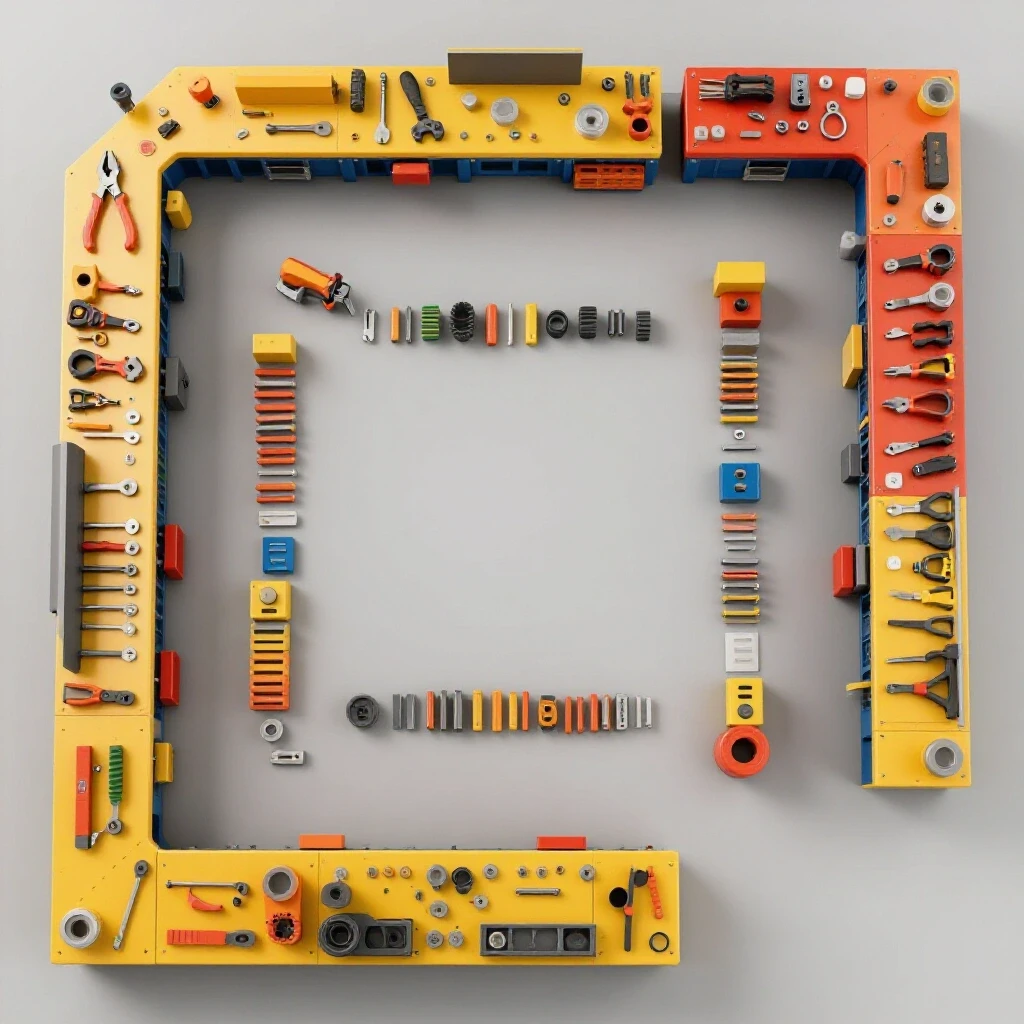
A fast production flow is not just about the tools; it is about how they are positioned. You want to minimize the distance you carry heavy materials. A logical sequence prevents the “workshop shuffle” where you are constantly moving things out of the way to reach a tool.
Logical Flow from Raw Stock to Finished Part
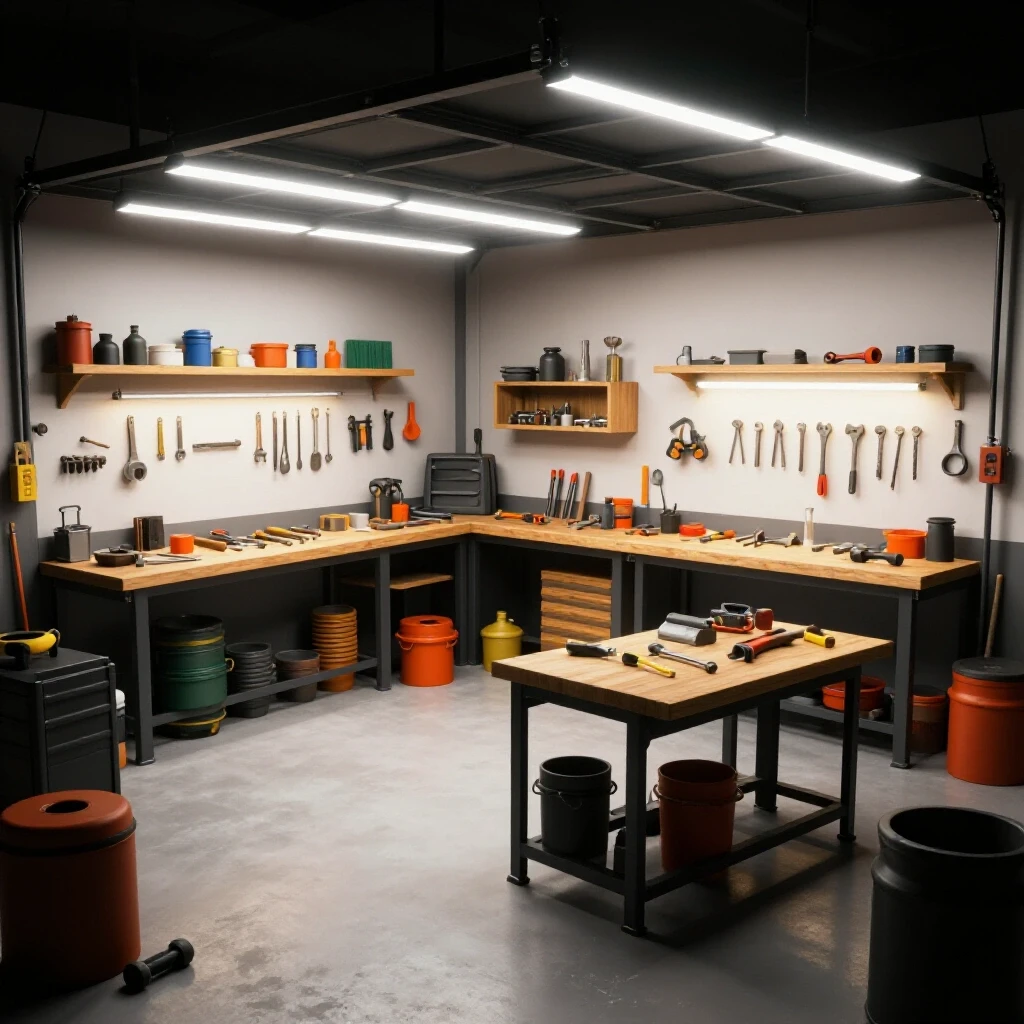
The most efficient layout follows the natural progression of the work. Start with your material storage near the entrance or delivery point. Next, place your cutting station (bandsaw or cold saw). From there, the material should move to the primary machining stations (lathe or mill), then to the assembly or welding bench, and finally to the finishing area (grinding, painting, or coating).
I have seen shops where the bandsaw was in the back corner, and the material rack was at the front. The fabricator had to carry 20-foot sticks of steel across the entire shop for every single cut. By simply moving the saw next to the rack, they saved nearly an hour of labor every day. That is the kind of efficiency that makes a shop profitable.
Tool Placement for Maximum Efficiency
- Primary Tools: Place the lathe and mill in the center of the work area with 360-degree access if possible.
- Secondary Tools: Grinders and sanders should be near the welding bench but away from precision machinery to prevent grit from getting into the ways.
- Tooling Storage: Keep your drill bits, end mills, and lathe tools within arm’s reach of the machine they belong to.
Testing Speed Controllers and Electrical Systems
Modern workshop machinery often relies on complex electronics to provide variable speed and torque. However, many budget-friendly options use undersized components that are prone to failure under heavy use.
Evaluating Variable Frequency Drives (VFDs)
A VFD takes standard household power and converts it into three-phase power, allowing you to control the speed of an AC motor with high precision. When researching milling machine buying tips, look for units that come pre-equipped with a reputable VFD brand. These drives offer “Vector Control,” which uses feedback to maintain motor speed even when you take a deep cut.
Cheap “speed controllers” found on many entry-level lathes are often simple pulse-width modulation (PWM) boards. These are notorious for blowing fuses or melting capacitors when the motor stalls. If you are serious about production, investing in a machine with a robust electrical cabinet is worth the extra cost. It reduces downtime and prevents the frustration of mid-project electrical failures.
Electrical Benchmarks for Shop Tools
- Input Voltage: 220V is always preferred over 110V for tools over 1.5 HP to reduce current draw and heat.
- Controller Type: Sensorless Vector Drive is the standard for high-performance variable speed.
- Duty Cycle: Ensure the motor is rated for “Continuous Duty” (S1 rating) rather than “Intermittent.”
Spare Parts Availability and Long-Term Maintenance
No matter how well you treat a machine, parts will eventually wear out. The difference between a minor hiccup and a month of downtime is how easily you can get replacement components. This is a factor often overlooked in the heat of a purchase.
The True Cost of Budget Imports
Many budget machines are sold under dozens of different brand names. While the initial price is low, finding a specific gear, lead screw, or circuit board can be a nightmare three years down the road. I always recommend checking the manufacturer’s website for a parts manual before buying. If they don’t list individual part numbers and have a way to order them, walk away.
Premium brands usually maintain a deep inventory of spare parts, even for discontinued models. This support is built into the higher price tag. In my 17 years of maintenance, I have had to custom-machine replacement parts for “no-name” tools because the original manufacturer vanished. That cost the owner more in labor than they saved on the initial purchase.
Creating a Maintenance Pipeline
- Manual Archive: Keep a digital and physical copy of every tool’s parts list.
- Consumable Stock: Keep spare belts, fuses, and common bearings on the shelf.
- Lubrication Schedule: Follow the manufacturer’s oiling requirements religiously to prevent way wear.
- Vendor Contacts: Identify three reliable vendors for tooling and repair parts.
Practical Benchmarks for Quality Selection
When you are ready to make a purchase, use these benchmarks to cut through the marketing. These are the physical realities that dictate how a machine will perform in your shop.
- Cast Weight Ratio: For a lathe, look for at least 15-20 lbs of machine weight per inch of center distance.
- Spindle TIR: Demand 0.0005″ or better for precision work; 0.001″ is the absolute limit for general fabrication.
- Motor Frame: Look for “TEFC” (Totally Enclosed Fan Cooled) motors to keep metal dust out of the windings.
- Lead Screw Quality: Look for ACME threads that are ground, not just rolled, for better accuracy and less backlash.
By focusing on these mechanical truths, you can build a workshop that isn’t just a collection of tools, but a high-speed production environment. You will spend less time troubleshooting and more time creating, which is the ultimate goal of any serious fabricator.
FAQ
What is the most important factor when choosing a workshop lathe? Rigidity is the most important factor. A heavy, cast-iron bed dampens vibration and allows for more accurate cuts. Always check the weight of the machine and the quality of the bedway castings before looking at features like digital readouts or paint color.
How much spindle runout is acceptable for a hobbyist? For general hobby work, a Total Indicated Runout (TIR) of 0.001 inches is usually acceptable. However, if you plan on doing precision engine work or high-speed milling, you should aim for a machine with 0.0005 inches or less.
Is a 110V motor enough for a small production shop? While 110V motors can work for light tasks, they draw more amperage and generate more heat than 220V motors. For any machine over 1.5 horsepower, a 220V connection is highly recommended to ensure long-term reliability and consistent power.
What is the benefit of a VFD over a standard speed controller? A Variable Frequency Drive (VFD) allows an AC induction motor to maintain high torque at low speeds and provides smoother acceleration and deceleration. It is much more durable than the cheap PWM controllers found on many entry-level DC-powered tools.
Why should I care about cast iron grades like Class 30? Higher grades of cast iron have better vibration-dampening properties and higher tensile strength. This means the machine will be less likely to chatter during heavy cuts, resulting in a better surface finish and longer tool life.
How can I tell if a machine has good parts availability? Before buying, search for the machine’s model number and the word “parts” online. If you can find an exploded view diagram with specific part numbers and a reputable vendor selling those parts, it is a good sign. If not, you may be on your own if something breaks.
Are linear rails better than dovetail ways? It depends on the application. Linear rails are faster and have less friction, making them great for high-speed work. Dovetail ways have more surface contact, which provides better dampening for heavy, slow-speed cuts.
What is “backlash” and why does it matter? Backlash is the “play” or dead space in a lead screw when you change directions. Too much backlash makes it difficult to hit precise dimensions. High-quality machines use precision-ground screws and adjustable nuts to minimize this effect.
Should I buy a used industrial machine or a new budget machine? A well-maintained used industrial machine (like a Bridgeport or South Bend) will almost always be more rigid and accurate than a new budget import. However, you must be prepared to inspect the ways for wear and potentially replace bearings or electronics.
How do I prevent my machines from vibrating? Ensure the machine is properly leveled on a solid concrete floor. Use high-quality leveling mounts to distribute the weight evenly. If the machine is top-heavy, consider bolting it to the floor or adding a weighted base to lower the center of gravity.
What is the first tool I should buy for a metalworking shop? A high-quality bandsaw or cold saw is often the best first investment. Every project starts with cutting material to length, and a saw that cuts straight and fast will save you more time than almost any other tool in the shop.
How often should I lubricate my machine ways? In a production environment, you should lubricate the ways every time you use the machine. Use a dedicated “way oil” (like ISO 68) which is designed to stick to vertical surfaces and prevent “stiction” during slow movements.
(This article was written by one of our staff writers, Steven Brooks. Visit our Meet the Team page to learn more about the author and their expertise.)