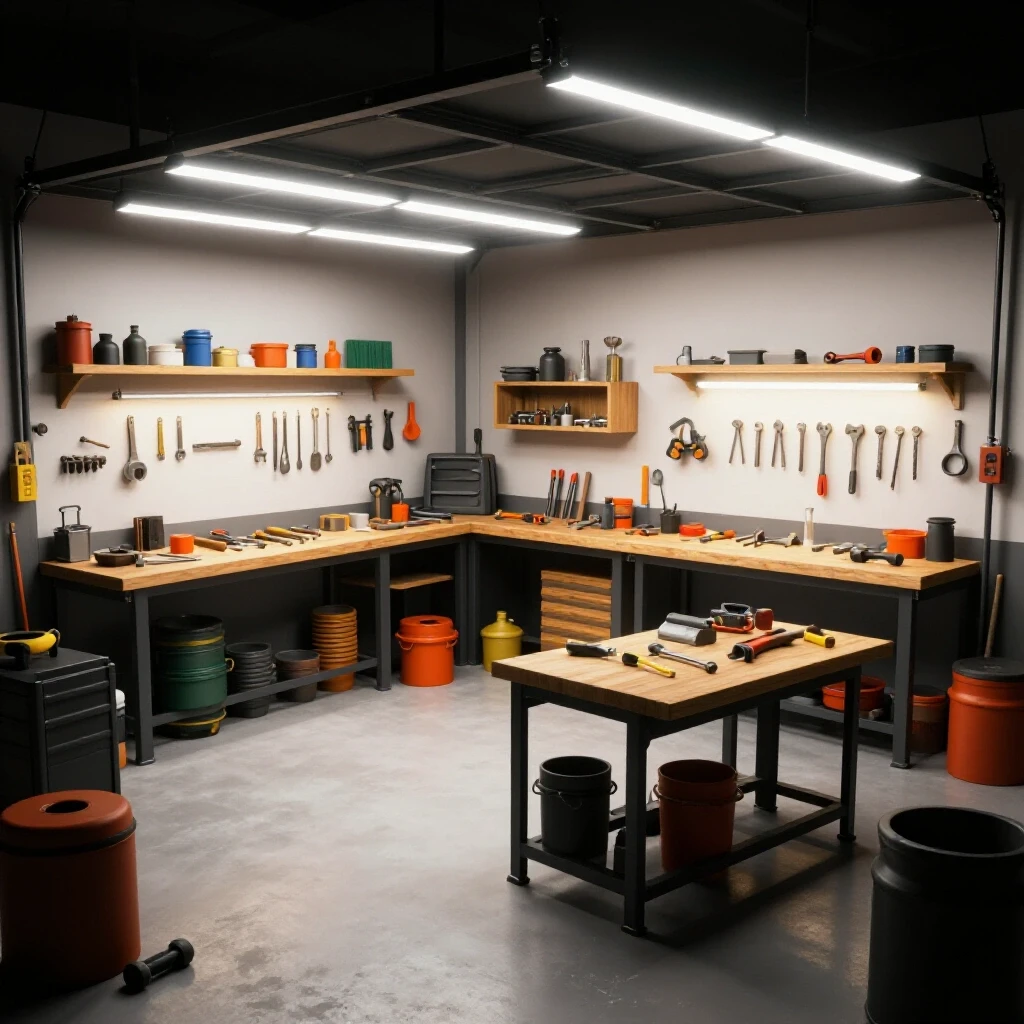
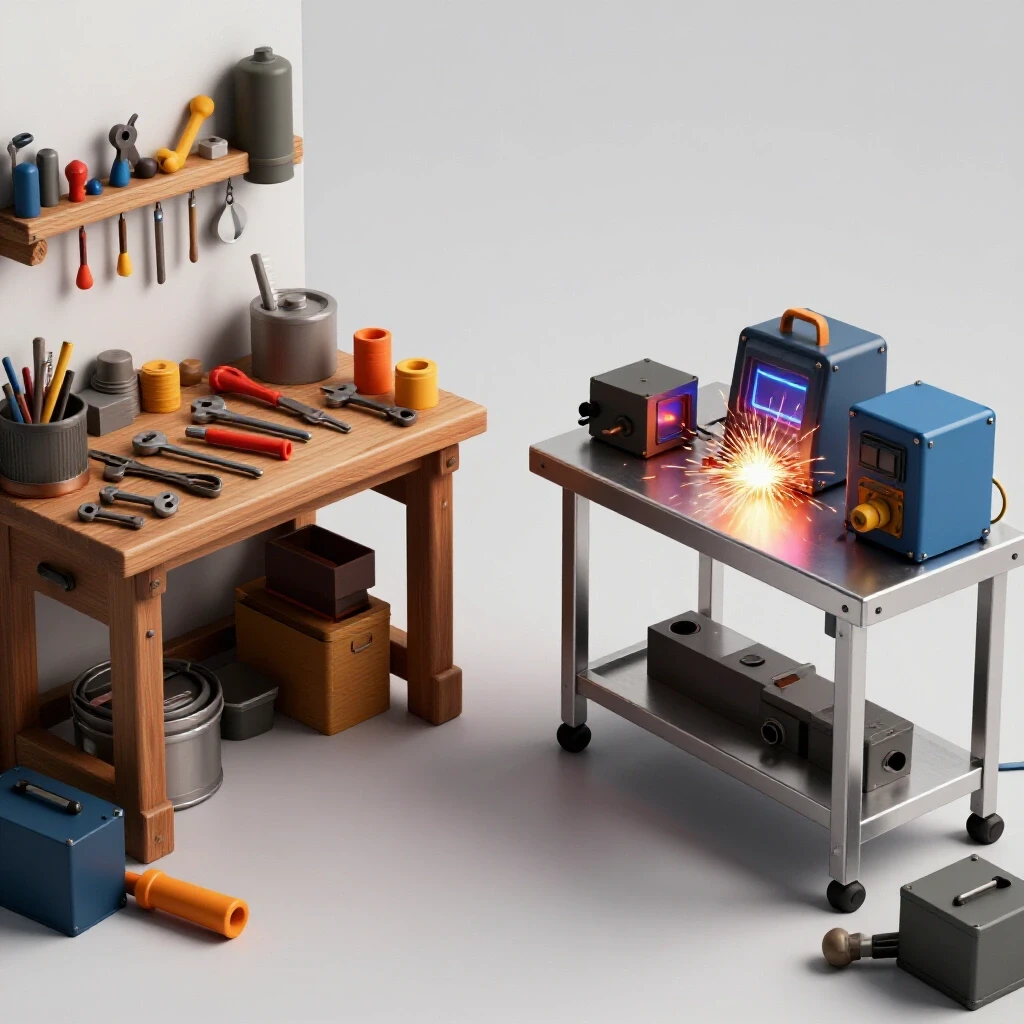
Regular Workbench vs Dedicated Steel Welding Table (Review)
In my 17 years as an industrial maintenance specialist, I have seen many fabricators struggle with a fundamental choice: using a standard steel utility surface or investing in a specialized precision fabrication platform. Most people think a table is just a place to put things, but in the world of metalworking, your work surface is actually your most important layout tool. If your foundation is off by even a fraction of an inch, every weld, cut, and assembly that follows will carry that error.
Throughout my career, I have performed teardowns and inspections on everything from heavy-duty shipyard equipment to small-shop setups. I have measured surface flatness with precision straightedges and monitored how heat affects different grades of steel. The confusion often stems from marketing that suggests any flat metal surface is sufficient for high-quality fabrication. However, the mechanical reality of heat dissipation and structural rigidity tells a different story.
Evaluating Surface Flatness and Material Thickness
Surface flatness refers to how level a work area remains across its entire dimensions, usually measured in thousandths of an inch. Material thickness determines how well that surface can resist warping when exposed to the intense, localized heat of a welding arc.
When I evaluate a work surface, the first thing I look at is the thickness of the top plate. A generic shop bench often uses thin-gauge sheet metal or perhaps a 1/8-inch steel skin. While this is fine for changing a spark plug, it fails under the thermal stress of a MIG or TIG welder. When you strike an arc, you create a Heat Affected Zone (HAZ). If the steel is too thin, the rapid expansion and contraction will cause the metal to “oil-can” or bow.
A specialized fabrication table typically starts at a thickness of 1/2 inch and can go up to 1 inch or more. This mass acts as a heat sink. It draws the thermal energy away from the weld joint, preventing the table itself from distorting. In my shop tests, a 1/4-inch plate can warp permanently after just a few high-amperage passes, while a 1-inch plate remains stable within a Total Indicated Runout (TIR) of 0.005 inches over a four-foot span.
- TIR (Total Indicated Runout): This is a measurement of the total variation in a surface or part relative to a fixed datum. In tables, we use it to see how much the surface deviates from a perfectly flat plane.
- Heat Sink Capacity: The ability of a material to absorb and dissipate heat without changing its own temperature or shape significantly.
| Feature | Standard Utility Surface | Specialized Fabrication Table |
|---|---|---|
| Top Thickness | 1/16″ to 3/16″ | 1/2″ to 1-1/2″ |
| Material Grade | A36 Mild Steel | High-Tensile S355 or Nitrided Steel |
| Flatness Tolerance | +/- 0.0625″ | +/- 0.001″ to 0.005″ |
| Heat Resistance | Low (Prone to warping) | High (Thermally stable) |
The Role of Fixturing Holes and Precision Alignment
Fixturing holes are CNC-machined openings, usually in 16mm or 28mm diameters, spaced at regular intervals across a work surface. These holes allow a fabricator to use specialized clamps, pins, and stops to lock workpieces into a perfect 90-degree or 45-degree alignment.
On a regular utility bench, you are limited to the edges of the table for clamping. This forces you to use “C-clamps” or “F-clamps,” which often leads to the middle of your project lifting off the table. I once spent three days repairing a structural frame that had been built on a generic bench. Because the fabricator couldn’t clamp the center of the assembly, the heat of the welds pulled the entire frame into a “diamond” shape, nearly two inches out of square.
A dedicated fabrication surface uses a grid system. This turns your table into a massive coordinate system. By using hardened steel pins and modular clamps, you can secure a part anywhere on the surface, not just the edges. This setup ensures that the part stays flat and square while the weld cools. This is critical because steel shrinks as it cools; if it isn’t physically restrained, it will move.
- Coordinate System: A grid-based layout that allows for repeatable placement of parts.
- Modular Fixturing: A system of interchangeable components (clamps, blocks, bolts) that fit into a standard hole pattern.
Structural Rigidity and Torsional Stiffness
Torsional stiffness is the ability of a structure to resist twisting forces. In a work surface, this is achieved through the design of the frame and the “ribbing” underneath the top plate.
I have inspected many budget-friendly benches where the legs are simply bolted to the corners of a thin frame. Under the weight of a heavy project, these frames can twist. If the frame twists, the top surface is no longer flat, even if the steel plate itself hasn’t warped. This is why specialized tables often feature a “honeycomb” or “box-section” ribbing system underneath.
These ribs are welded or bolted in a grid pattern to support the top plate. This prevents the plate from sagging under its own weight or the weight of the workpiece. When I measure a high-end table, I often find that the ribbing provides enough stiffness to support thousands of pounds with less than 0.001 inches of deflection. For a heavy-duty fabricator, this means the difference between a project that fits together perfectly and one that requires a sledgehammer to align.
- Ribbing: Internal support structures that reinforce a flat surface from underneath.
- Deflection: The degree to which a structural element is displaced under a load.
Grounding Efficiency and Electrical Path Integrity
Electrical conductivity is the measure of how easily an electric current flows through a material. In welding, the work surface acts as part of the electrical circuit.
On a standard bench, the ground clamp is often attached to a leg or a thin edge. If the bench is painted or has a layer of rust, the electrical path is restricted. This creates “arc blow” or a “dirty” arc, leading to poor weld penetration and excessive spatter. In my maintenance work, I have seen electrical drivers on welders fail prematurely because they were fighting against a high-resistance ground path.
A dedicated welding table is designed to be a massive ground plane. Because the surface is typically raw, precision-ground steel (or treated with a conductive nitriding process), the electrical connection is consistent across the entire top. You can ground the table once, and every part clamped to it becomes part of the circuit. This results in a much more stable arc and cleaner welds.
- Check for mill scale: Standard hot-rolled steel has a dark coating that resists electricity.
- Verify surface contact: A thicker plate provides more “surface area” for the current to travel through.
- Inspect ground lug points: High-quality tables have dedicated, unpainted spots for ground clamps.
Managing Spatter and Surface Longevity
Spatter consists of small molten metal droplets that fly off the weld pool and land on the surrounding surfaces. How a work surface handles this debris determines how long it will remain useful.
A regular steel bench is a magnet for spatter. Once those droplets hit the surface, they fuse to the thin metal. To remove them, you have to use a grinder or a chisel, which inevitably gouges the table. Over a few months, a smooth bench becomes a moonscape of bumps and divots. This makes it impossible to lay out a flat project.
Dedicated tables often undergo a process called “plasma nitriding.” This is a chemical-thermal process that hardens the surface of the steel and makes it resistant to weld spatter. Instead of fusing, the spatter simply sits on the surface and can be brushed away with a glove. In my experience, a nitrided table can last for decades in a production environment, whereas a standard mild steel bench might need its top replaced every year or two if used heavily.
- Plasma Nitriding: A treatment that diffuses nitrogen into the surface of the steel to increase hardness and corrosion resistance.
- Gouging: Physical damage to a surface caused by abrasive tools or impact.
Comparing Mechanical Tolerances and Standards
When choosing between these two classes of equipment, it helps to look at the ISO or industry standards for machine tool surfaces. While a general-purpose bench has no formal accuracy standard, precision tables are often built to specific tolerances.
In my shop, I use a precision level and a bridge cam gauge to check for “sag.” A high-quality fabrication table should show zero visible sag over a six-foot span. If you are building something like a vehicle chassis or a precision jig, a deviation of 1/16th of an inch (typical for a standard bench) can result in a frame that is crooked by several inches once you reach the end of the build.
- Flatness: Measured in microns or thousandths of an inch.
- Perpendicularity: The accuracy of the 90-degree angles between the holes and the table edges.
- Hole Spacing Tolerance: Usually held within +/- 0.001 inches to ensure fixturing components fit correctly.
Practical Steps for Evaluating a Work Surface
If you are currently researching a new platform for your shop, do not rely on the photos in a catalog. You need to look at the mechanical specifications. Here is the checklist I use when I am commissioned to inspect shop equipment for a client:
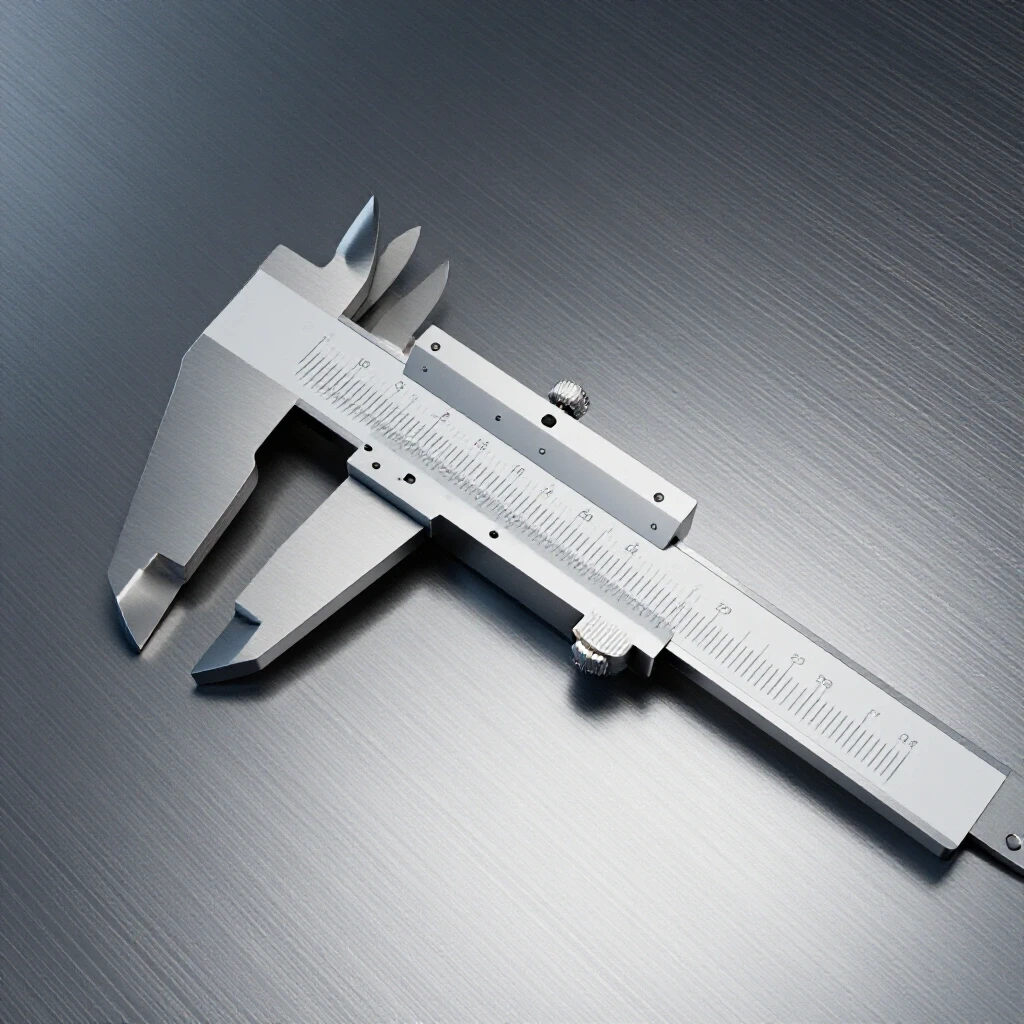
- Measure the Plate Thickness: Use a micrometer or calipers. If the plate is less than 1/2 inch, it is a utility bench, not a precision fabrication tool.
- Check the Ribbing Depth: Look under the table. The ribs should be at least 3 to 4 inches deep to provide real torsional stiffness.
- Inspect the Hole Finish: If the table has holes, look inside them. They should be clean, chamfered, and free of burrs. This indicates CNC machining rather than manual drilling.
- Test the Surface Hardness: If possible, ask if the steel is A36 (soft) or has been hardened/nitrided. A harder surface will resist the scratches and dings common in a heavy shop.
- Verify the Weight: Mass equals stability. A 4×8 foot precision table can easily weigh 1,000 to 2,000 pounds. If you can move the table by bumping it with your hip, it isn’t heavy enough for serious structural work.
Avoiding Common Rookie Mistakes
Many shop owners make the mistake of thinking they can “fix” a cheap bench later. I have seen people try to weld a thicker plate onto a thin frame, only to have the heat of the welding process pull the entire structure into a permanent twist.
Another mistake is neglecting the “hidden” costs of a low-quality surface. You might save money on the initial purchase, but you will spend hours grinding off spatter, shimming parts to get them level, and re-working frames that warped during cooling. In a professional setting, the time spent fighting a bad table usually costs more than the price of a good one within the first six months of operation.
- Shimming: Using thin pieces of material to level a workpiece on an uneven surface.
- Re-work: The process of fixing errors in a finished product, which is the single biggest drain on shop productivity.
Why Mass and Dampening Matter
In metalworking, vibration is the enemy of precision. When you are grinding or hammering on a workpiece, a thin-topped bench will vibrate and “ring.” This harmonic resonance can actually move your parts out of alignment while you are trying to tack-weld them.
A heavy, thick-walled steel table has high structural dampening. It absorbs the energy of impacts and vibrations. This makes for a much quieter shop and a more stable work environment. When I strike a piece of steel on a 1-inch thick table, it makes a dull “thud.” On a thin bench, it makes a high-pitched “ping” that vibrates through the floor. This stability is essential when you are trying to maintain tolerances within 0.005 inches.
- Harmonic Resonance: The tendency of a system to oscillate at greater amplitude at some frequencies than at others.
- Structural Dampening: The ability of a material or structure to dissipate mechanical energy, usually by converting it into a small amount of heat.
Final Thoughts on Structural Selection
Choosing the right foundation for your metalwork is about understanding the physics of your projects. If your work involves basic repairs, light assembly, or tasks where “close enough” is acceptable, a heavy-duty utility bench with a clean steel top will serve you well. However, if your goal is to produce professional-grade frames, precision jigs, or repeated assemblies, the specialized features of a dedicated fabrication platform are not just “extras”—they are mechanical necessities.
I always tell my clients to look past the paint and the branding. Look at the thickness of the steel, the complexity of the internal bracing, and the precision of the hole patterns. These are the factors that will determine whether your projects come off the table straight or crooked.
Frequently Asked Questions
Can I turn a regular steel bench into a precision welding table? It is very difficult. Because welding a thick plate to a frame introduces heat, you will likely warp the plate during the “upgrade” process. Precision tables are usually machined after the frame is welded to ensure the top remains perfectly flat.
Why are the holes in specialized tables so important? The holes allow you to use “blind” clamping. On a regular bench, you can only clamp the edges. With a hole grid, you can place a clamp in the very center of the table to hold a part down, which is essential for preventing heat-induced warping.
Is 1/2-inch steel thick enough for a professional shop? For most light to medium fabrication, 1/2 inch is the minimum standard. It provides enough mass to act as a heat sink and enough depth for fixturing pins to seat securely. However, for heavy structural beams, 3/4-inch or 1-inch plate is preferred.
What is the difference between a 16mm and 28mm hole system? 16mm systems are generally for lighter, more intricate work like furniture or sheet metal. 28mm systems are the industrial standard for heavy machinery, large frames, and structural steel, as the larger pins and clamps can withstand much higher forces.
Does a table need to be perfectly level to the earth? While “level” is nice for using a bubble level on your projects, “flatness” is more important. A table can be slightly tilted, but as long as the surface is a true flat plane, your parts will come out square.
How do I clean a nitrided table surface? You don’t need aggressive grinding. Usually, a simple stone or a dedicated scraper is enough to pop off any stray spatter. Avoid using harsh abrasives that could wear down the hardened surface layer.
Will a thick steel top rust? Yes, unless it is treated. Most fabricators use a light coat of anti-spatter spray or a specialized oil to protect the surface. Nitrided tables are much more resistant to rust than raw A36 steel.
Can I use magnets for fixturing instead of holes? Magnets can be useful for holding parts in place, but they do not provide the mechanical “locking” force that a pin and clamp system does. Magnets also attract metal dust and can interfere with the welding arc (arc blow).
What is the best way to check if my current bench is flat? Use a precision-ground straightedge (not a standard hardware store level) and a set of feeler gauges. Lay the straightedge across the table in several directions and try to slide the feeler gauge underneath. If a 0.010-inch gauge fits under the edge, the table is too warped for precision work.
Does the weight of the table affect the weld quality? Indirectly, yes. A heavier table vibrates less and provides a more consistent electrical ground, both of which lead to a more stable arc and better control over the weld puddle.
(This article was written by one of our staff writers, Steven Brooks. Visit our Meet the Team page to learn more about the author and their expertise.)