Which Metalworking Tools Hold Their Resale Value? (Review)
I have spent the last 17 years in a shop coat, usually covered in way oil and fine metal chips. In my time as an industrial maintenance specialist, I have torn down everything from massive 1950s radial drills to the latest digital inverter welders. I have seen which machines end up in the scrap hopper and which ones get a second or third life in a new shop. Many buyers get caught up in shiny paint and high-tech stickers, but the secondary market is brutal and honest. It does not care about marketing; it cares about iron, copper, and the ability to find a replacement gear ten years from now.
Choosing equipment that maintains its worth requires looking past the spec sheet. You have to look at the “bones” of the machine. I once spent three weeks trying to find a control board for a budget-tier CNC mill that was only five years old. The company had vanished, and the machine was effectively a very heavy paperweight. Meanwhile, a manual lathe from the 1970s sat next to it, still holding a half-thousandth tolerance and worth twice what the owner paid for it in 1990. This article will help you identify the mechanical markers of quality that ensure your tools remain an asset rather than an expense.
Evaluating Machinery Framework and Cast Iron Quality
The foundation of any metalworking machine is its frame, which is almost always made of cast iron. High-quality castings provide the weight needed to dampen vibrations and the stability to maintain alignment under heavy cutting loads. Without a solid frame, even the best motors and bearings cannot produce accurate parts.
In my experience, the difference between a machine that holds its value and one that does not often comes down to the grade of iron used. Industrial-tier machines use “seasoned” gray iron, often Class 25 or Class 30. Seasoning is a process where castings are left outside for months to allow internal stresses to move and settle. If a manufacturer skips this and machines the parts immediately, the frame can warp over time. I have seen budget lathes where the bed twisted nearly 0.005 inches over three years just from internal stress relief.
When you are looking at a machine, check the weight-to-work-envelope ratio. A mill with a 9×42 inch table should weigh at least 2,000 pounds. If it weighs 1,200 pounds, the manufacturer used thinner castings or hollowed out the base. Thinner iron leads to “chatter,” which are those ugly ripples you see on a finished metal part. Buyers in the used market know this. They will pay a premium for a heavy, ribbed casting because they know it will produce a better finish and last longer.
- Class 25 Gray Iron: Standard for most quality workshop machinery.
- Class 40 Gray Iron: Used in high-precision or heavy-duty industrial tools.
- Dampening Capacity: The ability of the material to absorb energy; cast iron is roughly 10 times better at this than steel.
| Feature | Budget Casting | Industrial Casting |
|---|---|---|
| Material | Unseasoned “Pot” Metal | Seasoned Class 30 Gray Iron |
| Ribbing | Minimal or None | Extensive Internal Bracing |
| Weight | Light (Easy to move) | Heavy (Requires rigging) |
| Vibration | High (Causes tool wear) | Low (Extends tool life) |
Assessing Motor Design and Power Delivery Systems
The motor and the way it transfers power to the spindle represent the “heart” of the machine. A reliable power system uses high-quality copper windings and robust cooling to prevent heat buildup, which is the primary killer of workshop electronics. Modern machines often choose between traditional belt drives or newer electronic speed controls.
I often tell people that a motor’s horsepower rating on the box is frequently a “peak” number, not a “continuous” one. In my shop, I look at the frame size of the motor. A true 2-horsepower industrial motor is significantly larger than a “2-peak-horsepower” motor found on a budget saw. The larger motor has more surface area to dissipate heat and thicker wire in the windings. This matters for resale because a buyer can smell a burnt motor from ten feet away.
Variable Frequency Drives (VFDs) have changed the game for workshop machinery. A VFD allows a three-phase motor to run on single-phase household power while providing variable speed control. Machines that come factory-equipped with high-quality VFDs or those easily converted to them tend to hold their value better. They offer smoother power delivery and better torque at low speeds compared to cheap pulse-width modulation (PWM) controllers found in entry-level tools.
- TEFC Motors: Totally Enclosed Fan Cooled motors prevent metal dust from entering the windings.
- Inverter-Duty Motors: Specifically designed to handle the heat generated by running at low speeds via a VFD.
- Service Factor: A number (like 1.15) that tells you how much a motor can be overloaded for short periods.
Measuring Spindle Runout and Bearing Integrity
Spindle runout is the amount of “wobble” in a rotating shaft, usually measured in thousandths of an inch. If a spindle has high runout, every tool you put in it will vibrate, leading to poor accuracy and broken cutters. High resale value is always tied to a spindle that stays true over thousands of hours of use.
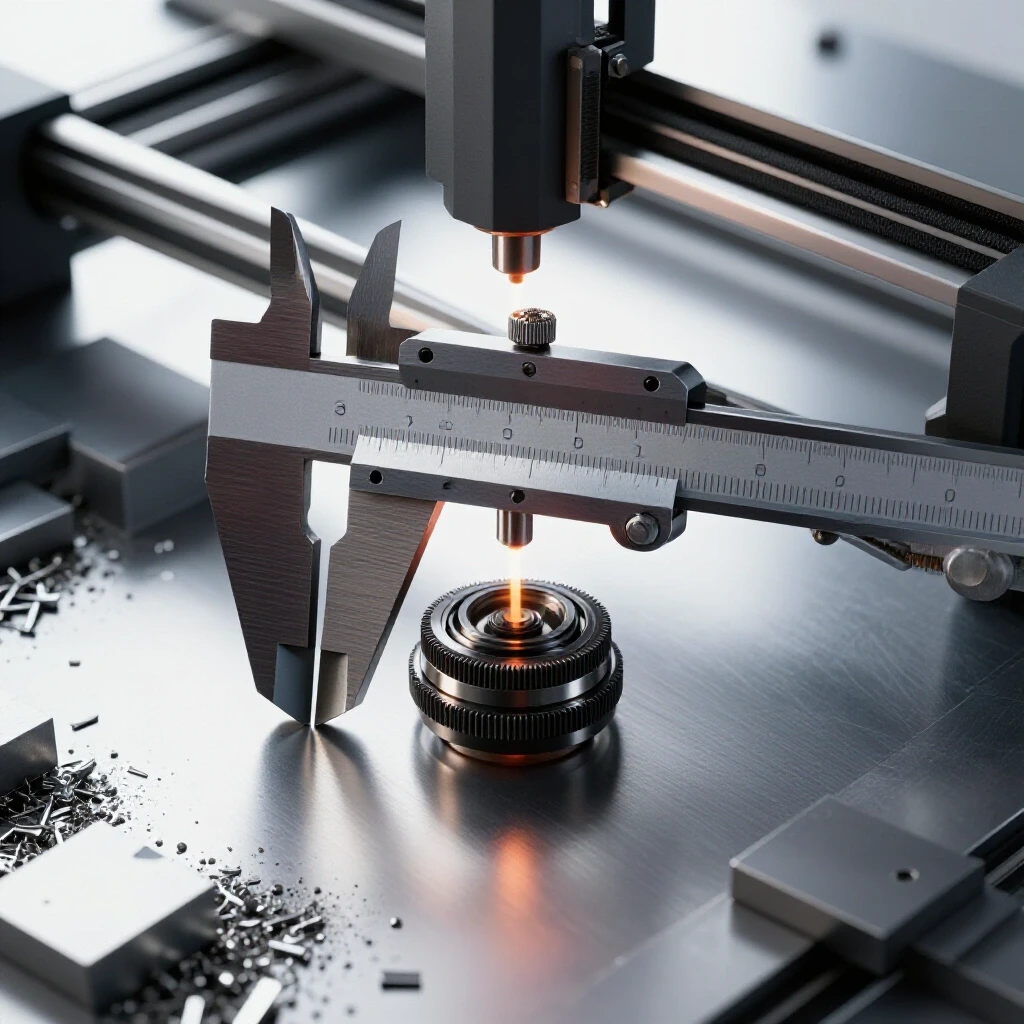
I use a dial test indicator to check Total Indicated Runout (TIR) on every machine I evaluate. For a metal lathe or milling machine to be considered “investment grade,” the runout at the spindle nose should be 0.0005 inches or less. Once you get into the 0.002-inch range, the machine is basically a wood lathe. The bearings supporting that spindle are just as critical. I prefer tapered roller bearings or angular contact bearings because they can be “preloaded” to remove all play.
When I tear down a spindle, I look at the bearing brand and the lubrication system. Machines that use standard, off-the-shelf bearing sizes from reputable makers like SKF, Timken, or NSK are much easier to maintain. If a manufacturer uses a proprietary, non-standard bearing size, the machine’s value drops the moment those bearings start to growl. A buyer who knows machines will ask about the spindle bearings before they even look at the paint.
- Clean the spindle taper: Any dirt will give a false reading.
- Mount a dial indicator: Use a magnetic base on the machine frame.
- Rotate by hand: Turn the spindle slowly and watch the needle.
- Check at distance: Measure at the nose and then 6 inches out on a test bar.
The Impact of Bedway Hardening on Tool Longevity
The bedways are the precision-ground surfaces that the carriage or table slides upon. On a lathe, if the bedways are worn, the machine can no longer turn a straight cylinder. Because regrinding bedways is an expensive process involving specialized machinery, the condition of these surfaces is the single biggest factor in used machinery pricing.
I always look for “induction hardened” or “flame hardened” bedways. You can usually tell by a small “H” stamped on the end of the bed or by the way the metal looks—hardened ways often have a slightly different sheen. Hardening makes the surface resistant to the “scoring” that happens when a stray metal chip gets trapped under the carriage. I have seen unhardened “soft” beds on budget machines develop deep grooves within just a year of heavy use.
Another thing to check is the “way wipers.” These are the felt or rubber seals that push chips away as the carriage moves. If a machine has poor-quality wipers, the bedways will wear out twice as fast. When I am inspecting a machine for a client, I pull back the wipers to see if the metal underneath is still shiny and smooth. If I see “galling” (torn metal), I know the machine’s value has plummeted.
- Induction Hardening: A process using electrical coils to heat and then quench the surface for extreme hardness.
- Scraping: The manual process of creating tiny oil pockets on the ways to reduce friction.
- Turcite/B-Liner: Plastic-like materials used on some ways to reduce wear and “stiction.”
Why Milling Machine Rigidity Dictates Future Worth
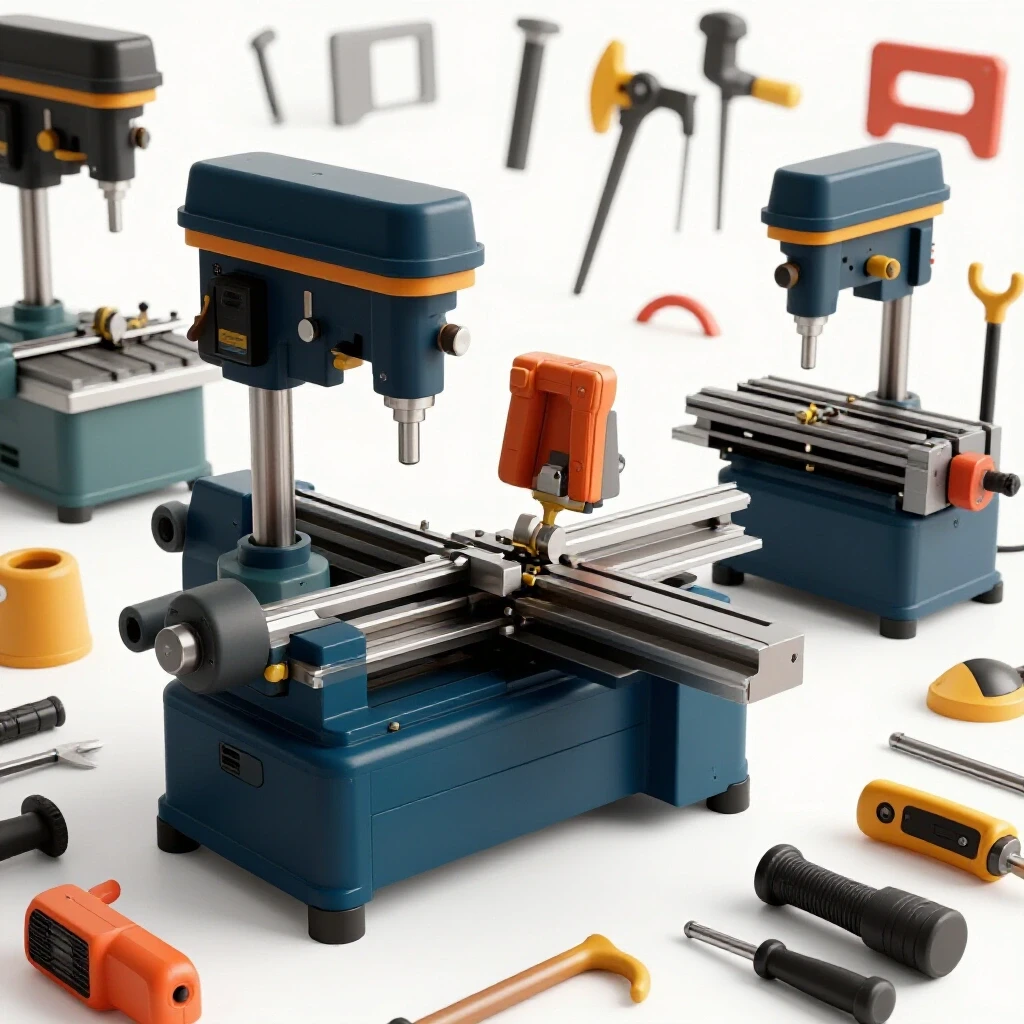
Milling machines are subject to massive side-loading forces that try to flex the column and table. A mill that flexes cannot hold a tolerance, and it will destroy carbide tooling. The secondary market values “stiffness” above almost all other features in a mill.
In my shop, I have tested the rigidity of various mill designs by putting a long bar in the spindle and applying 50 pounds of force while measuring the deflection with an indicator. A solid “knee mill” (where the table moves up and down on a heavy column) will usually deflect less than 0.001 inches. A “round column” mill might flex 0.005 inches or more. This is why round-column mills have very poor resale value compared to square-column or knee mills.
The “dovetail” or “box” ways on a mill also matter. Box ways provide more surface area and are better for heavy, slow cuts. Dovetail ways are more common on smaller machines and offer good precision for lighter work. If the ways show signs of “crushing” or uneven wear, it suggests the machine was pushed beyond its limits. A machine that was never overloaded will always command a higher price.
- Knee Mill: A design where the entire table assembly moves vertically on a massive “knee.”
- Bed Mill: A design where the table only moves in X and Y, and the head moves vertically.
- Torsional Stiffness: The ability of the machine column to resist twisting under load.
Inverter vs. Transformer Welding Platforms
Welding technology has split into two camps: the old-school transformer-based machines and the modern inverter-based units. While inverters are light and feature-rich, the resale market often treats them differently due to how they fail and how they are repaired.
Transformer welders are essentially big blocks of copper and iron. They are incredibly durable and can last 40 or 50 years. If a transformer welder stops working, it is often a simple fix like a contactor or a fan. Because of this “immortality,” brands like Miller or Lincoln transformer units hold a very high percentage of their original value. I have seen 30-year-old “Dialarc” or “Idealarc” units sell for 70% of what a new equivalent costs.
Inverters, on the other hand, are packed with complex circuit boards. They offer a much better arc and use less electricity, but they are harder to repair. If a main board dies out of warranty, the repair cost can be higher than the machine’s value. To maintain resale value in an inverter, you must stick with “Tier 1” brands that guarantee parts availability for at least 10 to 15 years. A budget “off-brand” inverter is almost impossible to sell once the warranty expires.
| Feature | Transformer Welder | Inverter Welder |
|---|---|---|
| Weight | Very Heavy (200+ lbs) | Light (20-50 lbs) |
| Duty Cycle | Often 60% to 100% | Varies (Usually lower) |
| Repairability | High (User serviceable) | Low (Board replacement) |
| Arc Quality | Good, but basic | Excellent, highly tunable |
| Resale Value | Extremely Stable | Brand Dependent |
Parts Pipelines and Documentation
A machine is only useful if it can be kept running. This is the “hidden” side of machinery worth. When you buy a tool, you are also buying into the manufacturer’s supply chain. If that chain is broken, the tool’s value starts a countdown to zero.
I always tell buyers to look for “legacy” brands. These are companies that have been around for decades and use standardized parts. For example, many high-quality lathes use a “D1-4” spindle nose. This is an international standard. If you need a new chuck, you can buy one from a dozen different companies. If a machine uses a proprietary spindle mounting system, you are locked into that manufacturer’s prices—if they are even still in business.
Documentation is another value-adder. A machine that comes with its original manual, wiring diagrams, and accuracy test sheet is worth more than a “mystery” machine. In my maintenance work, a wiring diagram saves me hours of troubleshooting. When a buyer see a well-organized manual, it tells them the previous owner likely took care of the machine.
- Check for parts websites: Does the manufacturer have a “buy parts” button on their site?
- Look for forum support: Is there a community of users who share repair tips?
- Verify standard fittings: Does it use standard NPT threads, metric bolts, and common bearings?
- Identify the controller: For CNC machines, is the control software still supported?
Pre-Purchase Inspection Checklist
Before you hand over your money for a piece of metalworking machinery, you need to perform a physical audit. This isn’t about being picky; it’s about verifying that the mechanical “bones” are still solid. Use this checklist to separate the high-value investments from the money pits.
- The “Thump” Test: Hit the main casting with a rubber mallet. A high-quality, solid casting will give a dull “thud.” A thin, cheap casting will “ring” or vibrate.
- Backlash Check: Turn the handwheels and see how far they move before the table actually starts to travel. On a used machine, 0.005 to 0.010 inches is acceptable. If it’s over 0.020 inches, the lead screws or nuts are worn.
- The Gearbox Listen: Run the machine through all its speeds. Listen for “clunking” or high-pitched whining. A healthy gearbox should have a consistent, rhythmic hum.
- Oil Clarity: Check the sight glasses. If the oil is milky, water has gotten in. If it’s black and gritty, the machine hasn’t been serviced in years.
- Spindle Play: Put a long bar in the spindle and try to shake it. You should feel zero “clunk.” Any movement here means the bearings are shot.
Final Thoughts on Machinery Investment
Investing in metalworking tools is a long-term game. The “marketing hype” will always push the latest features, the most digital screens, and the lowest prices. However, as someone who has spent a career fixing these machines, I can tell you that the secondary market ignores the screens and looks at the iron.
If you buy a machine with a heavy, seasoned frame, a standard motor, and hardened ways, you are not just buying a tool; you are “parking” your money in a physical asset. Even if you use it for a decade, a well-maintained, high-quality machine will often sell for a significant portion of its original price. In some cases, due to inflation and the rising cost of raw materials, you might even break even. Choose for the long haul, focus on the mechanical fundamentals, and you will never regret the investment.
Frequently Asked Questions
What is the single most important factor for a lathe’s resale value? The condition of the bedways is paramount. If the ways are worn or “swayed” (worn more in the middle than the ends), the lathe cannot turn accurately. Hardened ways are a major plus because they resist this wear. A lathe with pristine, hardened ways will always sell quickly.
Do digital readouts (DROs) increase a machine’s worth? Yes, but only if they are high-quality units. A DRO makes a manual machine much more productive. However, a buyer will value a “name brand” DRO like Newall or Mitutoyo much higher than a cheap, generic version. A broken or flickering DRO can actually detract from the value, as it suggests poor electrical maintenance.
Why are transformer-based welders still so popular on the used market? Simplicity equals longevity. A transformer welder has very few parts that can fail, and those that do are usually inexpensive and easy to find. For a home shop or a backup unit, the reliability of a 40-year-old transformer often outweighs the fancy features of a modern inverter.
Is “Made in the USA” or “Made in Europe” a guarantee of higher resale value? Generally, yes. These regions historically used higher grades of cast iron and more rigorous quality control for spindle alignments. Brands like Bridgeport, Monarch, and Weiler have massive followings. However, some modern high-end Asian imports (often from Taiwan) are now rivaling Western quality and hold their value quite well.
How much runout is “too much” for a milling machine? For precision work, you want to see less than 0.001 inches of TIR at the spindle. If the runout is 0.003 inches or more, you will struggle with tool breakage and poor surface finish. Most buyers will consider a machine with high runout to be in need of a total spindle rebuild, which lowers the price significantly.
Does the weight of a machine really matter that much? Weight is a proxy for rigidity and dampening. In metalworking, vibration is the enemy. A heavier machine can take deeper cuts without vibrating, which saves time and tools. Used buyers specifically look for “heavy iron” because you cannot easily add mass to a flimsy machine later.
Should I avoid machines with proprietary electronics? If you care about resale value, yes. If a machine uses a custom, “black box” controller that only one company sells, you are at their mercy. If they stop supporting it, the machine’s value drops to its “iron weight.” Standard components like off-the-shelf VFDs and contactors are much safer for long-term value.
How do I check if a machine’s ways are “soft” or hardened? You can often check the manufacturer’s original brochure (many are archived online). Physically, you can sometimes see a “quench line” on the side of the ways. In some cases, a very light file test in a non-critical area can tell you, but this requires a “calibrated” hand and is not always recommended for beginners.
What is “backlash” and why does it affect price? Backlash is the “slop” in the lead screws that move the table. While some backlash can be adjusted out, excessive slop usually means the nut or the screw itself is physically worn down. Replacing lead screws is expensive and labor-intensive, so a “tight” machine with low backlash is worth a premium.
Is it worth buying a machine that needs a new motor? If the “iron” (the frame, ways, and spindle) is in great shape, a bad motor is a great bargaining chip. Standard C-face or foot-mount motors are easy to replace. However, if the motor is a specialized, multi-speed design built into the headstock, it can be a nightmare to fix. Always identify the motor type before buying.
(This article was written by one of our staff writers, Steven Brooks. Visit our Meet the Team page to learn more about the author and their expertise.)