How to Select a Heavy Duty Cast Steel Bench Vise (Review)
In my seventeen years of maintaining industrial workshops, I have seen more tools fail from poor casting than from actual overwork. A bench vise is often the most abused piece of equipment in a fabrication shop, yet it is frequently the one people spend the least amount of time researching. Most buyers look at a coat of paint and a brand name, but the real value lies in the metallurgy and the precision of the internal screw.
Early in my career, I watched a technician attempt to straighten a heavy steel plate using a standard gray iron vise. Under the pressure of a four-foot cheater bar, the rear jaw didn’t just bend; it shattered like glass, sending a three-pound chunk of metal across the shop. That moment taught me the difference between a tool that looks strong and one engineered for high-tensile loads. Since then, I have focused on teardowns that prioritize material science and mechanical alignment over marketing claims.
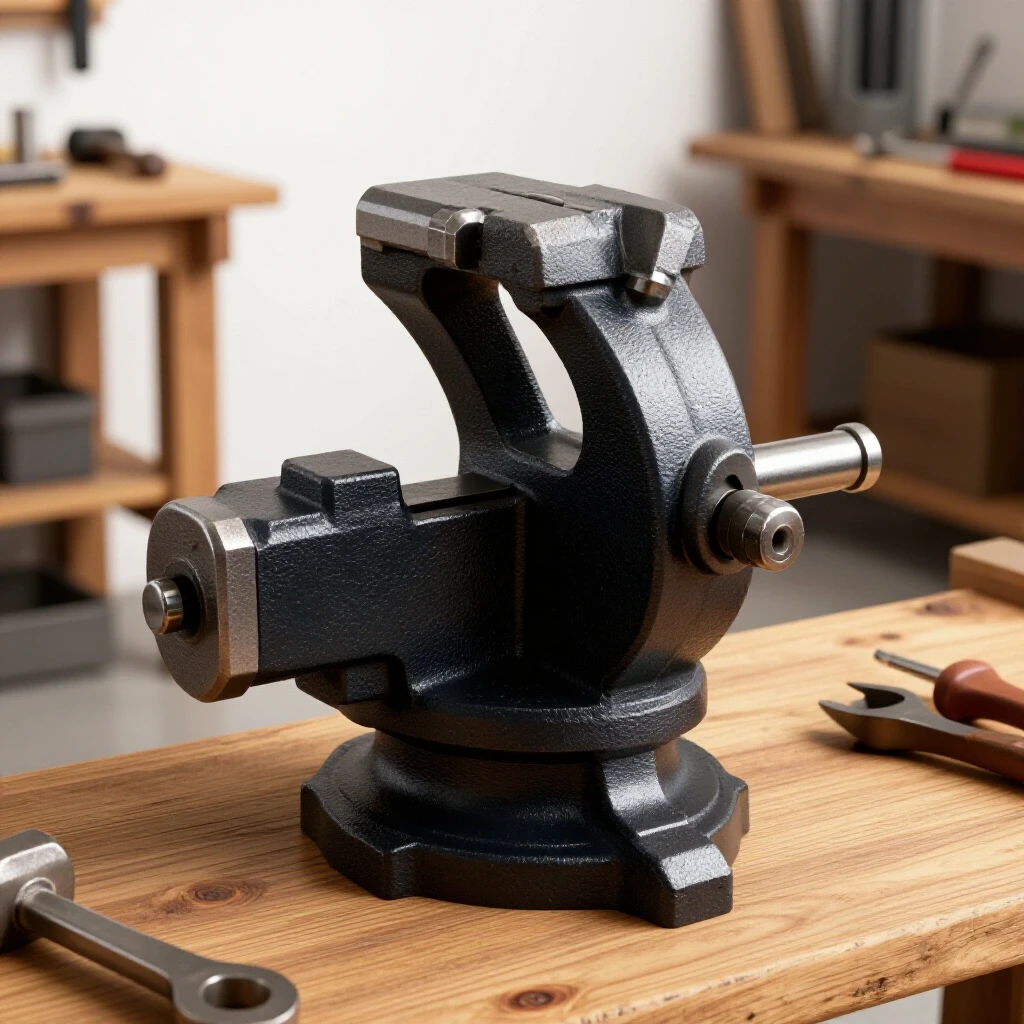
When you are looking for a stationary clamping solution, you are essentially buying a structural frame. This frame must resist thousands of pounds of force without deforming or cracking. In this guide, I will break down the technical metrics that define a high-performance clamping tool, from the PSI ratings of the steel to the specific tolerances of the jaw alignment.
Understanding Material Integrity: Cast Steel vs. Ductile Iron
The material composition of a vise determines its ability to survive high-impact loads and extreme clamping pressures without structural failure. While many entry-level tools use gray iron, industrial applications require materials with higher tensile strength and elongation properties to prevent catastrophic cracking.
Tensile strength is the measurement of the maximum stress a material can handle before it breaks. In the world of heavy-duty fabrication, cast steel is the gold standard. Most high-end units are rated between 60,000 and 90,000 PSI (pounds per square inch). For comparison, standard gray iron often fails at 20,000 to 30,000 PSI. Cast steel offers a level of “give” or ductility that allows the tool to absorb shocks—like those from a sledgehammer—without snapping.
Ductile iron is a middle ground often found in professional shops. It is created by adding magnesium to the iron melt, which turns the carbon flakes into spheres. This change prevents cracks from spreading. However, for the highest workloads, cast steel remains superior because it can be welded if a repair is ever needed, whereas cast iron generally cannot.
| Material Type | Average Tensile Strength | Impact Resistance | Repairability |
|---|---|---|---|
| Gray Cast Iron | 25,000 PSI | Low (Brittle) | Very Poor |
| Ductile Iron | 60,000 PSI | Medium | Poor |
| Cast Steel | 80,000+ PSI | High | Good (Weldable) |
Why Tensile Strength Matters in Fabrication
If you are using a vise to bend thick plate or secure a part for heavy grinding, the frame is under constant tension. A brittle material will fail suddenly once its limit is reached. A cast steel body will slightly deform before it breaks, giving you a safety margin. I always look for a “Grade 60” or “Grade 80” specification in the technical data sheets to ensure the casting can handle the torque I plan to apply.
Evaluating Mechanical Tolerances and Jaw Alignment
Mechanical tolerances refer to the precision with which the moving parts of the vise fit together, specifically the parallelism of the jaws and the runout of the main screw. High-quality tools are machined to tight specifications to ensure that clamping force is distributed evenly across the entire surface of the workpiece.
When I inspect a new unit, the first thing I check is the jaw alignment. If the jaws meet at an angle, you are only applying pressure to a small point on your workpiece. This can lead to the part slipping or the vise jaws marring the material. I use a feeler gauge to check for gaps. In a premium build, the jaws should be parallel within 0.001 to 0.003 inches across a four-inch span.
Another critical factor is the “play” in the slide. A loose slide causes the jaw to tilt upward when tightened, a phenomenon known as “jaw lift.” This lift forces the workpiece out of the vise. A well-built cast steel unit will have a precision-machined slide with minimal clearance, often adjustable via a gib screw to take up wear over time.
The Role of Total Indicated Runout (TIR) in Screws
While typically discussed in lathes, the concept of runout applies to vise screws as well. If the main screw is not perfectly straight or is poorly centered, you will feel “tight spots” as you rotate the handle. A screw with high runout puts uneven wear on the internal nut. I look for a screw that moves smoothly through its entire range of motion, indicating that the bore and the screw are concentric.
Analyzing Clamping Force and Screw Design
Clamping force is the actual pressure exerted by the jaws on a workpiece, usually measured in tons or kilonewtons, resulting from the torque applied to the handle. The efficiency of this transfer depends on the thread pitch of the main screw and the diameter of the handle.
Most industrial vises use an Acme thread. This is a square-topped thread designed specifically for high-load applications. The pitch—the distance between threads—determines how much force is generated. A finer pitch allows for more clamping force with less effort but moves the jaw slower. A coarser pitch moves the jaw quickly but requires more muscle to lock down.
I prefer a fully enclosed screw design. In a fabrication environment, metal chips and grinding dust act as abrasives. If the screw is exposed, these particles get trapped in the grease and grind down the threads. An enclosed screw stays lubricated and maintains its rated clamping force for decades rather than years.
- Screw Diameter: Look for a screw at least 3/4 inch to 1 inch thick for a 6-inch vise.
- Handle Length: A longer handle provides more leverage, but the vise body must be strong enough to handle that increased torque.
- Nut Length: The internal nut should be long enough to engage at least 5 to 7 threads to prevent stripping under high load.
Structural Rigidity and Throat Depth
Throat depth is the distance from the top of the jaws to the top of the slide, which determines how much of a workpiece can be held vertically. Structural rigidity is the ability of the vise body to resist twisting or bending when a part is clamped off-center.
A deep throat is useful for holding large plates, but it increases the leverage acting against the vise frame. If the casting is too thin, the vise will flex. I have measured some budget frames flexing as much as 0.015 inches under load. This flex reduces the actual clamping force and can cause the tool to “spring” open.
The anvil surface on the back of the vise is another area where rigidity is key. On a cast steel model, this anvil should be large and thick enough to support heavy hammering. I check the transition point where the anvil meets the stationary jaw; this is a common failure point where stress concentrations occur. A radiused transition is always better than a sharp 90-degree corner.
Why Mass Dampens Harmonics
In metalworking, vibration is the enemy of precision. A heavy, dense casting absorbs the vibrations from grinding and sawing. If a vise is too light, it will ring or chatter, which can lead to poor finishes on your work and increased fatigue for the operator. I generally look for a weight-to-jaw-width ratio of at least 10 pounds per inch (e.g., a 6-inch vise should weigh at least 60 pounds).
Swivel Base Mechanics and Stability
The swivel base allows the vise to rotate, providing better access to the workpiece, but it can also be a weak link if the locking mechanism is poorly designed. A heavy-duty base must lock securely enough to prevent any rotation even when the operator is using a pipe wrench on the clamped part.
I examine the locking “dogs” or bolts. Many lower-quality units use two small bolts that bite into a thin flange. Under high torque, these bolts can slip or even shear the flange. A professional-grade swivel base will often feature a 360-degree interlocking serrated base or at least three heavy-duty locking points.
If your work involves high-torque operations, such as threading large pipes, you might even consider a stationary base model. While less versatile, a stationary base eliminates the potential for base slip entirely. However, if you choose a swivel, ensure the base casting is as thick as the main body.
- Bolt Down Points: Ensure the base has at least three, and preferably four, mounting holes.
- Locking Force: The handles for the swivel should be large enough to tighten by hand without needing a hammer.
- Surface Contact: The bottom of the base should be ground flat to ensure 100% contact with the workbench.
Inspection Checklist for Selecting a Heavy-Duty Vise
When you are ready to make a choice, use this checklist to evaluate the tool. These steps move beyond the spec sheet and focus on the physical reality of the machine’s construction.
- Check the Casting: Look for “flash” or rough seams. While cosmetic, excessive flash often indicates a low-quality sand-casting process.
- Test the Slide: Open the vise to its maximum capacity. Wiggle the front jaw. There should be minimal side-to-side play.
- Inspect the Jaws: Ensure the jaw inserts are made of hardened steel (usually HRC 45-55) and are replaceable.
- Measure Parallelism: Close the jaws on a piece of paper. Try to pull the paper out from different spots. If it’s loose in one corner, the jaws are not parallel.
- Verify the Weight: If possible, weigh the unit. Compare it to the manufacturer’s spec. A lighter-than-advertised vise often indicates voids or “blowholes” in the casting.
- Check Screw Movement: Rotate the handle with one finger. It should move freely without binding.
Maintenance for Long-Term Performance
Even the best cast steel tool will fail if the internal mechanics are ignored. Because these tools are often in high-dust environments, the lubrication can quickly turn into a grinding paste.
I recommend a complete teardown once a year. Remove the main screw, clean the threads with a wire brush, and inspect the internal nut for wear. Use a high-pressure grease, such as a molybdenum-disulfide (moly) grease, which stays on the threads even under extreme pressure. Check the mounting bolts on your workbench as well; a vise is only as strong as the table it is bolted to.
By focusing on these mechanical realities—tensile strength, jaw parallelism, and screw design—you can cut through the marketing noise. A vise is an investment in your shop’s capability. Choosing one based on structural integrity ensures that it will remain a reliable anchor for your fabrication projects for decades.
Frequently Asked Questions
What is the advantage of cast steel over ductile iron for a bench vise?
Cast steel has higher impact resistance and can be repaired by welding. While ductile iron is strong, cast steel is less likely to shatter under sudden shock loads, such as heavy hammering or prying. It typically offers a higher tensile strength, often exceeding 80,000 PSI, making it the most durable choice for industrial metalworking.
How do I know if a vise has enough clamping force for my needs?
Clamping force is generally determined by the screw diameter and thread pitch. For heavy-duty fabrication, look for a tool that can generate at least 5,000 to 9,000 pounds of force. If the manufacturer doesn’t list the force, check the handle length; a longer handle on a thick Acme screw usually indicates a higher force capacity.
Why does the throat depth matter so much?
Throat depth determines the maximum size of the material you can hold vertically. However, a deeper throat increases the stress on the vise’s “neck.” When selecting a deep-throat model, ensure the casting is thick enough to prevent flexing, which can lead to the workpiece slipping or the frame cracking.
What should I look for in a swivel base to ensure it doesn’t slip?
Look for a base with multiple locking points—ideally two or three heavy-duty bolts. Some premium models use a serrated or “geared” base that physically interlocks, preventing any rotation once tightened. Avoid bases with thin flanges that can bend under the pressure of the locking bolts.
Are replaceable jaws necessary on a heavy-duty vise?
Yes. Jaws are consumables. Over time, the serrations will wear down, or you may need to switch to “soft” aluminum or copper jaws to avoid marring delicate parts. A high-quality vise will have jaws secured with screws that are accessible even after years of use.
What is “jaw lift” and how can I prevent it?
Jaw lift occurs when the moving jaw tilts upward as it tightens, often because of excessive clearance in the slide. You can minimize this by choosing a vise with precision-machined slides and an adjustable gib. High-quality designs use a “pull-type” nut that helps keep the jaw pulled down against the slide during tightening.
How often should I lubricate the main screw?
In a busy shop, you should lubricate the screw every few months. If the screw is exposed, it should be cleaned and regreased more frequently to prevent metal chips from causing wear. Use a heavy-duty grease designed for high-pressure applications.
Can I use a cheater bar on a cast steel vise?
While cast steel is much stronger than iron, using a cheater bar is generally discouraged. It can put forces on the screw and nut that exceed their design limits. If you frequently need a cheater bar, you likely need a larger vise or a different clamping method, such as a hydraulic press.
Does the weight of the vise actually affect its performance?
Yes. A heavier vise has more mass to absorb vibrations and resist flexing. In metalworking, mass helps dampen the harmonics from grinding or sawing, leading to a more stable work environment. A light vise will often “bounce” or chatter when you are working on heavy stock.
What is the best way to mount a heavy-duty vise to a workbench?
Use the largest grade-5 or grade-8 bolts that will fit the mounting holes. Ensure you use large fender washers or a steel backing plate under the workbench to distribute the load. A vise is only as strong as the surface it is attached to; a thin wooden table will flex long before the vise does.
(This article was written by one of our staff writers, Steven Brooks. Visit our Meet the Team page to learn more about the author and their expertise.)