Why You Should Avoid Cheap Digital Readouts on Mills (Review)
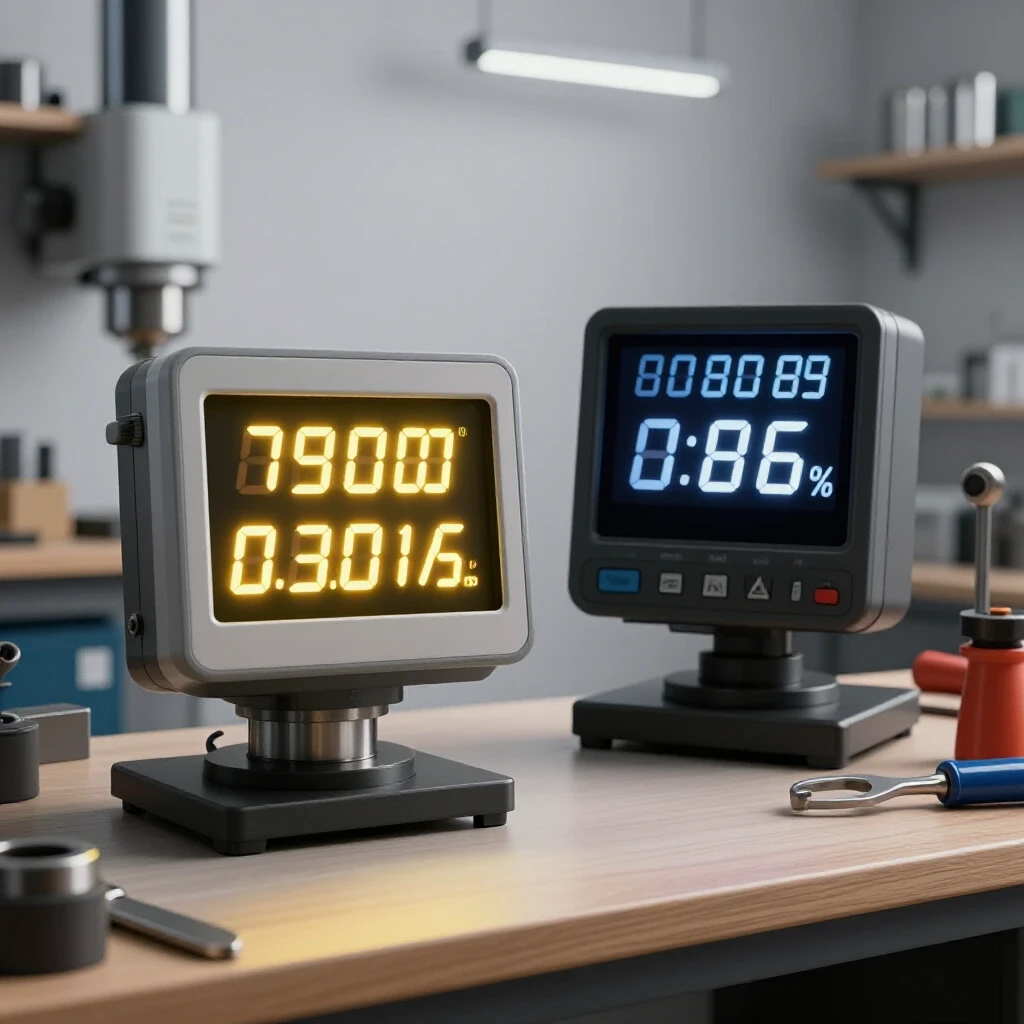
When I transitioned from a hobbyist metalworker to a small business owner, I quickly learned that the most expensive tool in my shop wasn’t my mill or my lathe. It was the “bargain” equipment that failed in the middle of a paid contract. I remember spending a Saturday afternoon on a batch of 20 aluminum manifolds. Halfway through the third part, the digital readout on my knee mill flickered, jumped two inches, and settled on a random number. I didn’t catch it until I measured the finished part. That single moment of electronic failure scrapped $400 in material and four hours of labor.
For side-hustlers and small shop owners, every minute spent at the machine needs to be profitable. We manage tight budgets and even tighter schedules. When we choose entry-level measurement systems for our mills, we often think we are being fiscally responsible. In reality, we are introducing a variable that can destroy our hourly shop rate and our reputation for quality. Understanding the financial impact of reliable measurement is the first step toward building a sustainable fabrication business.
Calculating the True Shop Rate for Precision Milling
A shop rate is the total hourly cost required to keep your business operational, covering everything from rent and electricity to the eventual replacement of your machinery. It is not just your desired take-home pay; it is a calculated figure that ensures your shop remains solvent. Most small-scale fabricators should target a rate between $65 and $120 per hour.
When you set up a side-hustle, you must look past the “hobby” mindset. If you are charging $30 an hour because it feels like a lot of money compared to your day job, you are likely losing money. You have to account for the “burden” of your shop. This includes the cost of floor space, the depreciation of your mill, and the administrative time spent quoting jobs. If your equipment is unreliable, your effective shop rate plummets because you are spending non-billable hours fixing tools or re-doing work.
- Fixed Overhead: Rent, insurance, and basic utilities.
- Variable Overhead: Tooling, coolant, and electricity used during machine operation.
- Labor Rate: What you would have to pay someone else to do the work.
- Profit Margin: The extra 10-20% that stays in the business for future growth.
| Expense Category | Monthly Cost (Example) | Hourly Impact (40 hrs/mo) |
|---|---|---|
| Shop Rent/Space | $400 | $10.00 |
| Insurance & Licensing | $80 | $2.00 |
| Utilities & Internet | $120 | $3.00 |
| Machine Depreciation | $200 | $5.00 |
| Total Base Overhead | $800 | $20.00/hr |
Building on this, if your base overhead is $20 per hour and you want to earn $50 per hour for your labor, your shop rate starts at $70. If a cheap readout fails and causes a two-hour delay, you haven’t just lost $140 in potential revenue; you’ve also wasted the material and the overhead costs for those hours.
The Financial Burden of Inaccurate Measurement Tools
Measurement systems on a milling machine, often called digital readouts, are the primary interface between the operator and the workpiece. They convert the physical movement of the machine’s table into precise numbers on a screen. High-quality systems provide repeatable, reliable data, while low-end versions often suffer from signal interference and mechanical instability.
In a professional setting, time is the most valuable commodity. Cheap electronic scales often use capacitive technology, similar to a pair of $20 digital calipers. While these are fine for quick measurements on a workbench, they struggle in a machining environment. They are sensitive to electrical noise from the mill’s motor and can be easily confused by a stray drop of coolant or a hot chip. When the display “jumps” or loses its zero point, the financial cost of that error is rarely limited to the price of the part. It creates a ripple effect through your entire production schedule.
- Lost Setup Time: Every time a readout glitches, you must re-indicate your workpiece.
- Scrap Material Costs: High-grade alloys and thick plate steel are expensive; one bad cut can wipe out a day’s profit.
- Tooling Wear: Using end mills on a part that ends up in the bin is a direct waste of consumable life.
- Customer Trust: Delivering a part that is out of tolerance can cost you a long-term contract.
Interestingly, many small shop owners view a $1,000 measurement system as an “unnecessary luxury” while they willingly spend $500 a year on scrapped material and wasted time. This is a classic example of being “penny wise and pound foolish.” In my experience, the transition from hobbyist to professional requires a shift in how we value our time and our equipment’s reliability.
Why Low-Cost Scales Fail in a Production Environment
The environment inside a milling machine is hostile to sensitive electronics. A combination of vibration, high-frequency electrical noise, and constant exposure to fluids creates a perfect storm for equipment failure. Industrial-grade systems are designed with heavy shielding and robust seals to withstand these conditions, whereas budget-friendly versions often lack basic protection.
When you are running a side-hustle, you might only use your mill for ten hours a week. However, those ten hours are often high-intensity. You are pushing the machine to meet a deadline. Cheap measurement scales often use thin aluminum extrusions that flex under the weight of chips. They also use unshielded cables that pick up electromagnetic interference (EMI) from the mill’s motor or nearby welders. This interference leads to “flickering” digits or, worse, a subtle drift that you don’t notice until the part is finished.
- Coolant Ingress: Budget scales often have poor seals, allowing cutting fluid to short out the sensor.
- Chip Interference: Metal shavings can get trapped in the scale’s track, causing physical damage or reading errors.
- Vibration Sensitivity: Constant heavy cutting can loosen the mounting of flimsy units, leading to measurement “slop.”
- Thermal Expansion: Low-end materials expand and contract at different rates, affecting accuracy during long machining sessions.
As a result, the “savings” found in a $200 measurement kit are often erased by the first major failure. If you are charging $85 an hour, and a cheap scale causes three hours of downtime over six months, you have already spent the difference between a budget unit and a professional-grade system.
Analyzing the ROI of High-Quality Milling Readouts
Return on Investment (ROI) is a calculation used to determine how quickly a piece of equipment pays for itself through increased efficiency or reduced costs. For a milling machine, a reliable measurement system is one of the highest ROI upgrades available. It allows for faster setups, more complex machining operations, and a significant reduction in measurement errors.
To calculate the payback period, compare the time saved per job and the reduction in scrap costs against the initial investment. A professional system might cost $800 more than a budget one. If that system saves you just 15 minutes of re-checking measurements per job and prevents one $50 scrap event per month, it will pay for itself in less than a year. For a shop owner aged 35 to 55, who is likely balancing a full-time job and family, those saved hours are a vital resource.
Comparison of Measurement System ROI
| Feature | Low-Cost Capacitive System | Industrial Glass/Magnetic System |
|---|---|---|
| Initial Cost | $250 | $1,050 |
| Expected Lifespan | 1-2 Years | 10+ Years |
| Annual Failure Rate | 15-20% | <1% |
| Accuracy/Repeatability | Poor (Jumpy) | Excellent (Stable) |
| Annualized Cost (5yr) | $125 + Scrap Costs | $210 + Zero Scrap |
As shown in the table, the long-term cost of the professional system is much more predictable. In business, predictability is the key to accurate job costing. When you know your tools will work every time you flip the switch, you can bid on jobs with confidence, knowing you won’t be derailed by technical glitches.
How Measurement Drift Affects Job Costing and Profitability
Job costing is the process of tracking all expenses associated with a specific project to ensure a profit is made. This includes materials, consumables, and machine time. Measurement drift—the slow loss of accuracy over time or during a single job—is a hidden cost that many small shop owners fail to track. It leads to “rework,” which is the most significant profit-killer in any fabrication shop.
When a measurement system drifts, you might find that a hole pattern is off by 0.005 inches. This might still be within a loose tolerance, but it makes assembly difficult and looks unprofessional. If the drift is worse, the part is unusable. If you are tracking your “consumable burden factor”—the cost of things like drill bits, end mills, and electricity—you will see that rework doubles these costs while generating zero additional revenue.
- Material Waste: You pay for the material twice but only get paid for it once.
- Consumable Loss: You use twice the amount of coolant, inserts, and electricity.
- Opportunity Cost: The time spent fixing a mistake is time you could have spent on a new, paying project.
- Schedule Slippage: One mistake can push back every other job on your calendar, leading to unhappy customers.
In my years of consulting, I have seen shops fail not because they lacked skill, but because they ignored these small, hidden leaks in their profitability. A reliable readout isn’t just about making better parts; it’s about protecting your bottom line from the invisible costs of measurement error.
Sourcing Reliable Equipment to Protect Your Side-Hustle Margins
When it is time to upgrade your mill, sourcing the right equipment requires looking at technical specifications rather than just the price tag. For a small shop, the goal is to find the “sweet spot” of industrial reliability without the “brand name” markup of high-end aerospace suppliers. You want systems that are specifically designed for the machine shop environment.
Look for scales with an Ingress Protection (IP) rating of at least IP54, which protects against dust and splashing water. Glass scales are the industry standard for manual mills because they are highly accurate and resistant to thermal expansion. Magnetic scales are another great option for shops that use heavy amounts of flood coolant, as they are virtually immune to fluid interference. Investing in these technologies ensures that your measurement remains consistent, regardless of the shop conditions.
- Shielded Cabling: Ensure the system uses armored or heavily shielded cables to prevent electrical noise.
- Die-Cast Housing: Avoid plastic displays; a metal housing acts as a heat sink and provides better durability.
- Resolution Options: For most mill work, a resolution of 0.005mm (0.0002″) is ideal for balancing precision and cost.
- Warranty and Support: Buy from a vendor that offers a real warranty and has a reputation for helping small shop owners.
By focusing on these metrics, you are making a strategic business decision. You are choosing to spend your capital on assets that will depreciate slowly and perform reliably, rather than on “disposable” tools that will need to be replaced in a year.
Why Hidden Consumables Bleed Small Shop Profits
In any fabrication job, the cost of the raw metal is only a fraction of the total expense. Hidden consumables—things like bandsaw blades, coolant, sandpaper, and even the electricity to run the phase converter—can add up to 15-20% of the total job cost. If you aren’t tracking these, you are likely under-pricing your work.
When you use a low-quality measurement system, your consumable usage often spikes. You might find yourself taking more “cleanup” passes because you don’t trust the readout. Each pass wears down your end mill and uses more electricity. Over a year, these extra passes can cost a side-hustler hundreds of dollars in unnecessary tooling replacements.
- Tracking Consumables: Keep a simple log of how many parts you get per end mill or per gallon of coolant.
- Applying a “Burden Factor”: Add a 10-15% markup to your material costs to cover these hidden items.
- Efficient Tooling: Invest in high-quality carbide that lasts longer, reducing the “per-part” cost of the tool.
Interestingly, many owners who complain about the high cost of quality tools are the same ones who buy the cheapest end mills and replace them three times as often. The data consistently shows that higher-quality inputs lead to lower “per-unit” costs over time. This is the cornerstone of profitable shop management.
Real-World Bidding: Factoring in Equipment Reliability
Bidding on a job is a high-stakes exercise in estimation. You have to predict how long a job will take and how much it will cost before you even touch the metal. If your equipment is prone to errors or requires constant adjustment, your estimates will always be wrong. You will either bid too high to cover your “trouble time” and lose the job, or bid too low and end up working for free.
A reliable mill setup allows you to use “linear-foot” or “per-feature” pricing models. For example, you might know that every 1/2-inch hole you drill and tap costs you exactly $4.50 in time and tooling. This level of precision in bidding is only possible when your machine’s measurement system is rock-solid. If you have to worry about the readout skipping, you can’t standardize your processes.
- Analyze the Drawing: Identify the tightest tolerances and the most complex features.
- Estimate Machine Time: Break the job into setup, roughing, finishing, and deburring.
- Add a Buffer: Always include a 10% “contingency” for unexpected issues, but don’t use it to cover for bad equipment.
- Review Post-Job: Compare your estimated time to your actual time to refine your future bids.
Building on this, I once worked with a shop that was losing money on every “simple” job they took. We discovered that their old, flickering readout was forcing the operator to stop and measure with calipers every few minutes. By replacing the unit with a reliable glass-scale system, they cut their machining time by 30% and immediately turned those “losers” into profitable jobs.
Actionable Framework: The Mill Upgrade Checklist
If you are considering upgrading your milling machine or starting a side-hustle, use this checklist to ensure you are making a sound financial investment. Don’t let the low price of entry-level electronics distract you from the long-term goal of a profitable, efficient shop.
- [ ] Evaluate Current Scrap Rate: Are you losing more than 2% of your parts to measurement errors?
- [ ] Calculate Hourly Downtime: How many hours per month do you spend “fiddling” with your tools?
- [ ] Check Environmental Sealing: Does your mill use flood coolant? If so, you need IP67-rated magnetic scales.
- [ ] Verify Mounting Rigidity: Are your measurement scales mounted to solid, machined surfaces or flimsy sheet metal brackets?
- [ ] Review Electrical Shielding: Are your cables routed away from high-voltage motor lines?
- [ ] Audit Your Shop Rate: Does your current hourly rate actually cover the cost of a high-quality equipment replacement?
By following this framework, you move away from emotional purchasing and toward data-driven business management. You start to see your mill not just as a machine, but as a production center that requires reliable inputs to generate consistent outputs.
Conclusion: Making Profitable Operational Decisions
Building a successful side-hustle in metalworking is a marathon, not a sprint. It requires a disciplined approach to finances and a commitment to equipment reliability. While it is tempting to save a few hundred dollars on a budget measurement system, the hidden costs of scrap, rework, and lost time will quickly outweigh those initial savings.
As a shop owner, your goal is to minimize unnecessary overhead and maximize the value of every hour you spend at the bench. Investing in professional-grade measurement tools for your mill is one of the most effective ways to achieve this. It provides the accuracy you need to charge professional rates and the reliability you need to meet your deadlines. Start by calculating your true shop rate, track your consumables religiously, and always choose the tool that offers the best long-term ROI. Your bottom line—and your sanity—will thank you.
Frequently Asked Questions
Why do cheap digital readouts often skip or jump numbers on a mill?
Most budget systems use capacitive scales, which are highly sensitive to electrical interference (EMI) from the mill’s motor. They also lack the robust shielding found in professional units. When a drop of coolant or a small metal chip enters the scale, it disrupts the signal, causing the display to lose its position or show random numbers.
Is the price difference between a $200 and an $800 readout system actually worth it for a side-hustle?
Yes. If your shop rate is $75/hour, the $600 price difference is equal to just 8 hours of work. A cheap system can easily cause 8 hours of wasted time through scrap and troubleshooting in its first year. The professional system also lasts significantly longer, often 10-15 years, compared to 1-2 years for budget units.
Can I use magnetic scales instead of glass scales to save money?
Magnetic scales are not necessarily cheaper, but they are more durable in high-coolant environments. They are an excellent choice for mills where glass scales might be at risk of breaking or getting contaminated. Both are superior to the capacitive scales found in entry-level kits.
How does measurement accuracy affect my ability to quote jobs?
Reliable measurement allows for repeatable processes. If you know your machine is accurate to 0.0005″, you can confidently bid on high-precision work that carries a higher profit margin. If your tools are unreliable, you are forced to bid on “loose tolerance” work, which is often a race to the bottom on pricing.
What is the most common mistake small shops make when tracking ROI?
Most shops fail to account for “soft costs” like the time spent re-doing a part or the frustration of a tool failure. They only look at the “hard cost” of the tool. A tool that saves you 10 minutes a day is worth thousands of dollars over its lifespan, but many owners ignore this because it isn’t a line item on an invoice.
Should I prioritize a better readout over new tooling?
A reliable readout is a foundational tool. Better tooling (like high-end end mills) will only help you if you can place the tool accurately. If your readout is drifting, even the most expensive end mill will produce a scrap part. Always ensure your measurement system is solid before investing in high-performance consumables.
How do I factor equipment depreciation into my shop rate?
Take the total cost of the tool and divide it by its expected lifespan in hours. For example, a $1,200 readout that lasts 5,000 hours costs $0.24 per hour. While this seems small, when you add up all your tools, this “depreciation burden” can be $5-$10 per hour, which must be covered by your shop rate to fund future replacements.
Does a professional readout system require special maintenance?
High-quality glass and magnetic scales are designed to be low-maintenance. Usually, they only require an occasional wipe-down of the external covers. Unlike cheap units, they do not require frequent recalibration or battery changes, which further reduces your non-billable shop time.
(This article was written by one of our staff writers, Michael Hargrove. Visit our Meet the Team page to learn more about the author and their expertise.)