Choose the Right Half Mask Respirator for Welding (DIY Fix)
I have spent the last 15 years chasing gremlins in fabrication shops. Whether it is a stubborn vibration in a vertical mill or a mysterious case of porosity in a TIG bead, I have learned that the most complex problems usually have a systematic solution. One issue that many fabricators overlook is how their own safety gear integrates with their workflow. We focus so much on the machine’s tolerances that we forget about our own. If you are squinting through fumes or fighting a mask that won’t stay put, your precision suffers. I treat my respiratory protection like any other piece of shop equipment: it requires a baseline calibration, regular maintenance, and a diagnostic approach to ensure it is functioning at peak efficiency.
In my early days troubleshooting industrial mills, I remember a specific job where we were welding up a series of stainless steel brackets. I was using a standard setup, but by mid-afternoon, I felt sluggish and could taste a metallic tang. My mask was “on,” but it wasn’t working. I realized then that a respirator is a mechanical system. If the seals fail or the filter media is wrong for the alloy, the system is down. Just as you wouldn’t use a wood blade to cut tool steel, you cannot use a basic dust mask to handle the complex particulates found in welding smoke.
Establishing a Mechanical Baseline for Half-Mask Respirators
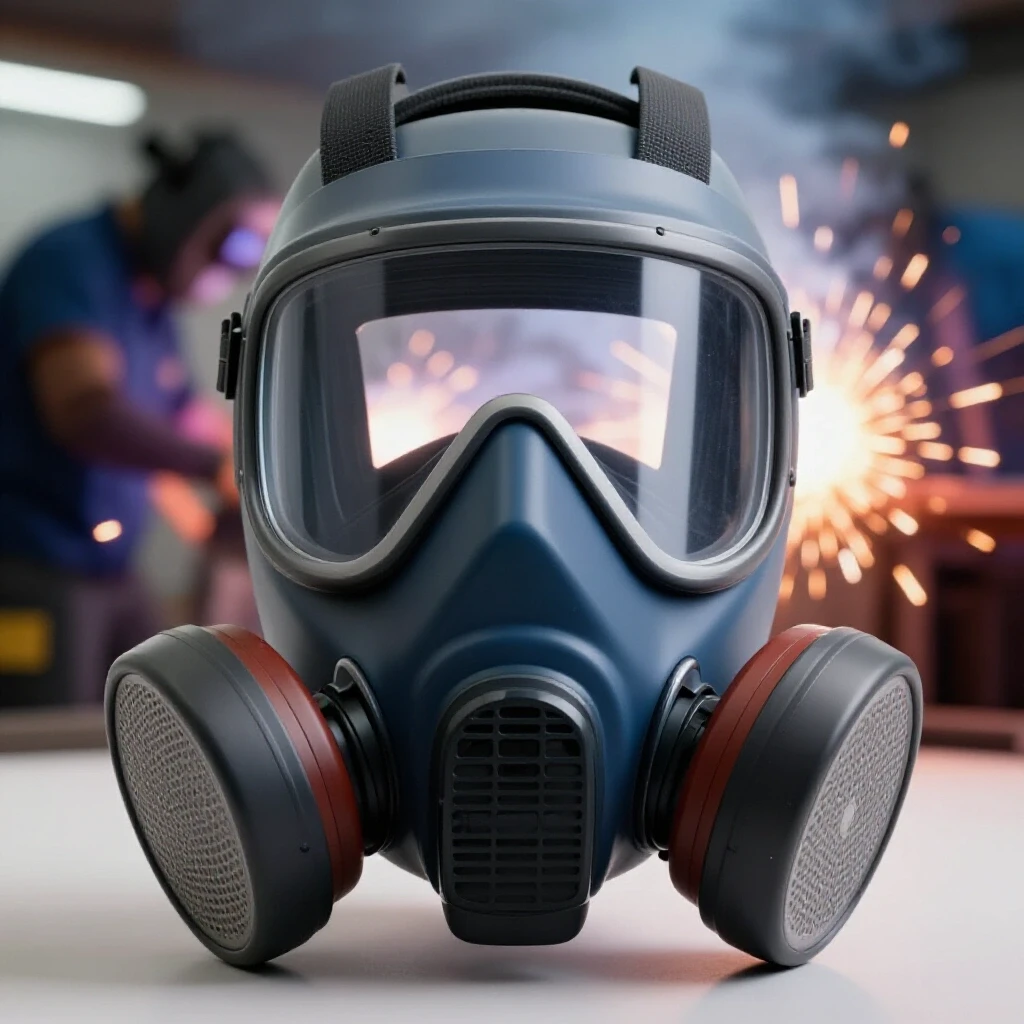
A half-mask respirator is a reusable facepiece that covers the nose and mouth. It relies on a mechanical seal against the skin and replaceable cartridges to strip contaminants from the air. In a shop environment, this tool is your first line of defense against the microscopic metal oxides created by the intense heat of the arc.
When I evaluate a new piece of gear, I look at it through the lens of a millwright. I check the material of the facepiece—usually silicone or thermoplastic—for its “durometer” or softness. A softer material conforms better to the irregular geometry of a human face, much like a high-quality gasket conforms to a pitted flange. If the material is too stiff, it will create “leak paths,” especially when you move your jaw to talk or adjust your hood.
Identifying the Correct Filter Media for Metalworking
Filter media are specialized materials designed to trap specific sizes of particles or neutralize gases. In welding, we primarily look for NIOSH-rated P100 filters that capture 99.97% of airborne bits. The “P” stands for oil-proof, which is essential in a shop where cutting fluids and machine oils are often atomized into the air.
The “100” rating is the gold standard for particulates. Weld fumes are incredibly small, often ranging from 0.1 to 1.0 microns. To put that in perspective, a human hair is about 70 microns wide. If you are using a filter rated only for 95% efficiency, you are letting a significant amount of “fines” through. I always look for a “pancake” style filter for welding. These are low-profile discs that fit easily under a welding hood without bumping the lens or the sensor.
Troubleshooting Common Seal Leaks and Bypass Issues
Bypass occurs when contaminated air takes the path of least resistance around the filter. This is usually caused by poor fit, facial hair, or degraded strap elasticity. In my experience, a leak in a respirator is no different than a vacuum leak in an intake manifold; it ruins the performance of the entire system.
To diagnose a leak, I use a two-stage pressure test. First, the negative pressure check: cover the filter inlets with your palms and inhale gently. The mask should collapse slightly against your face and hold that vacuum for at least ten seconds. If you feel air rushing in against your cheeks or the bridge of your nose, the seal is compromised. Second, the positive pressure check: cover the exhalation valve and exhale. The mask should bulge slightly but not let air escape from the edges.
| Seal Failure Symptom | Probable Root Cause | Diagnostic Step | Permanent Fix |
|---|---|---|---|
| Fogging on safety glasses | Top seal leak at nose bridge | Negative pressure check | Adjust nose clip or tighten upper straps |
| Smell of ozone/fumes | Cartridge saturation or side leak | Visual inspection of seal flange | Replace filters or resize facepiece |
| Mask “walking” down face | Strap tension loss or oil on skin | Check strap elasticity (stretch test) | Clean skin with soap; replace head harness |
| Moisture buildup inside | Exhalation valve stuck or dirty | Inspect valve flap for debris | Clean valve seat or replace thin silicone flap |
Why Machining Chatter and Vibrations Affect Mask Stability
It might seem unrelated, but the physical environment of the shop affects how your mask performs. When I am running a lathe with a heavy workpiece that has 0.005 inches of runout, the resulting vibration travels through my body. High-frequency chatter from a poorly seated carbide insert can actually cause a respirator to shift if the straps are not indexed correctly.
I have found that “strap fatigue” is a real issue. Just like a drive belt on a drill press, the elastic straps on a mask lose their “spring constant” over time. If you find yourself tightening the straps every hour, the material has reached its elastic limit. I recommend a “pull test.” Stretch the strap to twice its length; it should snap back instantly. If it lingers or looks “wavy,” it is time to swap the harness.
Cartridge Selection Based on Material Chemistry
One of the biggest mistakes I see intermediate fabricators make is using the same filter for every job. While a P100 filter handles the “dust” or particulates, it does nothing for the gases produced when welding through coatings or specific alloys. If you are welding galvanized steel, for example, the heat vaporizes the zinc coating, creating “zinc chills” if inhaled.
If you smell something “sweet” or “chemical” while welding, your P100 filter is likely being bypassed by vapors. In these cases, I switch to a combination cartridge that includes an organic vapor layer. This layer uses activated carbon to adsorb gases. Think of it like a chemical sponge. However, these are heavier and thicker. I only use them when my diagnostic process—checking the material safety data sheets (MSDS) for the base metal and filler—confirms the presence of harmful gases.
Integrating Personal Protection with Welding Gear
A common diagnostic hurdle is when a respirator prevents a welding hood from closing fully. This is not just an annoyance; it is a safety hazard. If your hood is propped open even a fraction of an inch, you are exposing your neck to UV radiation and your eyes to “side flash.”
When troubleshooting this interference, I look at the “stack height” of the respirator. Some masks have the filters mounted front-and-center, which almost always hits the hood’s sensors. I prefer models where the filters are swept back toward the jawline. This shifts the center of gravity closer to your face, reducing neck strain, and provides the clearance needed for the hood to “click” into the down position.
Systematic Maintenance and Cleaning Protocols
I treat my mask cleaning like I treat my tool calibration. At the end of every shift, the mask should be stripped down. I remove the filters—never get them wet—and wash the facepiece in warm, soapy water. This removes skin oils which can break down the silicone over time.
- Disassemble the facepiece, removing filters and valves.
- Submerge in warm water (no hotter than 120°F) with mild detergent.
- Scrub the sealing flange with a soft brush to remove embedded grit.
- Rinse thoroughly; soap residue can cause skin irritation (dermatitis).
- Air dry in a clean environment, away from the welding bench.
- Inspect the exhalation valve. It should be flat and flexible, not curled at the edges.
Case Study: The “Ghost Leak” in a Custom Chassis Build
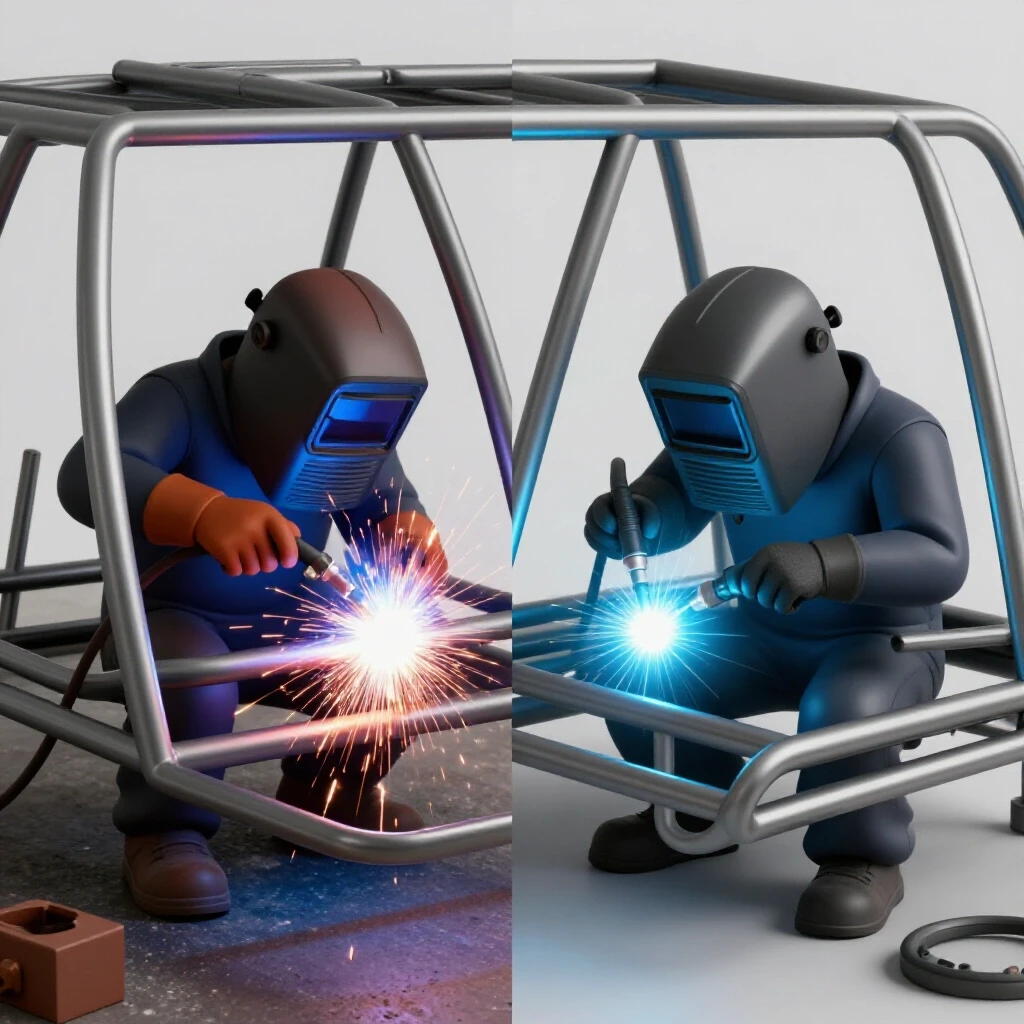
I was once working on a 4130 chromoly tube chassis. I noticed that every time I leaned over to weld the bottom cluster, I would get a whiff of shielding gas and smoke. I performed a standard seal check while standing up, and it passed perfectly. I was baffled.
I applied a systematic diagnostic approach. I recreated the body position I was in when the leak occurred. I realized that when I tucked my chin to see the joint, my chest was hitting the bottom of the respirator, pushing it up and breaking the seal at the nose. The fix wasn’t a different mask, but a strap adjustment. By tightening the lower “cradle” strap and loosening the top slightly, the mask could pivot without breaking the seal. This taught me that diagnostics must be performed in the “working envelope,” not just at the workbench.
Diagnostic Math: Understanding Filter Life Cycles
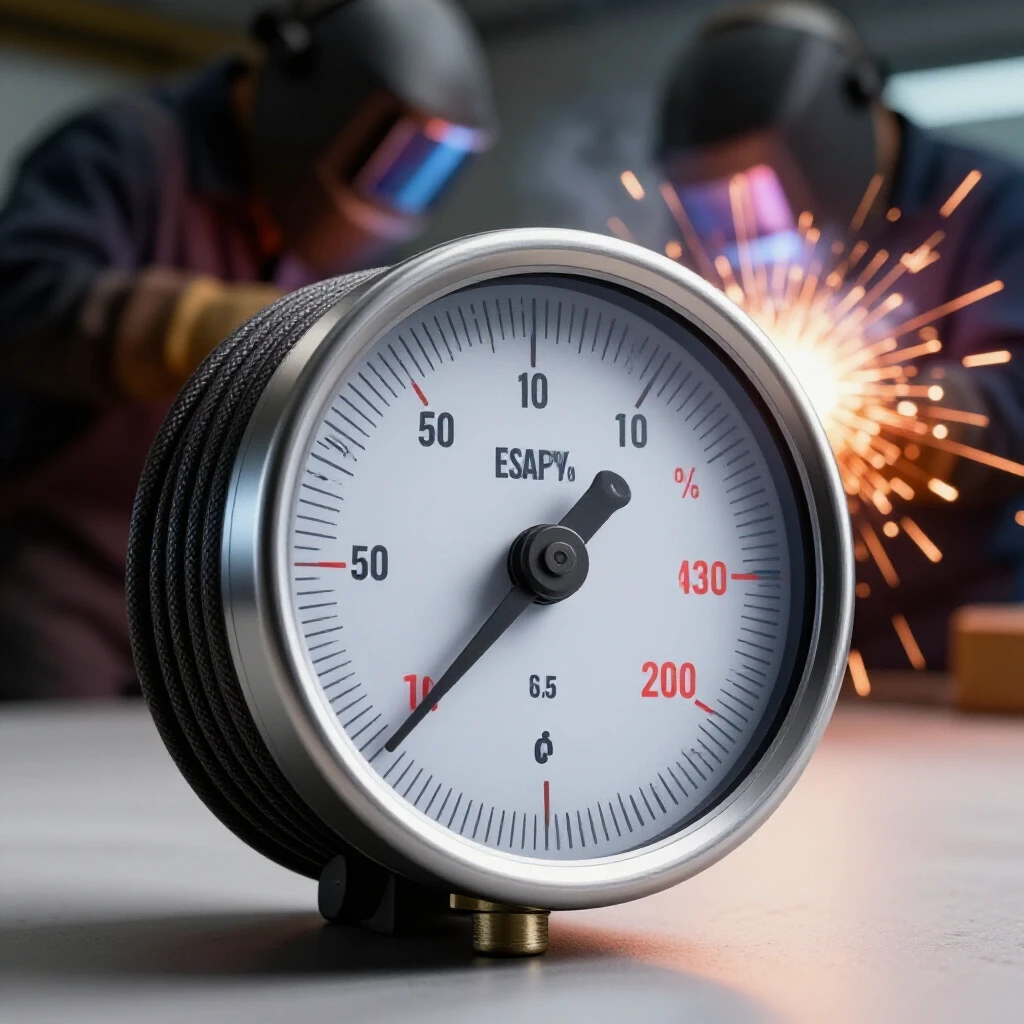
How do you know when a filter is “dead”? In a mechanical system, we look for a drop in pressure or a change in sound. With a respirator, we look for “breathing resistance.” As the P100 media traps particles, the paths for air become smaller. This requires your lungs to work harder to pull air through.
I use a simple “effort-to-output” metric. If I feel like I am breathing through a straw by the end of a four-hour shift, the filter is at 80% capacity. I don’t wait for it to hit 100%. A clogged filter causes you to breathe harder, which creates more suction, which can actually pull the mask seal open. I replace my filters every 40 hours of “arc time” or sooner if the shop is particularly dusty from grinding.
| Metric | Acceptable Range | Failure Threshold |
|---|---|---|
| Seal Vacuum Hold | 10+ Seconds | < 5 Seconds |
| Strap Elasticity | 100% Return | < 90% Return |
| Breathing Resistance | Minimal | Noticeable “Sucking” sound |
| Facepiece Softness | Pliable/Soft | Brittle or Tacky |
Troubleshooting Weld Porosity Caused by Respiratory Gear
This is a rare but fascinating issue I have encountered. I was once diagnosing a recurring porosity problem in a series of aluminum welds. We checked the gas flow (30 CFH), the tungsten (2% ceriated), and the base metal cleanliness. Everything was perfect, yet we had tiny pinholes.
We discovered that the welder’s respirator exhalation valve was pointed directly down toward the weld puddle. Every time he exhaled, a puff of carbon dioxide and moisture-laden air was hitting the shielding gas envelope, causing turbulence and contamination. We resolved this by installing a “downward-facing” valve cover on the mask. It redirected the breath away from the work zone. It is a perfect example of how every component in the shop—including what you wear—interacts with the metallurgy.
Actionable Checklist for Daily Mask Calibration
- Visual Inspection: Check for cracks in the silicone, especially around the filter ports.
- Valve Check: Ensure the thin rubber flaps are not “glued” shut by dried sweat or dust.
- Filter Seat: Ensure the bayonet or threaded mount is tight. A 0.002-inch gap here is enough to bypass the filter entirely.
- Strap Indexing: Mark your “comfort spots” on the straps with a silver marker so you can return to a known good tension instantly.
- Seal Test: Perform both positive and negative pressure checks before striking the first arc.
Mastering the Shop Environment
Troubleshooting is more than just fixing a broken machine; it is about optimizing the entire process. When you master the selection and maintenance of your breathing gear, you remove a significant variable from your fabrication workflow. You will find that your beads are steadier, your layout is more precise, and your fatigue levels drop.
I have seen many talented fabricators walk away from the trade because of “shop lung” or chronic fatigue. Most of the time, it was because they treated their respirator as an afterthought rather than a precision instrument. By applying the same diagnostic rigor to your mask that you apply to your lathe alignment or your weld penetration, you ensure that you stay in the shop for the long haul.
Frequently Asked Questions
How can I tell if my mask is the right size without a professional fit test? While a professional “bitrex” or “saccharin” fit test is the gold standard, you can perform a “user seal check.” If you can’t achieve a vacuum that holds for 10 seconds during a negative pressure test, the mask is likely the wrong size. Usually, if the mask sits on your chin but touches your lower eyelids, it is too large. If it pinches your nostrils shut, it is too small.
Can I wear a half-mask with a beard? Technically, no. Any amount of facial hair that comes between the skin and the silicone flange will create a leak path. Even a “five o’clock shadow” can reduce the effectiveness of the seal by over 50%. For the mask to function as a mechanical seal, it needs a smooth, clean surface.
Why do I still smell “smoke” even with brand-new P100 filters? P100 filters are designed to stop solids (particulates), not gases. Welding produces ozone and other gases that pass right through a standard particulate filter. If the smell is bothersome or you are working with coated metals, you need a P100 filter with a “nuisance odor” carbon layer or a full organic vapor cartridge.
How often should I replace the exhalation valves? Exhalation valves should be replaced if they show any signs of warping, curling, or loss of flexibility. In a heavy-use shop, I inspect them weekly and usually replace them every six months. A faulty exhalation valve is a major failure point because it allows unfiltered air directly into your breathing zone during inhalation.
Is there a way to stop my safety glasses from fogging while wearing a mask? Fogging is a diagnostic symptom of a leak at the top of the nose bridge. When you exhale, warm air is escaping upward. Adjust the nose clip or tighten the upper straps to pull the mask tighter against the bridge of your nose. If the mask fits correctly, no air should reach your glasses.
What is the difference between N95 and P100 for welding? An N95 is a disposable mask that is not oil-resistant and only catches 95% of particles. A P100 is oil-proof and catches 99.97%. In a welding shop where there is metal fume and potentially atomized oils, a P100 is the minimum requirement for effective protection.
Can I use compressed air to blow out my filters? Never do this. Compressed air will tear the delicate microscopic fibers of the filter media, creating large holes that you cannot see. This turns your “100” rated filter into a “0” rated filter. Once a filter is clogged, it must be discarded.
How do I store my mask to prevent the silicone from deforming? Store your mask in a sealed plastic bag or a dedicated hard case. Do not leave it hanging by the straps on a hook, as the weight of the mask will eventually stretch the elastic. Also, keep it away from direct sunlight and extreme heat, which can “set” the silicone into a warped shape.
Why does my face itch after wearing the mask for an hour? This is often caused by soap residue or skin oils trapped against the skin. Ensure you are rinsing the mask thoroughly after cleaning. If the problem persists, you may have a sensitivity to the mask material. Switching from a thermoplastic mask to a high-grade medical silicone mask often resolves this.
Can I use the same cartridges for grinding and welding? Yes, a P100 filter is excellent for both. However, grinding produces much larger sparks and hot “swarf” that can burn holes in the outer layer of the filter. I recommend using a “spark shield” or a plastic cover over your filters when doing heavy grinding to extend their life.
(This article was written by one of our staff writers, Paul Whitaker. Visit our Meet the Team page to learn more about the author and their expertise.)