Financing Options for Expanding Custom Fab Shops (Review)
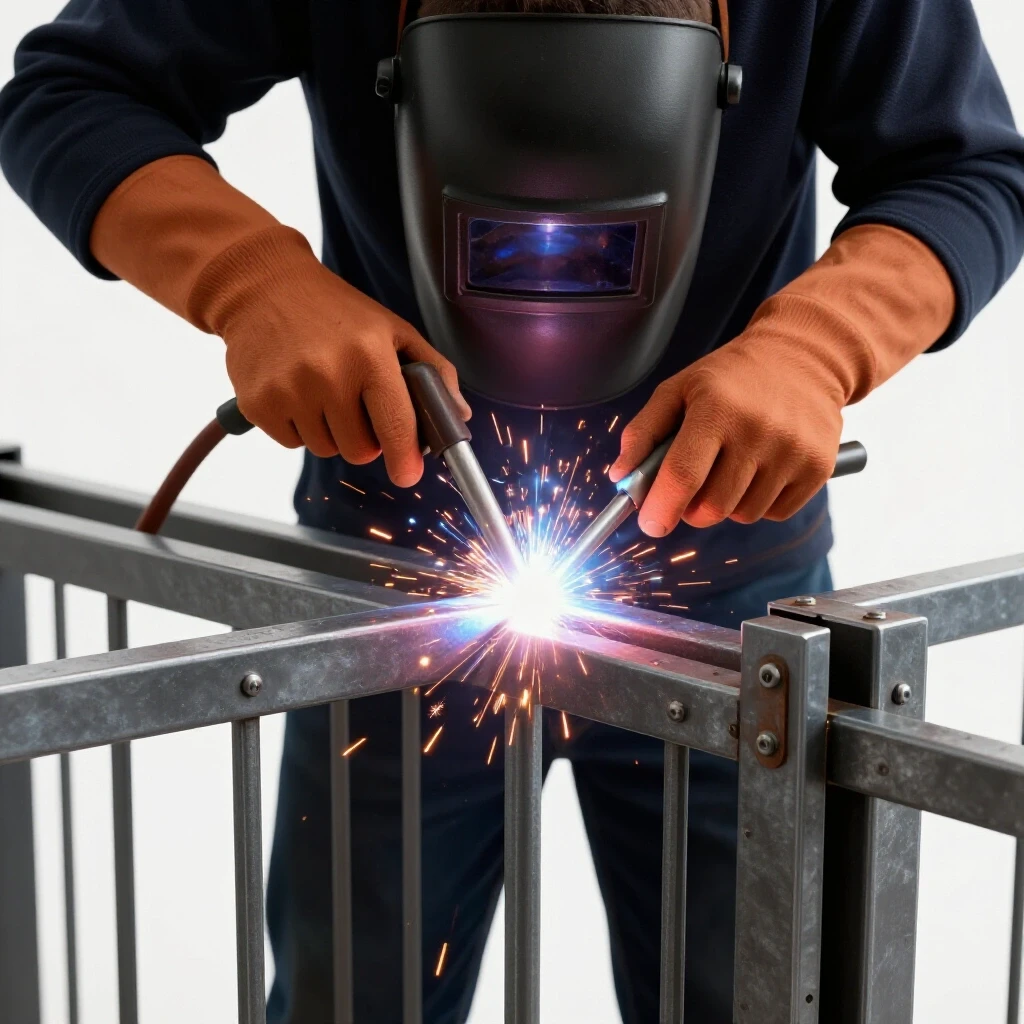
I remember the first time I landed a contract for twenty custom gate frames. I was still working out of my garage, balancing a full-time job and late-night welding sessions. I looked at the check, felt like a success, and got to work. Two weeks later, after buying three bottles of shielding gas, two buckets of grinding discs, and a mountain of steel, I realized I was actually paying the customer to let me do the work. My bank account was lower than when I started. That was my wake-up call. Transitioning from a hobbyist to a professional fabricator isn’t about how well you can lay a bead; it is about how well you manage the numbers behind the torch.
Many shop owners in their 40s and 50s reach a point where they need to scale. They have the skill and the client base, but they lack the capital structure to grow without drowning in debt. This guide is designed to help you navigate the financial realities of growing your shop, from calculating your true cost of doing business to choosing the right ways to fund your next big equipment purchase.
Establishing a Realistic Hourly Shop Rate for Fabrication
A shop rate is the total dollar amount you must charge per hour of labor to cover every single expense in your business while still making a profit. It is the foundation of every quote you send and determines whether your business will survive the next year.
Most side-hustlers pick a number out of thin air, often around $40 or $50 an hour, because it sounds like a lot compared to a retail wage. However, a professional shop rate usually falls between $65 and $120 per hour, depending on your region and specialized equipment. To find your number, you must account for “unbillable time”—the hours you spend sweeping the floor, talking to customers, or fixing a broken bandsaw.
Breaking Down the Overhead Burden
Your overhead burden includes every cost that exists even if you don’t strike an arc that day. If you don’t track these, they will eat your profit margins before you even realize they are gone.
- Rent or Mortgage: Even if you work from a home shop, a portion of your mortgage and property taxes should be allocated to the business.
- Utilities: Power for the welder, heating for the shop, and high-speed internet for CAD work.
- Insurance: General liability and equipment insurance are non-negotiable once you start taking paid work.
- Software Subscriptions: CAD/CAM licenses, accounting software like QuickBooks, and invoicing tools.
| Expense Category | Annual Cost (Example) | Monthly Impact |
|---|---|---|
| Shop Rent/Space Allocation | $6,000 | $500 |
| Utilities (Power/Heat) | $2,400 | $200 |
| Business Insurance | $1,200 | $100 |
| Software & Subscriptions | $900 | $75 |
| Total Fixed Overhead | $10,500 | $875 |
If you work 20 hours a week on your side-hustle, that is roughly 80 hours a month. To simply cover that $875 in overhead, you need to add $10.93 to every billable hour before you even pay yourself or buy a single flap disc.
Strategies for Funding Equipment and Shop Expansion
Funding expansion involves choosing how to pay for the tools that will increase your output, such as a CNC plasma table or a high-end TIG setup. This process requires comparing the cost of the money—like interest rates—against the projected income the tool will generate.
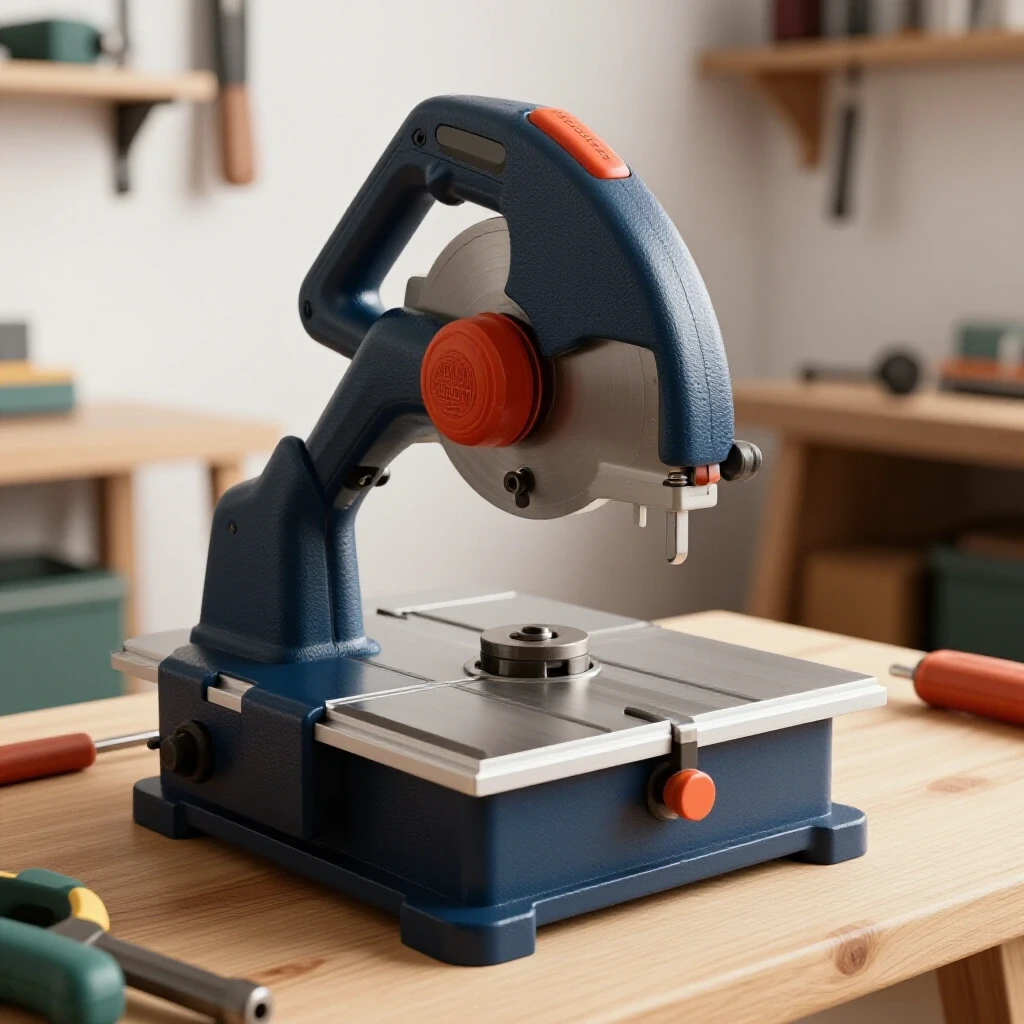
When I needed to move from a manual cold saw to a semi-automatic model, I had to decide between draining my cash reserves or looking at external funding. For a small shop, there are three primary paths to acquiring new machinery. Each has a different impact on your taxes and monthly cash flow.
Equipment Leasing vs. Commercial Loans
Leasing is often the most accessible path for a growing shop. Many equipment dealers offer “lease-to-own” programs. The advantage here is that the monthly payment is often lower than a loan payment, and you can sometimes deduct the entire lease payment as a business expense.
Commercial loans, often through local banks or credit unions, usually require more paperwork but result in lower total interest paid over time. If you have a solid three-year history of tax returns for your shop, a small business loan can provide the capital needed for a major expansion, like moving into a dedicated commercial space.
The Power of Section 179
One of the most important tools in your financial belt is the Section 179 tax deduction. This allows you to deduct the full purchase price of qualifying equipment from your gross income in the year you buy it. Instead of depreciating a $20,000 CNC machine over five or seven years, you can take the whole hit at once. This can significantly lower your tax bill, effectively “refunding” you a portion of the machine’s cost through tax savings.
- Cash Purchase: Best for smaller tools (under $5,000) to avoid interest.
- Equipment Lease: Best for preserving cash flow and keeping debt off your personal credit report.
- SBA Microloans: Great for shops needing $10,000 to $50,000 with mentorship requirements.
Why Consumable Tracking Prevents Profit Bleed
Consumable tracking is the process of measuring exactly how much shielding gas, welding wire, abrasives, and saw blades are used on a specific project. Failing to account for these “hidden” costs is the fastest way to turn a profitable job into a loss.
In my early years, I viewed a box of grinding wheels as a general shop expense. That was a mistake. If a project requires heavy beveling on thick plate, you might go through $40 in abrasives alone. If you didn’t build that into the quote, that $40 comes directly out of your pocket.
Calculating the Consumable Burden Factor
A simple way to handle this is to apply a “consumable burden” to your labor or material costs. Based on my data from years of fabrication, a standard burden is often 10% to 15% of the material cost. However, for high-intensity jobs like stainless steel TIG welding, where argon gas and specialized fillers are expensive, that factor might jump to 25%.
- Welding Gas: Calculate the cost per cubic foot. A standard 250cf tank of 75/25 Ar/CO2 might cost $70 to refill. That is $0.28 per cubic foot.
- Abrasives: Track how many flap discs you use per hour of heavy grinding.
- Saw Blades: Estimate the life of a blade in “total square inches of cut” to find the cost per cut.
Building a Precision Job Costing Model
Job costing is the method of estimating the total cost of a project by combining material, labor, overhead, and consumables before adding a profit margin. It is the only way to ensure that you are being paid fairly for your expertise and shop time.
When a customer asks for a quote, don’t just guess. Use a structured template. I have found that breaking a quote into four distinct “buckets” prevents items from being forgotten.
The Four Buckets of a Fabrication Quote
- Raw Materials: The actual cost of the steel, aluminum, or hardware. Always add a 20% to 30% markup here to cover the time spent ordering, picking up, and moving the material.
- Labor Hours: Be honest about how long it takes. Include setup time, jigging, welding, and clean-up. If you think it will take five hours, quote six.
- Consumables: Use your calculated burden factor (e.g., 15% of material cost).
- Subcontracted Services: If you have to send parts out for powder coating or laser cutting, mark these up by at least 15% to cover the logistical headache.
| Quote Element | Base Cost | Markup/Rate | Total to Client |
|---|---|---|---|
| Steel Tubing | $400 | 25% | $500 |
| Labor (10 hours) | – | $85/hr | $850 |
| Consumables | $400 (Mat) | 15% | $60 |
| Powder Coating | $200 | 20% | $240 |
| Total Quote | – | – | $1,650 |
Measuring ROI on Major Machinery Investments
Return on Investment (ROI) is a calculation used to determine if a new tool will pay for itself within a reasonable timeframe. For a small shop, a “good” ROI is generally a payback period of 12 to 24 months.
If you are considering a $15,000 CNC plasma table, you shouldn’t just think about the monthly payment. You need to look at how many hours of manual labor it replaces. If the machine saves you 10 hours of manual cutting and grinding per week, and your shop rate is $85, that machine is “earning” $850 a week in saved labor.
The Payback Period Formula
To find your payback period, divide the total cost of the machine by the monthly profit (or labor savings) it generates.
Example: * Machine Cost: $15,000 * Monthly Labor Savings: $1,200 * Increased Monthly Material Markup (from faster throughput): $300 * Total Monthly Gain: $1,500 * Payback Period: 10 Months
In this scenario, the machine is an excellent investment. If the payback period was 60 months, you would be better off continuing to outsource your cutting or looking for a used machine.
Sourcing Strategies to Lower Material Expenses
Material sourcing is the practice of finding and purchasing raw metals at the lowest possible price while maintaining quality. For a growing shop, moving from “retail” metal prices to “wholesale” or “bulk” pricing is a major milestone.
When you are a hobbyist, you buy steel by the foot at a local hardware store or a small-scale metal center. You might pay $8.00 a foot for square tubing. As a professional, you should be buying 20-foot sticks from a regional distributor. That same tubing might drop to $3.50 a foot when bought in bulk.
Tips for Better Material Margins
- Establish Net-30 Accounts: Once you have a business entity, apply for credit terms with large metal suppliers. This allows you to buy material for a job, finish the job, and get paid by the customer before you have to pay the supplier.
- Buy “Drops” and Remnants: Many large suppliers sell off-cuts by the pound. For small brackets or gussets, this can reduce material costs by 50%.
- Batch Your Orders: Delivery fees can kill a small job’s profit. Try to order enough material for three or four jobs at once to spread that $100 delivery fee across multiple projects.
Analyzing Post-Job Profits to Refine Future Bids
Post-job analysis is the act of comparing your original estimate to the actual time and money spent once the project is finished. This is the most ignored step in fabrication, yet it is the most valuable for long-term growth.
I used to keep a “Job Log” on a clipboard by the door. Every time I started a project, I hit a stopwatch. When I finished, I wrote down the actual hours. I was shocked to find that “simple” jobs were often taking 30% longer than I quoted.
Identifying “Profit Leaks”
If your actual costs are consistently higher than your quotes, you have a profit leak. Common culprits include: * Scope Creep: Doing “just one more thing” for the customer without charging for it. * Inefficient Workflow: Spending too much time looking for tools or moving material because the shop layout is poor. * Hidden Rework: Having to fix mistakes because of poor measurements or rushing.
By reviewing these metrics monthly, you can adjust your shop rate or your quoting multipliers to ensure your bank account actually grows.
Modern Software Tools for the Small Fab Shop
Managing the finances of a growing shop is much easier with the right digital tools. You don’t need expensive enterprise software, but you do need systems that talk to each other.
- QuickBooks Online or Xero: Essential for tracking expenses, sending professional invoices, and running profit/loss reports.
- Jobber or Fullbay: These are “Field Service Management” tools that help with scheduling, quoting, and tracking time on specific jobs.
- SheetLayout or CutList Optimizer: These apps help you minimize material waste by showing you exactly how to cut your parts from standard lengths or sheets.
- Wave Accounting: A great, free alternative for very small shops just starting to move away from spreadsheets.
Next Steps for Your Shop’s Financial Growth
Expanding your fabrication business is a marathon, not a sprint. The goal is to build a shop that supports your life rather than one that consumes all your time and money.
- Step 1: Spend the next week tracking every minute you spend in the shop, including cleaning and administrative work.
- Step 2: Calculate your overhead for the last three months to find your “break-even” hourly number.
- Step 3: Before your next big equipment purchase, run a payback period calculation to ensure the tool will actually make you money.
- Step 4: Start adding a 15% consumable burden to every quote you send out.
By mastering these “shop math” principles, you move from being a person with a welder to being a business owner who happens to weld. The difference is visible in your stress levels and your bottom line.
Frequently Asked Questions
How do I know if I should buy a new machine or keep outsourcing the work?
You should consider buying a machine when the annual cost of outsourcing (including shipping and delays) exceeds the annual cost of owning the machine (payment, maintenance, and labor to run it). If outsourcing costs you $1,000 a month and a machine payment is $600, you are likely ready to bring that process in-house.
What is a “safe” profit margin to aim for in custom fabrication?
For most small shops, a net profit margin of 15% to 25% is a healthy target. This is the money left over after you have paid yourself a fair hourly wage and covered all overhead. If your margins are below 10%, you have very little room for error if a project goes wrong.
Should I charge the same shop rate for every type of work?
Not necessarily. Many shops use a “tiered” rate. For example, manual grinding or assembly might be billed at $65/hr, while specialized TIG welding or CNC machining might be billed at $110/hr. This reflects the higher cost of the equipment and the higher level of skill required.
How do I handle customers who say my shop rate is too high?
Focus on value and reliability rather than price. Explain that your rate includes professional insurance, high-quality materials, and the specialized equipment needed to do the job safely and correctly. Most “price shoppers” are high-headache clients; the best customers understand that quality work requires a professional budget.
Is it better to finance equipment through a dealer or a bank?
Dealer financing is often faster and may offer 0% interest promotions for short terms. However, local banks often offer better long-term rates and help you build a commercial credit history, which is vital if you ever want to buy a commercial building or take out a large line of credit.
How much should I mark up my materials?
A standard markup is 20% to 50%. The smaller the order, the higher the markup should be. If you spend an hour driving to pick up $100 worth of steel, a 20% markup ($20) doesn’t even cover your gas and time. In that case, a flat “material handling fee” might be more appropriate.
What is the most common “hidden cost” in a fab shop?
Abrasives and gases are the most common. A single 6-inch grinding hub can cost $15, and a shop can go through five in a day of heavy work. If those aren’t tracked and billed, you are losing $75 a day in “invisible” costs.
How do I account for my own time if I’m still working a day job?
You must pay yourself a “fair market wage” in your calculations. If you would have to pay an employee $30/hr to do the work, that $30 is a cost, not profit. Your profit is what remains after that $30/hr is paid out. This ensures the business is actually viable on its own.
When should I move from a home shop to a commercial space?
Move when the limitations of your current space are costing you more in lost efficiency than the rent of a new space. If you are spending two hours a day moving machines around just to fit a project inside, that is 10 hours a week of wasted labor. At $85/hr, that is $3,400 a month in “lost” time—likely more than the cost of a small commercial lease.
(This article was written by one of our staff writers, Michael Hargrove. Visit our Meet the Team page to learn more about the author and their expertise.)