How to Calculate Break-Even Points for Small Projects (Guide)
I remember the first “real” job I took in my small shop. It was a set of custom steel brackets for a local contractor. I glanced at the pile of scrap in the corner, figured it would take me two hours, and quoted him $100. I thought I was making a killing. By the time I finished, I had spent four hours fabrication time, used three expensive ceramic flap discs, and burned through half a bottle of shielding gas. After factoring in the electricity to run the welder and the heat for the shop, I realized I hadn’t made a dime. In fact, I had paid for the privilege of doing the work.

That experience taught me that side-hustle metalworking is often a trap of hidden costs. Most fabricators start as hobbyists. We are used to buying tools because we want them, not because they earn their keep. When you transition to taking paid work, your mindset must shift from “what is this worth to the customer” to “what does this cost me to produce.” If you don’t know the exact moment a project starts paying for itself, you are just guessing at your livelihood.
Establishing a Realistic Shop Hourly Rate
A shop hourly rate is the base dollar amount you must charge for every hour of work to cover your expenses and pay yourself a fair wage. It is not just a random number chosen to match the guy down the street; it is a calculated figure based on your specific shop’s financial needs.
When I talk to small shop owners, they often pick a number like $30 or $40 an hour. They think this is competitive. However, once you factor in the cost of the building, the tools, and the time spent sweeping the floor, that number is almost always a loss. For a solo operator in a small, well-equipped garage or dedicated shop, a realistic rate usually falls between $65 and $120 per hour. This range allows you to maintain the equipment and actually see a return on your time.
To find your rate, you need to total your monthly fixed costs. This includes rent or a portion of your mortgage, utilities, and any subscriptions for design software. Divide this total by the number of hours you actually spend under the hood or at the bench. If your overhead is $500 a month and you work 20 hours a week on side jobs, your overhead cost is $6.25 per hour. Now, add your desired take-home pay and a “shop fund” for future repairs. This total is your baseline.
- Fixed Overhead: Rent, utilities, internet.
- Labor Rate: What you would pay a skilled welder to do the work.
- Shop Reinvestment: Funds set aside for tool upgrades and maintenance.
Why Hidden Consumables Bleed Small Shop Profits
Consumables are the items you use up during a job that cannot be used again, such as welding wire, shielding gas, abrasives, and drill bits. Because these items are small, many fabricators forget to bill for them, which creates a massive hole in their fabrication job costing.
I once consulted for a guy who couldn’t figure out why his bank account was stagnant despite being busy. We looked at his abrasive cabinet. He was using high-end 5-inch grinding wheels that cost $8 each. On a typical furniture project, he would go through four of them. That is $32 off his profit margin that he wasn’t tracking. We implemented a “consumable burden factor,” which is a flat percentage added to the material cost to cover these “invisible” expenses.
| Consumable Item | Estimated Cost | Typical Usage per Project |
|---|---|---|
| 5-inch Flap Disc (Ceramic) | $7.50 | 2-3 discs |
| Shielding Gas (75/25 Mix) | $60.00 (Refill) | 5-10 hours of arc time |
| Welding Wire (11lb Spool) | $45.00 | 0.5 – 1.0 lb |
| TIG Tungsten / Filler Rod | $25.00 (Pack) | 2-3 rods |
| Shop Rags / Degreaser | $15.00 (Bulk) | Variable |
Most successful small shops add a 10% to 15% surcharge on top of the raw material cost just to handle these items. If you are doing heavy grinding or using expensive specialty gases like straight Helium, that percentage needs to be even higher.
Mapping Machinery Amortization and Tool Wear
Machine amortization is the process of spreading the cost of an expensive tool over its useful life so that each project pays for a tiny piece of that tool. This ensures that when your welder eventually dies, you already have the cash sitting in the bank to buy a new one.
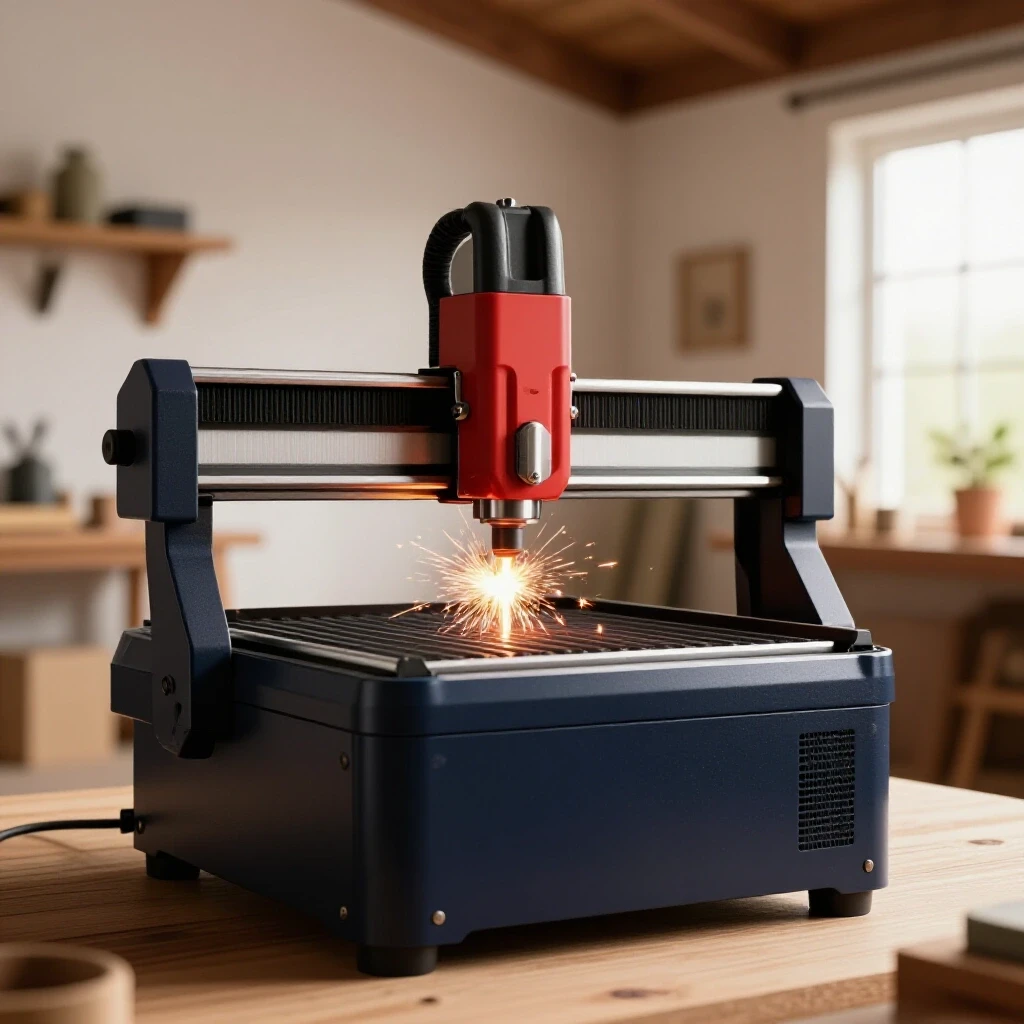
If you buy a $4,000 CNC plasma table and expect it to last five years, you need to recover $800 a year plus the cost of maintenance. If you run the machine for 200 hours a year, that machine has an hourly “rent” of $4. Every time you quote a job using that table, you must add that $4 per hour to your quote. If you don’t, you are essentially giving the customer a free piece of your equipment.
I suggest creating a simple spreadsheet for your major tools. List the purchase price, the expected lifespan in years, and the estimated hours of use per year. This gives you a “machine rate” that makes calculating shop rates much more accurate.
- Welder ($2,500): $2.50 per hour (based on 1,000-hour life).
- Cold Saw ($1,200): $1.50 per hour (based on blade life and motor wear).
- Ironworker ($6,000): $5.00 per hour (heavy maintenance and tooling costs).
Building a Custom Job Quote and Pricing Model
A professional quote is more than just a total price; it is a roadmap of the work to be performed. It should be broken down into material costs, labor hours, and shop fees. This transparency helps the client understand the value and helps you stay disciplined.
When I build a quote, I always start with the materials. I call my supplier for current pricing because steel prices can fluctuate 10% in a single week. I then apply a 30% to 50% material markup. This isn’t just for profit; it covers the time I spent driving to the steel yard, the fuel for my truck, and the risk of a miscut. If I buy a stick of tubing for $100, the customer pays at least $130.
Next, I estimate the labor. I break the job into phases: cutting, fit-up, welding, and finishing. If I think the welding will take two hours, I write down three. There is always a “fit-up tax” in fabrication. Parts rarely align perfectly on the first try, and your pricing should reflect that reality.
- Material Cost: Raw stock + 35% markup.
- Labor Cost: Total estimated hours x Shop Hourly Rate.
- Consumable Fee: 12% of the material cost.
- Machine Fee: Specific hourly rate for specialized equipment (CNC, etc.).
Bulk Metal Sourcing and Strategic Purchasing
One of the easiest ways to improve your margins is to stop buying metal by the foot at retail hardware stores. Side-hustle metalworking requires a relationship with a local steel service center. Buying a full 20-foot stick of square tubing is often only slightly more expensive than buying a 4-foot piece at a home improvement store.
I keep a “drop rack” in my shop for offcuts. When I buy a full stick for a job, the customer pays for the whole stick, even if I only use 15 feet. The remaining 5 feet are profit. I can use that “free” material for a smaller project later, and since I’ve already recovered the cost, the entire material charge on the second job goes straight to the bottom line.
Interestingly, many shops ignore the “convenience factor.” If a customer needs a small bracket and you have the material on hand, you should still charge them the full market rate for that steel. Your ability to stock and store material is a service that has value.
Analyzing Post-Job Profits and Cost Variance
The most important part of the process happens after the sparks stop flying. You must compare your estimated costs to your actual costs. This is called a post-job reconciliation. It is the only way to know if your pricing model is actually working.
In my own shop, I kept a simple logbook next to the welder. I would jot down when I started and when I finished. I was often shocked to find that a job I thought took four hours actually took six. That two-hour difference is the difference between a profitable side-hustle and an expensive hobby. If you find a consistent variance, you need to raise your rates or improve your efficiency.
- Estimated Hours vs. Actual Hours: Did you underestimate the grinding time?
- Consumable Waste: Did you use more gas than expected due to a leak or high flow rate?
- Material Scrap: Was there more waste than planned?
Tools for Tracking and Estimation
You don’t need expensive software to manage a small shop’s finances. A few simple digital tools can keep your numbers organized and your bids professional.
- Spreadsheets (Excel or Google Sheets): Create a template that calculates your shop rate automatically based on your monthly bills.
- Invoicing Apps (Wave or Square): These allow you to send professional quotes and accept credit cards on-site, which often leads to faster approvals.
- Time Tracking Apps (Toggl or Clockify): Use these on your phone to track exactly how long you spend on each phase of a project.
- Metal Weight Calculators: Online tools that help you estimate the weight of your project, which is essential for calculating shipping or material handling costs.
Setting Benchmarks for Success
To keep your shop healthy, you should aim for specific financial benchmarks. These are not rules, but they are indicators used by successful small-scale fabricators to ensure they are moving in the right direction.
A common goal is a gross margin of 50%. This means that after you pay for the metal and the consumables, half of the check stays in the shop to cover your labor and overhead. If your margins are consistently below 30%, you are likely underpricing your skill or overspending on supplies.
Another benchmark is the “Tool Payback Period.” For any new tool costing over $500, I aim for a payback period of less than 12 months. If I buy a new TIG welder, I want to see $2,000 worth of specialized TIG work come through the door within a year to justify the investment.
- Average Shop Rate: $75 – $95/hr for general fabrication.
- Material Markup: 30% minimum.
- Profit Margin Target: 20% after all expenses and labor are paid.
Frequently Asked Questions
How do I handle a customer who says my shop rate is too high? Explain that your rate covers professional-grade equipment, high-quality consumables, and the expertise to do the job safely. Most “cheap” shops don’t track their costs and eventually go out of business. You are pricing for longevity and reliability. If they still push back, they might not be the right customer for a sustainable business.
Should I charge for the time I spend talking to a client about a design? Yes, but usually as a “Design Fee” or “Consultation Fee.” For small projects, I build 30 minutes of “admin time” into my labor estimate. If the design takes hours of CAD work, that is a separate line item. Your brain is just as much a tool as your welder.
What is the biggest hidden cost in a small metal shop? Abrasives and electricity. People often underestimate how much it costs to run a 220V welder and a large air compressor simultaneously. Additionally, high-quality sanding discs are expensive. If you aren’t tracking how many you use, you are losing money on every “clean” weld.
How do I calculate the cost of shielding gas for a single job? Check your flow meter (typically 20-30 CFH). If you weld for one hour of “arc-on” time at 25 CFH, you’ve used 25 cubic feet of gas. If a 125-cubic-foot tank costs $60 to refill, that hour of welding cost you $12 in gas alone.
Is it better to charge a flat fee or an hourly rate for fabrication? For small, repeatable projects, a flat fee is better because as you get faster, your “hourly” pay effectively goes up. For custom, one-off repairs where “surprises” are likely, always quote an hourly rate with a clear estimate of the expected range.
How much should I mark up my materials? The standard is 30% to 50%. This covers the “procurement cost”—the time spent ordering, picking up, and unloading the metal. It also covers the cost of the floor space used to store it.
How do I factor in the cost of my shop’s square footage? Take your total monthly rent or mortgage and divide it by the total square footage. Then, multiply that by the square footage of your shop. If your shop takes up 25% of your property and your mortgage is $2,000, the shop’s “rent” is $500. This must be covered by your billable hours.
When is the right time to upgrade to a more expensive machine? When the current machine is the bottleneck in your production. If you are spending three hours grinding because your cutter leaves a poor edge, a better saw or plasma table will pay for itself by saving you labor hours. Calculate the time saved per month and see if it covers the monthly “rent” of the new tool.
Do I need to charge for “shop supplies” like welding wire and cleaning chemicals? Yes. Use a “Consumable Burden” percentage (usually 10-15%) added to the material total. It is much easier than trying to measure every inch of welding wire used.
How can I reduce my material costs without sacrificing quality? Establish a relationship with a local steel supplier and buy in bulk. Ask for “drops” or “remnants” at a discount. Also, design your projects around standard metal lengths (usually 20 or 24 feet) to minimize waste.
What should I do if I finish a job and realize I lost money? Don’t panic, but do a “post-mortem.” Look at your time logs and material receipts. Did you spend too much time on a specific task? Did you forget to bill for a specific consumable? Use that data to adjust your next quote. Every “loss” is just a tuition payment in the school of business.
(This article was written by one of our staff writers, Michael Hargrove. Visit our Meet the Team page to learn more about the author and their expertise.)