How to Choose a Portable Welder for Field Projects (Guide)
I have spent 17 years in industrial maintenance, often elbow-deep in the guts of machinery that failed at the worst possible moment. In my shop, I don’t look at the shiny paint or the celebrity endorsements on the box. I look at the gauge of the internal wiring, the quality of the cooling fans, and the thickness of the circuit board traces. When you are standing in a muddy field trying to tack a gate hinge or repair a trailer frame, the marketing hype on a spec sheet won’t help you. You need a machine that can handle “dirty” generator power and keep an arc steady in the wind.
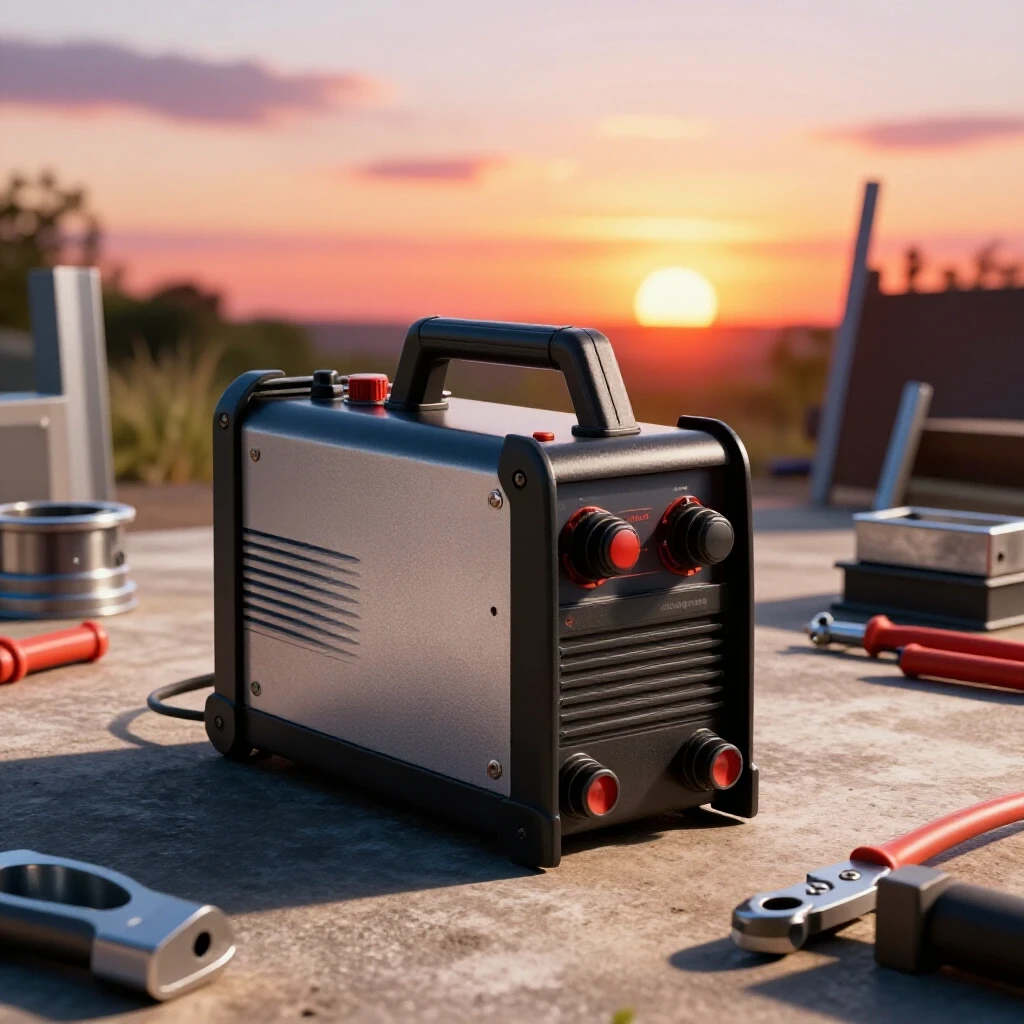
Selecting mobile welding equipment requires looking past the brand name to see the actual engineering inside. I’ve seen budget units outperform premium brands in specific field conditions, and I’ve seen expensive machines “brick” themselves because their cooling vents were poorly placed for outdoor use. My goal is to help you peel back the plastic casing and understand what makes a mobile power source reliable for off-site work.
Evaluating Power Conversion: Inverters versus Transformers
Power conversion refers to how a machine takes high-voltage electricity from a wall or generator and turns it into the low-voltage, high-current flow needed to melt metal. In the world of mobile equipment, this choice defines your weight, your power bill, and your arc quality.
For years, the heavy transformer was the king of the shop. These use large copper or aluminum coils to step down voltage. They are incredibly durable but weigh a ton. Modern mobile units almost exclusively use inverter technology. Inverters use silicon components to switch power at high frequencies, which allows the internal transformer to be the size of a soda can rather than a cinder block.
| Feature | Inverter Technology | Transformer Technology |
|---|---|---|
| Weight | 15–45 lbs | 80–200 lbs |
| Power Efficiency | 80%–90% | 40%–60% |
| Input Power | 110V/220V Multi-voltage | Usually single voltage |
| Arc Control | High (Digital) | Moderate (Analog) |
| Repairability | Board replacement | Coil rewinding/Simple parts |
In my experience, the weight savings of an inverter are non-negotiable for field projects. Carrying a 100-pound transformer up a ladder is a safety hazard. However, inverters are more sensitive to dust and moisture. When I evaluate a mobile unit, I look for “potting” on the circuit boards. Potting is a thick, rubbery coating that protects electronics from vibration and metallic dust. If a machine lacks this, it likely won’t last three seasons in a real-world mobile environment.
Assessing Duty Cycle and Thermal Management
Duty cycle is a measurement of how many minutes out of a ten-minute period a machine can weld at a specific amperage before it shuts down to cool. A 30% duty cycle at 100 amps means you can weld for three minutes and must let the fan run for seven.
In the field, thermal management is your biggest hurdle. You are often working in direct sunlight or cramped spaces where airflow is restricted. I have tested units that claim a 40% duty cycle on the box, but in 90-degree weather, they trip their thermal overload in less than two minutes. This is often due to undersized heat sinks or poor fan CFM (Cubic Feet per Minute) ratings.
- Look for “Fan-on-Demand” systems: These only run the fan when the internal components reach a certain temperature. This prevents the machine from sucking in unnecessary dust while it’s just sitting idle.
- Check the heat sink material: Aluminum is standard, but the surface area matters. More fins mean better cooling.
- Verify the amperage rating: Many budget brands list their “peak” amperage, not their “rated” amperage. Always look for the rated output at a 60% duty cycle for a realistic idea of performance.
I’ve found that for most mobile repairs on 1/4-inch steel, you want a machine that can provide at least 90 to 100 amps at a 30% or higher duty cycle. Anything less and you will spend more time waiting for the “overheat” light to turn off than you will actually working.
Analyzing Wire Drive Systems and Mechanical Feeders
The wire drive system is the mechanical heart of any portable MIG or flux-cored machine. It consists of a motor, a gearbox, and drive rolls that push the welding wire through the lead to the gun.
Many lightweight units save money by using plastic drive housings. In my 17 years of repairs, I have seen dozens of these plastic housings crack or warp when they get hot. Once the housing warps, the drive rolls lose alignment, leading to “bird-nesting”—where the wire tangles up inside the machine.
- Cast Aluminum Housings: These are the gold standard for portable units. They dissipate heat and maintain strict tolerances for the drive rolls.
- Drive Roll Tensioners: Look for a numbered scale on the tensioner. This allows you to repeat settings accurately rather than just guessing.
- Motor Quality: A high-quality drive motor should have metal gears. Plastic gears are common in entry-level machines and are the first thing to fail under the stress of a 15-foot torch lead.
When I’m inspecting a machine for field use, I check the “runout” of the drive roll shaft. If you can wiggle the shaft with your fingers, the wire feed will be pulsed and inconsistent. A quality machine will have a shaft with less than 0.002 inches of play, ensuring a smooth, steady arc even when the torch cable is coiled or bent.
Understanding Input Power and Generator Compatibility
Field work often means you aren’t plugged into a stable wall outlet. You might be using a 50-foot extension cord or a portable generator. This creates two problems: voltage drop and “dirty” power.
Voltage drop happens when electricity travels through a long cord. A machine that needs 120V might only receive 105V at the end of a long lead. High-quality mobile welders use “Power Factor Correction” (PFC). This technology allows the machine to pull a steady amount of power even if the input voltage fluctuates.
Why Generator Compatibility Matters
Generators can produce “noisy” electricity with spikes in voltage. I’ve seen these spikes fry the sensitive capacitors in cheap inverter welders. If you plan to run your equipment off a generator, ensure the manufacturer specifically states it is “generator friendly.”
- Total Harmonic Distortion (THD): For the best results, use a generator with less than 5% THD.
- Surge Watts: Your generator should have a surge rating at least 1.5 times the peak draw of your welder.
- Inverter Generators: These are generally safer for modern welders because they produce a clean sine wave similar to household power.
Interestingly, I’ve found that machines with a wide input voltage range (e.g., 90V to 270V) are the most resilient in the field. They can handle the sag of a long extension cord without the arc stuttering or the machine shutting down entirely.
Comparing Welding Processes for Remote Environments
Choosing the right process for the field is about balancing equipment weight with the environmental conditions. Wind is the enemy of gas-shielded welding, which is why your choice of process matters as much as the machine itself.
Shielded Metal Arc Welding (Stick)
This is the most “field-hardy” process. It doesn’t require a gas bottle, and the arc can handle wind speeds that would ruin a MIG weld. Stick welders are also the simplest mechanically, meaning there are fewer parts to break during transport.
Flux-Cored Arc Welding (FCAW)
Flux-core is essentially MIG welding without the gas bottle. The wire contains its own shielding material. It’s excellent for mobile work because it is portable and handles outdoor breezes well. However, it creates more smoke and slag that must be cleaned off.
Gas Metal Arc Welding (MIG)
MIG is the easiest to learn and produces the cleanest welds, but it is difficult to use outdoors. Even a light breeze can blow away your shielding gas, leading to “porosity”—tiny holes in the weld that weaken the structure. If you choose a MIG machine for the field, ensure it is a “multi-process” unit so you can switch to stick or flux-core when the wind picks up.
Evaluating Build Quality and Environmental Protection
A machine that lives in a clean shop can afford to be delicate. A machine that lives in the back of a truck cannot. When I teardown a unit, I look at the chassis construction and the “IP” (Ingress Protection) rating.
The IP rating tells you how well the machine is protected against solids and liquids. An IP23 rating is common for quality field welders. The “2” means it is protected against fingers or similar objects, and the “3” means it is protected against spraying water (like light rain).
- Case Material: High-impact plastic is actually better than thin sheet metal in some cases. It doesn’t dent, it doesn’t rust, and it can absorb the shock if the machine is dropped.
- Corner Protectors: Look for rubberized or reinforced corners. These are the points that take the most abuse during loading and unloading.
- Handle Design: A central, ergonomic handle is vital. If the handle is off-center, the machine will bang against your legs while you carry it.
I once repaired a unit that had fallen only three feet from a tailgate. The internal components were fine, but because the frame was made of thin, 22-gauge steel, the entire chassis twisted, which caused the cooling fan to hit its own shroud. A rigid internal frame is what separates a “consumer” tool from a “professional” mobile platform.
Inspecting Leads, Clamps, and Connectors
The points where electricity leaves the machine are often the weakest links. In the field, you will be pulling on your cables, stepping on your ground clamp, and dragging your torch across abrasive surfaces.
The Importance of DINSE Connectors
Most modern portable units use DINSE-style connectors. These are twist-lock plugs that provide a secure electrical connection. Look for the size of the connector; “50mm” connectors are much more robust than the smaller “25mm” versions. A loose connection at the plug creates heat, which can melt the front panel of your machine.
Ground Clamps and Electrode Holders
The “alligator” style clamps included with budget machines are usually made of thin, copper-plated steel. These lose their spring tension quickly and provide a poor ground, leading to a “cold” arc. I always recommend upgrading to a solid brass or heavy-duty spring clamp. In my shop tests, a high-quality ground clamp can actually improve arc stability by reducing electrical resistance by as much as 15%.
Cable Jacket Material
For field use, you want “EPR” (Ethylene Propylene Rubber) or similar high-flex jackets. Cheap PVC cables become stiff and brittle in cold weather, making them nearly impossible to coil and prone to cracking.
Interface Design: Digital versus Analog Controls
When you are wearing thick welding gloves and a darkened helmet, you don’t want to fiddle with tiny, sensitive buttons. The interface of a mobile welder should be intuitive and rugged.
Analog Knobs: These are generally more durable and easier to use with gloves. However, they can be bumped and moved during transport. I prefer knobs that have a slight “click” or detent to hold their position.
Digital Displays: These allow for precise settings, which is helpful if you are following a specific welding procedure. However, a digital screen is another point of failure. If the screen cracks or the backlight fails, the machine becomes difficult to use.
Synergic Controls: Some modern inverters offer “synergic” settings. You tell the machine the thickness of the metal and the type of wire, and it automatically sets the voltage and wire speed. For field repairs where you need to move quickly, this can be a huge time-saver, but I always make sure the machine has a “manual override” for when the computer’s guess isn’t quite right for the specific joint.
Maintenance and Spare Parts Availability
The most expensive tool in the world is the one you can’t get parts for. Before you buy, research the availability of “consumables” like contact tips, nozzles, and drive rolls.
I have a rule: if I can’t buy the contact tips at a local welding supply store, I don’t buy the machine. Many “off-brand” portable welders use proprietary torch designs. If you lose a nozzle on a job site on a Saturday afternoon, and the only replacement is two weeks away by mail, your project is dead in the water.
- Check the Torch Brand: Many high-quality portable units use standard “Euro-style” or “Tweco-style” torches. These are industry standards, and parts are available everywhere.
- Internal Fuse Access: Some machines require a full teardown just to change a simple fuse. I look for units with easily accessible breakers or fuses.
- Warranty and Service Centers: Does the company have a physical location in your country where you can send the machine for repair? Shipping a 40-pound welder back to an overseas factory will often cost more than the machine is worth.
In my years of maintenance work, I’ve found that the best machines aren’t the ones that never break—they are the ones that are easy to fix when they do.
Practical Benchmarks for Selection
To help you decide, I have developed a set of benchmarks based on the physical construction and performance of the equipment I’ve tested. Use this checklist when comparing models.
- Weight-to-Power Ratio: A good portable inverter should provide at least 4 amps of output for every 1 pound of weight. (e.g., a 40lb machine should output 160 amps).
- Case Rigidity Test: Press firmly on the side panels. If the metal or plastic bows significantly, the internal components are at risk during transport.
- Cable Length: Mobile units should come with at least 10-foot leads. Anything shorter will require you to constantly move the machine as you work.
- Idle Power Draw: A quality inverter should draw very little power when not welding (less than 50 watts). High idle draw indicates inefficient internal components.
By focusing on these mechanical and electrical realities, you can avoid the “marketing trap” of high-gloss photos and focus on the engineering that actually matters in the dirt and the wind.
Summary of Key Takeaways
Choosing a tool for field work is a balance of portability and durability. You want the lightest machine possible that doesn’t sacrifice the rigidity of the drive system or the quality of the cooling. Look for potted circuit boards to protect against vibration, cast aluminum drive rolls for consistent wire feeding, and a “generator-friendly” power supply to handle the realities of remote work.
Remember, the goal isn’t to find the “perfect” machine—it’s to find the one whose compromises you can live with. If you weld mostly in the wind, prioritize a machine with a high Stick-welding duty cycle. If you need clean welds on thin sheet metal in a mobile shop, prioritize a MIG unit with a high-quality, metal wire drive.
Frequently Asked Questions
Can I run a portable welder on a standard household outlet?
Most portable 120V welders will run on a 15-amp or 20-amp household circuit. However, at higher settings, they will likely trip the breaker. For consistent performance, a 20-amp dedicated circuit is recommended. If the machine is a “dual-voltage” unit, using a 240V outlet will significantly increase your duty cycle and power output.
Why does my welder keep shutting off when using an extension cord?
This is usually due to voltage drop. If the cord is too long or the wire gauge is too thin (like a standard orange 16-gauge cord), the welder isn’t getting enough “juice.” For portable welding, use a 12-gauge or 10-gauge heavy-duty extension cord and keep the length under 50 feet whenever possible.
Is flux-core really better than MIG for outdoor projects?
In the field, yes. MIG requires a shielding gas that can be easily blown away by a 5 mph breeze. Flux-core uses a wire with a center core that creates its own shield, making it much more reliable in windy conditions. It also eliminates the need to carry a heavy, pressurized gas cylinder.
What is the “TIR” or runout equivalent in a welding machine?
While TIR (Total Indicated Runout) is a machining term for spindle accuracy, in welding, the equivalent is “wire feed consistency.” You can test this by feeding wire against a scale; the feed should be smooth without any pulsing. Mechanically, check the drive roll shaft for “play.” Any movement in the shaft will lead to arc instability.
How much should a good portable welder weigh?
For true portability, look for a machine between 15 and 45 pounds. Modern inverter technology allows for very powerful machines in this weight range. Anything over 50 pounds usually requires a wheeled cart, which limits your ability to work on uneven terrain or up ladders.
Does the “Open Circuit Voltage” (OCV) matter for field work?
Yes. OCV is the voltage present at the electrode before you strike an arc. A higher OCV (usually 60V-80V) makes it much easier to start an arc, especially if the metal is slightly rusty or if you are using difficult electrodes like E7018. Cheap machines often have low OCV, making them frustrating to use in less-than-perfect field conditions.
Can I weld aluminum with a portable MIG welder?
Yes, but it usually requires a “spool gun.” Aluminum wire is very soft and will tangle if you try to push it through a standard 10-foot torch lead. A spool gun puts the wire roll right on the handle, so it only has to travel a few inches. Ensure the portable machine you choose has a switch or plug for a spool gun if you plan to do aluminum repairs.
What is “Potting” and why should I care?
Potting is the process of encasing circuit boards in a solid or rubberized compound. In a mobile environment, your welder will be bounced around in a truck and exposed to fine metallic dust. Potting protects the sensitive electronics from vibration damage and short circuits caused by dust buildup. It is a hallmark of a well-engineered field machine.
Are digital displays better than traditional knobs?
Digital displays offer precision, which is great for repeatable results. However, in the field, they can be hard to read in direct sunlight and are more prone to breaking. Traditional analog knobs are more robust and can be operated easily with gloves. For most field work, a simple, rugged interface is often more reliable than a complex digital menu.
How do I know if a welder is “generator compatible”?
Look for “PFC” (Power Factor Correction) or a specific mention of generator use in the manual. Generators can have “dirty” power with voltage spikes. A generator-compatible welder has extra capacitors and filters to smooth out this power so the internal electronics don’t get fried. Always check the THD (Total Harmonic Distortion) of your generator as well.
(This article was written by one of our staff writers, Steven Brooks. Visit our Meet the Team page to learn more about the author and their expertise.)