Honest Performance Reviews of Metalworking Machinery (Guide)
After 17 years of tearing down machinery and rebuilding shop floors, I have learned that a shiny coat of paint often hides a multitude of mechanical sins. Most people buying a new lathe or milling machine look at the spec sheet and the brand name first. I look at the casting thickness and the quality of the bearings. Marketing brochures love to use words like “professional grade,” but those terms do not tell you how the machine will behave when you are taking a heavy cut in 4140 steel.
My time in industrial maintenance has taught me that the best machine is not always the most expensive one. It is the one where the manufacturer did not cut corners on the structural components. I have seen 500-pound lathes that outperformed 800-pound models because the lighter one had better-aligned ways and a superior spindle design. In this guide, I will show you how to look past the branding and evaluate the actual iron and steel that makes these tools work.
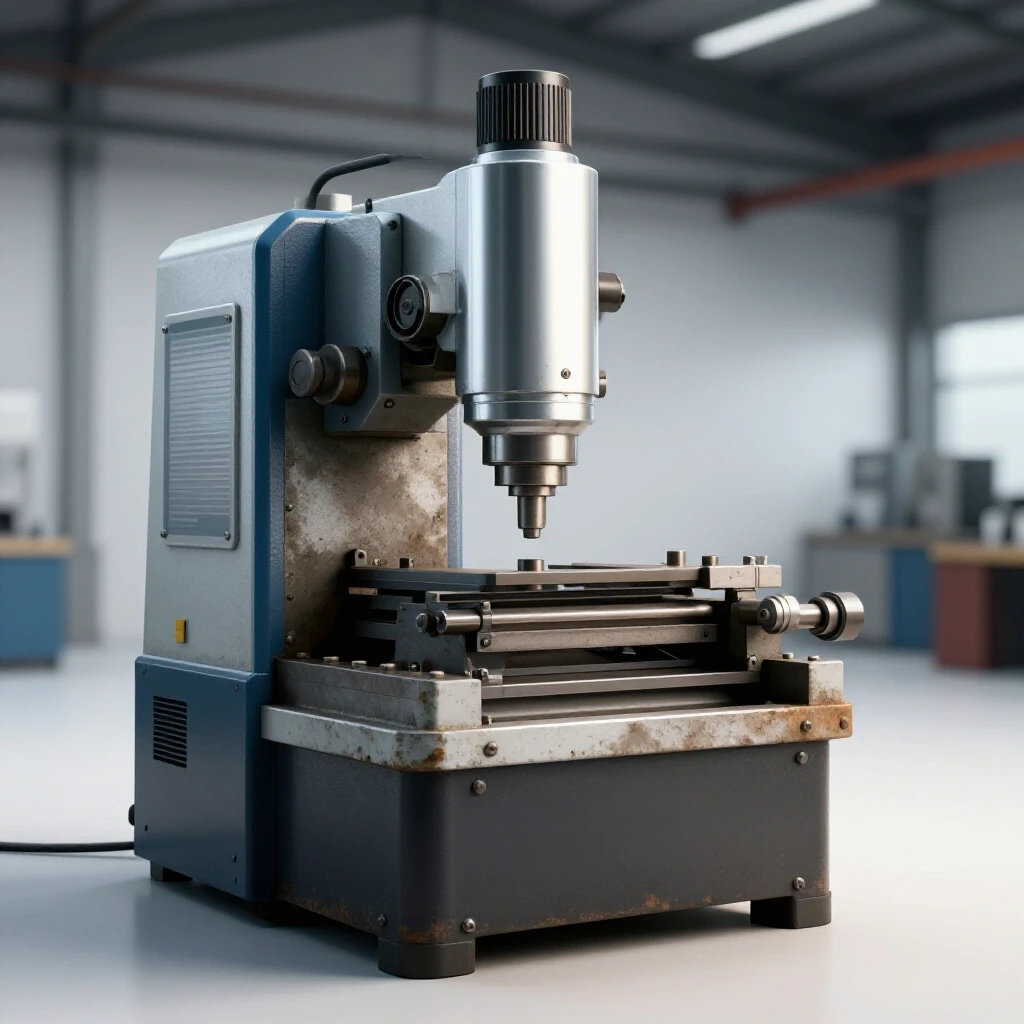
We will focus on the physical realities of workshop machinery. This includes how to measure spindle runout, why the grade of cast iron matters for vibration, and how to tell if a motor is actually up to the task. If you are tired of wondering if a budget machine is a “steal” or just “scrap metal,” this breakdown is for you.
Evaluating the Foundation: Cast Iron Quality and Frame Rigidity
The frame of a metalworking machine acts as the skeleton that supports every other part. In the world of machine tool reviews, we look for high-quality cast iron that can absorb the vibrations created during cutting. Without a rigid frame, the tool will chatter, leaving a poor surface finish on your workpiece.
Cast iron is the standard material for machine beds because of its unique ability to dampen harmonics. When a cutting tool hits the metal, it creates waves of energy. A heavy, well-designed casting absorbs that energy. If the frame is made of thin sheet steel or low-grade iron, those vibrations travel back into the tool. This causes the “chatter” marks you see on finished parts.
When I evaluate a machine, I look for “Meehanite” or similar high-grade gray iron. These materials are aged to ensure they do not warp over time. Cheaper machines often use “green” iron that hasn’t sat long enough. As the internal stresses in the metal relax over a year or two, the machine bed can actually twist, ruining your alignment.
| Feature | Budget Casting (Light Duty) | Industrial Casting (Heavy Duty) |
|---|---|---|
| Material Grade | Grade 15-20 Gray Iron | Grade 25-40 or Meehanite |
| Dampening Ability | Low (more vibration) | High (smooth finishes) |
| Wall Thickness | 0.25 – 0.50 inches | 0.75 – 1.50+ inches |
| Weight-to-Size Ratio | Light (easy to move) | Heavy (requires hoist) |
| Long-term Stability | Prone to warping | Stress-relieved and stable |
- Check the webbing: Look under the bed of a lathe or inside the column of a mill. You want to see thick cross-ribs. These ribs prevent the frame from twisting under load.
- Weight matters: If two lathes have the same swing and length, the heavier one is almost always better. That extra mass is what keeps the machine still during heavy use.
- Surface finish: Look at the non-machined surfaces of the casting. If they look like rough sand, it suggests a lower-quality casting process.
Motor Designs and Power Delivery Systems
The motor is the heart of any metalworking tool, providing the torque needed to push a cutter through hard material. When choosing workshop machinery, you must understand the difference between motor types and how they handle different speeds. A motor that looks powerful on paper might stall the moment you try to use a large drill bit.
Most modern small-to-mid-sized machines use either induction motors or brushless DC (BLDC) motors. Induction motors are traditional and very reliable, but they often require a belt change to adjust the speed. BLDC motors allow for “turn-the-dial” speed control. However, some cheap BLDC systems lose all their torque at low speeds, which is exactly when you need it most for tasks like threading.
I prefer seeing a machine with a Variable Frequency Drive (VFD) paired with a three-phase induction motor. This setup gives you the best of both worlds: high torque at low speeds and easy speed adjustment. In my shop, I have seen cheap control boards on “budget” brushless motors fry after just a few months of heavy use. A VFD is generally more robust and easier to replace if it fails.
- Horsepower (HP) ratings: Be careful with “peak” HP ratings. Look for the “continuous” rating. A 1 HP continuous motor is stronger than a “2 HP peak” motor that can only hold that power for a few seconds.
- Drive belts: Look for multi-groove “V” belts or timing belts. Avoid thin, single-round belts that slip easily.
- Heat management: Check if the motor has a dedicated cooling fan or large cooling fins. Metalworking generates heat, and a hot motor is a short-lived motor.
Measuring Spindle Runout for Precision Machining
Spindle runout is the amount of “wobble” in the main rotating part of the machine. In any metal lathe comparison guides, runout is the most critical metric for accuracy. If your spindle has high runout, you will never be able to turn a part that is truly round, no matter how good your technique is.
We measure this using Total Indicated Runout (TIR). You place a dial test indicator against the inside of the spindle taper and rotate it by hand. The movement of the needle tells you how much the spindle is off-center. For a standard workshop lathe, you want to see a TIR of 0.0005 inches or less. If the needle jumps more than 0.001 inches, the machine will struggle with precision work.
Why does this happen? Usually, it comes down to the bearings. High-end machines use tapered roller bearings or precision-matched ball bearings. These are designed to handle both the side loads of cutting and the forward pressure of drilling. Budget machines often use standard automotive-grade bearings that are not rated for the high precision needed in machining.
- Clean the spindle: Even a tiny speck of dust can throw off your measurement by 0.001 inches.
- Use a magnetic base: Secure your dial indicator to the machine bed so it cannot move.
- Rotate slowly: Turn the spindle by hand through several full circles to get an accurate average.
- Check the chuck: Once the spindle itself is tested, mount your chuck and test a piece of precision ground rod. This tells you if the chuck is the problem or the machine itself.
Inspecting Slide Tolerances and Gib Adjustments
The slides are the parts of the machine that move the tools, such as the carriage on a lathe or the table on a mill. For choosing workshop machinery that lasts, you need to inspect the “ways”—the tracks these slides move on. If the slides are loose, the tool will dig into the metal; if they are too tight, you won’t be able to move them smoothly.
The “ways” should be hardened and ground. You can tell if they are hardened by trying to scratch an inconspicuous area with a file; if the file slides off without leaving a mark, the metal is hardened. This is vital because it prevents wear over years of use. Most quality machines also use “gibs,” which are small strips of metal that can be tightened to take up any play in the slides.
I always check for “stiction”—that jerky feeling when you try to move a slide just a tiny amount. Good slides move smoothly because they have been “scraped” by hand. Scraping creates tiny oil pockets that allow the metal surfaces to glide on a film of oil. If the ways look like a mirror, they might actually stick more because the oil has nowhere to stay.
- Backlash: This is the “dead space” when you turn a handwheel before the slide starts to move. While some backlash is normal (0.002 to 0.005 inches), excessive backlash (over 0.010 inches) makes precise work very difficult.
- Way wipers: Look for felt or rubber seals at the ends of the slides. These keep metal chips from getting under the sliding surfaces and scratching them.
- Oil ports: A good machine has clear points where you can add “way oil.” If you have to take the machine apart to grease it, it probably won’t get maintained properly.
Testing Speed Controllers and Electrical Stability
The electronics on modern machines are often the first thing to fail. In my 17 years of maintenance, I have replaced more circuit boards than I have broken gears. When you are looking at milling machine buying tips, pay close attention to the control box. A well-designed electrical system is organized and protected from metal dust.
Metal chips are conductive. If the machine’s electronics are not in a sealed box, a single stray chip can cause a short circuit. I prefer machines that use standard, off-the-shelf components. If a speed controller is a custom, “no-name” board, you might be stuck with a heavy paperweight if that company goes out of business.
Another thing to check is the “Back-EMF” or load compensation. A good speed controller will detect when the motor is under load and feed it more power to keep the RPM steady. You can test this by running the machine at a low speed and applying a light load (like a piece of wood against the spindle). If the motor slows down significantly, the controller is low-quality.
| Component | What to Look For | Red Flag |
|---|---|---|
| Enclosure | Gasket-sealed metal box | Plastic box with holes |
| Wiring | Neatly bundled and labeled | “Rat’s nest” of loose wires |
| Switches | Industrial-grade “clunk” feel | Mushy, cheap plastic buttons |
| E-Stop | Large, locking mushroom head | Small, non-locking button |
| Cooling | Heat sinks or internal fans | No visible cooling for chips |
Planning Spare Parts Supply and Long-Term Maintenance
No matter how well a machine is built, parts will eventually wear out. One of the biggest mistakes I see fabricators make is buying a machine without checking the parts pipeline. If you break a gear or fry a motor, can you get a replacement in three days, or will it take three months from overseas?
I always recommend calling the manufacturer’s parts department before you buy the machine. Ask them if they have common items like drive belts, lead screw nuts, and replacement motors in stock. If they can’t give you a straight answer, that is a major warning sign.
Maintaining a machine is about more than just oiling it. It is about having access to the technical drawings and a community of users who have solved common issues. Popular “clones” of famous designs often have the best parts availability because many different companies sell the same components.
- Check for standardized parts: Does the machine use standard bearings (like 6204-2RS) or custom sizes?
- Download the manual: Read the manual before buying. Is it clear, or is it a poor translation that doesn’t explain how to adjust the machine?
- Look for local support: A brand with a local warehouse is worth a 20% price premium for the peace of mind it provides.
Why Spindle Tapers and Tooling Standards Matter
The way a machine holds its tools determines how much you will spend on accessories over the next decade. In the world of milling machine buying tips, the “taper” is the shape of the hole in the spindle. Common standards include R8, Morse Taper (MT), and ISO/BT tapers.
If you buy a machine with an obscure taper, you will pay double for every tool holder you buy. R8 is the standard for most small-to-medium mills in the US. It is easy to find and relatively cheap. For lathes, a Morse Taper in the tailstock (usually MT2 or MT3) is the gold standard.
I have seen people buy a “deal” on an old European machine, only to find out that a single collet costs $100 because the taper is no longer manufactured. Always stick to industry standards unless you have a very specific reason not to.
- R8 Taper: Great for versatility; very common in hobby and light industrial mills.
- Morse Taper (MT): The standard for lathe tailstocks and drill presses.
- BT30/CAT40: Found on larger, more rigid industrial machines; very strong but expensive.
Final Inspection Checklist Before Buying
When you are finally standing in front of a machine, or looking at a detailed listing, use this checklist to make your final decision. These steps are based on my years of diagnosing failures in the field.
- The “Thumb” Test: Run your thumb over the bedways. They should feel smooth, not like a chalkboard.
- The “Listen” Test: Turn the machine on at its highest speed. It should hum, not rattle or scream. High-pitched whining usually means bad bearings or poorly meshed gears.
- The “Push” Test: With the power off, try to shake the spindle or the table. Any visible movement or “clunking” means the tolerances are loose.
- The “Lever” Test: Check the handles. They should be made of metal (cast iron or steel). Plastic handles on a metalworking machine are a sign of cost-cutting that likely extends to the internal parts.
- The “Oil” Test: Look for signs that the machine has been tested. A small amount of oil or a few stray chips from a factory test-cut is actually a good sign of quality control.
Practical Next Steps for the Decisive Buyer
Choosing the right machinery is a balance between your budget and your accuracy requirements. If you are doing basic repair work, a machine with 0.002 inches of runout might be perfectly fine. But if you are building engines or high-precision tools, you cannot compromise on the spindle and the bed quality.
Start by defining your most common project. If you are mostly turning small pins, a large, heavy lathe is a waste of space. However, if you plan to turn large brake rotors, a small “benchtop” lathe will vibrate so much that you will never get a good finish. Buy the machine that fits 90% of your work, rather than the “dream” machine that is too big for your shop.
Finally, remember that the machine is only half the cost. You will likely spend another 50% to 100% of the purchase price on tooling, measuring equipment, and work-holding. Plan your budget accordingly so you don’t end up with a high-end machine and no way to actually use it.
FAQ: Honest Performance Reviews of Metalworking Machinery
What is the most important spec to look for in a metal lathe?
While swing and length are important for size, spindle runout (TIR) is the most important spec for performance. If the spindle runout is over 0.001 inches, you will struggle to make parts that are truly round or concentric.
Is a heavier machine always better?
In general, yes. Mass equals dampening. A heavier cast-iron frame absorbs the vibrations from the cutting tool, which leads to a better surface finish and longer tool life. However, the weight must be in the right places, like the bed and the headstock.
Should I choose a belt-drive or a gear-head lathe?
Belt-drive machines are typically quieter and more “forgiving” if you crash the tool, as the belt will slip. Gear-head machines offer more torque and easier speed changes but are much louder and can be more expensive to repair if a gear breaks.
What is “backlash” and how much is too much?
Backlash is the play in the lead screws when you change direction. On a new machine, 0.003 to 0.005 inches is acceptable. If a new machine has more than 0.010 inches of backlash, it suggests poor manufacturing tolerances in the nuts and screws.
Why does “hardened and ground ways” matter?
Hardened ways are heat-treated to be much harder than the carriage that slides on them. This ensures that the wear happens on the replaceable carriage parts rather than the permanent machine bed, keeping the machine accurate for decades.
Do I need a 3-phase motor for a home shop?
Not necessarily. While 3-phase motors are more efficient, you can use a Variable Frequency Drive (VFD) to run a 3-phase motor on standard 220V single-phase household power. This is actually a preferred setup for many pros because it allows for easy speed control.
What is the difference between a “hobby” and “industrial” mill?
The main difference is rigidity and duty cycle. An industrial mill will have a much larger spindle, thicker castings, and a motor designed to run 8 hours a day without overheating. Hobby mills are capable of the same accuracy but must take much smaller cuts.
How can I tell if a machine has good bearings?
Listen to the machine at high RPM. Precision bearings will have a consistent, smooth hum. If you hear growling, clicking, or a high-pitched “singing,” the bearings are either low-quality, improperly tensioned, or damaged.
Is it worth buying a machine with a Digital Readout (DRO) pre-installed?
Yes. A DRO makes machining much faster and reduces the chance of human error when reading handwheels. While you can add one later, factory-installed units are often better integrated and save you hours of installation work.
What is the first thing I should do after my new machine arrives?
Clean it thoroughly. Most machines are shipped with a thick, sticky grease called “cosmoline” to prevent rust. You must remove this from every surface and then apply proper way oil before moving any of the slides to prevent scratching the precision surfaces.
(This article was written by one of our staff writers, Steven Brooks. Visit our Meet the Team page to learn more about the author and their expertise.)