Should You Upgrade Your Old Transformer MIG Welder? (Guide)
For nearly two decades, I have lived in the hum of a workshop. I have spent 17 years tearing down machinery, comparing internal components, and figuring out why some tools last 30 years while others die in three. When you stand in front of an old, heavy metal box that has served you well, it is hard to think about replacing it. You know its quirks, and it has never let you down. However, the technology inside these machines has shifted significantly.
In my shop, I value physical construction over shiny paint. I want to see thick copper, stout drive motors, and high-quality bearings. Many fabricators ask if they should stick with their reliable old power sources or move toward modern switching technology. This is not about following a trend. It is about whether the mechanical and electrical reality of a new machine will actually improve your work or just give you more parts that can break.
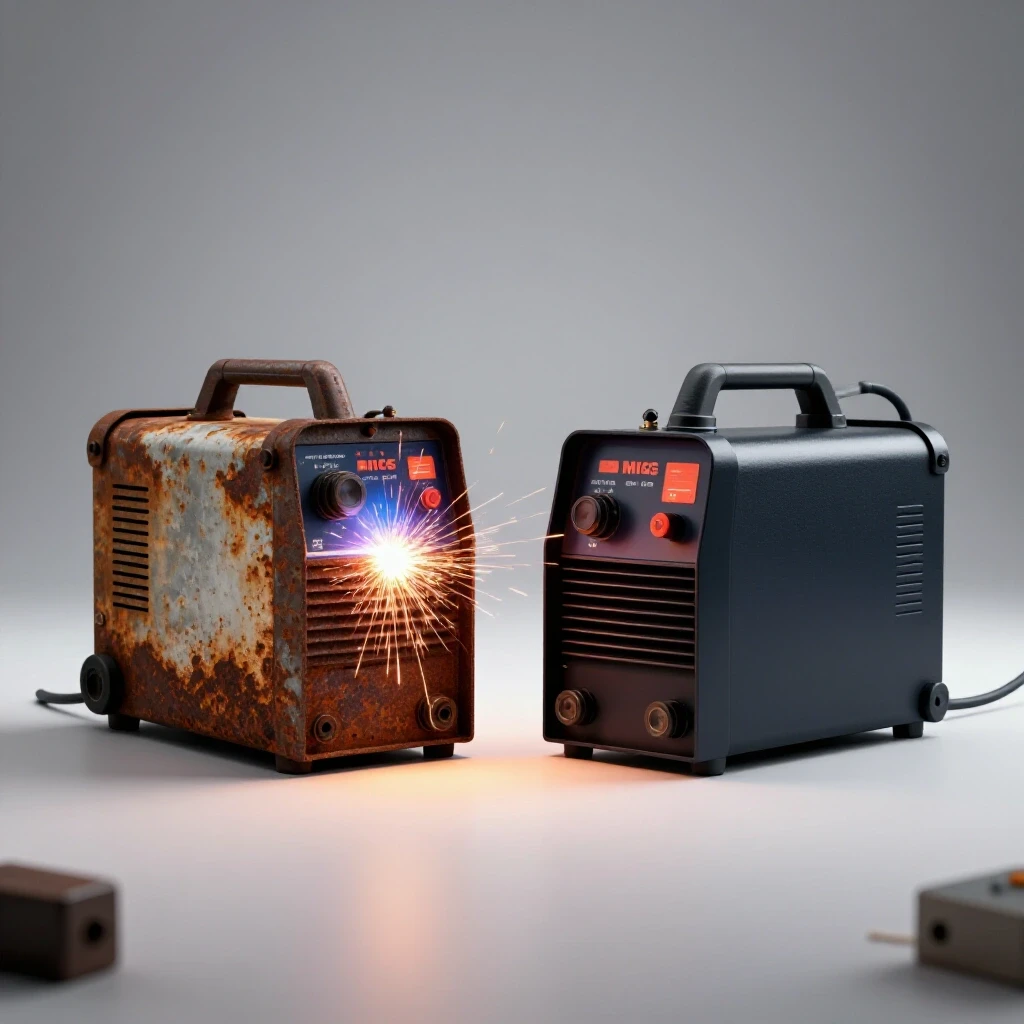
Choosing workshop machinery requires looking past the marketing hype. You have to evaluate the guts of the machine. In this guide, I will break down the structural and functional differences between traditional power sources and modern alternatives. We will look at wire drive assemblies, thermal management, and arc behavior to see if an upgrade makes sense for your specific workload.
Evaluating Power Delivery and Internal Copper Mass
The heart of a traditional machine is a massive transformer that uses heavy copper or aluminum windings to step down voltage. These units are simple, relying on a large magnetic core to handle the electrical load, which results in a very heavy but incredibly durable power source.
Building on this, the weight of a machine often tells you a lot about its internal construction. In my experience with machine tool reviews, I have found that mass usually equals heat dissipation. A traditional transformer unit might weigh 150 to 200 pounds because of those copper coils. This mass allows the machine to soak up heat during long sessions. It is a simple design with very few parts that can fail due to a dust-filled shop environment.
Interestingly, modern units use high-frequency switching. Instead of a giant transformer, they use power transistors to change the incoming power. This allows the machine to be much smaller and lighter. While a traditional unit is a tank, a modern switching unit is a precision instrument. The trade-off is complexity. A transformer unit has a simple circuit, while a modern unit relies on complex circuit boards that can be sensitive to vibration and metal dust.
- Transformer units: Heavy, simple, and very resistant to electrical surges.
- Inverter units: Light, complex, and offer much finer control over the output.
- Copper windings: Provide better conductivity and longevity than aluminum alternatives.
- Magnetic cores: The size of the core directly impacts how much heat the machine can handle.
Comparing Wire Drive Systems and Mechanical Feed Quality
The wire drive system is the mechanical assembly responsible for pushing the welding wire through the torch cable at a consistent speed. A high-quality drive system uses all-metal gears and ball bearings to ensure the wire does not slip or stutter during the welding process.
When I conduct metalworking tool comparisons, I always open the side panel first. I want to see the drive rolls. In many budget-friendly modern machines, manufacturers use plastic housings and plastic gears to save money. This is a red flag. A plastic drive system can flex under tension, leading to inconsistent wire feeding. This feels like a “bird nesting” issue, but it is often just a mechanical failure of the drive itself.
In contrast, older industrial machines often featured heavy cast aluminum drive assemblies. These systems use actual bearings rather than plastic bushings. If you are looking at a potential upgrade, check the motor size and the drive roll material. A stout motor with a high-torque gearbox will provide a much smoother arc than a tiny motor struggling to pull wire off a heavy spool.
| Component | Professional Grade | Entry-Level Grade |
|---|---|---|
| Drive Roll Material | Hardened Tool Steel | Soft Alloy or Plastic |
| Housing Material | Cast Aluminum | Injection Molded Plastic |
| Gear Construction | All-Metal / Machined | Plastic or Sintered Metal |
| Bearing Type | Sealed Ball Bearings | Plastic Bushings |
Assessing Duty Cycles and Thermal Management Limits
Duty cycle is a rating that defines how many minutes out of a ten-minute period a machine can operate at a specific output before it shuts down to cool. Thermal management involves the fans, heat sinks, and airflow paths designed to keep the internal components within safe operating temperatures.
I have seen many guys get frustrated when their machine cuts out in the middle of a project. This usually happens because they did not look at the duty cycle. A traditional transformer machine often has a lower duty cycle on paper, but it cools down predictably. Modern machines often have higher duty cycles because their fans are more efficient and their internal components generate less waste heat.
As a result of better efficiency, a modern machine might offer a 60% duty cycle at a high amperage, whereas an old transformer might only give you 20% or 30%. However, you must look at how the machine is cooled. I prefer machines with “fan on demand” systems. These only run the fan when the machine is hot, which prevents the internal boards from sucking in unnecessary shop dust and metal grindings.
- Check the data plate for the 60% and 100% duty cycle ratings.
- Inspect the size of the cooling vents for potential airflow blockages.
- Listen to the fan; a high-quality ball-bearing fan lasts longer than a sleeve-bearing fan.
- Verify if the electronics are “potted” or sealed to protect them from conductive dust.
Analyzing Arc Stability and Puddle Control Dynamics
Arc stability refers to the consistency of the electrical bridge between the wire and the workpiece, while puddle control is the operator’s ability to manipulate the molten metal. These factors are heavily influenced by the machine’s ability to smooth out the electrical current.
This is where modern technology really shines. In an old transformer machine, the arc can feel “harsh” or “crisp.” You have limited ways to tune the puddle. Modern machines use digital controllers to monitor the arc thousands of times per second. They can adjust the power output instantly to compensate for a shaky hand or a change in the distance between the torch and the metal.
Building on this, modern units often feature an “inductance” control. Think of inductance like a shock absorber for your weld. It slows down how fast the current rises, which can reduce spatter and help the puddle flow out better on thick plate. If you find yourself spending hours grinding off weld spatter, a machine with better arc control could save you a significant amount of money in consumables and labor.
- Transformer Arc: Often fixed or limited adjustment; can be prone to more spatter.
- Inverter Arc: Highly adjustable; allows for a “soft” or “stiff” arc feel.
- Short-Circuit Transfer: Improved in modern units through faster electrical response.
- Thin Metal Performance: Modern units can often run at much lower amperages without the arc cutting out.
The Reality of Portability and Workshop Footprint
Portability is the ease with which a machine can be moved around the shop or to a job site, while footprint refers to the total floor space the machine and its gas bottle occupy. These factors determine how much a tool interferes with your workflow in a cramped environment.
In my years of writing machine tool reviews, I have noticed that shop space is the most undervalued resource. An old transformer unit usually requires a dedicated cart. It is a permanent fixture in the corner of the shop. If you need to weld something on the other side of a trailer, you are dragging 50 feet of heavy lead.
A modern power source can often be tucked under a bench or carried with one hand. This change in form factor is not just about convenience; it is about safety. Dragging heavy cables across a shop floor creates trip hazards. Being able to bring the machine to the work, rather than the work to the machine, changes how you approach large fabrication projects.
- Transformer weight: Typically 100 to 250 pounds.
- Inverter weight: Typically 25 to 50 pounds for similar output.
- Space savings: Modern units often have a 50% smaller footprint.
- Mounting: Lighter units can be mounted on wall brackets or high shelves to clear floor space.
Evaluating Long-Term Durability and Repair Costs
Durability is the measure of how well a machine resists wear and environmental damage, while repairability is the ease and cost of fixing the machine when a component fails. These two factors determine the total cost of ownership over ten or twenty years.
This is the biggest point of debate. An old transformer machine is almost immortal. If a diode blows, you can usually find a replacement and solder it in. The components are large and discrete. In my maintenance work, I have fixed 40-year-old machines with basic off-the-shelf parts. They are built like a manual lathe; you can see how they work just by looking at them.
Modern machines are different. They are more like a modern car. When a main control board fails, you often cannot repair it; you have to replace the entire board. These boards can be expensive, sometimes costing half the price of a new machine. If the manufacturer stops making that specific board, the machine becomes a very expensive paperweight.
- Research the availability of replacement circuit boards before buying.
- Check if the machine uses standard consumables (tips, nozzles, liners).
- Look for a “modular” internal design where the power stage is separate from the control stage.
- Consider the warranty period; a longer warranty often indicates higher confidence in the electronics.
Measuring Efficiency and Consumable Costs
Electrical efficiency is the ratio of power used for welding versus power wasted as heat, while consumable costs include the price of wire, shielding gas, and replacement torch parts. Higher efficiency leads to lower utility bills and less strain on your workshop’s electrical system.
A traditional transformer is not very efficient. It draws a lot of power even when it is just sitting there idling. When you are welding, a lot of the electricity you pay for is wasted as heat in the copper coils. Modern units are much “greener.” They pull less power from the wall to produce the same amount of heat at the torch.
Interestingly, this efficiency also impacts your gas and wire usage. Because modern machines produce less spatter, you aren’t wasting wire that ends up as little balls on the floor. Better arc starts also mean you aren’t wasting gas trying to get the weld established. Over a year of heavy use, these small savings in wire and gas can start to offset the cost of a new machine.
- Idle power draw: Transformers stay “hot” and pull more current when not in use.
- Wall plug requirements: Modern units can often run on 120V or 240V automatically.
- Spatter reduction: Less wasted wire and less time spent on post-weld cleanup.
- Gas flow: Some modern units have digital timers to optimize pre-flow and post-flow.
Inspection Checklist Before Making the Switch
Before you decide to replace your current equipment, you should perform a systematic evaluation of your current machine’s performance versus your future needs. This checklist helps you identify if your limitations are mechanical or if they are simply a matter of outdated technology.
- Check Wire Feed Consistency: Run 10 feet of wire through the torch. If it stutters, inspect the drive rolls and motor. If the motor is weak, an upgrade is likely needed.
- Evaluate Spatter Levels: If you spend more than 10% of your time grinding spatter, modern arc control will pay for itself in labor savings.
- Test Low-Amperage Stability: Try welding 20-gauge sheet metal. If your old machine just blows holes through it, you need the finer control of a modern switching power source.
- Weigh the Portability Factor: How often do you move the machine? If it stays in one spot and only does heavy plate, the old transformer might be better.
- Audit Your Power Usage: If your lights flicker or you frequently trip breakers with the old unit, the efficiency of a newer model will solve those electrical bottlenecks.
Final Verdict on Machinery Investments
Upgrading a core piece of shop equipment is a big decision. If your old machine is a heavy-duty industrial unit that you only use for thick structural steel, there is very little reason to change. The reliability of those old copper windings is hard to beat for pure, raw power. You won’t find a modern machine that feels quite as “unbreakable.”
However, if you are doing a mix of thin sheet metal and general fabrication, the benefits of modern technology are hard to ignore. The ability to fine-tune the arc, the reduction in cleanup time, and the portability of the power source make a huge difference in a one-man shop. You aren’t just buying a new tool; you are buying better control over your projects and more space in your workshop.
My advice is to look at the drive system first. A machine is only as good as its ability to feed wire. If a new machine has a plastic drive, walk away, no matter how good the specs look. If it has a solid, metal-geared drive and a reputable history of parts availability, it is a solid investment for the next decade of your work.
Frequently Asked Questions
Why are transformer units so much heavier than modern ones?
Transformer units rely on large iron cores and many feet of heavy copper wire to change the electricity from your wall into welding power. This mass is necessary for the physics of the design. Modern units use small electronics to do the same job at much higher speeds, allowing the components to be significantly smaller.
Will a modern machine last as long as my 30-year-old welder?
Probably not. While the mechanical parts might hold up, the electronics in modern machines have a shorter lifespan than simple copper coils. However, a modern machine will likely perform better during its life. It is a trade-off between absolute longevity and daily performance quality.
Can I fix a modern machine myself?
It depends on the failure. You can still fix drive motors, fans, and torches. However, if the main circuit board fails, you will likely need to order a replacement from the manufacturer. Unlike old machines, you cannot usually fix the board itself without specialized electronics knowledge.
Does a modern machine really use less electricity?
Yes. They are much more efficient at converting wall power into an arc. You will notice this most if you have limited power in your shop. A modern machine can often weld thicker material on a smaller circuit than an old transformer unit could.
What is the biggest advantage of “inductance” control?
Inductance control allows you to change how “fluid” the weld puddle is. High inductance creates a smoother, wetter puddle with less spatter, which is great for thicker steel. Low inductance creates a colder, faster-freezing puddle, which is better for out-of-position welds or thin metal.
Should I worry about plastic drive rolls?
You should worry more about the drive roll housing and the gears. Most drive rolls are steel, but the assembly that holds them and the gears that turn them are often plastic in budget machines. Plastic can warp or wear out, leading to wire slipping.
Is the arc “feel” really that different?
Yes. A transformer arc is tied to the 60Hz frequency of your wall power. A modern machine switches at 20,000Hz or more. This creates a much smoother, more stable arc that responds instantly to changes in your technique.
Can I use my old torch on a new machine?
In many cases, yes. Most modern machines use a “Euro-style” connector or a standard Tweco-style backend. If your new machine uses the same connection type, you can carry over your favorite torch and consumables.
Does weight affect the duty cycle?
In old machines, yes. More weight meant more metal to soak up heat. In modern machines, the duty cycle is more about how fast the fans can pull heat away from the small electronics. A light machine can have a high duty cycle if its cooling system is well-engineered.
Why do some professionals still prefer old transformers?
Many pros like the “predictability” of an old machine. They know exactly how it will react every time they pull the trigger. There is also a sense of security in knowing the machine can be dropped or covered in dust and still work the next morning.
(This article was written by one of our staff writers, Steven Brooks. Visit our Meet the Team page to learn more about the author and their expertise.)