Should You Buy Machine Tools Locally or Online? (Comparison)
Choosing heavy machinery for a workshop is a major commitment that goes far beyond a simple transaction. It involves weighing the benefits of seeing a machine in person against the vast selection found on the internet. As someone who has spent 17 years maintaining and repairing metalworking equipment, I have seen how these choices impact a shop for years.
The core of the decision rests on how you verify the quality of the iron and the precision of the moving parts. When you look at equipment locally, you can touch the castings and hear the motor run. When you browse a digital catalog, you rely on technical data and the reputation of the supplier. Both paths have merits, but they require different strategies to ensure you do not end up with a machine that fails under pressure.
Evaluating Framework Rigidity and Material Quality
The physical structure of a machine tool determines how well it can handle heavy cuts without vibrating or flexing. A rigid frame ensures that the cutting tool stays exactly where it should, which leads to better surface finishes and longer tool life.
Why Heavy Castings Dampen Harmonics
Cast iron is the preferred material for machine bases because its internal structure absorbs vibrations, also known as harmonics. High-quality gray iron contains graphite flakes that act as tiny shock absorbers. This dampening effect is vital when a tool is spinning at high speeds or taking deep bites out of a steel workpiece.
In my experience, the weight of a machine is often the first clue to its build quality. A heavier machine usually means thicker castings and more internal ribbing. When comparing two machines of the same size, the one with more mass will generally be more stable. You should look for Class 25 or Class 30 gray iron specifications. These grades offer a good balance of strength and vibration control.
- Class 25 Gray Iron: Offers basic dampening and is common in entry-level machines.
- Class 30 Gray Iron: Provides higher tensile strength and better wear resistance for bedways.
- Ductile Iron: Used for parts that need to withstand impact without cracking.
| Cast Iron Grade | Structural Dampening | Wear Resistance | Common Application |
|---|---|---|---|
| Class 20 | Moderate | Low | Light-duty stands |
| Class 25 | Good | Moderate | Small lathe beds |
| Class 30 | Excellent | High | Industrial milling columns |
| Class 40 | Superior | Very High | Precision grinder bases |
Identifying Sheet Steel versus Solid Iron Frames
Some modern machines use welded steel frames instead of solid castings to save weight. While steel is strong, it does not dampen vibration as well as iron. A steel frame can act like a bell, ringing during a cut and leaving “chatter” marks on your part.
When you are inspecting a machine, look at the corners and joints. Solid iron will have rounded edges from the casting process. Steel frames often have visible welds or sharp, bent corners. If you are buying through a digital platform, check the shipping weight. A significant difference in weight between two similarly sized machines often indicates that one uses more sheet metal and less solid iron.
Assessing Motor Designs and Power Delivery
The motor is the heart of the machine, providing the torque needed to move the metal. Understanding how that power is delivered helps you choose a machine that won’t stall when the work gets difficult.
Comparing Inverter and Transformer Systems
Electrical efficiency in machine tools is often determined by whether the system uses a traditional transformer or a modern inverter-based drive. Transformers are heavy and reliable but less efficient. Inverters, or Variable Frequency Drives (VFDs), allow for precise speed control and better energy use.
Inverters are excellent for maintaining torque at low speeds, which is critical for operations like threading or large-diameter drilling. However, they are more complex and can be sensitive to “dirty” power in a workshop. A transformer-based machine is often simpler to repair but lacks the fine-tuned control of a digital drive.
- Torque: The twisting force that rotates the spindle.
- Horsepower (HP): The total power output of the motor over time.
- VFD: A device that controls motor speed by changing the frequency of the electricity.
| Feature | Transformer-Based | Inverter-Based (VFD) |
|---|---|---|
| Speed Control | Stepped (Gears/Belts) | Infinitely Variable |
| Low-End Torque | Depends on Gearing | Electronically Maintained |
| Weight | Heavy | Light |
| Electrical Efficiency | 70-80% | 90-95% |
| Complexity | Low | High |
Understanding Brushless Direct-Drive Motors
Some newer machines use brushless DC motors that connect directly to the spindle. This removes the need for belts or gears, which can reduce noise and maintenance. These motors are very efficient and provide a wide range of speeds without the user having to stop and change a belt position.
The downside is that if the electronics fail, the machine is down until a specific replacement board is found. When looking at machine tool reviews, check if the motor uses standard frame sizes. If the motor is a custom shape, getting a replacement years from now might be difficult.
Measuring Precision and Mechanical Tolerances
Precision is the difference between a part that fits and a part that goes into the scrap bin. You must understand how to measure the accuracy of a machine’s moving parts before you commit to a purchase.
Spindle Runout and Bearing Quality
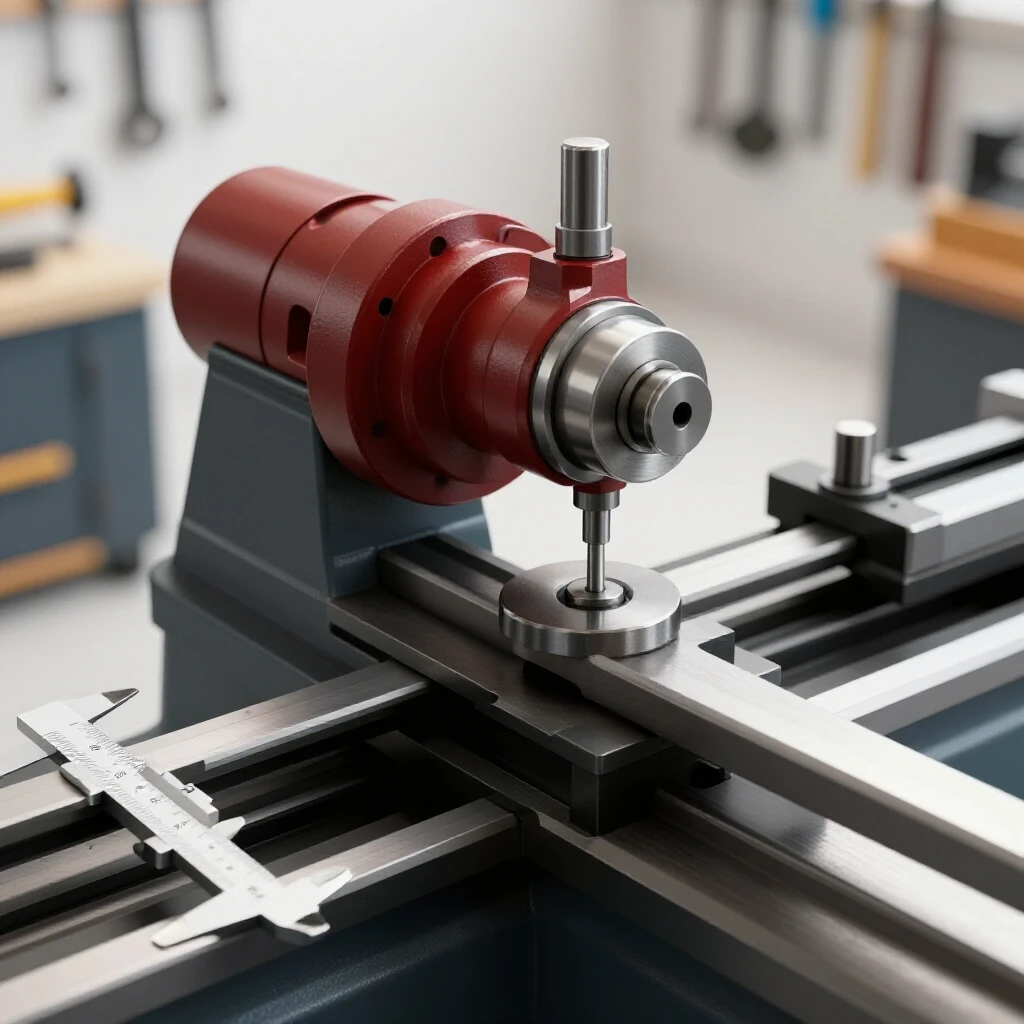
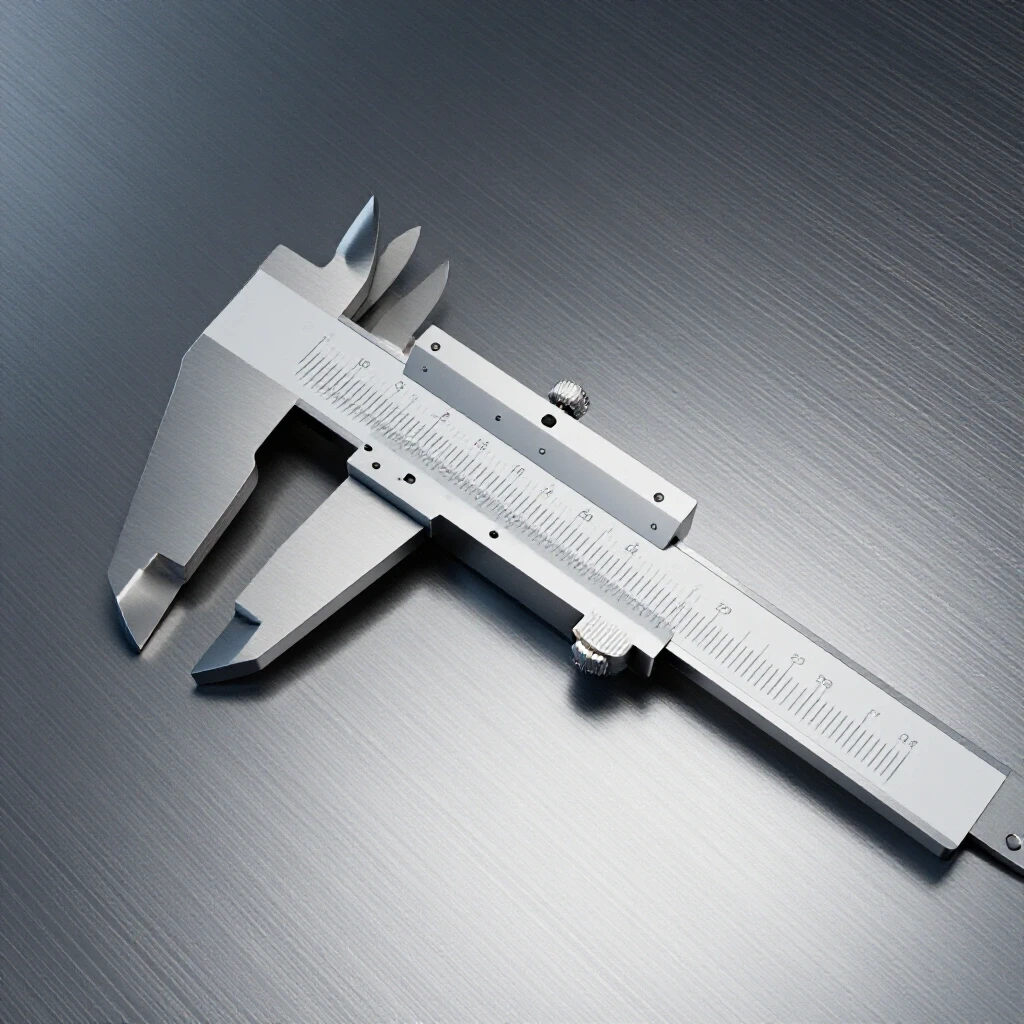
Spindle runout, or Total Indicated Runout (TIR), is a measurement of how much the spindle wobbles as it rotates. If a spindle has high runout, your drill bits will walk, and your milled surfaces will be uneven. A high-quality machine should have a TIR of less than 0.0005 inches.
The bearings inside the spindle head support the load and allow for smooth rotation. Tapered roller bearings are common in lathes because they handle both side loads and end loads well. Ball bearings are often found in high-speed mills. When researching online, look for the bearing class, such as ABEC-3 or ABEC-5. Higher numbers indicate tighter tolerances and better precision.
- TIR (Total Indicated Runout): The total movement of a part’s surface as it rotates 360 degrees.
- Preload: The constant pressure applied to a bearing to remove internal play.
- Spindle: The rotating shaft that holds the tool or the workpiece.
Inspecting Slide Tolerances and Bedways
The bedways are the precision-ground tracks that the machine’s moving parts slide along. They must be perfectly flat and parallel. Many high-end machines feature “hand-scraped” ways. This process creates tiny oil pockets on the surface, which prevents the metal parts from sticking together, a phenomenon known as “stiction.”
When you evaluate a machine locally, move the slides through their full range of motion. They should feel consistent from one end to the other. If the slide gets tighter at the ends, the bedways might be worn in the center. Online buyers should look for “hardened and ground” specifications, which suggest the ways will resist wear over many years of use.
Sourcing Considerations: Local vs. Digital Access
Where you buy your machine affects how you will handle delivery and what happens if something goes wrong. Both local and online sources have specific logistical hurdles.
Physical Inspection vs. Specification Sheets
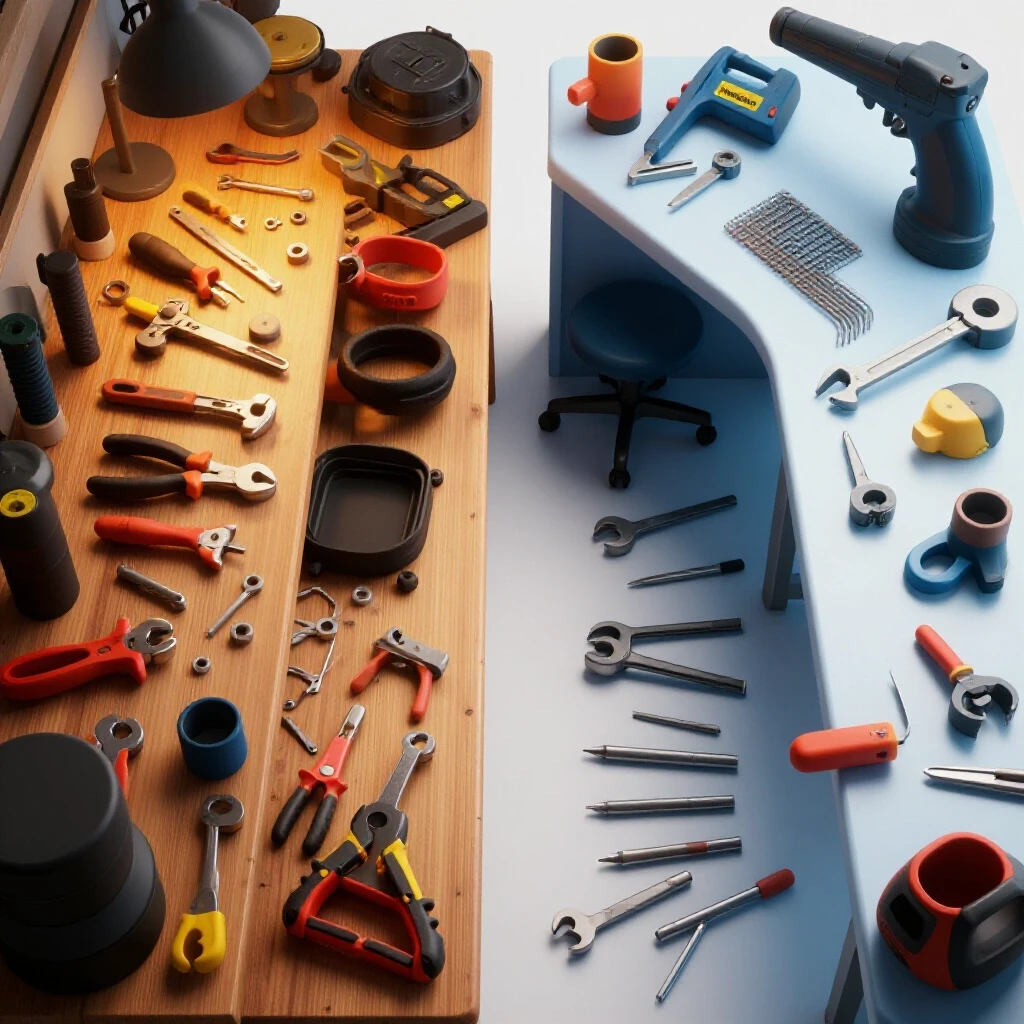
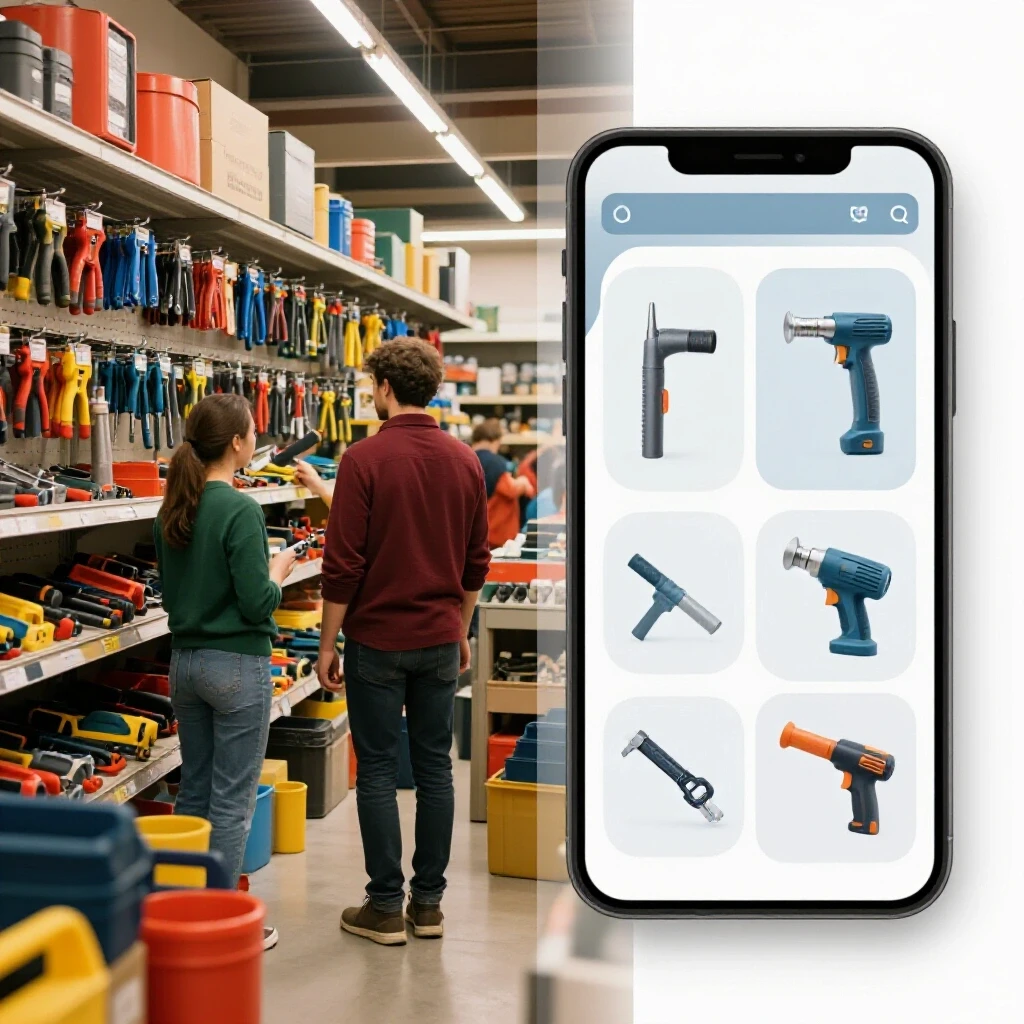
Buying locally allows for a “hands-on” assessment that spec sheets cannot replicate. You can check for casting flaws, test the switchgear, and feel the vibration of the motor. This is the best way to avoid “lemons” that might have slipped through factory quality control.
However, online sourcing provides access to a much wider variety of engineering designs. You can compare different machine tool reviews from users across the world. The challenge is interpreting the data. A spec sheet might claim a certain horsepower, but it may not mention that the motor overheats after twenty minutes of use. You must learn to read past the marketing and focus on the physical dimensions and component types.
- Check the total machine weight against similar models.
- Verify the spindle taper type (e.g., R8, MT3) for tool compatibility.
- Look for the presence of a central lubrication system.
- Review the diameter of the lead screws and whether they use ball screws.
- Confirm the voltage requirements (110V, 220V, or 3-phase).
Logistics and Freight Handling
Shipping a 1,000-pound machine is not like receiving a standard package. Online purchases often involve “LTL” (Less Than Truckload) shipping. You must have a plan for getting the machine off the truck and into your shop. Many delivery trucks only offer “curbside” service, meaning they drop the crate at the end of your driveway.
Local sellers might offer delivery and setup services. While this can be more convenient, it is important to ensure they have the right equipment to move the machine without stressing the frame. Lifting a machine by its handles or lead screws can ruin its precision before you even turn it on.
Long-Term Maintenance and Parts Availability
A machine tool is only useful if you can keep it running. Over time, bearings wear out, belts snap, and electronic boards can fail due to dust or heat.
Standardizing Components for Longevity
One of the biggest risks in choosing workshop machinery is buying a “proprietary” design. These are machines where every part is unique to that specific brand. If the company goes out of business, you may not be able to find replacement parts.
I always recommend looking for machines that use standardized components. This includes NEMA motor frames, standard-size bearings, and common belt types. If a machine uses a standard B-section V-belt, you can buy a replacement at any industrial supply store. If it uses a custom molded belt, you are at the mercy of the original manufacturer.
- NEMA: A standard for motor mounting and frame dimensions.
- Off-the-shelf: Parts that are widely available from multiple suppliers.
- Proprietary: Parts designed specifically for one machine that cannot be easily replaced.
Planning Your Spare Parts Supply
When you buy a machine, you should also look at the availability of a parts manual and exploded-view diagrams. These documents are essential for maintenance. In my years of maintenance work, I have found that a machine with a well-documented parts list is much easier to keep in service.
Before buying, check if common wear items like brushes, fuses, and belts are listed in the manual. If you are buying through a digital platform, see if the seller offers a dedicated parts department. A low-cost machine becomes very expensive if it sits idle for three months waiting for a simple gear to arrive from overseas.
Final Benchmarks for Selection
To make a confident choice, you should have a set of non-negotiable benchmarks. These are the “hard numbers” that define whether a machine is a hobbyist toy or a professional tool.
- Minimum Weight: For a benchtop mill, look for at least 300 lbs. For a floor lathe, 1,000 lbs is a good baseline for stability.
- Spindle Runout: Aim for 0.001 inches or less for general work; 0.0005 inches for high-precision tasks.
- Motor Power: Ensure the HP rating is “continuous duty,” not “peak power,” which is often a misleading marketing number.
- Bedway Hardness: Look for induction-hardened ways, usually rated around 40-50 HRC (Rockwell C Scale).
By focusing on these mechanical realities, you can cut through the hype. Whether you pick a machine from a local showroom or a digital warehouse, your focus should always be on the quality of the iron, the precision of the bearings, and the reliability of the electronics.
Frequently Asked Questions
What is the most important factor when choosing workshop machinery? The quality of the main casting is the most critical factor. While motors and electronics can be upgraded or replaced, a thin or warped frame cannot be easily fixed. Heavy, high-quality cast iron provides the foundation for all the precision work the machine will perform.
How can I verify spindle runout if I am buying online? You cannot verify it physically, so you must rely on the manufacturer’s “test report.” Many high-quality machines ship with a signed inspection sheet showing the actual measured runout of that specific unit. If a seller cannot provide these tolerances, the machine may not be built to high precision standards.
Is a variable speed motor better than a geared head? It depends on your needs. Variable speed (VFD) is very convenient and allows for fine-tuning the cutting speed. However, a geared head provides a mechanical advantage that can deliver more torque at very low speeds. For heavy-duty industrial work, gears are often preferred; for general fabrication, variable speed is usually sufficient.
What should I look for in machine tool reviews? Look for reviews that discuss long-term durability rather than “out of the box” impressions. Pay attention to mentions of motor overheating, plastic gears in the drivetrain, or difficulty in leveling the machine. Reviews that include measurements, like actual runout or table flatness, are the most reliable.
Why does cast iron weight matter so much? Weight equals mass, and mass absorbs energy. When a cutting tool hits metal, it creates vibrations. If the machine is too light, these vibrations travel through the frame and cause the tool to bounce. This results in a poor finish and can even break carbide cutting tools.
What are “ways” and why should I care about them? The ways are the precision surfaces that the machine’s carriage or table slides on. They must be perfectly straight and hard enough to resist wear. If the ways wear down, the machine loses its ability to cut straight lines, and the only fix is an expensive professional regrinding.
Can I run industrial machinery on home power? Most home shops have 220V single-phase power. Many industrial machines require 3-phase power. You can often bridge this gap using a Variable Frequency Drive (VFD) or a rotary phase converter, but you must factor this into your setup plan before purchasing.
What is the difference between a belt drive and a gear drive? Belt drives are quieter and can act as a safety “fuse”; if the tool jams, the belt slips instead of breaking a gear. Gear drives provide a positive connection with no slip, which is better for heavy torque, but they are noisier and more expensive to repair if a crash occurs.
How do I handle the delivery of a heavy machine? You need to confirm if the delivery includes a liftgate service. If the machine is over 1,000 pounds, a standard liftgate may not be enough. You might need to rent a forklift or a heavy-duty pallet jack to move the equipment from the curb into your workshop safely.
Should I worry about “proprietary” parts? Yes. If a machine uses a unique computer board or a non-standard motor mount, you are locked into that manufacturer for repairs. Choosing machines with standard NEMA motors and common industrial bearings ensures you can keep the machine running even if the original company stops supporting that model.
(This article was written by one of our staff writers, Steven Brooks. Visit our Meet the Team page to learn more about the author and their expertise.)