How to Find Cheap High-Quality Welding Consumables (Review)
I have spent the last 15 years in my shop tracking every linear foot of weld and every pound of wire consumed. My shelves are lined with maintenance journals that tell a story marketing brochures never will. I have seen “premium” contact tips melt in minutes and “budget” welding wire run as smooth as butter. The reality is that the fabrication industry is flooded with high-margin branding that often masks average performance. Finding the sweet spot between cost and reliability requires looking past the shiny labels and digging into the material specifications and real-world wear patterns.
Early in my career, I bought the most expensive electrodes available, assuming price equaled performance. A structural failure on a simple gate frame taught me otherwise. The expensive rod had been sitting on a damp shelf for a year, and the flux was compromised. Since then, I have logged every failure and every success. I now focus on data-driven purchasing, evaluating things like the American Welding Society (AWS) classifications and the consistency of wire diameter. This guide is built on those logs to help you avoid the hidden costs of low-quality supplies.
Analyzing Material Specifications for Fabrication Supplies
Material specifications are the technical blueprints that define the chemical and mechanical properties of your welding materials. These standards ensure that regardless of the brand name, the product meets a minimum threshold for tensile strength, ductility, and composition. Understanding these specs is the first step in identifying value-driven options that do not compromise structural integrity.
When you look at a spool of MIG wire or a box of sticks, the AWS code is your best friend. For example, ER70S-6 is a common carbon steel wire. The “ER” stands for electrode or rod, “70” indicates a minimum tensile strength of 70,000 psi, “S” means solid wire, and “6” refers to the chemical additives like silicon and manganese. These additives help the weld flow better and handle light rust or mill scale. If a budget brand carries this certification, it has passed the same chemical tests as the big-name brands.
- Tensile Strength: The maximum stress a material can withstand before breaking.
- Ductility: The ability of the weld to deform without fracturing.
- Deoxidizers: Elements like silicon that clean the weld pool during the process.
- Cast and Helix: The physical curve and twist of the wire, which affects how it feeds through your liner.
I have found that mid-tier suppliers often provide the exact same chemical composition as premium brands. The difference is usually in the packaging or the “cast” of the wire. A poor cast means the wire won’t feed straight, leading to bird-nesting in your drive rolls. I always check the spooling quality before a long production run. If the wire is “cross-wound” neatly, it is usually a sign of a high-quality manufacturing process, regardless of the price tag.
Evaluating Value-Driven Filler Metals and Electrodes
Filler metals are the consumable wires or rods that provide the bulk of your weld joint. Finding affordable options requires balancing the initial purchase price with the “cleanliness” of the arc and the amount of spatter produced. High spatter isn’t just annoying; it represents wasted material and increased cleanup time, which drives up the total cost of the project.
In my workshop logs, I track “spatter loss” and “arc stability.” Some cheap wires are coated in excessive copper to prevent rust, but this copper can flake off and clog your liner. I prefer wires with a thin, consistent coating. For stick welding, I look at the flux coating. If the flux is brittle or uneven, the arc will wander, and you will spend more time grinding than welding.
| Consumable Type | Premium Brand Cost (Avg) | High-Value Alternative Cost | Key Performance Metric |
|---|---|---|---|
| MIG Wire (ER70S-6, 11lb) | $45 – $60 | $28 – $35 | Feed consistency and spatter levels |
| Stick Electrodes (7018, 5lb) | $35 – $45 | $22 – $28 | Slag detachability and re-strike ease |
| TIG Rods (ER70S-2, 1lb) | $15 – $20 | $9 – $12 | Purity and absence of surface oils |
| Flux-Core Wire (E71T-11) | $80 – $110 | $55 – $70 | Smoke volume and slag coverage |
Interestingly, I have found that some “off-brand” 7018 rods actually have better slag detachability than the industry leaders. When the slag curls up and pops off on its own, you save minutes on every joint. Over a hundred-hour project, those minutes turn into hours of saved labor. I recommend buying a small 1lb or 2lb pack of a new brand to test its “re-strike” capability. If the rod sticks every time you try to start a new arc, it’s not a bargain, no matter how cheap it was.
Shielding Gas Management and Sourcing Strategies
Shielding gas protects the molten weld pool from atmospheric contaminants like oxygen and nitrogen. While you cannot “cheap out” on the gas quality itself, you can significantly reduce costs by managing how you buy and store it. The choice between owning your cylinders and renting them is the biggest factor in long-term utility costs for a small shop.
For most active DIYers and small shops, owning your cylinders is the most cost-effective path. Rental fees can quietly eat $100 to $200 a year per bottle, even if you don’t use a single cubic foot of gas. I own four cylinders of different sizes and gas mixes. This allows me to swap them at local welding supply houses without ongoing monthly costs.
- 75/25 Argon/CO2: The standard for MIG welding carbon steel; provides a good balance of penetration and low spatter.
- Straight Argon: Required for TIG welding and MIG welding aluminum.
- Flow Meter vs. Pressure Regulator: A flow meter (with the clear tube and ball) is more accurate and prevents gas wastage compared to a simple gauge.
- Pre-flow and Post-flow: Settings on your machine that control gas before and after the weld; tuning these can save 10-15% of your gas volume.
I keep a log of my gas usage by recording the PSI of the tank before and after a project. This helped me realize that I was wasting nearly 20% of my gas by having my flow rate set too high. Most indoor welding only requires 15-20 cubic feet per hour (CFH). Cranking it to 35 CFH doesn’t make the weld better; it just empties your tank twice as fast. Investing in a high-quality flow meter is a one-time cost that pays for itself in gas savings within six months.
Longevity and Wear Patterns of Contact Tips and Nozzles
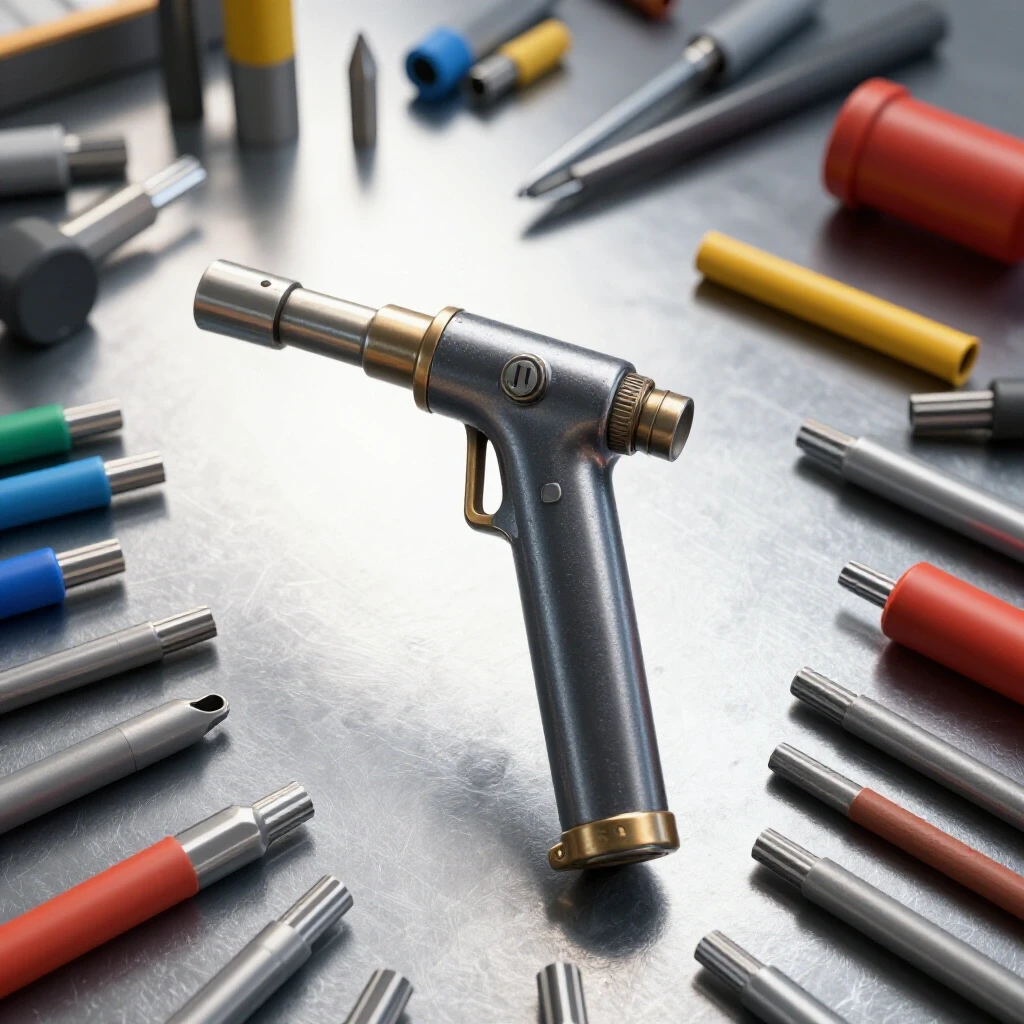
Contact tips and nozzles are the “frontline” consumables that experience the most heat and physical wear. A contact tip is the small copper part that transfers the electrical current to the wire, while the nozzle directs the shielding gas. Finding high-quality versions of these parts involves looking at the copper alloy composition and the precision of the machining.
I have found that cheap contact tips often have slightly oversized or off-center holes. This causes “micro-arcing” inside the tip, which leads to erratic wire feeding and premature tip failure. In my shop, I track “arc hours per tip.” A high-quality tip should last through at least two or three 11lb spools of wire if the wire is clean. If you are burning through a tip every few hours, your wire might be dirty or your tension is too high.
- Inspect the Bore: Use a tip cleaner or a small wire to ensure the hole is smooth and round.
- Check the Thread Fit: The tip should screw in firmly without wobbling; a loose fit causes heat buildup.
- Nozzle Material: Look for chrome-plated or heavy-walled copper nozzles that resist spatter buildup.
- Anti-Spatter Spray: Using a ceramic-based spray can triple the life of your nozzle by preventing slag from sticking.
When evaluating these parts, I buy in packs of 25 or 50. The unit price drops significantly, often by 40% or more. However, I only do this after I have verified that the specific brand fits my torch perfectly. Not all “Tweco-style” or “Binzel-style” parts are created equal. I keep a digital manual of my torch’s specific part numbers on my phone to avoid buying the wrong size at the store.
Abrasives and Finishing Supplies: Balancing Price and Removal Rate
Abrasives like flap discs, grinding wheels, and cutoff wheels are often the most expensive part of a project on a per-hour basis. Finding affordable, high-quality abrasives isn’t about the price per disc; it’s about the “cost per gram” of metal removed. A $2 disc that wears out in five minutes is far more expensive than a $5 disc that lasts for thirty.
In my testing, I use a consistent pressure and a timed grind on a standard piece of 1/4-inch plate. I weigh the plate before and after to see how much metal was actually removed. Many budget flap discs use “aluminum oxide,” which is fine for wood or soft metals but dulls quickly on steel. For fabrication, I look for “Zirconia” or “Ceramic” grains. These materials are self-sharpening; as they break down, they reveal new, sharp edges.
- Zirconia Alumina: Great for general purpose steel grinding; offers a good balance of life and cost.
- Ceramic Grain: The top tier for high-pressure grinding; lasts the longest but requires a powerful grinder to be effective.
- Type 27 vs. Type 29: Type 27 is flat for finishing, while Type 29 is angled for aggressive material removal.
- Bonding Agent: The “glue” that holds the grit; if it smells like it’s burning, the disc is likely low quality.
I have found that buying “bulk packs” of 10 or 20 discs from reputable industrial supply houses often beats the prices at big-box hardware stores. I also track the “vibration factor.” Cheap discs are often out of balance, which causes hand fatigue and puts unnecessary wear on your grinder’s bearings. A smooth-running disc is a sign of better manufacturing and leads to a better finish on your work.
Bulk Purchasing vs. Just-in-Time Inventory for Small Shops
Managing your inventory is a crucial part of keeping costs down. Buying in bulk can save money, but only if you use the materials before they degrade. Welding supplies are sensitive to the environment; wire can rust, and stick electrodes can absorb moisture from the air, rendering them useless for critical welds.
I use a “Minimum Stock Level” system in my shop. For example, I always keep two 11lb spools of MIG wire on hand. When I open the second spool, I order two more. This prevents “emergency trips” to the local store where I might have to pay a 30% premium because I’m in the middle of a project.
- Storage Environment: Keep wire and rods in a climate-controlled space or use a dedicated rod oven for 7018.
- Desiccant Packs: I throw large silica gel packs into my wire storage bins to prevent surface oxidation.
- Date Labeling: I mark every spool with the date I bought it to ensure I use the oldest stock first (First-In, First-Out).
- Group Buys: Sometimes I split a large case of abrasives or wire with a fellow fabricator to get the bulk discount without the storage headache.
By tracking my consumption over several years, I know that I use roughly 50 lbs of MIG wire and 100 flap discs annually. Knowing these numbers allows me to wait for seasonal sales or “overstock” discounts from industrial suppliers. This proactive approach has reduced my annual consumable spend by nearly 25% without changing the quality of the products I use.
Maintenance Schedules for Consumable Delivery Systems
The parts of your welder that deliver the consumables—like the liner, drive rolls, and TIG collets—need regular attention to ensure your affordable supplies perform their best. A dirty liner will make a $100 spool of wire feed like garbage. I treat these components as “semi-consumables” and replace them on a strict schedule based on the amount of wire run through the machine.
I keep a maintenance log taped to the side of my welder. Every time I finish a spool of wire, I blow out the liner with compressed air. Every five spools, I replace the liner entirely. This simple $15 part is the most common cause of feeding issues, yet many people ignore it until the machine stops working.
| Component | Maintenance Action | Interval (Runtime/Material) | Cost of Neglect |
|---|---|---|---|
| MIG Liner | Blow out with air | Every 11lb spool | Wire slipping / Bird-nesting |
| Drive Rolls | Clean grooves with wire brush | Every 22lb of wire | Erratic arc / motor strain |
| TIG Collet | Inspect for warping | Every 20 arc hours | Poor gas coverage / Tungsten slip |
| Ground Clamp | Clean contact surfaces | Monthly | Voltage drop / Overheating |
Regularly cleaning your drive rolls is also vital. Over time, the metal dust from the wire builds up in the grooves, reducing the grip. If you tighten the tension to compensate, you crush the wire, making it harder to feed through the tip. By maintaining the delivery system, you ensure that even more affordable consumables perform at their peak potential.
Conclusion: Developing a Value-Driven Purchasing Habit
Finding high-quality, affordable fabrication supplies is a marathon, not a sprint. It requires a shift in mindset from “what is the cheapest item today” to “what provides the best value over the next 100 hours of shop time.” By focusing on AWS specifications, managing your shielding gas, and tracking wear patterns in your maintenance journal, you can build a shop that is both productive and cost-effective.
I recommend starting by auditing your current supplies. Look at the labels, check for certifications, and start a simple log of how long your tips and discs last. Over time, the data will point you toward the brands that actually deliver on their promises. You don’t need the most expensive gear to produce professional-grade work; you just need to be the most informed buyer in the room.
FAQ: Finding High-Value Welding Supplies
How can I tell if a cheap brand of welding wire is actually safe to use? Check the spool for an AWS (American Welding Society) classification like ER70S-6. This certification means the wire meets specific chemical and mechanical standards. If the manufacturer can provide a “Certs” sheet or a “Mill Test Report,” it is a strong indicator of quality control.
Is it always better to buy a larger spool of wire to save money? Not necessarily. While the price per pound is lower on 33lb or 44lb spools, they are heavy and can strain the drive motors of smaller 120V welders. Also, if you don’t use the wire quickly, it may rust before you finish the spool. Stick to 11lb spools for home shops unless you are welding daily.
What is the most common sign that a contact tip needs to be replaced? If you notice the wire “hunting” or the arc becoming unstable despite having a good ground, the tip is likely worn. Look for an “oblong” hole at the exit of the tip. If it’s no longer perfectly round, it’s time to swap it.
Can I use the same shielding gas for both MIG and TIG welding? Generally, no. MIG welding steel usually uses a mix of Argon and CO2 (like 75/25), while TIG welding requires 100% pure Argon. Using a MIG mix for TIG will immediately contaminate your tungsten and ruin the weld.
Why do my “cheap” flap discs seem to disappear so fast? They are likely made of aluminum oxide, which is a softer abrasive. For steel fabrication, always look for Zirconia or Ceramic discs. They cost more upfront but last 3 to 5 times longer, saving you money in the long run.
How do I prevent my stick welding electrodes from going bad? Keep them in airtight containers. For 7018 rods, which are “low-hydrogen,” they actually need to be kept in a rod oven at a specific temperature to remain effective for structural work. For general hobby use, a sealed plastic tube with a rubber O-ring is usually sufficient.
Does the brand of the welding nozzle really matter? The brand matters less than the fit and the material. Ensure the nozzle is heavy-walled copper and fits snugly on your specific torch. A loose nozzle can allow air to be sucked into the gas stream, causing porosity in your welds.
Is it worth buying “gasless” flux-core wire to save on tank rentals? Flux-core is great for outdoor or portable work, but the wire itself is significantly more expensive than solid MIG wire. If you do a lot of welding in a shop, the savings from using gas and solid wire will eventually pay for the cost of the cylinder.
What is the best way to clean used welding supplies? Never use “used” filler wire if it has rust on it. For abrasives, you can use a “dressing stick” to clean loaded grinding wheels, but flap discs are strictly one-time use. Always keep your supplies in a dry, dust-free cabinet.
How often should I change my MIG welder’s liner? For a hobbyist, changing it once a year or every 50 lbs of wire is a good rule of thumb. If you notice the wire “stuttering” or the drive rolls slipping even when tightened, the liner is likely clogged with dust and should be replaced immediately.
(This article was written by one of our staff writers, David Reynolds. Visit our Meet the Team page to learn more about the author and their expertise.)