How to Win Custom Steel Fabrication Bids with Quotes (Guide)
When I first moved my fabrication gear from a corner of my garage into a dedicated commercial space, I thought I knew my numbers. I had been building custom steel projects for years as a hobbyist, occasionally taking cash for a trailer repair or a set of heavy-duty brackets. I based my prices on what felt right or what I saw others charging online. It was only after a grueling month of sixty-hour weeks that I looked at my bank account and realized I was essentially paying my customers for the privilege of doing their work.
The transition from a hobbyist to a professional fabricator is often stalled by a lack of financial clarity. It is easy to see the steel and the finished product, but it is much harder to see the invisible drain of electricity, the slow wear on an expensive cold saw blade, or the cost of the floor space itself. To run a sustainable side business, you must move away from “guesstimating” and toward a methodical system of cost recovery.
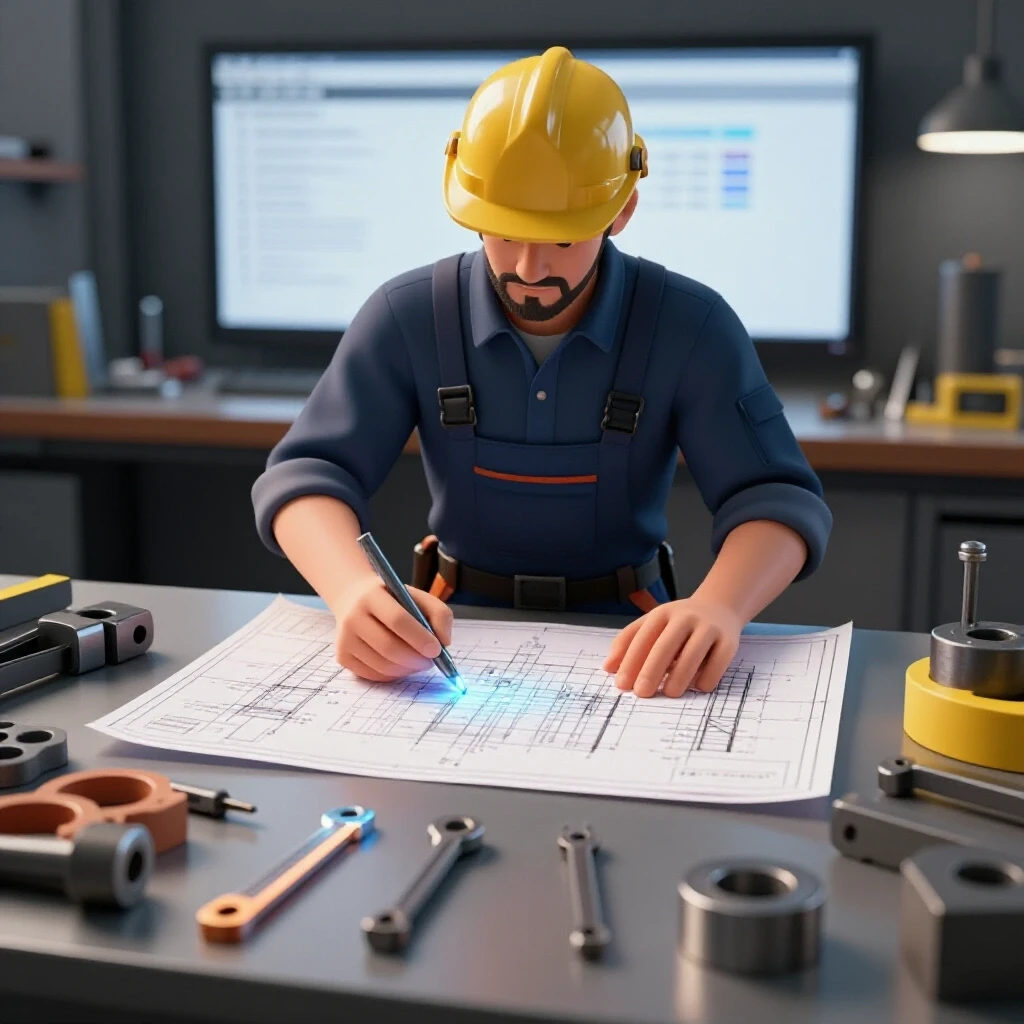
This guide focuses on the financial mechanics of building professional estimates for custom metalwork. We will look at how to account for every cent that leaves your shop so that every quote you send out is backed by hard data. By mastering shop math and understanding your true operational costs, you can stop worrying about undercutting yourself and start building a profitable fabrication business.
Establishing a Realistic Shop Hourly Rate
A shop hourly rate is the foundational number used to value the time spent on a project, covering all expenses and profit. It is not simply a reflection of what you want to earn per hour; it is a calculated figure that ensures the business remains solvent.
Many side-hustlers make the mistake of setting their rate based on their “take-home” goal. If you want to make $40 an hour, you cannot charge $40 an hour. That rate must also cover your rent, your power, your insurance, and the eventual replacement of your equipment. In the small-scale fabrication world, I have found that a healthy shop rate often falls between $65 and $120 per hour, depending on your region and your specific overhead.
To find your rate, you must first calculate your “nut”—the total amount of money required to keep the lights on even if you don’t strike an arc all month. This includes fixed costs like shop rent, business insurance, and software subscriptions. Once you have that monthly total, divide it by the number of billable hours you realistically expect to work. If your overhead is $1,000 a month and you work 40 hours on side projects, your overhead burden is $25 per hour before you even pay yourself or buy a single flap disc.
Mapping Overhead Burdens and Fixed Costs
Overhead burdens are the indirect costs of running a shop that cannot be tied to a specific piece of steel. These are the “hidden” expenses that often catch new business owners off guard during tax season or at the end of a slow month.
When I talk about overhead, I am referring to everything from the high-speed internet used to send quotes to the heat in the winter. Even if you work out of your home garage, you should allocate a portion of your utilities and property taxes to the business. This creates a realistic financial model that can survive the transition to a commercial lease later.
- Utilities: Electricity for high-demand equipment and shop lighting.
- Insurance: General liability and equipment coverage.
- Consumable Base: Items like rags, floor sweep, and hand cleaner.
- Marketing: Website hosting and business cards.
- Administrative Time: The hours spent on the phone, ordering material, and billing.
Machinery Amortization and Equipment ROI
Amortization is the process of spreading the cost of an expensive tool over its expected useful life. Instead of viewing a $5,000 ironworker as a one-time hit to your savings, you should view it as a per-hour cost that must be recovered through your projects.
If you buy a piece of equipment for $6,000 and expect it to last for 5,000 hours of operation, that machine costs you $1.20 for every hour it runs. This is its “rental rate” within your own shop. If you do not include this in your shop rate, you will not have the funds available to replace the machine when it eventually wears out.
| Equipment Type | Estimated Lifespan (Hours) | Recovery Rate Category |
|---|---|---|
| Heavy Fabrication Tables | 10,000+ | Low Impact |
| Industrial Saws | 3,000 – 5,000 | Moderate Impact |
| High-End Power Tools | 500 – 1,000 | High Impact |
| Precision Measuring Tools | 2,000 | Moderate Impact |
Building a Comprehensive Project Estimate
A project estimate is a detailed prediction of the total costs and time required to complete a specific fabrication task. It serves as a roadmap for the job and a financial agreement between you and the client.
The goal of a good estimate is to eliminate surprises. I have found that the most successful quotes are broken down into three distinct pillars: materials, labor, and consumables. When you separate these, you can see exactly where your margins are. If a client asks for a discount, you can point to the material costs and explain that while you might be able to adjust the labor, the steel has a fixed market price.
A common pitfall is failing to account for “shop flow” time. This is the time spent moving material from the rack to the saw, cleaning the steel before assembly, and palletizing the finished parts. If you only bill for the time the tool is actually touching the metal, you are likely losing 20% to 30% of your billable day.
Material Takeoffs and Sourcing Strategies
A material takeoff is the process of listing every individual piece of steel, hardware, and bought-in component needed for a build. This list must be precise, accounting for the “kerf” or the width of the cut made by your saw.
When sourcing steel, the price you pay at the counter is rarely the price you should charge the customer. You must account for the time spent driving to the supplier, the fuel for your truck, and the risk of holding that inventory. I typically apply a material markup of 15% to 35%. This covers the administrative burden of sourcing and provides a small buffer if a piece of steel is accidentally cut short.
- Full Lengths vs. Remnants: Buying 20-foot sticks is cheaper per foot but requires more storage.
- Bulk Hardware: Buying bolts by the box rather than individually can save 50% or more.
- Drop Management: Keep track of your “drops” (leftover pieces). If a customer pays for a full stick but you only use 15 feet, that 5-foot remnant is pure profit for a future small job.
Tracking Hidden Consumables
Consumables are the items that are used up during the fabrication process, such as shielding gas, grinding wheels, drill bits, and sandpaper. Because these items are small, they are the most common source of “profit bleed” in a small shop.
I recommend using a “Consumable Burden Factor” rather than trying to count every single grinding disc for every job. Based on my experience, consumables usually account for 5% to 10% of the total material cost. For high-intensity projects involving a lot of cleaning or finishing, that number can climb much higher.
- Gas Usage: Estimate the cubic feet of gas used based on the total estimated trigger time.
- Abrasives: Track how many discs you go through in a typical week and divide that by your billable hours.
- Tooling Wear: Factor in the cost of sharpening or replacing drill bits and annular cutters.
Accurate Labor and Time Assessment
Labor assessment is the process of predicting exactly how many man-hours a project will take from start to finish. This is often the most difficult part of quoting because humans are naturally optimistic about how fast they can work.
In my consulting work, I see fabricators consistently underestimate the time required for “non-value-added” tasks. These include things like changing saw blades, deburring edges, and adjusting jigs. To combat this, I suggest using a “multiplier” for your initial time estimates. If you think a task will take an hour, quote it at 1.2 or 1.3 hours. This creates a safety net for the inevitable hiccups that occur in custom fabrication.
The Breakdown of a Fabrication Hour
When you look at a 60-minute window in the shop, not all of it is spent fabricating. Understanding the split between setup, execution, and cleanup is vital for accurate pricing.
- Setup (15%): Reviewing drawings, pulling material, and setting up stops on the saw.
- Execution (70%): The actual cutting, fitting, and joining of the steel.
- Cleanup and Packaging (15%): Removing spatter, wiping down the steel, and preparing for transport.
If you only quote for the “Execution” phase, you are effectively giving away 30% of your labor for free. Over the course of a year, this can mean the difference between a thriving business and one that is barely breaking even.
Analyzing Post-Job Performance
Post-job performance analysis is the practice of comparing your original estimate to the actual time and money spent on a completed project. This is the only way to improve the accuracy of your future quotes.
I keep a simple log for every major project. On one side, I have my estimated hours and material costs. On the other, I record the actual hours worked and the final receipts from the steel yard. Interestingly, I often find that I am accurate on material but consistently “short” on labor for complex assemblies. By seeing this pattern, I can adjust my labor multiplier for similar jobs in the future.
This data-driven approach removes the emotion from pricing. If the data shows that a certain type of bracket always takes two hours instead of one, you must raise the price or find a way to build it faster. You cannot argue with the numbers.
Key Metrics for Shop Health
Tracking specific metrics allows you to see the financial trajectory of your side-hustle. These numbers act as a “check engine light” for your business.
- Effective Hourly Rate: Your total profit from a job divided by the actual hours worked.
- Material-to-Labor Ratio: The balance between what you spend on steel versus what you earn for your skill.
- Quote Win Rate: The percentage of sent quotes that turn into paying jobs. (Aim for 30% to 50%; if you win 100%, your prices are likely too low).
Essential Tools for Financial Management
Managing the economics of a shop requires more than just a notebook. Modern software can automate much of the “boring” work, allowing you to focus on the steel.
- Spreadsheet Software: Tools like Excel or Google Sheets are perfect for building your own shop rate calculators and material takeoff templates.
- Invoicing Platforms: Services like Quickbooks or FreshBooks allow you to track expenses in real-time and see which projects are actually profitable.
- Inventory Trackers: Simple digital lists of your current steel stock can prevent unnecessary trips to the supplier.
- Time Tracking Apps: Using a dedicated app to “clock in” to specific projects provides the raw data needed for post-job analysis.
Practical Steps for Moving Forward
If you are currently struggling with inconsistent profits, the best thing you can do is stop quoting for 48 hours and sit down with your bank statements. Calculate your true overhead. Look at your last three jobs and be honest about how many hours you actually spent on them versus what you billed.
Once you have your true shop rate, use it religiously. It might feel uncomfortable to send a quote that is higher than what you used to charge, but remember: you are not just selling a piece of steel. You are selling your expertise, the use of your specialized equipment, and the convenience of your shop space.
Next Steps for Your Business
- Audit Your Overhead: List every recurring expense for your shop, no matter how small.
- Calculate Your Machine Rates: Determine the hourly recovery cost for your most expensive tools.
- Build a Quote Template: Create a standard form that includes sections for materials, labor, consumables, and markup.
- Track Every Minute: For your next project, record every hour spent, including the time spent cleaning the floor at the end of the day.
Frequently Asked Questions
What is a “burdened” labor rate?
A burdened labor rate is the total cost of an hour of work, including the worker’s wages plus all associated overhead costs like taxes, insurance, and utilities. For a solo shop owner, this means your “wage” plus the cost of keeping the shop open.
How much should I mark up my materials?
Most small fabrication shops apply a markup between 15% and 35%. This covers the time spent sourcing, transporting, and storing the material. For very small orders, some shops use a higher percentage to cover the administrative “hassle factor.”
Should I charge for the time I spend quoting?
While you usually don’t send a bill for a quote, that time must be covered by your shop rate. Your hourly rate should be high enough that the “billable” hours pay for the “non-billable” administrative hours.
How do I account for a tool that I already own?
Even if a tool is paid off, you should still include a depreciation or “replacement” fee in your shop rate. This ensures that when the tool eventually breaks, the business has the cash on hand to buy a new one without dipping into personal savings.
Why is my “Effective Hourly Rate” lower than my “Shop Rate”?
This usually happens because of “untracked time.” If you spend two hours talking to the client and one hour cleaning up, but you only billed for the four hours of welding, your effective rate drops because the total time spent was seven hours.
Is it better to quote a flat fee or an hourly rate?
For custom fabrication, a flat fee (based on a detailed hourly estimate) is often better for the client because it provides price certainty. However, your internal math must be based on a solid hourly rate to ensure the flat fee is profitable.
How do I handle a job where the material prices change suddenly?
Your quotes should include a “validity period,” typically 7 to 14 days for steel. If the client waits longer than that to approve the job, you should reserve the right to re-quote based on current market prices.
What is the biggest mistake side-hustlers make when pricing?
The most common mistake is failing to value their own time. Many hobbyists-turned-pros feel guilty charging a professional rate, but underpricing hurts the entire industry and leads to burnout.
How do I track consumables without it taking too much time?
Instead of tracking every item, use a percentage-based “Consumable Burden.” If you spend $500 a year on abrasives and gas and work 500 hours, add $1.00 to your hourly shop rate to cover those items automatically.
Should I give discounts to friends and family?
If you choose to do so, always show the full professional price on the invoice first, then apply a “Friends and Family Discount” as a line item. This ensures they understand the true value of the work you are providing.
(This article was written by one of our staff writers, Michael Hargrove. Visit our Meet the Team page to learn more about the author and their expertise.)