Write Safe Standard Operating Procedures for Tools (DIY Guide)
Scaling a fabrication shop is a series of calculated risks. I remember the day I moved from a cramped two-car garage into a 2,400-square-foot industrial bay. I thought more space would automatically solve my production bottlenecks. Instead, I spent the first six months walking miles across the concrete because my layout was inefficient. I realized quickly that a professional shop isn’t just a collection of expensive tools. It is a synchronized system of power, air, and documented workflows.
When you transition from a hobbyist mindset to a micro-manufacturing operation, the stakes change. Mistakes that were once annoying now become expensive downtime or safety hazards. Integrating advanced machinery like a CNC plasma table or a heavy-duty milling machine requires more than just a plug and an outlet. It demands a strategic approach to infrastructure. This guide focuses on the technical and operational foundations you need to turn your workshop into a high-output environment.

Mapping Material Flow to Eliminate Shop Bottlenecks
A productive workshop layout is built around the movement of raw material. In my early years, I made the mistake of placing my material rack at the far end of the shop. This meant every sheet of steel had to be carried past three other machines before it hit the first saw. This created a physical bottleneck that slowed every project.
To optimize your space, you must analyze the “travel path” of your most common projects. Most advanced shops benefit from a linear or U-shaped flow. Raw materials enter through a roll-up door, move to a primary cutting station, proceed to secondary machining or welding, and finally exit through finishing and shipping.
Floor Load Ratings and Machine Zoning
Before you bolt down a 4,000-pound mill, you must understand your floor’s capacity. Most residential garage slabs are 4 inches thick, which may not support the concentrated point loads of heavy machinery or the vibration of a large air compressor. For industrial-grade equipment, a 6-inch reinforced concrete slab is the standard.
Zoning your shop helps manage noise and safety. I recommend a 3-foot minimum access zone around every major machine. This ensures you have enough room for maintenance and prevents operators from bumping into each other. If you are integrating a CNC plasma table setup, keep it away from precision electronics or your clean assembly area to avoid grit and smoke contamination.
| Layout Factor | Requirement | Reason |
|---|---|---|
| Minimum Clear Walkway | 36 Inches | OSHA compliance and emergency egress |
| Heavy Machine Slab | 6-Inch Reinforced | Prevents cracking and maintains tool level |
| CNC Plasma Buffer | 10 Feet | Protects other tools from conductive dust |
| Material Storage | Near Entrance | Reduces physical strain and floor wear |
Engineering 3-Phase Power for Heavy Machinery
Most home-based or light commercial shops face a major hurdle: the lack of 3-phase power. Most industrial tools, like high-end lathes and vertical mills, require 3-phase electricity because it is more efficient and provides smoother torque. While you can pay the utility company to drop a 3-phase line, the cost is often prohibitive for a scaling fabrication shop.
I have spent years testing different ways to bridge this gap. The two most common solutions are Rotary Phase Converters (RPC) and Variable Frequency Drives (VFD). An RPC uses a 3-phase motor to generate the third leg of power, while a VFD uses electronics to convert power and can also control motor speed.
Selecting a 3-Phase Power Converter
When choosing a 3-phase power converter, you must calculate your total connected load. If you plan to run multiple machines simultaneously, a large rotary converter is usually the better investment. If you only need to power a single 5HP motor on a lathe, a dedicated VFD is more cost-effective.
It is critical to maintain a balanced voltage between the three legs. A voltage imbalance of more than 5% can cause motors to overheat and fail prematurely. I recommend installing a digital volt/amp meter on your converter panel to monitor these levels during startup and under heavy load.
- Rotary Phase Converters: Best for shops with multiple 3-phase machines. They are durable but can be noisy.
- Digital Phase Converters: These provide the cleanest power for CNC electronics but come at a higher price point.
- Static Converters: Generally avoided for high-output shops as they only provide about two-thirds of a motor’s rated horsepower.
Designing High-Volume Clean Air and Fume Extraction
Air quality management is often an afterthought until the shop is filled with a blue haze from welding or fine dust from a grinder. High-volume clean air filtration is not just about comfort; it is about protecting your lungs and your machinery. Fine metallic dust is conductive and can short out the expensive control boards in your CNC equipment.
A proper dust collection duct design requires understanding static pressure loss. This is the resistance air faces as it moves through pipes and around bends. If your ducts are too small or have too many elbows, your 2,000 CFM (Cubic Feet per Minute) collector will only pull a fraction of its rated capacity at the tool.
Calculating CFM Requirements by Tool
Different tools require different levels of suction. A 7-inch angle grinder produces heavy particles that require high velocity to move, while a CNC plasma table produces fine, buoyant smoke. To keep particles suspended in the air within the ductwork, you need a branch velocity of at least 4,000 FPM (Feet Per Minute).
| Tool Type | Recommended CFM | Duct Diameter |
|---|---|---|
| Grinding Station | 500 – 800 | 5 Inches |
| CNC Plasma Table | 1,200 – 2,000 | 8 Inches |
| Small Milling Machine | 400 – 600 | 4 Inches |
| General Shop Air Scrubbing | 1,000+ | N/A (Ceiling Mount) |
When installing your ductwork, use smooth-walled metal pipe rather than flexible ribbed hose. Use long-radius elbows to minimize turbulence. I also suggest installing a multi-stage cyclone separator. This pulls the heavy chips out of the air stream before they hit your expensive pleated filters, extending their life significantly.
Developing Standardized Operational Sequences for Advanced Tooling
As you scale, you cannot rely on memory to keep things safe and efficient. This is where creating formalized safety manuals for your equipment becomes vital. These documents serve as a roadmap for every person who enters the shop, ensuring that tools are used correctly and consistently.
A standardized operating sequence should be a one-page document posted directly on or near the machine. It should outline exactly what needs to happen from the moment the power is turned on until the machine is cleaned and powered down. This reduces the “mental load” on the operator and prevents simple mistakes that lead to broken end mills or ruined workpieces.
Components of a Formalized Machine Safety Protocol
Every machine in your shop, from the drill press to the CNC gantry, needs a documented procedure. I break these down into four distinct phases:
- Pre-Flight Inspection: Check for loose bolts, ensure guards are in place, and verify that lubrication levels are sufficient.
- Setup and Calibration: Document the specific steps for homing the machine or setting tool offsets.
- Operational Steps: The actual sequence of buttons or levers required to complete a task safely.
- Shutdown and Cleanup: The “Lockout/Tagout” basics and the cleaning requirements to prepare the machine for the next job.
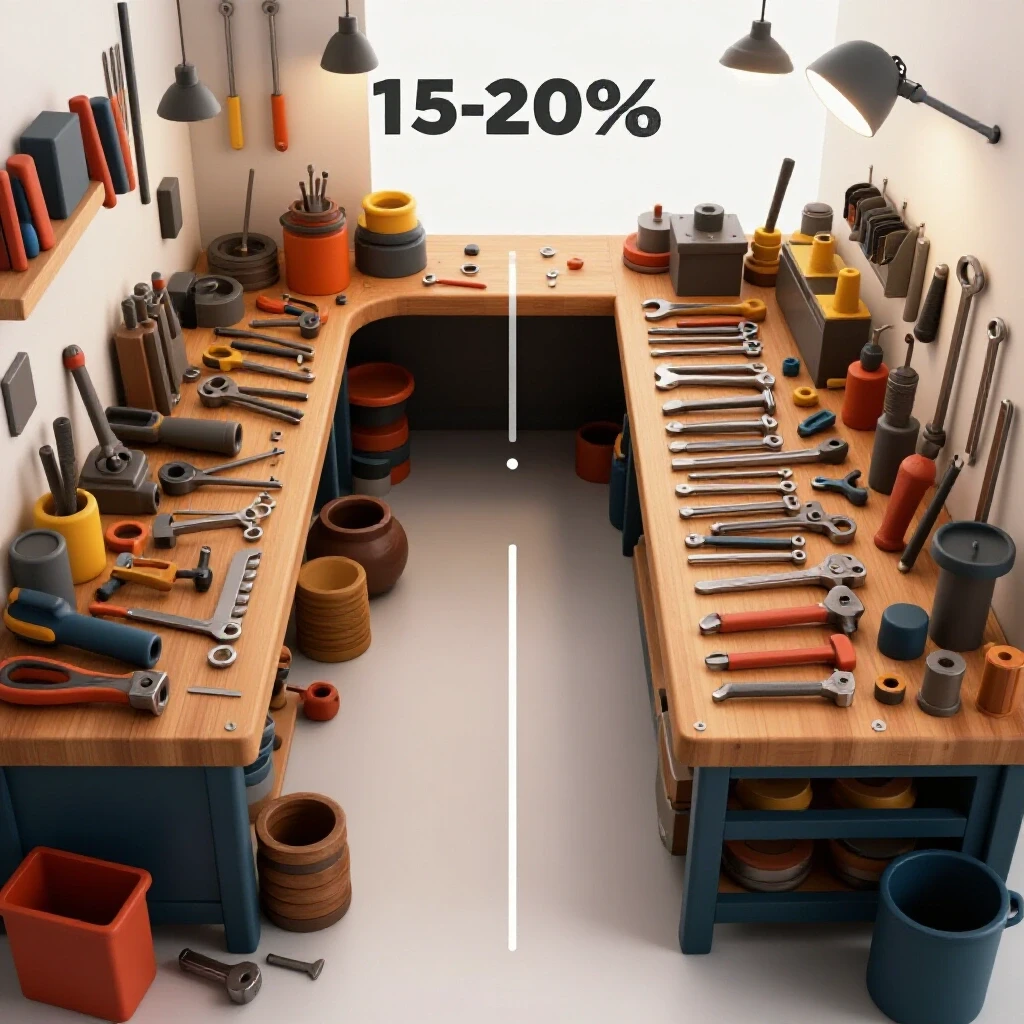
By documenting these steps, you create a repeatable process. In my shop, I found that having a “Startup Checklist” for the CNC plasma table reduced our scrap rate by 15% because we stopped forgetting to check the air pressure and electrode wear before hitting the “Start” button.
Successful Integration of CNC Automation
Transitioning to CNC (Computer Numerical Control) is the biggest leap a fabrication shop can take. It allows for a level of precision and repeatability that manual tools cannot match. However, the learning curve is steep. You are no longer just a fabricator; you are now a software operator and a machine technician.
The heart of CNC integration is the software workflow. This usually involves three stages: CAD (Computer-Aided Design), CAM (Computer-Aided Manufacturing), and the Machine Controller. If these three systems don’t talk to each other correctly, your expensive gantry is just a heavy paperweight.
Leveling CNC Plasma Lines and Gantry Alignment
Mechanical precision starts with the foundation. If your CNC plasma table setup is not perfectly level, the gantry will bind, leading to skipped steps and ruined parts. Use a precision machinist’s level, not a standard builder’s level, to set your frame.
Most entry-level to mid-grade CNC systems use stepper motors. These are great for the price, but they operate in an “open loop,” meaning the controller doesn’t actually know if the motor moved as far as it was told. If the torch hits a tip-up, the motor might skip, and the rest of the cut will be offset. Higher-end systems use “closed-loop” servos that provide feedback to the controller, allowing the machine to stop or correct itself if an error occurs.
- Software Integration Tip: Stick to a single software ecosystem if possible. Using one brand for CAD and CAM reduces the “translation errors” that happen when moving files between programs.
- Cable Management: Use high-quality drag chains to protect your motor and signal cables. Electrical “noise” from the plasma cutter can interfere with the low-voltage signals going to your motors.
- Grounding: Proper grounding is non-negotiable for CNC plasma. You need a dedicated ground rod for the table to prevent electromagnetic interference (EMI) from crashing your computer.
Maintenance and Amortization of Shop Assets
A professional shop owner views tools as assets that depreciate over time. If you buy a $15,000 CNC table, you need to know how many hours of cutting it will take to pay for itself. This is called amortization.
Maintenance is the key to protecting that investment. I use a simple spreadsheet to track maintenance intervals based on “spindle hours” or “arc time.” For example, a compressor might need an oil change every 500 hours, while a CNC gantry needs its rails lubricated every week of heavy use.
Creating a Maintenance Tracking Framework
Don’t wait for something to break to fix it. Reactive maintenance is the enemy of shop throughput. Instead, implement a proactive schedule.
- Daily: Wipe down ways, empty water traps in air lines, and clear chips from machine beds.
- Weekly: Check belt tensions, inspect electrical connections for heat discoloration, and clean air filters.
- Monthly: Deep clean the CNC water table, check 3-phase voltage balance, and calibrate machine axes.
- Annually: Replace worn lead screws, update software drivers, and perform a full shop safety audit.
| Machine | Monthly Maintenance Task | Expected Life (Hours) | Replacement Cost |
|---|---|---|---|
| CNC Plasma | Clean Rails / Check Slats | 5,000 – 8,000 | $10,000 – $30,000 |
| Vertical Mill | Lubricate Ways / Check Oil | 10,000+ | $5,000 – $20,000 |
| Air Compressor | Change Oil / Check Belts | 5,000 (Piston) | $1,500 – $5,000 |
| Rotary Converter | Inspect Bearings / Dusting | 20,000+ | $1,000 – $4,000 |
Practical Next Steps for Your Shop Evolution
Moving your shop toward a more professional, efficient setup is a marathon, not a sprint. The physical layout, the electrical infrastructure, and the documented safety protocols are the bones of your operation. Without them, even the most expensive tools will underperform.
Start by mapping your current floor plan. Identify where material gets stuck and where you are wasting steps. Once you have a clear flow, look at your power and air systems. Are they capable of supporting the next machine you want to buy? Finally, start documenting your processes. Write down the startup and shutdown sequences for your most complex tools today.
By treating your workshop as a manufacturing cell rather than just a place to work, you will reduce your stress and increase your capability. The goal isn’t just to work harder; it’s to build a system that works for you.
Frequently Asked Questions
How do I know if I need a rotary phase converter or a VFD?
A VFD is excellent for controlling the speed of a single motor and is relatively inexpensive for tools under 5HP. However, if you have multiple 3-phase machines or a machine with its own complex internal controls (like a CNC mill), a rotary phase converter is usually required because it provides a true 3-phase power source that mimics the utility grid.
What is the most common mistake in CNC plasma table setup?
The most common mistake is inadequate air drying and filtration. Plasma cutters require bone-dry air. If there is moisture in your lines, you will burn through electrodes and nozzles rapidly, and your cut quality will suffer. Always install a refrigerated air dryer or a multi-stage desiccant system.
How much space should I leave between machines for safety?
I recommend a minimum of 36 inches of clear space around the operating side of any machine. For machines that handle long stock, like a bandsaw or a lathe, you must also account for the “swing” or “protrusion” of the material itself.
Why is duct velocity important in dust collection?
If the air in your ducts moves too slowly (below 3,500–4,000 FPM), heavy metal dust will settle in the bottom of the pipes. Over time, this creates a clog that reduces suction and can even become a fire hazard. Keeping the velocity high ensures the debris actually reaches the collector.
How do I begin documenting equipment operational guidelines?
Start with the “Pre-Flight” checklist. What are the three things you always check before turning on the machine? Write those down. Then, document the shutdown procedure. Keep it simple and use bullet points. Laminate the sheet and zip-tie it to the machine’s power cord or control panel.
Can I run a CNC machine on a standard rotary phase converter?
Yes, but you must be careful. CNC electronics are sensitive to voltage spikes and imbalances. You must ensure the “manufactured leg” of the 3-phase power is not connected to the control transformer of the CNC. Always check with the machine manufacturer before connecting to a phase converter.
What is the best way to handle heavy material in a small shop?
Invest in a mobile gantry crane or a heavy-duty hydraulic lift table. Trying to manhandle 4×8 sheets of 1/4-inch steel is a recipe for back injuries and dropped material. A simple jib crane mounted to a structural column can also drastically improve material flow.
How often should I check my 3-phase voltage balance?
I recommend checking it once a month or whenever you add a new machine to the circuit. Large changes in the total load on your shop’s electrical panel can affect how the converter balances the legs.
Is a water table or a downdraft table better for CNC plasma?
A water table is generally cheaper and easier to maintain for a home-based shop. It traps about 90% of the dust and sparks. A downdraft table is more effective at removing fine smoke but requires a very high-volume fan (3,000+ CFM) and expensive ducting to vent outside.
How do I calculate the return on investment (ROI) for a new tool?
Calculate the “Shop Rate” (your hourly cost to run the shop) and estimate how many hours the new tool will save you per month. If a $5,000 tool saves you 10 hours of labor a month and your rate is $75/hour, the tool pays for itself in about seven months.
(This article was written by one of our staff writers, Edward Sinclair. Visit our Meet the Team page to learn more about the author and their expertise.)