How to Extend Angle Grinder Carbon Brush Life (DIY Guide)
I remember the first time a deadline nearly broke my small fabrication business. I was finishing a set of custom railings for a local contractor. My shop rate was set at $75 an hour, which I thought was generous. Then, my primary angle grinder started sparking and died. I didn’t have a backup, and I didn’t know how to fix it. I lost four hours driving to the city to buy a new one. That single equipment failure turned a profitable Saturday into a net loss.
Many of us starting a side-hustle metalworking business focus on the big numbers, like the price of a welder or a plasma table. We often overlook the small, moving parts that keep the shop running. If you want to master fabrication job costing, you have to look at the “micro-costs.” This includes how often you replace tools and how well you maintain them. Learning to service the internal components of your grinders is a vital step in reducing overhead.
Establishing a Baseline Shop Rate for Small Fabricators
A shop rate is the total dollar amount you must charge per hour to cover your labor, overhead, and profit. It is the foundation of small metal shop pricing and ensures you aren’t just “buying yourself a job” but actually building a business. Without an accurate rate, you are guessing at your success.
When I talk to shop owners, I suggest a rate between $65 and $120 per hour, depending on your region and specialty. This isn’t just a number pulled from the air. It includes your rent, electricity, insurance, and the cost of the tools you wear out every day. If your tools fail early because of poor maintenance, your “true” shop rate actually goes down because your expenses are rising.
- Labor: What you would pay someone else to do the work.
- Overhead: Fixed costs like shop rent, utilities, and software.
- Consumable Burden: The cost of discs, gas, and small tool parts.
- Profit Margin: The extra 10–20% that allows the business to grow.
Factoring in Tool Amortization and Maintenance
Tool amortization is the process of spreading the cost of a piece of equipment over its expected lifespan. For a side-hustle metalworking pro, an angle grinder might be expected to last three years. However, if you neglect simple upkeep, that lifespan might drop to eighteen months, doubling your hourly equipment cost.
Maintaining the internal electrical contacts of your grinders is the easiest way to improve your metal business ROI calculators. Most grinders fail because the carbon blocks that transfer power to the motor wear down or get clogged with metal dust. By checking these parts regularly, you prevent the motor from burning out prematurely. This keeps your capital investment low and your profit per hour high.
Maximizing Tool Longevity to Protect Margins
Maintaining the internal components of your handheld power tools ensures they reach their full service life. By focusing on the small parts that conduct electricity to the motor, you prevent sudden failures during a paid job. This protects your scheduled delivery dates and your professional reputation with clients.
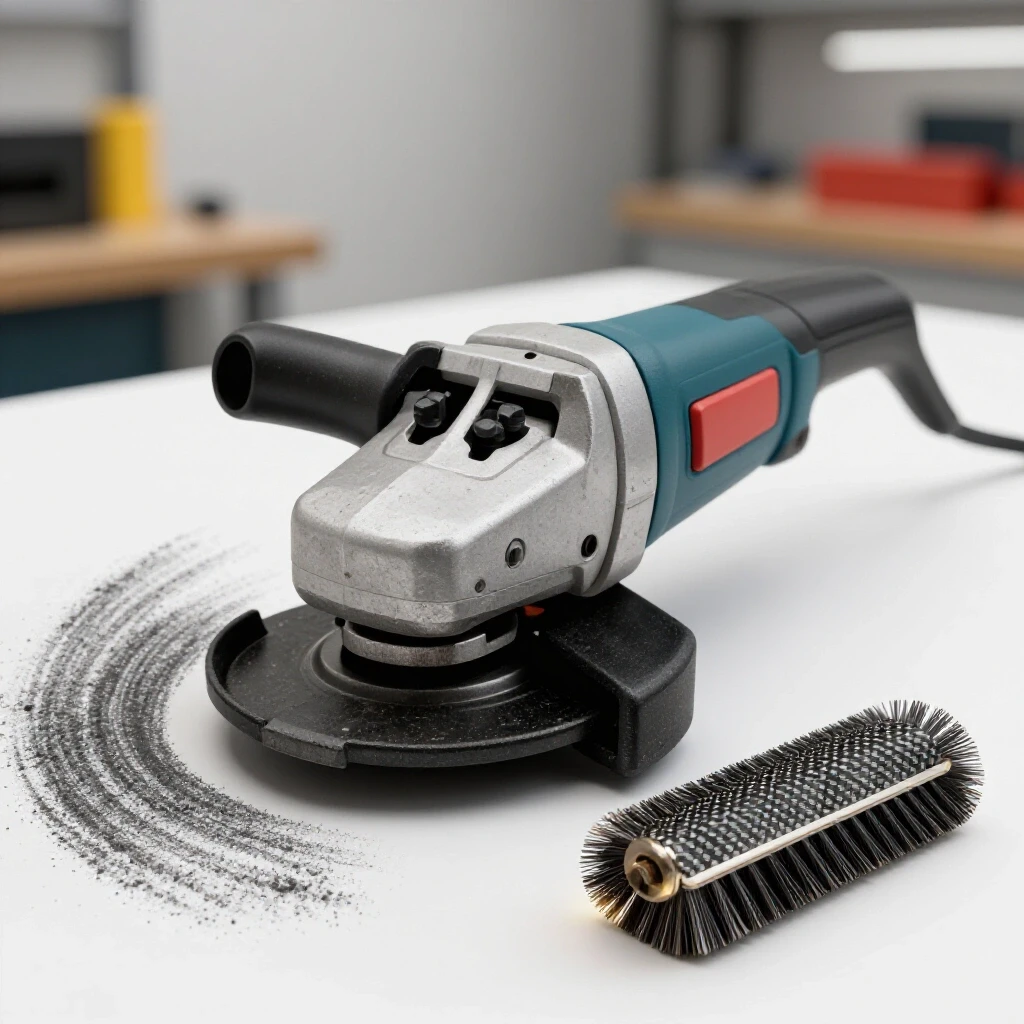
Most grinders use small carbon blocks, known as brushes, to keep the motor spinning. These are designed to wear out, but they often wear unevenly or get stuck. I make it a habit to inspect these every 50 hours of trigger time. If you wait until the tool stops working, you might damage the commutator—the rotating part of the motor—which is a much more expensive fix.
Routine Inspection Intervals for Electrical Contacts
Regular inspection intervals are scheduled times when you open a tool to check for wear and debris. For a shop running 20 hours a week, a monthly check is usually enough to catch issues before they cause a breakdown. This proactive approach is a key part of welding consumable tracking and overall shop efficiency.
- Unplug the tool and remove the side panels or brush caps.
- Check the length of the carbon blocks; if they are less than a quarter-inch long, replace them.
- Look for “pitting” or black burn marks on the surface of the carbon.
- Ensure the wires leading to the blocks are secure and not frayed.
Cleaning the Commutator for Optimal Conductivity
The commutator is the copper ring inside the motor that the carbon blocks rub against. Over time, it collects a film of carbon dust and metal particles that can cause “arcing” or excessive sparking. Cleaning this surface restores the flow of electricity and reduces heat buildup, which is the number one killer of small power tools.
I use a simple pencil eraser or a specialized cleaning stone to gently rub the copper segments while rotating the motor by hand. You want to see a bright, copper shine. Avoid using heavy sandpaper, as this can create flat spots that lead to more vibration. A clean contact point means the motor runs cooler and uses less power, saving you money on your monthly energy bill.
Managing Spring Tension and Brush Seating
Spring tension refers to the pressure applied to the carbon blocks to keep them in contact with the motor. If the tension is too light, the electricity will jump across the gap, causing sparks. If it is too heavy, the blocks will wear down too fast. Proper seating ensures the block matches the curve of the motor perfectly.
- Test the spring with a small pick to ensure it snaps back into place.
- If the spring looks discolored (blue or purple), it has likely overheated and lost its tension.
- When installing new blocks, run the grinder at “no load” (not cutting anything) for two minutes.
- This “seating” process allows the new carbon to shape itself to the motor without the stress of a heavy workload.
Why Hidden Consumables Bleed Small Shop Profits
Consumables are the items you use up during a job, such as grinding wheels, welding wire, and the internal parts of your tools. Many fabricators forget to track these, leading to inaccurate fabrication job costing. If you don’t account for these, you are essentially giving away a portion of your profit on every invoice.
In my experience, a “consumable burden” usually adds about 10–15% to the total cost of a project. If you are replacing your grinder’s internal contacts every few months because of a dusty shop environment, that cost needs to be in your bid. I recommend keeping a simple logbook next to your workbench to track how often you service your tools.
| Maintenance Action | Frequency | Time Cost | ROI Impact |
|---|---|---|---|
| Brush Inspection | Monthly | 5 Mins | Prevents $150 replacement |
| Commutator Cleaning | Quarterly | 10 Mins | Extends motor life by 50% |
| Dust Blow-out | Weekly | 2 Mins | Reduces heat-related failure |
| Spring Tension Check | Bi-Annually | 5 Mins | Ensures consistent power |
Tracking Consumables and Hidden Operational Costs
Consumable tracking is the practice of recording every item used during production, from gas to sandpaper. This data allows you to see exactly where your money is going and helps you adjust your markups. For a small shop, even a $5 set of motor brushes can impact the bottom line if they are failing every week.
I suggest using a simple spreadsheet to track your “burn rate.” If you find you are going through more tool parts than expected, it might be time to invest in better dust collection or change your grinding technique. Pushing too hard on a grinder increases heat, which melts the internal components faster. Let the tool do the work, and your costs will stay down.
Building a Profitable Fabrication Quote
A fabrication quote is a formal document that outlines the costs and terms of a job for a client. To stay profitable, your quote must include material costs, labor, overhead, and a markup for consumables. Using a structured model prevents you from underbidding and losing money on complex projects.
When I build a quote, I start with the raw material and add a 20–30% markup. This covers the time I spent sourcing the metal and the gas I used to pick it up. Then, I add my hourly shop rate based on a realistic estimate of the time required. Finally, I add a small “shop fee” (usually 5%) to cover things like electricity and tool wear.
- Material Cost: Total price of steel, aluminum, or hardware.
- Markup: 20% to 50% depending on the job size.
- Labor Hours: Estimated time multiplied by your shop rate.
- Consumable Fee: Flat rate or percentage to cover discs and tool parts.
- Total Bid: The sum of all parts, clearly stated for the client.
Analyzing Post-Job Profits to Refine Pricing
Post-job reconciliation is the act of comparing your original estimate to the actual costs incurred after the work is done. This is the most important habit for any side-hustle metalworking owner. It tells you if your shop rate is high enough and if your tool maintenance is actually saving you money.
Did the job take longer than expected because a tool failed? Did you use more grinding discs than you billed for? If you find a pattern of tool issues, it’s a sign that your maintenance routine needs to be more rigorous. I once discovered that I was losing $200 a month simply because I wasn’t cleaning my grinders, leading to premature motor burnouts. Once I started a weekly cleaning schedule, my tool replacement costs dropped by 60%.
Digital Tools for Managing Shop Economics
In the modern shop, you don’t need a degree in accounting to stay profitable. Several digital tools can help you track your time, manage your invoices, and calculate your ROI. These resources make the business side of fabrication much less intimidating for those of us who would rather be behind a welding hood.
- QuickBooks or FreshBooks: Great for tracking expenses and sending professional invoices.
- Clockify: A free time-tracker that helps you see exactly how long a project takes.
- Google Sheets: Perfect for building your own custom ROI calculators and material trackers.
- Wave Accounting: A solid free option for small shops that need basic bookkeeping and scanning.
Moving Toward a More Efficient Workshop
The transition from a hobbyist to a professional fabricator requires a shift in mindset. You are no longer just making things; you are managing an asset. Every tool in your shop is a machine that should be generating a return on investment. By taking 10 minutes to service the internal contacts of your grinders, you are directly contributing to the financial health of your business.
Start by setting aside one hour this weekend to inspect your most-used tools. Look at the wear on the carbon blocks and clean out any metal dust. Then, look at your last three jobs. Did you actually make the profit you intended? If not, use the principles of shop rate calculation and consumable tracking to adjust your next bid. Consistency in maintenance leads to consistency in profit.
Frequently Asked Questions
How do I know if the internal contacts in my grinder are failing?
You will usually notice a drop in power, an unusual “electrical” smell, or excessive sparking visible through the side vents. If the tool starts and stops intermittently when you move it, the carbon blocks are likely too short to maintain a steady connection. Checking them immediately can prevent a total motor failure.
Is it worth fixing a cheap $40 grinder?
From a business perspective, time is money. If a repair takes you an hour and parts cost $10, you have “spent” $85 of shop time to save a $40 tool. However, for high-end grinders in the $150–$300 range, regular maintenance is essential to protect your investment and maintain a high ROI.
How much should I mark up my metal materials?
A standard markup is 20% to 50%. This covers the “hidden” costs of sourcing: the time spent on the phone, the fuel for your truck, and the floor space used to store the material. For very small jobs, a higher percentage is often necessary to make the effort worthwhile.
What is a “consumable burden” in a fabrication bid?
This is a percentage added to a quote to cover items that are “consumed” during the work. This includes welding wire, shielding gas, grinding discs, and even the wear and tear on tool components like motor brushes. Most shops use a 5% to 15% burden rate depending on the intensity of the work.
How often should I blow out my tools with compressed air?
In a metal shop, I recommend doing this at the end of every work session. Metal dust is conductive and can cause short circuits if it builds up inside the motor housing. A quick blast of air through the intake vents is the simplest way to extend the life of your electrical tools.
What happens if I don’t “seat” new carbon brushes?
If you put a new, flat carbon block against a curved motor and immediately start heavy grinding, the contact point is very small. This causes extreme heat at that tiny point, which can crack the carbon or scar the motor. Running the tool at no load for a few minutes allows the parts to wear into a perfect fit.
Can I use any carbon brush that fits in the slot?
While many look similar, different tools require specific grades of carbon and specific spring tensions. Using the wrong part can lead to poor performance or damage to the motor. Always try to find parts that match the specifications of your tool manufacturer to ensure the longest service life.
How do I calculate my true hourly shop rate?
Add up all your monthly business expenses (rent, insurance, utilities, tool depreciation) and divide that by the number of billable hours you work. Then, add your desired hourly wage and a profit margin. If your expenses are $1,000 and you work 40 billable hours, your overhead is $25/hour. Add a $40 wage and $10 profit, and your rate is $75/hour.
Why does my grinder spark more when I’m cutting heavy plate?
Heavy cutting puts more load on the motor, which draws more current through the internal contacts. If those contacts are dirty or the springs are weak, the electricity will arc more. This is a sign that you are pushing the tool too hard or that it is time for a routine internal cleaning.
Should I track my maintenance time as billable hours?
Maintenance is considered “non-billable” labor, but it must be covered by your overhead. When you set your shop rate, you should assume that a certain percentage of your week will be spent on shop upkeep. If you work 40 hours, you might only “bill” 30 of them, so those 30 hours must cover the costs of all 40.
(This article was written by one of our staff writers, Michael Hargrove. Visit our Meet the Team page to learn more about the author and their expertise.)