Why Cheap Metalworking Tools Fail Under Heavy Load (Review)
When I opened my first fabrication shop sixteen years ago, I spent most of my nights staring at spreadsheets and wondering why my bank account didn’t reflect the hard work I put in during the day. Like many of you, I started as a hobbyist who loved the craft. I thought that if I could weld a clean bead and cut a straight line, the business side would take care of itself. I quickly learned that the transition from a hobbyist to a professional side-hustler is paved with hidden costs that can sink a shop before it even gets off the ground.
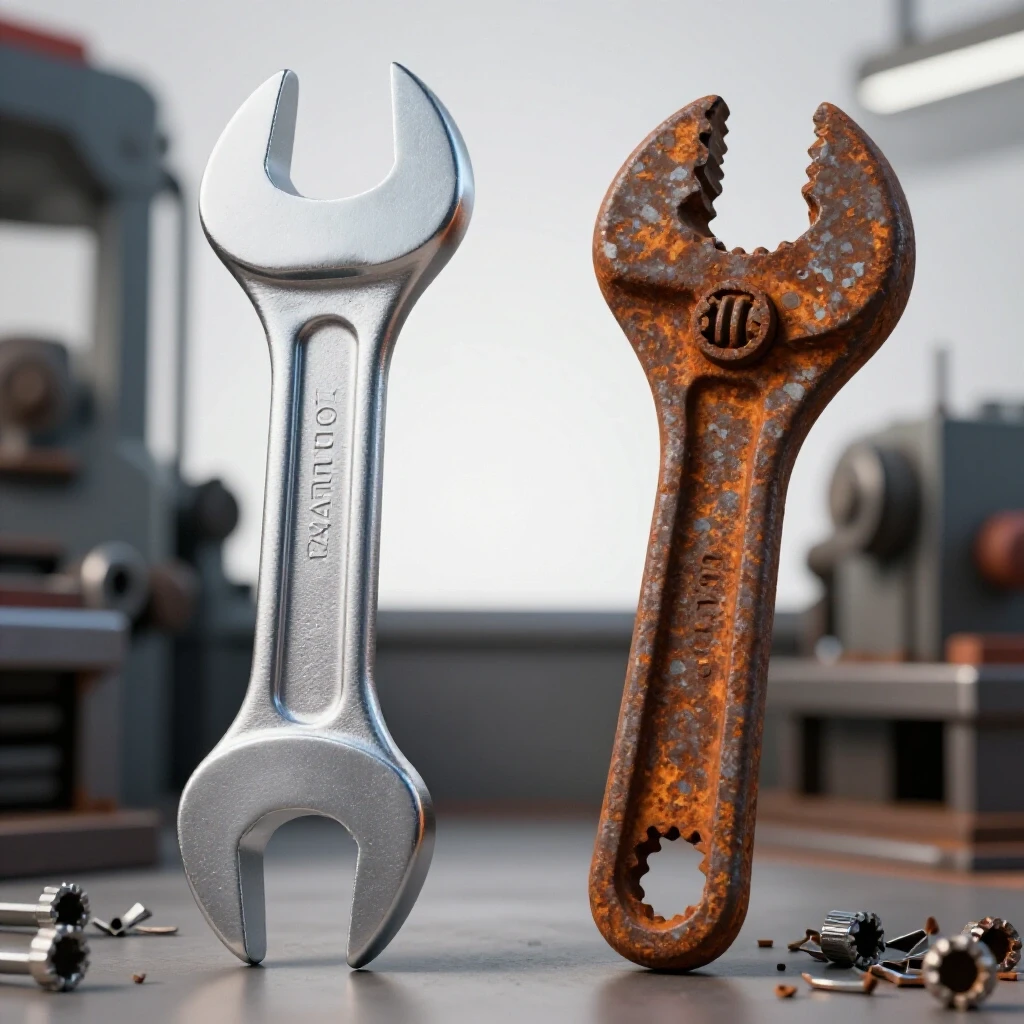
The most painful lessons didn’t come from complex projects. They came from the quiet erosion of profits caused by equipment that couldn’t handle the transition from occasional use to daily production. When you move into paid work, your tools are no longer just toys; they are capital investments that must generate a return. If a machine fails because its structural design limitations weren’t meant for repeated torque, your hourly rate doesn’t just drop—it disappears into downtime.
In this guide, I will break down the financial realities of running a small metal shop. We will look at how to calculate a shop rate that actually covers your bills, how to account for the physical limits of your equipment, and how to price your work so you aren’t just paying for the privilege of working in your own garage.
Establishing Your True Shop Rate for Sustainable Growth
A shop rate is the total dollar amount you must charge for every hour of labor to cover your overhead, equipment wear, and personal profit. It is the most critical number in your business because it dictates whether a project is a success or a financial drain.
Many side-hustlers make the mistake of picking a number out of thin air, often settling on $30 or $40 an hour because it sounds better than their day job. However, a professional fabrication job costing model requires a much deeper look. You must account for “unbillable” time—the hours spent cleaning the shop, quoting jobs, and driving to the steel yard. If you only bill for 20 hours a week but spend 40 hours in the shop, your $40 rate is actually $20.
To find your real rate, you need to list every fixed cost you have. This includes electricity, insurance, rent (even if you pay it to yourself for your garage space), and software subscriptions. Once you have that monthly total, divide it by the number of hours you can realistically bill to clients. For most small shops, a healthy small metal shop pricing structure starts between $65 and $120 per hour, depending on your local market and the complexity of your equipment.
Breaking Down the Overhead Burden
Overhead refers to the ongoing expenses of operating a business that are not directly tied to a specific project. These costs exist whether you have a customer or not.
When I first started tracking my expenses, I realized I was ignoring the “small” things. The $50 monthly bump in the power bill from running a plasma cutter and the $200 annual insurance premium for business equipment add up. If you ignore these, you are essentially subsidizing your customers’ projects with your own savings. I recommend using a 1.5x or 2.0x multiplier on your base labor rate to ensure these costs are covered.
Mapping Machinery Amortization and Wear
Amortization is the process of spreading the cost of a tool over its expected useful life. This allows you to set aside money for its eventual replacement.
If you buy a piece of equipment for $2,000 and expect it to last 2,000 hours of arc time, that tool costs you $1.00 for every hour it runs. However, entry-level equipment often features manufacturing tolerances that are not designed for the high-stress applications of a daily shop. When these machines are subjected to repeated impact loads or high heat, their lifespan can be cut in half. This “accelerated wear” is a hidden cost that many people fail to include in their metal business ROI calculators.
| Expense Category | Annual Estimated Cost | Monthly Impact |
|---|---|---|
| Shop Utilities (Power/Heat) | $1,800 | $150 |
| Insurance & Licensing | $900 | $75 |
| Consumable Base (Gas/Wire) | $1,200 | $100 |
| Tool Maintenance/Repair | $600 | $50 |
| Total Fixed Overhead | $4,500 | $375 |
Structural Integrity and the Financial Impact of Equipment Fatigue
Equipment fatigue is the gradual weakening of a tool’s components caused by repeated stress, eventually leading to mechanical failure. In a professional setting, this often manifests as deformation or fracture in parts that were designed for lighter use.
When you are doing side-hustle metalworking, you might be tempted to push a machine past its intended duty cycle to finish a job. Interestingly, this is where most financial losses occur. A tool built with inconsistent heat treatment or lower-grade material composition will fail under these heavy loads. It isn’t just about the tool breaking; it’s about the three days of lost production while you wait for a replacement. That downtime can cost you more than the price of a higher-quality machine.
Observing Material Composition and Failure Modes
Material composition refers to the specific alloys and elements used to create a tool’s structural parts, which determines its strength and durability.
In my years of consulting, I have seen countless bench vices and presses fail because of internal casting flaws or “brittle” metal choices. Under heavy torque, these tools don’t just bend; they snap. This is often due to structural design limitations where the manufacturer saved money by using thinner walls or lower-grade fasteners. When you are quoting a job, you must consider if your current setup can handle the physical stress of the work without failing mid-project.
The True Cost of Downtime in a Small Shop
Downtime is any period when your shop is unable to produce billable work due to equipment failure or lack of materials.
If your shop rate is $80 an hour and a machine failure stops you for five hours, you have lost $400 in potential revenue. If you have to spend another $300 to replace the tool, that single failure cost you $700. When calculating the ROI on a new tool, I always look at the “failure cost.” If a more robust machine prevents even two failures a year, it usually pays for itself in saved downtime alone.
Tracking Consumables to Prevent Hidden Profit Leaks
Consumables are the items you use up during fabrication, such as welding wire, shielding gas, sanding belts, and drill bits. These are the most common “profit leaks” in a small shop.
I once worked with a fabricator who couldn’t understand why his bank balance was flat despite being busy. We started welding consumable tracking and found he was spending nearly 15% of his total revenue on flap discs and gas, but he wasn’t charging the customers for them. He viewed them as “shop supplies” and absorbed the cost. In reality, these should be billed as a “consumable burden” on every invoice.
Calculating the Consumable Burden Factor
A consumable burden is a percentage or flat fee added to a job to cover the cost of materials used up during the process.
For most general fabrication, I suggest a consumable burden of 10% to 20% of the total labor cost. For example, if a job takes five hours at $80/hour ($400 labor), you should add $40 to $80 to the bill to cover the wire, gas, and abrasives. This ensures that you aren’t paying for the customer’s grinding discs out of your own pocket.
Strategies for Bulk Sourcing and Inventory Management
Inventory management is the practice of tracking what you have in stock to ensure you never run out of supplies mid-job.
Buying in bulk can significantly lower your costs, but it requires upfront capital. I recommend tracking your usage for three months to see what you use most. If you find you go through ten rolls of wire a year, buying them all at once during a sale can improve your margins. Use a simple spreadsheet or a dedicated app to monitor these levels so you don’t end up paying “emergency” prices at a local retail store when you run out on a Saturday night.
- Inventory Spreadsheet: Track every box of electrodes and every tank of gas.
- Usage Log: Note how many grinding discs a specific type of project uses.
- Reorder Points: Set a “low stock” trigger so you order before you are empty.
- Supplier Relations: Talk to local industrial supply houses; they often give better rates to “businesses” than to walk-in hobbyists.
Building Accurate Quotes for Side-Hustle Metalworking
A quote is a formal offer to perform work for a specific price, based on an estimate of time, materials, and overhead.
Many new shop owners fear that high quotes will drive away customers. While some “price shoppers” will leave, the customers you want are the ones who value quality and reliability. When building a quote, I use a “bottom-up” approach. I start with the raw material cost, add a markup, then add my labor hours, and finally the consumable burden. If the final number makes you nervous, remember that you are running a business, not a charity.
Formulating a Realistic Material Markup
Material markup is the percentage you add to the cost of raw steel or hardware to cover the time spent sourcing, transporting, and financing those materials.
I typically recommend a 20% to 50% markup on materials. If you spend $100 on steel, you should charge the customer at least $120. This covers the gas for your truck and the time you spent at the steel yard. Interestingly, many shops forget that they are essentially providing a “loan” to the customer by buying materials upfront. The markup compensates you for that risk.
Using Software and Digital Estimation Tools
In the modern shop, manual math is a recipe for error. Digital tools can help you maintain consistency across all your bids.
I rely on a few specific types of tools to keep my shop running smoothly: 1. Estimation Spreadsheets: Custom Excel or Google Sheets templates that calculate your shop rate automatically. 2. Invoicing Platforms: Tools like Wave, Quickbooks, or Square that allow you to send professional quotes and accept digital payments. 3. Project Management Apps: Trello or Asana can help you track where each job stands so you don’t overpromise on deadlines. 4. Time Trackers: Apps like Toggl help you see exactly how long a job takes, which is vital for refining future quotes.
| Quote Component | Calculation Method | Example (Small Bracket Job) |
|---|---|---|
| Raw Materials | Cost + 30% Markup | $50 + $15 = $65 |
| Labor | 3 Hours @ $85/hr | $255 |
| Consumable Burden | 15% of Labor | $38.25 |
| Total Quote | Sum of all parts | $358.25 |
Analyzing Post-Job Profits to Refine Your Model
Post-job analysis is the practice of comparing your estimated costs and time against the actual results after a project is finished.
This is the most skipped step in small shops, yet it is the most important for long-term survival. After every job, I sit down and look at the “variance.” If I estimated three hours but it took five, I need to know why. Was it a tool failure? Did I underestimate the grinding time? This data allows you to adjust your calculating shop rates for the next project, ensuring you don’t repeat the same mistake.
Identifying Job Cost Variance
Job cost variance is the difference between what you thought a job would cost and what it actually cost.
A positive variance means you made more money than expected; a negative variance means you lost money. If you consistently see a negative variance on projects involving heavy material, it might be a sign that your equipment’s structural design limitations are slowing you down. If your machines are struggling to maintain tolerances under load, you are likely spending extra time on “re-work” or manual finishing, which eats your profit.
Adjusting for Future ROI and Upgrades
Once you have six months of data, you can make informed decisions about equipment upgrades. If you see that you are spending $200 a month on repairs for a specific machine, the “payback period” for a better version becomes very clear. This is how you move from a struggling side-hustle to a profitable small business. You stop guessing and start making decisions based on documented performance and financial reality.
- Review your logs: Look for patterns in equipment downtime.
- Calculate the “Lost Opportunity” cost: How much more work could you have done with a faster, more reliable machine?
- Set a “Capital Expense” fund: Put 5% of every check into a separate account for future tool upgrades.
- Analyze your margins: If a specific type of work (like thin-gauge sheet metal) is consistently more profitable than another (like heavy structural repair), pivot your marketing toward the higher-margin work.
Frequently Asked Questions
What is the biggest hidden cost in a small metal shop? The biggest hidden cost is unbillable time. Most owners only track the hours they spend welding or cutting, but they ignore the hours spent cleaning the shop, talking to customers, or fixing tools that have failed under heavy use. These “lost hours” can easily cut your effective hourly rate in half if you don’t account for them in your overhead.
How do I know if my shop rate is too low? If you are consistently busy but your bank account isn’t growing, your rate is likely too low. Another sign is if you never lose a bid. If every customer says “yes” immediately, you are probably the cheapest option in town, which is a dangerous place to be for a small shop with limited capacity.
Why do entry-level tools often fail when I start taking on paid work? Entry-level tools are often designed for intermittent use. When you start a side-hustle, you subject these tools to higher stress and longer run times. Issues like material composition flaws, poor heat treatment, and loose manufacturing tolerances become apparent under these heavy loads, leading to fractures or deformation.
Should I charge for the time I spend picking up metal? Yes. You are providing a service by sourcing and transporting materials. If you don’t charge for this time—either through a labor fee or a material markup—you are essentially working for free during those hours.
What is a reasonable profit margin for a small fabrication shop? After paying all expenses (including your own hourly wage), a healthy small shop should aim for a 10% to 20% net profit margin. This “extra” money is what allows the business to grow, buy new equipment, and handle unexpected repairs.
How do I calculate the ROI on a new, more expensive tool? To calculate ROI, look at how much time the new tool will save you per project and how much downtime it will prevent. If a $3,000 tool saves you 5 hours a month at an $80 shop rate, it provides $400 in monthly value. In that scenario, the tool pays for itself in less than eight months.
Is it better to lease or buy equipment for a side business? For most small side-hustles, buying used, high-quality industrial equipment is often better than leasing. Industrial-grade tools hold their value well and are designed to handle the structural stress that causes lighter equipment to fail.
How often should I review my shop rate? I recommend reviewing your shop rate every six months. As your skills improve and your overhead changes (due to rising power costs or new insurance premiums), your rate must evolve to keep your business profitable.
How do I handle customers who complain about my pricing? Focus on the value you provide. Professional pricing reflects your expertise, your equipment’s reliability, and the quality of the finished product. If a customer only cares about the lowest price, they are likely to be the most difficult to work with and the least profitable in the long run.
What is the best way to track consumables? Start with a simple logbook or spreadsheet. Note the date you start a new roll of wire or a new bottle of gas, and the date it runs out. Over time, you will see exactly how much “consumable burden” you need to add to your quotes to stay in the black.
(This article was written by one of our staff writers, Michael Hargrove. Visit our Meet the Team page to learn more about the author and their expertise.)