How to Repair Sticking Tool Chest Drawer Slides (Easy Fix)
In my fifteen years of running a small-scale fabrication shop, I have learned that the most expensive tool is the one that stops working when you are in the middle of a deadline. We often focus on the horsepower of our motors or the duty cycles of our welders, but we overlook the infrastructure that holds those tools. I have kept detailed maintenance logs since 2008, tracking everything from the amperage draw on my bandsaw to the friction levels in my storage units. One of the most common, yet ignored, points of failure in a high-production environment is the mechanical degradation of the tracks holding our heavy equipment.
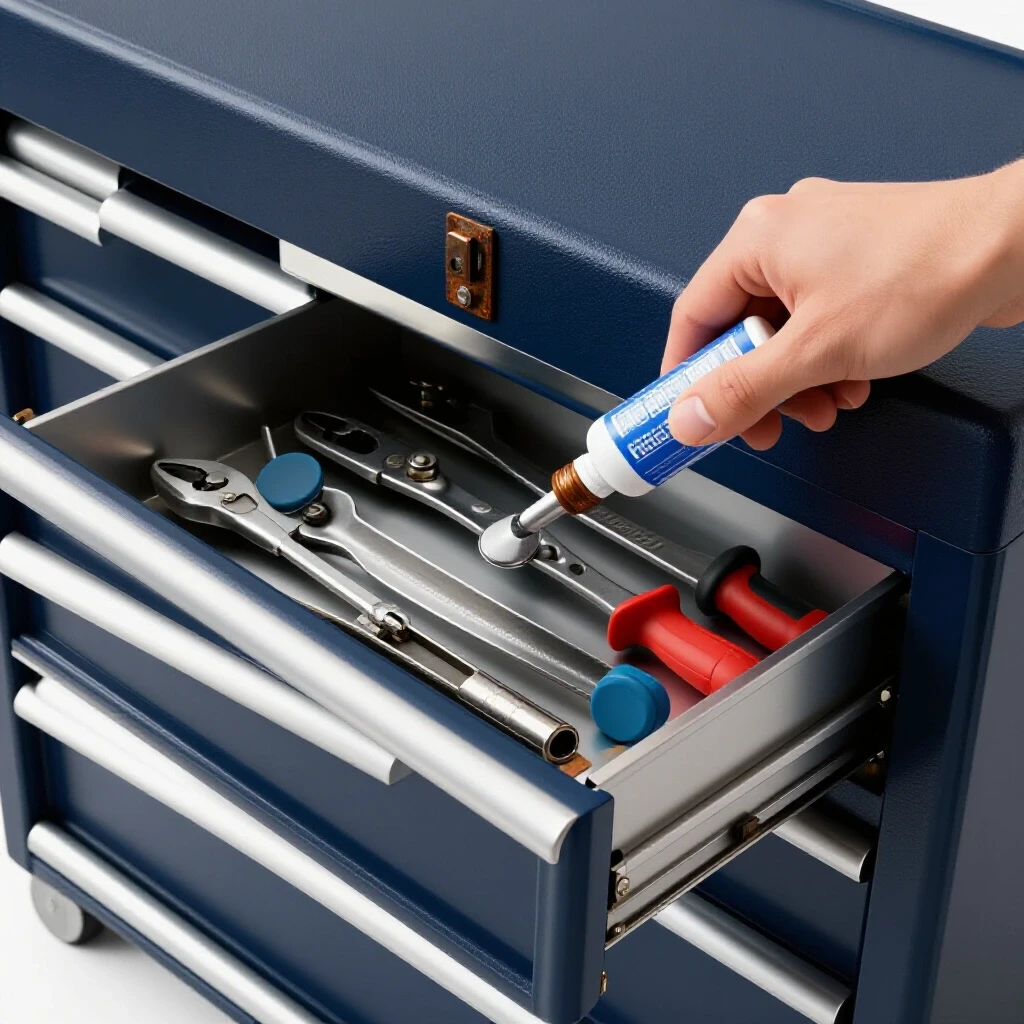
When a drawer starts to resist or bind, most people just pull harder. In my shop, that is a red flag that triggers a maintenance entry. Marketing brochures for tool chests promise “heavy-duty” performance, but they rarely mention that these systems are subject to the same laws of physics as any other machine. Dust, weight-induced deflection, and lubricant breakdown are inevitable. If you are tired of shallow reviews that only look at the paint job of a new chest, this guide focuses on the actual mechanical reality of keeping those steel tracks moving smoothly over a decade of hard use.
Understanding the Engineering of Steel Slide Systems
The mechanical foundation of most professional tool storage relies on cold-rolled steel tracks and ball-bearing carriages designed to handle specific weight loads over thousands of cycles.
Cold-rolled steel is metal that has been processed at room temperature to achieve tighter tolerances and a smoother surface finish than hot-rolled alternatives. In the context of tool storage, this material provides the structural rigidity needed to support hundreds of pounds of steel. Ball bearings are the intermediate rolling elements that reduce friction between the fixed track and the moving drawer member. When these components fight each other, it is usually due to a breakdown in this rolling interface or a physical change in the steel’s geometry.
The Role of Load Ratings in Mechanical Longevity
Load ratings are the manufacturer’s estimate of the maximum weight a slide can support while still operating within its design parameters.
Most professional-grade slides are rated for 100 to 200 pounds per pair. However, my logs show that operating at 90% of the rated capacity consistently leads to faster lubricant displacement and track “brinelling”—a term for permanent indentation of the steel raceway caused by the ball bearings. Understanding these limits helps you diagnose why a specific drawer is sticking. If you have a drawer filled with solid steel plate or heavy pneumatic impacts, you are likely exceeding the elastic limit of the cold-rolled steel, causing the tracks to flare or bow.
| Slide Component | Material Property | Failure Mode | Impact on Performance |
|---|---|---|---|
| Outer Rail | Cold-Rolled Steel | Flaring/Bowing | Increased lateral friction |
| Ball Bearings | Hardened Chrome Steel | Flat spots/Pitting | Gritty or “notchy” movement |
| Retainer | Nylon or Thin Steel | Cracking/Bending | Bearings bunch up and jam |
| Lubricant | Lithium or Synthetic | Drying/Contamination | High resistance and heat |
Systematic Diagnosis of Binding Storage Tracks
Before reaching for a can of spray, you must identify the root cause of the resistance through a structured inspection process.
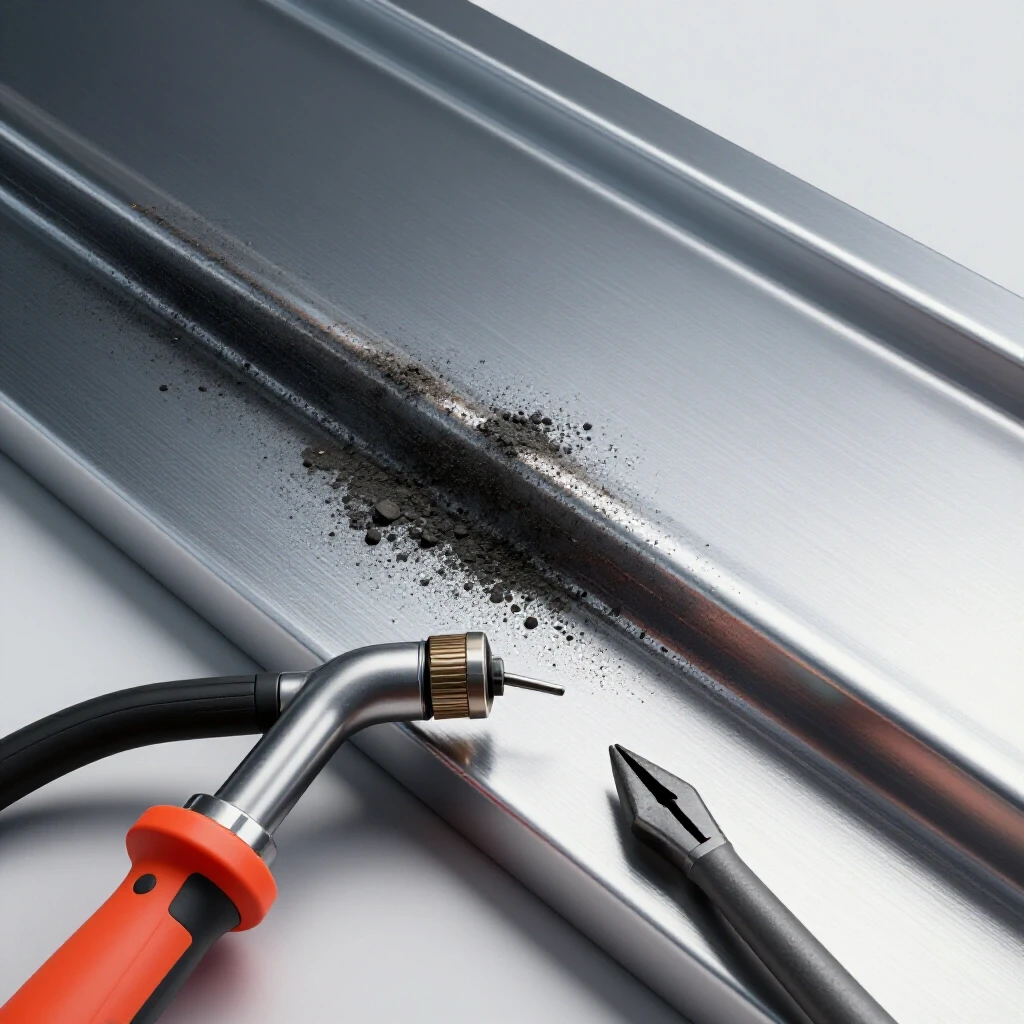
I treat a sticking drawer like a misaligned bandsaw blade. You cannot fix it until you know where the deviation is occurring. The first step is always to empty the drawer. You cannot accurately assess the health of the bearings or the straightness of the rails while they are under a 100-pound load. Once empty, I use a high-lumen flashlight to inspect the tracks for “swarf”—the fine metal shavings and dust that accumulate in a fabrication shop. This grit acts like sandpaper, grinding down the bearings and the rail surfaces every time you open the drawer.
Identifying Structural Deflection and Misalignment
Structural deflection occurs when the weight of the tools causes the metal frame or the slides themselves to bend out of their original parallel orientation.
In my shop logs, I have noted that even high-end chests can suffer from “cabinet rack” if the floor is not perfectly level. If the cabinet is slightly twisted, the drawer tracks will no longer be parallel. This creates a “pinching” effect where the drawer moves easily for the first few inches and then binds as it extends. You can check this by measuring the distance between the rails at the front and the back with a digital caliper. A variance of even 1/16th of an inch can cause significant sticking in a ball-bearing system.
- Check for loose mounting screws that allow the rail to “wiggle.”
- Look for shiny spots on the metal that indicate where the drawer is rubbing.
- Inspect the “detent”—the small rubber or plastic piece at the back that holds the drawer shut—for signs of tearing.
- Observe the ball bearing carriage to ensure it hasn’t “timed” or shifted too far forward or back.
Practical Steps for Restoring Smooth Movement
Once you have identified the cause of the friction, the restoration process involves cleaning, deburring, and re-lubricating the steel components.
I avoid “quick fixes” like spraying penetrants into the tracks. Penetrants are designed to break rust, not provide long-term lubrication. In fact, they often wash away the existing grease, leaving the metal bone-dry and prone to rapid wear. Instead, I follow a protocol derived from maintaining precision machinery. This ensures the fix lasts for years, not just a few days.
Effective Cleaning and Debris Removal
Cleaning is the most critical part of the process, as applying new lubricant over old grit creates a grinding paste that will destroy the slides.
I use a lint-free rag dampened with mineral spirits to wipe down the entire length of the rail. For the ball bearings themselves, I use a small brush to flick out any trapped metal chips. Interestingly, I have found that magnetic dust from grinding is the most common culprit in fabrication shops. It sticks to the steel rails and gets rolled into the bearing races. After cleaning, the rails should feel smooth to the touch. If you feel any snags, you likely have a physical burr that needs attention.
Manual Deburring and Track Straightening
Deburring is the process of removing small, raised edges of metal that have been “plowed” up by the bearings or by accidental impacts.
If a drawer has been slammed or overloaded, the ball bearings can create small craters in the steel. I use a fine-tooth needle file to lightly knock down any high spots on the track edges. You are not trying to reshape the rail, just returning it to a flat plane. For flared rails, a pair of parallel-jaw pliers can be used to gently move the steel back into alignment. This is a delicate process; cold-rolled steel has a “memory,” and over-correcting can lead to fatigue cracks in the metal.
Strategic Lubrication for Long-Term Reliability
Choosing the right lubricant is a matter of matching the chemical properties of the grease to the environment of your shop.
In a dusty fabrication environment, a “wet” grease can be a liability because it attracts and holds contaminants. However, for high-load drawers, a dry film often lacks the film strength to prevent metal-on-metal contact. Through years of tracking tool performance metrics, I have found that a high-quality synthetic grease with PTFE (Teflon) or a dedicated white lithium grease provides the best balance.
Lubricant Performance Comparison
| Lubricant Type | Pros | Cons | Best Use Case |
|---|---|---|---|
| White Lithium Grease | High film strength, stays put | Attracts some dust | Heavy bottom drawers |
| Dry PTFE Spray | Does not attract grit | Low load capacity | Small, light tool drawers |
| Silicone Spray | Cheap, easy to apply | Evaporates quickly | Temporary fix only |
| Synthetic Grease | Long-lasting, wide temp range | More expensive | Professional-grade chests |
When applying grease, less is more. I apply a small bead to the bearing carriage and cycle the drawer ten times to distribute the lubricant evenly. The goal is a microscopic layer between the ball and the race. Any excess grease should be wiped away, as it will only serve as a magnet for grinding dust.
Establishing a Preventative Maintenance Schedule
The difference between a frustrating shop and a productive one is the transition from reactive repairs to a preventative maintenance mindset.
I treat my tool storage like my 240V inverter welder or my cold saw. It has a service interval. Based on my shop logs, a tool chest in a daily-use fabrication environment requires a “deep clean” and re-lubrication every 12 to 18 months. If you are working in a particularly high-dust area, such as near a stationary grinder, that interval should be halved. By tracking these intervals, you prevent the “cascading failure” where a sticking slide leads to a broken handle or a tipped cabinet.
Creating a Workshop Maintenance Log
A maintenance log is a simple document—either digital or a physical notebook—where you record the date and the specific service performed on each piece of equipment.
- Identify the Unit: Assign a number to each tool chest.
- Record the Load: Note which drawers are carrying the most weight (e.g., “Drawer 4: 85lbs of fasteners”).
- Log the Intervention: Note if you cleaned, deburred, or re-lubricated.
- Note the Lubricant: Record what brand and type of grease was used to track its longevity.
- Schedule the Next Check: Set a reminder for 12 months out.
This level of detail might seem excessive until you realize that it allows you to identify which brands are actually holding up to your specific workflow. If Drawer 3 on Brand A sticks every 6 months while Brand B lasts 2 years, you have the data you need for your next major equipment purchase.
Comparative Evaluation of Slide Durability
When you are planning your next equipment upgrade, you need to look past the marketing specs and evaluate the actual mechanical construction of the slides.
I have found that many “pro-sumer” brands use thinner gauge steel for their tracks to save on shipping costs. In my testing, a slide made from 14-gauge steel will significantly outlast one made from 16-gauge steel under the same load. Furthermore, look at the number of ball bearings per inch. A higher bearing density distributes the load more effectively, reducing the pressure on any single point of the track.
- Slide Extension: Full-extension slides are standard, but they put the most stress on the rear mounting points. Ensure the rear of the rail is securely fastened to the cabinet frame.
- Detent Strength: A weak detent allows drawers to drift open, which can cause the cabinet to tip.
- Steel Finish: Look for zinc plating or powder coating on the rails to prevent oxidation, which increases friction.
- Bearing Material: Hardened chrome steel bearings are the gold standard; avoid plastic rollers for anything other than the lightest storage needs.
Managing Equipment Reliability and Warranty Realities
Even with perfect maintenance, mechanical components eventually wear out. Understanding your warranty coverage is part of being a professional buyer.
Most tool chest warranties cover “manufacturing defects,” but they are often vague about “wear and tear.” If a slide fails because it was clogged with grinding dust, the manufacturer may deny the claim. However, if you have a log showing regular maintenance and the slide still failed due to a cracked bearing retainer, you have a much stronger case for a warranty replacement. I keep a digital folder with scans of all my receipts and a copy of the specific warranty terms for every major tool in my shop.
Strategic Equipment Purchasing Pathway
When it is time to add more storage, I follow a specific decision-making process based on my historical data.
- Assess the Load: Determine the exact weight of the tools going into the new unit.
- Verify the Gauge: Confirm the thickness of the drawer steel and the slide steel.
- Evaluate the Bearing System: Count the bearings and check the retainer material.
- Review the Serviceability: Can the slides be easily removed for cleaning? If they are riveted in, they are “disposable” hardware.
- Calculate Lifetime Cost: A chest that costs $200 more but lasts twice as long without needing parts is the better investment.
By focusing on these metrics, you move away from the frustration of “marketing hype” and toward a shop filled with reliable, high-performing equipment. Smoothly operating storage is not a luxury; it is a fundamental requirement for a focused, efficient fabrication environment.
FAQ: Maintaining and Fixing Metal Storage Slides
Why do my tool drawers stick even though they are not overloaded?
Sticking often occurs because of “timing” issues with the ball bearing carriages. If a drawer is partially opened and closed repeatedly, the bearing retainer can migrate out of position. To fix this, fully extend the drawer until you feel it hit the stops. This often resets the carriage position. Additionally, check for “racking” of the cabinet frame if the floor is uneven.
Can I use WD-40 to make my slides move faster?
I strongly advise against using standard WD-40 for long-term lubrication. It is a solvent and water-displacer, not a heavy-duty lubricant. It will provide a temporary improvement but will quickly evaporate and leave the metal unprotected. Use a dedicated white lithium grease or a dry PTFE spray for better results.
How do I know if my slides are bent or just dirty?
Empty the drawer and wipe the tracks clean. If the drawer still has a specific “tight spot” in the same place every time you move it, the track is likely bent or flared. If the resistance is consistent throughout the entire travel, it is more likely a lubrication or debris issue.
Is it possible to over-lubricate the tracks?
Yes. Excess grease acts as a magnet for shop dust, metal shavings, and lint. This creates a thick sludge that eventually hardens and causes the bearings to skid rather than roll. Apply a thin, even coat and wipe away any “blobs” that squeeze out of the sides.
What is the best way to clean out old, hardened grease?
Mineral spirits or a dedicated degreaser on a stiff nylon brush works best. Avoid using wire brushes, as they can scratch the smooth finish of the cold-rolled steel, creating new friction points. Ensure the tracks are completely dry before applying new lubricant.
How much weight can a standard ball-bearing slide really hold?
Most professional-grade slides are rated for 100 lbs per pair. However, for long-term reliability, I recommend staying under 80% of that rating. If you have a drawer that needs to hold 150 lbs, look for chests that feature “double slides”—two sets of tracks for a single drawer.
Why do the bearings sometimes fall out of the tracks?
This usually happens when the bearing retainer (the piece of plastic or thin metal holding the balls) becomes bent or brittle and breaks. This is often a result of slamming the drawer or overloading it, which forces the bearings to put lateral pressure on the retainer. If bearings are falling out, the slide typically needs to be replaced.
Does the temperature of my garage affect my drawer slides?
Extreme cold can cause standard grease to become thick and “tacky,” increasing resistance. If your shop is not climate-controlled, using a high-quality synthetic grease is beneficial because it maintains a more consistent viscosity across a wider temperature range.
How can I prevent my tool chest from tipping when I pull out a heavy drawer?
Beyond fixing the slides so they don’t require a hard “yank,” always load your heaviest tools in the bottom drawers. Many professional chests now include “one-drawer-at-a-time” interlock systems. If yours doesn’t, be disciplined about closing one drawer before opening another, especially if the slides are moving so smoothly that the drawer can drift.
What should I do if the metal track is flared open?
If the U-shaped channel of the rail has spread apart, you can often gently squeeze it back into shape using a pair of smooth-jawed pliers or a small C-clamp. Go slowly and check the fit frequently. If the steel is severely deformed, it may have lost its structural integrity and will likely flare again under load.
(This article was written by one of our staff writers, David Reynolds. Visit our Meet the Team page to learn more about the author and their expertise.)