Is a CNC Plasma Cutter Profitable for Home Shops? (Analysis)
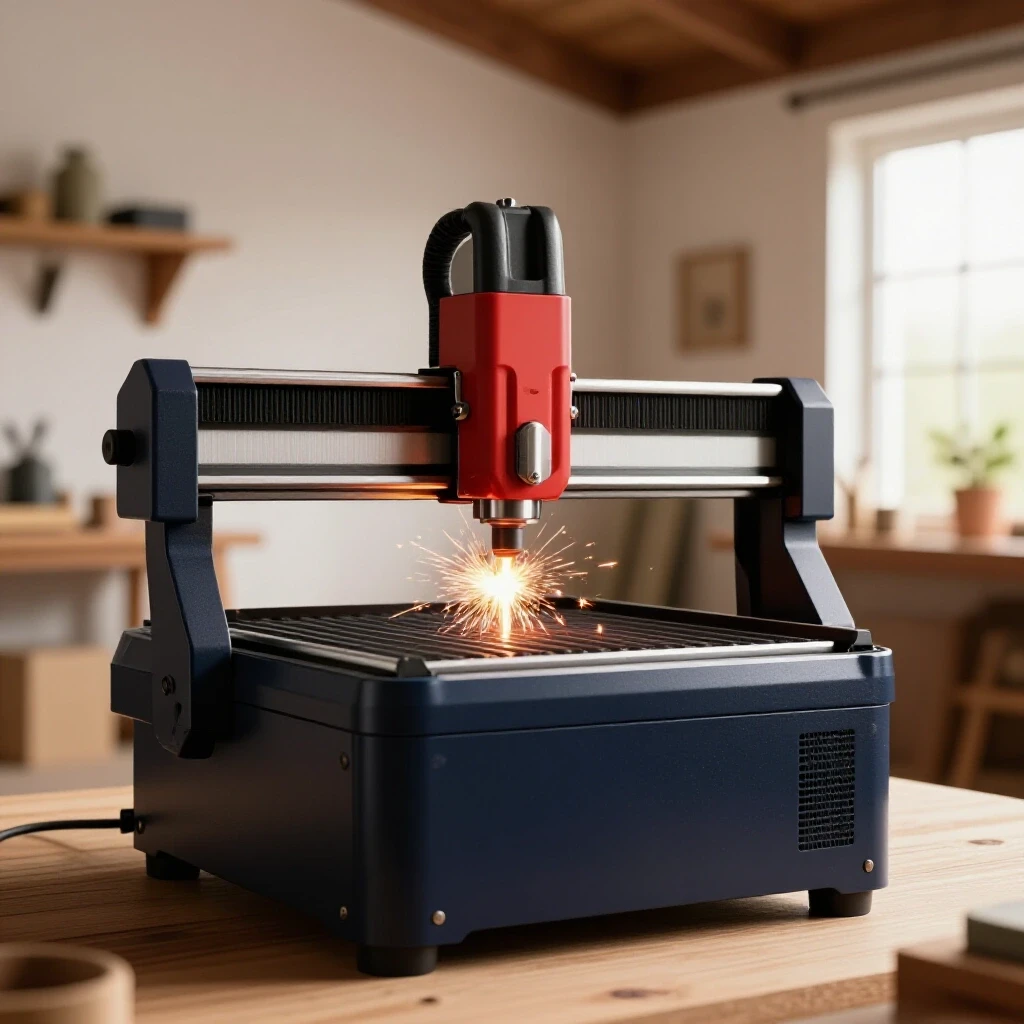
The first time I stood in my garage looking at a brand-new CNC plasma table, I felt a mix of excitement and a very specific kind of dread. I had spent nearly $5,000 on the setup, and while the machine was sleek, my bank account looked significantly thinner. Like many hobbyists moving into the side-hustle phase, I was haunted by a single question: How many custom brackets and metal signs would I have to sell before this machine actually paid for itself?
In my 16 years of metalworking, I have seen many talented fabricators fail because they treated their shop like a hobby while trying to charge like a business. They guess at their prices, ignore the cost of electricity, and forget that every spark flying off the torch represents a tiny piece of a copper nozzle being consumed. To make a small-scale automated cutting setup work financially, you have to move past “gut feelings” and embrace the hard numbers of shop math.
Establishing a Realistic Shop Hourly Rate
A shop hourly rate is the foundational number used to ensure every hour you spend in the garage covers your bills and pays you for your skill. It is not just a random number like $50 or $100; it is a calculated figure that includes your overhead, your machine’s wear and tear, and your desired take-home pay.
When I started consulting for small shops, I noticed a trend: most owners were charging $30 an hour because they felt “guilty” charging more. However, when you factor in the cost of light, heat, and the square footage of your garage, you are likely losing money at that rate. For a home-based side-hustle, a healthy starting range is typically between $65 and $120 per hour. This range allows you to cover the “hidden” costs that most people ignore.
To find your specific rate, start by listing every monthly expense related to your shop. Even if you own your home, the shop uses a portion of the property. If your garage takes up 20% of your home’s square footage, it should technically “pay” 20% of the utilities. Add these costs up, divide them by the number of hours you actually plan to work each month, and you have your base overhead.
Mapping the Payback Period for Equipment Investments
Amortization is a fancy way of saying “paying yourself back for the tools.” It involves spreading the initial cost of your machinery over its expected lifespan so you know how much each hour of use actually costs you in depreciation.
If you buy a mid-range CNC plasma setup for $5,000 and you expect it to last five years before it needs a major overhaul or replacement, that is a cost of $1,000 per year. If you only use the machine for 10 hours a week (520 hours a year), the machine itself costs you roughly $1.92 per hour just for existing.
Many owners forget this step. They think that once the machine is paid off, the “cost” goes to zero. In reality, you should always be “charging” the job for the machine’s replacement. This ensures that in five years, you have the cash sitting in a dedicated account to buy the next upgrade without dipping into your personal savings.
| Investment Tier | Initial Cost | Expected Life | Annual Depreciation | Monthly Burden |
|---|---|---|---|---|
| Entry Level | $2,500 | 3 Years | $833 | $69 |
| Mid-Range | $5,500 | 5 Years | $1,100 | $92 |
| High-End Home Shop | $8,500 | 7 Years | $1,214 | $101 |
Tracking Consumable Burdens and Operating Costs
Consumables are the parts of the plasma torch—the nozzles, electrodes, and shields—that wear out as you cut. These are the most common “profit leeches” in a small shop because their cost is small enough to ignore on a single job but large enough to ruin your monthly margins.
A typical set of consumables might cost $15 to $25. Depending on your air quality and the thickness of the metal, that set might last for three hours of “arc-on” time or ten hours. If you are cutting 1/2-inch mild steel, you will burn through tips much faster than if you are cutting thin decorative signage.
I recommend a “Consumable Burden Factor.” This is a flat percentage or hourly fee you add to every quote to cover these parts. For most home-scale CNC operations, adding $10 to $15 per hour of machine time is a safe way to ensure you aren’t paying for the customer’s electrodes out of your own pocket.
- Nozzles: These wear out as the orifice widens, causing a wider, less precise kerf.
- Electrodes: The hafnium element in the center wears down; if it gets too deep, it can ruin the entire torch head.
- Air Filtration: Moisture is the enemy of consumables. Investing in a high-quality air dryer can double the life of your tips, directly increasing your profit per cut.
Why Material Markup is Non-Negotiable
Material markup is the extra fee you charge on top of the raw price of the steel to cover your time spent driving to the supplier, loading the truck, and storing the sheets. It also covers the “waste” or “drops” that inevitably happen when a part doesn’t fit perfectly on a sheet.
In my experience, many side-hustlers simply charge the customer exactly what the steel cost them. This is a mistake. If a 4×4 foot sheet of 1/4-inch mild steel costs you $150, and you use half of it for a project, you shouldn’t just charge $75. You should apply a 20% to 50% markup.
This markup accounts for the risk you take. If you tip the sheet and it scratches, or if the supplier gives you a piece with a slight bow, you are the one who has to deal with it. A standard practice for small shops is a 35% markup on all raw materials. This ensures that the “handling” of the metal is a profitable activity, not a chore you do for free.
Building an Accurate Fabrication Job Quote
Fabrication job costing is the process of combining your shop rate, machine time, material costs, and markups into a single price for the customer. The goal is to be consistent so that your customers feel they are getting a fair deal and you know exactly how much you are making.
When I quote a job, I break it down into three stages: setup, cutting, and finishing. Setup includes the time spent in CAD/CAM software designing the part. Cutting is the actual time the machine is running. Finishing includes de-burring the edges or grinding off the “dross” (the hardened slag left on the bottom of the cut).
- Design Time: Charge your full shop rate for CAD work. If a sign takes two hours to draw, that is $130–$240 before you even touch a piece of metal.
- Machine Time: Use your CAM software to estimate the “inches of cut.” Most software will give you a time estimate. Multiply this by your shop rate plus your consumable burden.
- Post-Processing: Don’t underestimate how long it takes to clean up 20 small brackets. If it takes an hour of wire-brushing, that is another hour of shop time.
Analyzing Post-Job Profits to Refine Bidding
One of the most important habits I developed was the “Post-Job Audit.” After the customer picks up their parts and the invoice is paid, I sit down and look at my actual time versus my estimated time. This is where you find out if your side-hustle metalworking is actually making money.
If I estimated a job would take four hours but it actually took six because I had to restart a cut, I need to know why. Was the metal dirty? Did a consumable fail early? By tracking these variances, you can adjust your future quotes. If you find that you are consistently spending 20% more time than you quote, you simply raise your rates or your time estimates by 20%.
Sourcing Mild Steel for Maximum Margin
For a home shop, buying metal can be expensive because you aren’t ordering truckloads. However, there are ways to keep costs down to improve your return on investment.
- Look for Remnants: Many industrial steel yards have a “drops” section where they sell offcuts by the pound. For small brackets or signs, these can be 50% cheaper than buying full sheets.
- Bulk Buying: If you know you use a lot of 3/16-inch plate for a specific product, buy three sheets at once. Most suppliers offer a break at the 500-pound or 1,000-pound mark.
- Standardize Your Material: Try to design your products around common thicknesses. If you can make everything out of 10-gauge and 1/4-inch plate, you only have to stock two types of steel, reducing your “dead” inventory.
Digital Tools for Shop Management
Managing the finances of a small fabrication business is much easier today than it was a decade ago. You don’t need a complex accounting degree; you just need a few simple tools to keep the data organized.
- QuickBooks or FreshBooks: These are excellent for sending professional invoices and tracking which customers have paid.
- Excel or Google Sheets: I still use a custom spreadsheet for my job estimates. I plug in the material cost and the cut time, and it automatically calculates the final price based on my shop rate.
- SheetCam or Fusion 360: These programs don’t just generate the cut paths; they provide the “cut distance” data you need to calculate consumable wear and machine time accurately.
Common Mistakes That Drain Shop Revenue
Even with the best intentions, I’ve seen many owners fall into traps that turn a profitable Saturday into a volunteer session. The most common error is the “friend and family discount.” While it is tempting to help out a neighbor, the machine doesn’t know it’s cutting for a friend—it still uses electricity and wears out the nozzle.
Another mistake is ignoring “non-cutting” time. If you spend thirty minutes cleaning the water table or five minutes changing a tank of compressed air, that is time you aren’t being paid for unless it is baked into your shop rate. Consistency is the key to a sustainable side business. If you treat every job with the same financial rigor, you will find that the machine becomes an asset rather than a liability.
Key Benchmarks for Success
- Target Shop Rate: $65–$120 per hour.
- Consumable Burden: $10–$15 per arc-hour.
- Material Markup: 20% to 50%.
- Machine Payback Goal: 18 to 24 months for a part-time shop.
- Quote Variance: Aim to stay within 10% of your initial estimate.
FAQ: Navigating the Economics of Home Fabrication
How much does it actually cost to run a CNC plasma cutter per hour? On average, for a home shop, you are looking at $12 to $20 per hour in direct operating costs. This includes electricity, compressed air, and the wear on your consumables (nozzles and electrodes). This does not include your labor or the “rent” of your shop space.
What is the best way to price custom metal signs? I recommend a “hybrid” approach. Calculate the material cost with a 35% markup, then add your design time (CAD) at your full shop rate. Finally, add the machine time. Many shops find that a “per-square-inch” or “per-linear-foot” price works well for standard signs once they know their averages.
Should I charge for the time I spend talking to customers? Yes, but indirectly. You shouldn’t send a bill for a 15-minute phone call, but that time should be factored into your “overhead” which determines your hourly shop rate. If you spend 5 hours a week on the phone, those are 5 hours you aren’t cutting, so your cutting hours must be priced high enough to cover that time.
How do I know if my CNC table is a good investment? A tool is a good investment if it either saves you time on current tasks or allows you to take on work you couldn’t do before. Calculate your “payback period.” If the profit from the machine can cover the initial $2,000–$8,000 cost within two years of part-time work, it is generally considered a sound investment for a side-hustle.
What is “dross” and does it affect my profit? Dross is the re-solidified metal that sticks to the bottom of a cut. Removing it takes time and labor. If your machine settings are dialed in correctly, dross is minimized. If you have to spend an hour grinding dross off every part, you are losing money on labor. High-quality cuts are directly tied to higher profit margins.
Can I compete with big industrial shops? You shouldn’t try to compete on high-volume, simple parts. Big shops have massive machines that cut faster than yours. Your advantage is “low-volume, high-customization.” Focus on one-off brackets, custom repairs, or personalized art where the customer values your specific design and quick turnaround.
Is it better to buy a cheap $2,000 table or a $6,000 table? A $2,000 table often requires more manual adjustment and has lower “up-time.” If you are handy and don’t mind tinkering, it can work. However, a $6,000 table usually offers better torch height control (THC), which saves you money by making your consumables last longer and producing more consistent cuts.
How often should I raise my shop rates? Review your numbers every six months. If the cost of steel or electricity has gone up, or if you find you are booked out three months in advance, it is time to raise your rates. Even a $5 per hour increase can make a massive difference in your year-end profit without scaring away loyal customers.
Do I need a water table or a downdraft table for profitability? A water table is generally cheaper and easier for a home shop. It keeps the metal cool (preventing warping) and traps most of the dust. Preventing warping saves you money because you won’t have to scrap parts that “bowed” during the cutting process.
What is the most profitable thickness of metal to cut? For most home-scale CNC plasma units, 10-gauge (roughly 1/8-inch) to 1/4-inch mild steel is the “sweet spot.” It cuts fast enough to be profitable but is thick enough to be used for heavy-duty brackets and structural parts that command a higher price than thin decorative tin.
The transition from hobbyist to side-hustle owner is entirely about the shift in mindset from “making things” to “managing margins.” By tracking your consumables, respecting your shop rate, and accurately marking up your materials, you ensure that your time in the garage is as rewarding for your bank account as it is for your creativity. Next time you fire up that torch, remember: every inch of cut is a business transaction. Treat it that way, and the machine will pay for itself faster than you think.
(This article was written by one of our staff writers, Michael Hargrove. Visit our Meet the Team page to learn more about the author and their expertise.)