When to Replace vs Repair Old Electric Shop Tools (Decision)
I have spent nearly two decades in my shop taking apart everything from vintage drill presses to modern imported milling machines. When you are staring at an old piece of equipment that just sparked or started vibrating, the choice to fix it or move on is rarely about brand loyalty. It is about the mechanical bones of the machine. I look at the cast iron, the motor windings, and the bearing seats. If the foundation is solid, a repair is often better than a new purchase. If the frame is warped or the motor is an obsolete design, you are just chasing bad results with good effort.
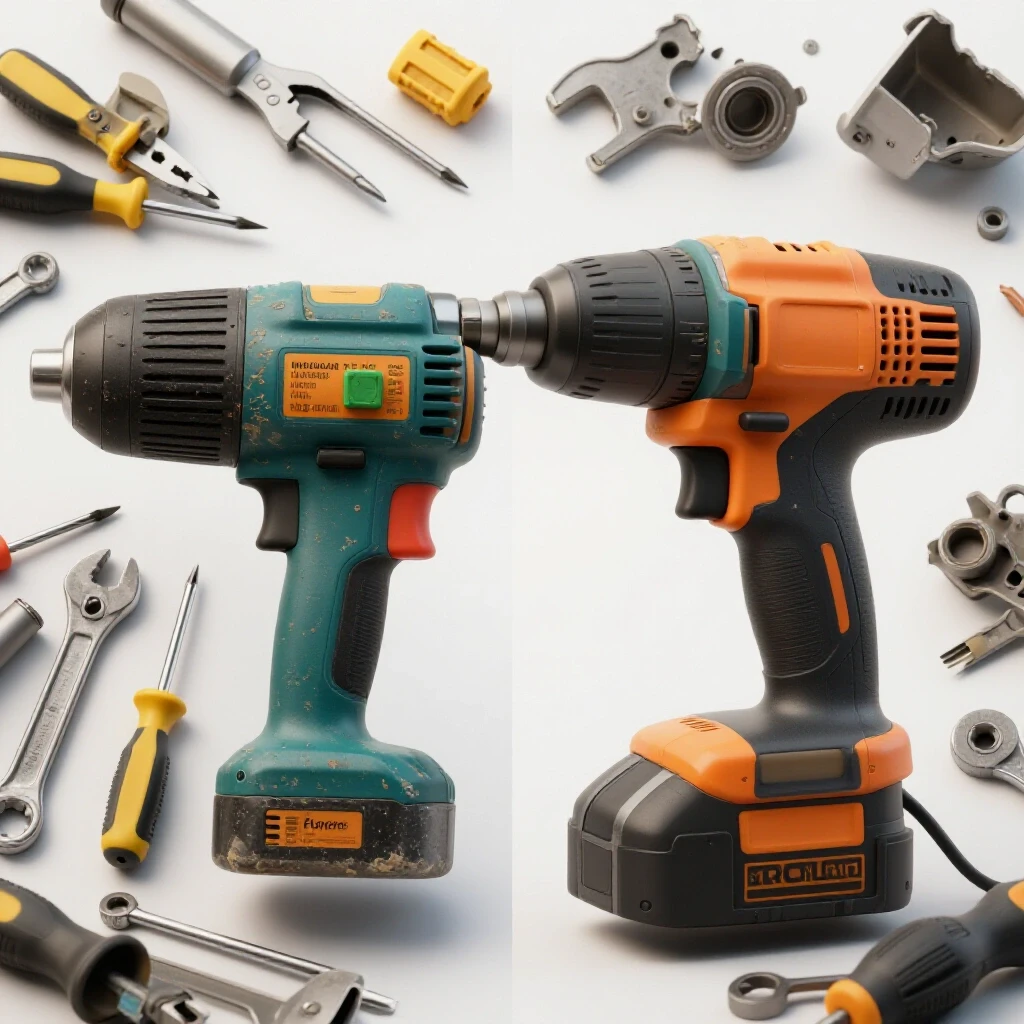
The confusion usually starts with marketing. Modern tool companies promise “professional grade” performance from machines that weigh half as much as their predecessors. On the other hand, enthusiasts often claim that “they don’t make them like they used to,” ignoring the fact that modern electronics can provide torque and speed control that old machines never could. My goal is to help you look past the paint and the stickers to see what is actually happening inside the housing.
Assessing the Structural Integrity of Machinery Frames
Evaluating the physical chassis of a tool involves checking for cracks, warping, and the quality of the metal used to dampen vibrations during heavy cuts.
The frame is the only part of a tool you cannot easily replace. In my shop, I prioritize heavy cast iron over thin, stamped steel. Cast iron, specifically Class 25 or Class 30, has a high carbon content that naturally absorbs the “chatter” or harmonics created when a cutting tool hits metal. If you are looking at an old lathe or mill, the weight is your friend. A heavy base means the machine will stay put and keep its alignment under a heavy workload.
I once worked on a 1950s band saw that had a hairline crack in the main C-frame. No matter how much I tuned the guides or replaced the tires, the blade would never track straight under tension. The frame was flexing. In that case, the machine was essentially a boat anchor. When you examine your old tools, look for “stress risers” or cracks around bolt holes and corners. If the frame is compromised, no amount of new parts will restore its accuracy.
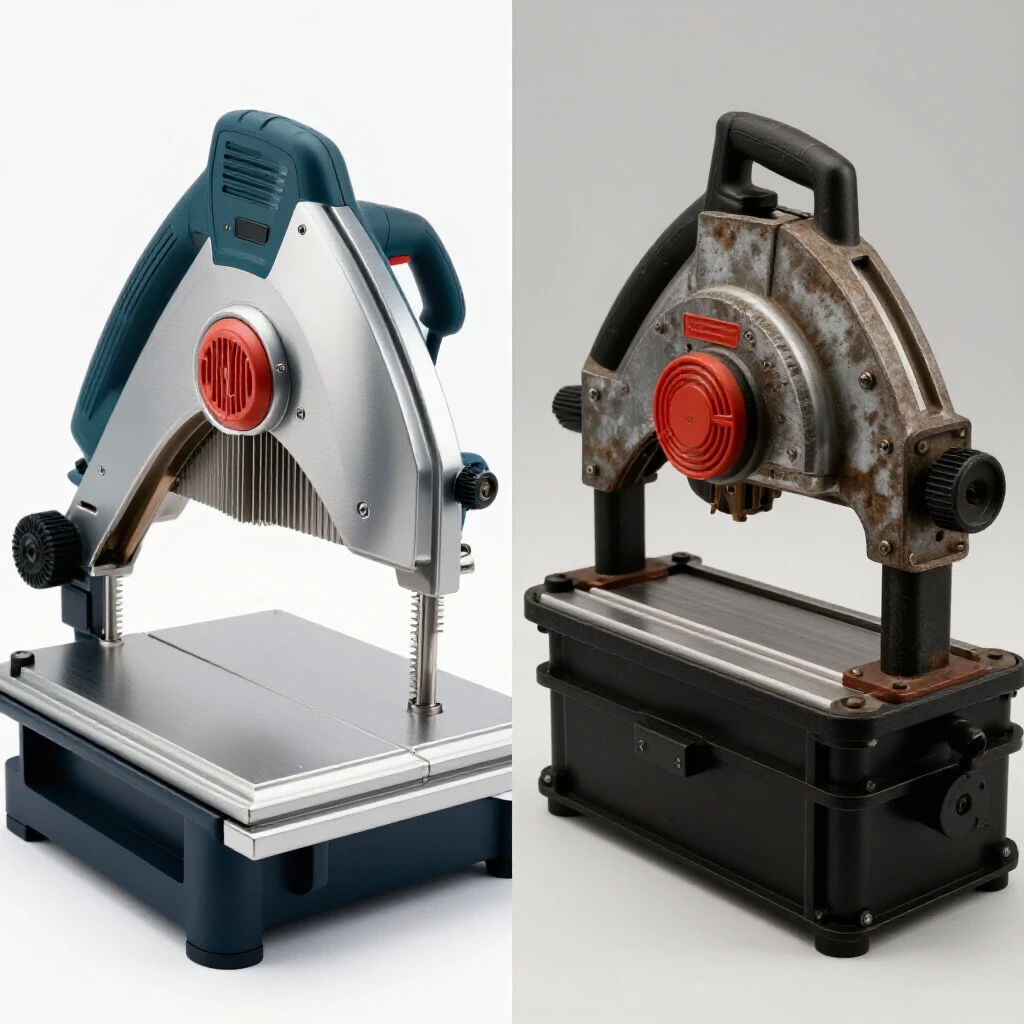
Cast Iron vs. Stamped Steel Comparison
| Feature | Cast Iron (Old/Premium) | Stamped Steel (Modern/Budget) |
|---|---|---|
| Vibration Dampening | High (Absorbs harmonics) | Low (Tends to vibrate/ring) |
| Rigidity | Excellent (Resists twisting) | Moderate (Can flex under load) |
| Weight | Heavy (Provides stability) | Light (Easier to move, less stable) |
| Repairability | Difficult (Requires specialized welding) | Easy (Can be patched or braced) |
Analyzing Electric Motor Health and Power Delivery
Motor evaluation involves checking the condition of the internal copper windings, the commutator, and the insulation to see if the power plant is still viable.
The motor is the heart of your shop equipment. In older tools, you typically find induction motors or brushed universal motors. I always start by checking the “smell” of a motor. If it has a sharp, ozone-like scent, the insulation on the copper wires is likely burning off. You can use a tool called a megohmmeter to test the insulation resistance. If the resistance is low, the motor is a ticking time bomb that will eventually short out.
Modern brushless motors and Variable Frequency Drives (VFDs) have changed the game. An old motor usually runs at one or two fixed speeds, requiring you to move belts on pulleys to change your RPM. A modern VFD allows you to turn a dial to change speed while maintaining high torque. If your old tool has a proprietary motor with a strange mounting pattern, it might be better to replace the whole unit rather than trying to source a custom replacement that fits an obsolete frame.
- Induction Motors: These are found in larger stationary tools. They are quiet and last for decades if the bearings are kept clean.
- Universal Motors: Found in smaller tools like grinders. They use carbon brushes. If you see heavy sparking at the back of the motor, the brushes are worn or the commutator is damaged.
- Brushless DC Motors: These are becoming common in high-end benchtop tools. They offer more power in a smaller package and require less maintenance.
Measuring Precision with Spindle Runout and Bearing Wear
Measuring runout involves using a dial indicator to detect any “wobble” in a rotating shaft, which indicates how accurately the tool can perform its task.
Total Indicated Runout (TIR) is the metric I live by. If I put a dial indicator on a drill press spindle and it moves more than 0.005 inches, that tool is no longer capable of precision work. For a metal lathe, I look for a TIR of 0.0005 to 0.001 inches. If the runout is high, the problem is usually the bearings. Bearings are the wear items that support the spinning shafts.
In older machinery, you might find “babbitt” bearings or older styles of ball bearings that are no longer made. Replacing these can be a nightmare. However, if the machine uses standard ISO-sized bearings, you can often press out the old ones and install new high-precision versions for very little effort. If the spindle itself is bent or the bearing “seat” (the hole where the bearing sits) is wallowed out, the tool has reached the end of its functional life.
The Evolution of Speed Control and Electrical Drivers
Electrical drivers are the circuit boards and switches that manage how much power goes to the motor and at what frequency.
Old tools used simple mechanical switches. These are great because they are easy to fix. You can usually take them apart, clean the copper contacts, and they work like new. Modern tools use digital control boards. While these boards allow for features like “soft start” (where the tool ramps up speed slowly) and constant speed under load, they are much harder to repair. If a control board on a 10-year-old saw dies, and the manufacturer no longer makes that board, the tool is often useless.
I recently compared an old bridge-rectified DC motor on a small lathe to a modern brushless drive. The old system was jerky at low speeds. The new system used back-EMF feedback to sense when the tool was hitting the metal and automatically added more power to keep the RPM steady. This kind of technology is a strong argument for replacing an old, struggling machine with a modern equivalent that offers better control.
Evaluating Torsional Stiffness and Tool Alignment
Torsional stiffness refers to a machine’s ability to resist twisting forces when a heavy load is applied to the cutting head or worktable.
When I test a milling machine or a lathe, I look at the “ways”—the precision-ground surfaces that the parts slide on. If the ways are worn in the middle (where the tool spends most of its time), you will have “slop” or “play” in your cuts. You can test this by moving the table to the end of its travel and then back to the center. If it feels tighter at the ends than in the middle, the metal has physically worn away.
Checking alignment also involves looking at the “tram.” On a mill, this means making sure the head is perfectly square to the table. On a drill press, it means the table is 90 degrees to the spindle. If an old tool has been dropped or crashed, the casting might be permanently twisted. No amount of adjustment will fix a twisted casting.
Tool Alignment Benchmarks for Metalworking
- Drill Press Spindle Runout: Should be less than 0.003 inches for general fabrication.
- Lathe Spindle Runout: Ideally less than 0.0005 inches for precision fitting.
- Mill Table Flatness: Should not deviate more than 0.001 inches over a 12-inch span.
- Motor Vibration: A nickel stood on edge on the motor housing should not fall over while the tool is idling.
Planning for Spare Parts and Long-Term Support
Parts availability is the “hidden” factor that determines if a repair is a smart investment or a waste of time.
I always tell people to check the “parts exploded view” online before they start a repair. If you can’t find a replacement lead screw or a specific gear for an old lathe, you will have to make those parts yourself. For most people, that isn’t practical. Brands that have been around for a long time often have a better “aftermarket” for parts. If you have a budget import tool from a brand that disappeared five years ago, you are likely out of luck.
Interestingly, the “right” choice often depends on your specific workload. If you only use a tool once a month, a slightly worn old machine might be fine. But if you are trying to run a side business, the reliability of a new machine with a warranty becomes very attractive. You have to weigh the time spent fixing a tool against the time spent using it.
Case Study: The 1980s Bench Grinder vs. Modern Low-Speed Grinder
I once had to decide whether to rebuild an old 8-inch bench grinder. It vibrated so badly it would walk across the workbench. I pulled it apart and found the shaft was slightly bent. To fix it, I would have needed to turn a new shaft on a lathe and press in new bearings.
Instead, I looked at a new low-speed grinder. The new unit had a more balanced motor and ran at 1,750 RPM instead of the old 3,450 RPM. This lower speed prevented me from “bluing” or overheating the steel when sharpening chisels. In this case, the technological gain (lower speed and better balance) was more valuable than the “heavy duty” feel of the old vibrating grinder. The old tool was built better, but the new tool performed better for my specific needs.
Inspection Checklist for Old Electric Tools
Before you decide to keep or toss a tool, go through this list with a set of calipers and a multimeter.
- Visual Frame Check: Use a flashlight to look for cracks in the cast iron or welds.
- Spindle Runout Test: Use a dial indicator on the innermost part of the spindle.
- Bearing “Growl” Test: Spin the motor by hand (unplugged). If it feels “crunchy” or makes a clicking sound, the bearings are shot.
- Insulation Test: Check the power cord for cracks and use a multimeter to ensure there is no continuity between the power “hot” lead and the tool’s metal frame.
- Under-Load Performance: Does the motor bog down significantly during a standard cut? This indicates weak capacitors or worn windings.
- Adjustment Range: Do the knobs and gibs (adjustment strips) still have room to tighten, or are they bottomed out?
Making the Final Choice
The decision usually comes down to the “bones” of the machine. If you have a high-quality cast iron frame and a standard motor mount, that tool is worth keeping forever. You can always upgrade the motor to a VFD or replace the bearings with high-precision versions. You are essentially using the old tool as a platform for modern performance.
However, if the tool has a proprietary plastic housing, a bent spindle, or a burnt-out custom circuit board, it is time to move on. Modern manufacturing has made certain classes of tools, like small benchtop drill presses or handheld grinders, almost “disposable” because the cost of precision replacement parts is so high compared to a new unit.
Focus on the metrics. If the runout is within spec and the frame is solid, fix it. If the metal is worn and the accuracy is gone, a new machine will save you hours of frustration and wasted material.
Frequently Asked Questions
What is the most common reason an old tool stops working? In my experience, it is usually the simplest part: the power cord or the switch. Over years of use, copper wires inside the cord fatigue and break, or the switch contacts become pitted and covered in carbon. Before you condemn a motor, bypass the switch and test the motor directly to see if it still spins.
Can I replace an old AC motor with a modern DC brushless motor? Yes, but it requires some fabrication. You will need to create a new mounting plate and install a controller. This is a common upgrade for small lathes and mills. It gives you much better speed control and more torque at low RPMs, which is critical for metalworking.
How do I know if my bearings are “precision” or just standard? Bearings are rated by the ABEC scale (1, 3, 5, 7, and 9). Most standard shop tools use ABEC 1 or 3. If you are repairing a high-speed spindle or a precision lathe, you should look for ABEC 5 or higher. These have much tighter tolerances and will reduce the runout of your tool.
Is a heavy tool always better than a light one? Usually, yes. In metalworking, mass equals stability. A heavier machine can take deeper cuts without vibrating. Vibration causes “chatter” marks on your workpiece and can even break carbide cutting tools. If two machines have the same specs but one weighs 50 pounds more, the heavier one is almost always the better choice.
What does “Class 30 Cast Iron” mean? This is a grading system for gray cast iron. Class 30 means the metal has a minimum tensile strength of 30,000 psi. It is a standard material for machine tool beds because it is excellent at dampening vibrations and is very wear-resistant when properly lubricated.
How much runout is “too much” for a drill press? For woodworking, you can get away with 0.010 inches. For metalworking, anything over 0.005 inches will make it difficult to drill precise holes or use reamers. If your drill bits are “walking” or making oversized holes, check your spindle runout first.
Are modern digital readouts (DROs) worth adding to an old machine? Absolutely. A DRO removes the “backlash” or play in your lead screws from the equation. It measures the actual movement of the table rather than how many times you turned the handle. Adding a DRO to an old, solid machine is one of the best ways to make it perform like a modern high-end unit.
Can I fix a “burnt out” motor myself? If the copper windings are physically melted or shorted, it requires a professional “rewind” shop. This is usually very expensive. However, if the motor just needs new brushes or a new start capacitor, those are easy fixes that you can do in an afternoon for very little money.
What is “backlash” and can it be repaired? Backlash is the “dead space” when you turn a handle before the table starts moving. It is caused by wear in the lead screw and the nut. On many tools, you can adjust the nut to take up this slack, or you can replace the brass nut entirely. If the lead screw itself is worn thin in the middle, you will need to replace the screw to fix the problem.
Why does my tool vibrate more than it used to? If it isn’t the bearings, it is likely an “unbalanced” rotating mass. This could be a chipped grinding wheel, a bent pulley, or even a belt that has developed a “set” or a flat spot from sitting in one position for too long. Try replacing the belt with a “link belt” to see if the vibration goes away.
What is the difference between a VFD and a simple rheostat speed controller? A rheostat (like a light dimmer) lowers the voltage, which also lowers the torque. If you slow a motor down this way, it will stall as soon as you start cutting. A VFD (Variable Frequency Drive) changes the frequency of the electricity, which allows the motor to run slowly while still maintaining almost all of its original turning power.
(This article was written by one of our staff writers, Steven Brooks. Visit our Meet the Team page to learn more about the author and their expertise.)